Notes from Coffee With Roleen
October 22, 2014
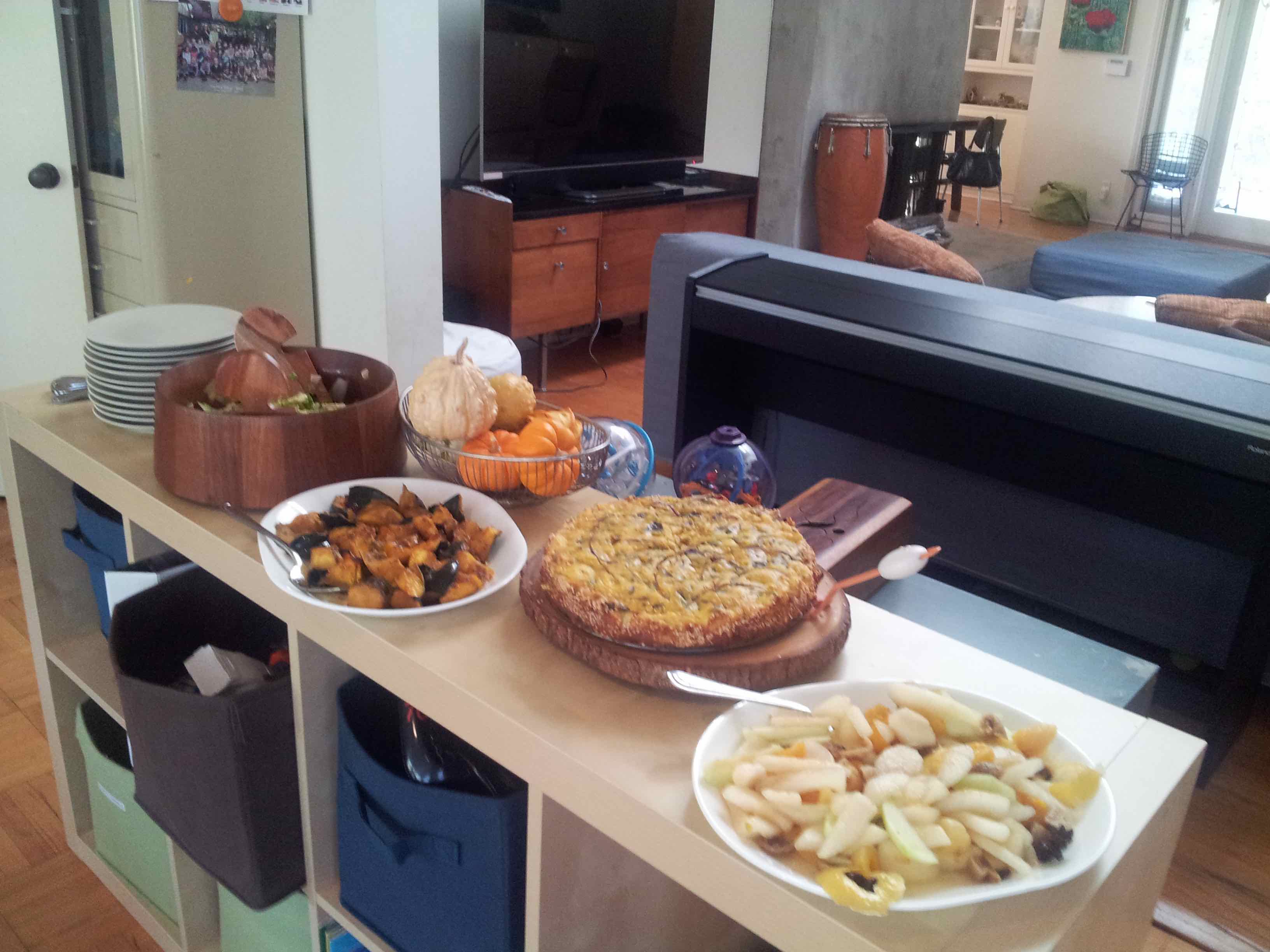
If you’ve never been to Coffee With Roleen then you haven’t fully experienced how lucky we all are to be a part of the New School-West community. Come sometime, bring along your stickiest questions, and realize over the course of 90 minutes the extent to which your parenting joys and challenges are shared. Personally this notetaker owes a lot of his parenting worldview to these gatherings. Thank you to the Davis-Shemer household for the warm and generous hospitality last month!
The meeting began with noting the value of REFLECTION. We don’t have time. Kids don’t have time. But it is critical to learning, we need it. These Coffees provide a place for reflection.
SIBLINGS
— “That’s not fair!” Distinguish between FAIR (what is appropriate for an individual’s needs in that moment) and EQUAL (exactly the same.)
— Roleen makes a parenthetical point here about education: education cannot nor should not be equal, but does need to be fair. Fairness is not equal because what one needs may not be what another needs.
— there’s no answer to sibling rivalry, it’s what they do
— one mom tells them “you guys don’t have to be friends”
— also “that’s something you two can figure out, you guys are capable”
— WE don’t like to see the agitation
— consider talking to one separate from the other: “I’ve noticed this is happening… how do you think it can be done differently?” Don’t get in it! (Also, “better” can be a trigger word, “differently” takes the pressure off.)
— ok to say “Remember when it was just you and me? But now your little sister is here, so what are we going to do?” It’s not dissing the younger, it’s validating their feelings.
“I’VE TOLD YOU SEVENTEEN TIMES AND YOU DID IT AGAIN!”
— developmentally they are pre-operational — the brain is connected directly to the action, they are not thinking about it beforehand. For this reason modeling is key, more than teaching. Modeling respectful interaction is more effective than telling them in words. You may have told them seventeen times, but have you tried modeling it, demonstrating the positive of a different action?
— remember… they GET you, get your attention, when they misbehave, and in that sense so called misbehavior is in their job description. They want to get their needs met. They’re not consciously trying to manipulate.
— you can’t teach morals, you must live them and don’t think that in adolescence you can teach something different than what you’ve been living. You are building the foundation now.
— don’t ask a question if you already know the answer (“Did you take that?”). They will “lie” to save face. Reframe it to address what you want to address.
RELATING TO ANOTHER PERSON
— not too early to introduce notions of empathy: “If you are X, what would you be feeling? What would you need if you were them?”
— another touchstone: You can’t control the world, you can only control your response to the world
— managing expectations: Give them a chance to play out what might happen. “You might want a hug, what will we do if that doesn’t happen?” Do this as close to the experience as possible. Talk though the “what ifs” before you knock on the playdate door.
— then revisit experiences afterward, especially with regard to things that were unpredictable
— “you’re not ready yet” instead of “hold his hand!” builds critical synapses for later, when the roles might be reversed.
— another idea: observing a third party and talking about it from that removed perspective. For example, observing a third-party interaction at a park, or using dolls to play out a particular social scenario.
— remember the PAUSE BUTTON”: stop in the middle and say “if it doesn’t go this way, what do you think will happen?”
— give yourself, and them, permission to screw up
THE IMPORTANCE OF RECONNECTING CANNOT BE OVERSTATED
— verbally recognize their need: “I’ve noticed that we haven’t spent too much time together, let’s look for a solution.” “Now is not a good time, but let’s make and write down a plan.” Certain children may need that clear visualization. They can make or take pictures of how the plan will work, which gives them some control, power.
— idea: designated one-on-one time, even if it’s five or ten minutes
— idea: take 10 minutes before dinnertime, knowing that dinnertime can be especially hairy
— idea: have a “Dinner Box” filled with things that are only for that time when you need to be making dinner (or talking on the phone, or anything recurring that necessitates your non-child attention). They can help gather or shop for things in the box.
— the parent coming home MUST have time to check in
TOOTHBRUSHING
— dentist-approved idea: if there’s a power struggle going on try “Morning is your turn, nighttime is my turn.” Give them some control.
COMMUNICATION HAS TO BE A CIRCLE. USUALLY THAT MEANS LISTENING. OFTEN IT MEANS LISTENING FIRST.
“NIGHT TIME IS REALLY HARD FOR US”
— solicit their creative solutions: “something has to change, what are your ideas?”
— shared idea: in response to their infinite list of concerns try simply “In the morning… in the morning… in the morning.”
— shared idea: start doing everything REALLY early
— shared idea: books on tape. These can be easily found at the library, or can be recorded bare-bones to order by mom or dad (or grandma).
— shared idea with bone fide report of success: reading books via Skype With Grandma and/or Grandpa. Everybody wins!
“ON WEDNESDAYS I CAN’T”
— it’s very healthy to plan a break time for them, a time to check out. Give them a break. Give yourself a break.
THEORY…
can take the emotion out of a situation, which can be a relief in that it takes the burden of accountability off the parent. Theory says: How does my kid fit into this developmental pattern of behavior.
— this step back can be true for them, too: “I wonder why he did that, there must be reason, we don’t know him” instead of “He’s not nice” or “I don’t like him.”
— Roleen emphasizes in this example a key in how to be social: ACCEPTING, EMBRACING the other, not judging them.
OTHER USEFUL MISCELLANEA
— occupational therapy… can be very expensive. Sometimes an initial evaluation can be enough to give you some tools that can be implemented on your own.
— prepping for kindergarten is not about academia, it’s about prepping their brain to be able to attend and learn
— we know what kids need but we don’t let them in on it…
entertaining validation, shared article tip: http://www.huffingtonpost.com/sarah-fader/threeyearolds-are-asshole_b_4784416.html