Two of the concepts that are ever present when teaching movement to children are bodies and space. Over the last two months, both the West and East Wing movement groups have played movement games, some familiar to them from last year but most created or added by the collective investigation and the thread we are following that day. Together we explored HIGH and LOW movements, defining and making shapes both with our bodies and on the floor, connecting and partnering with a friend, following and taking turns to lead movement, movement and stillness, and sequence and patterns all of which deepen an understanding of one’s body and where it is in space.
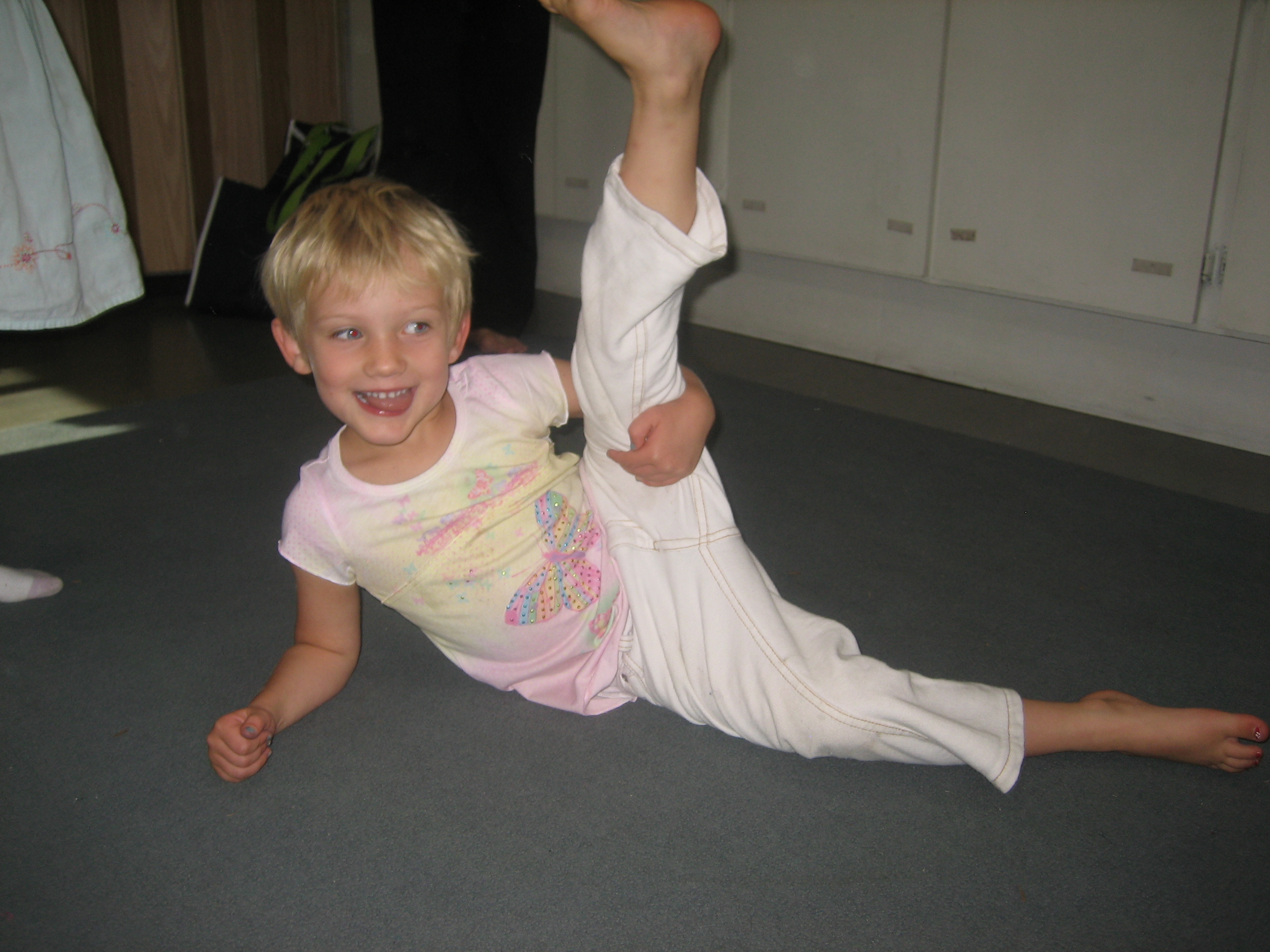
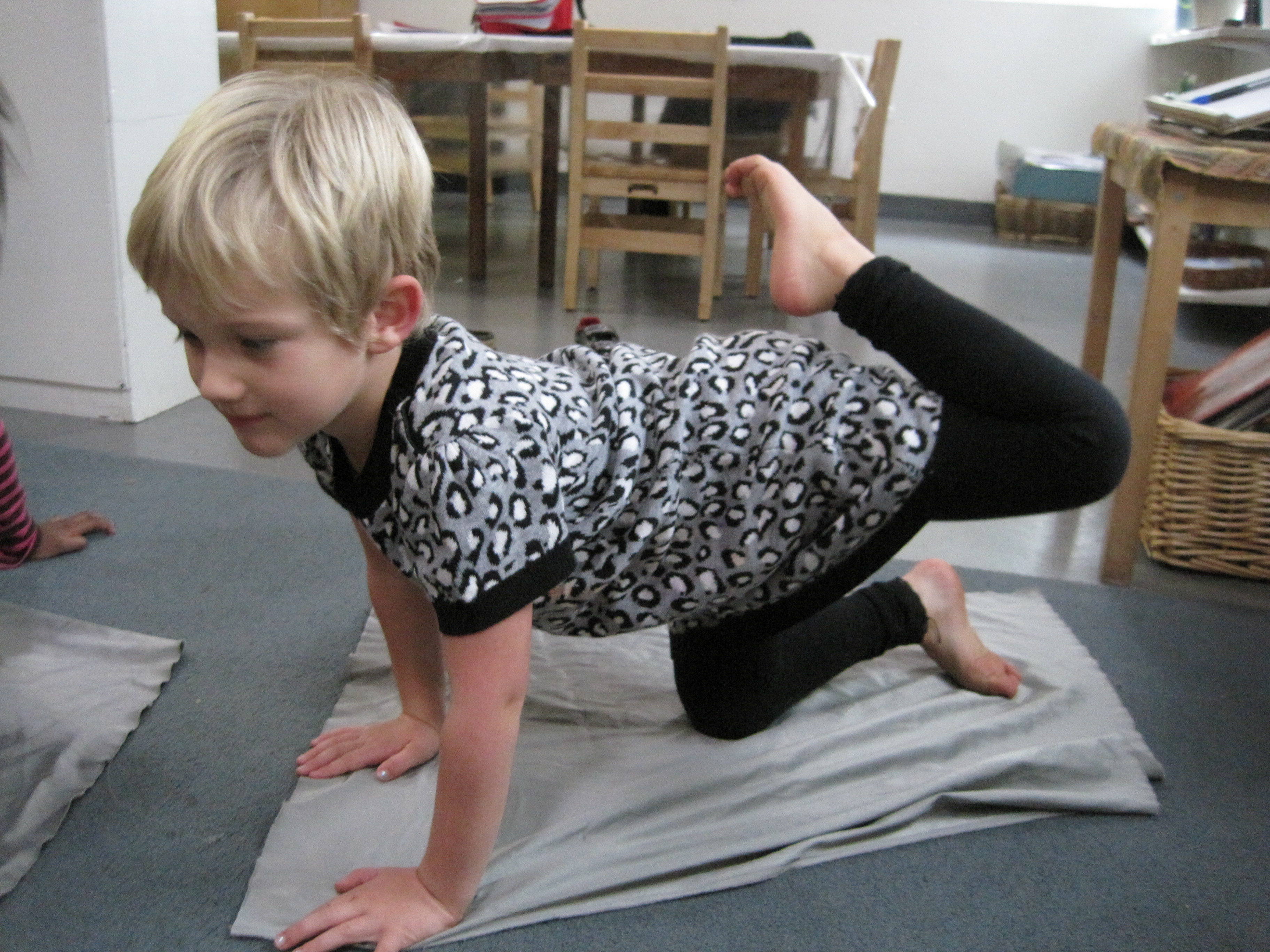
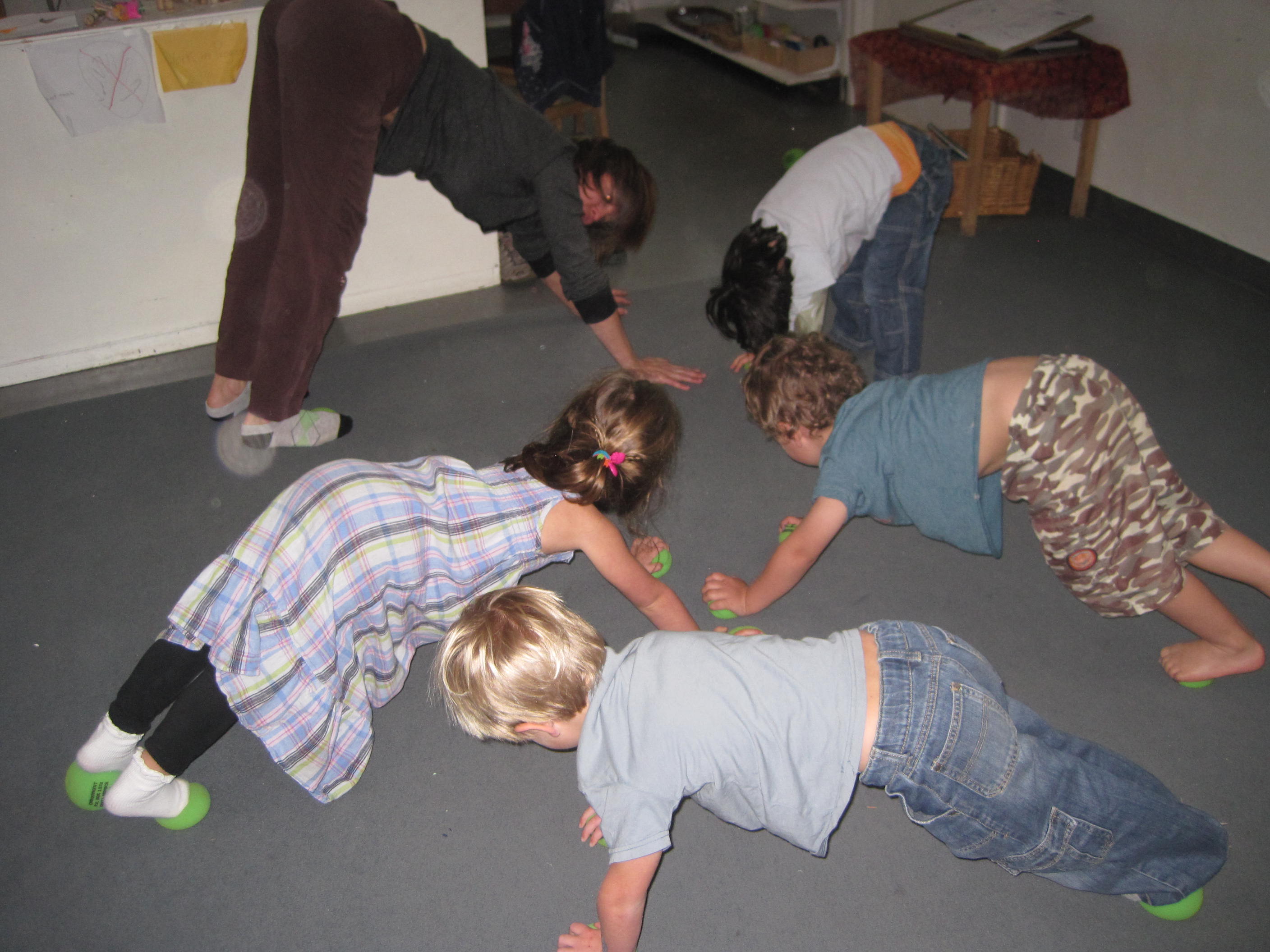
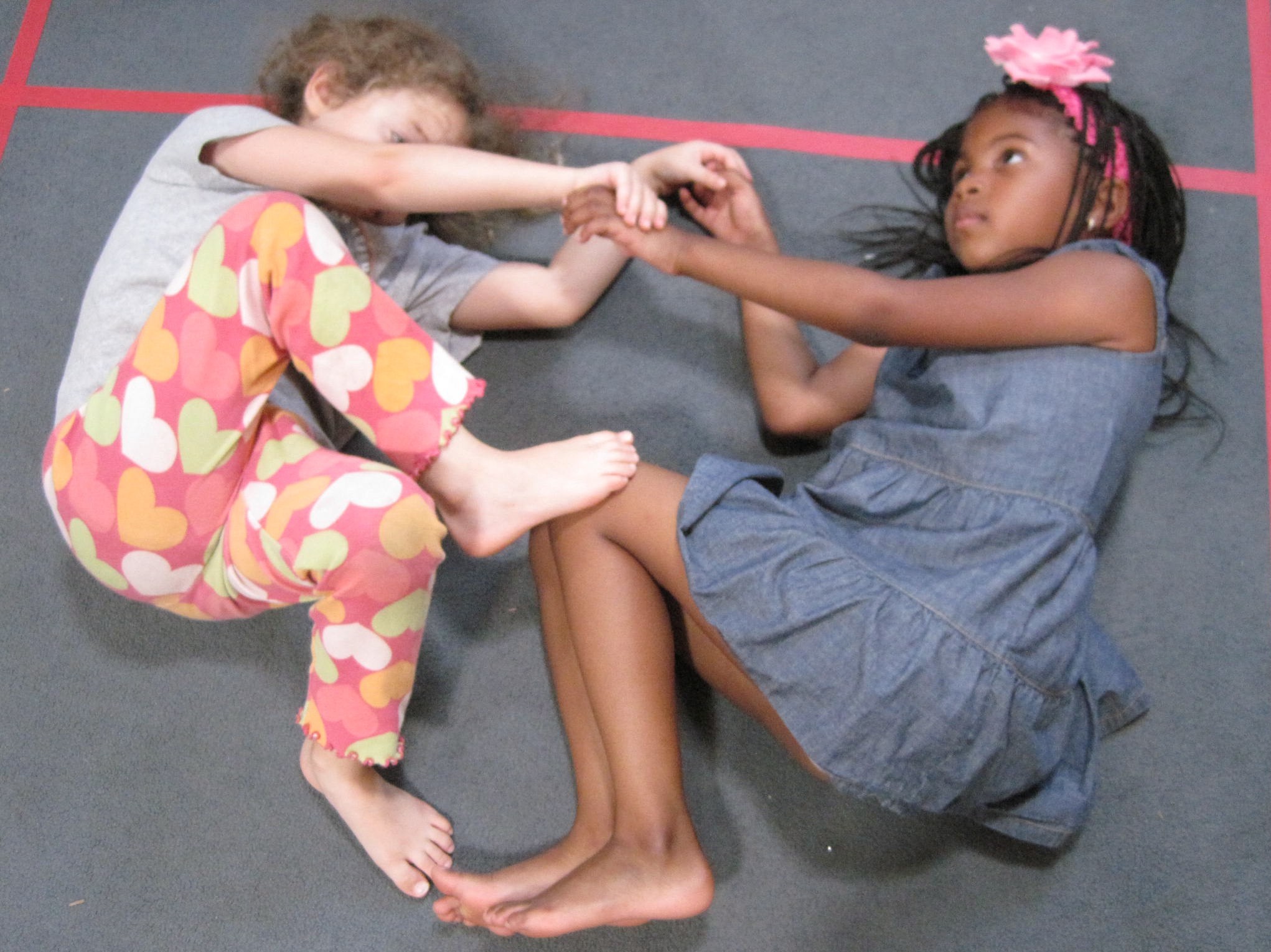
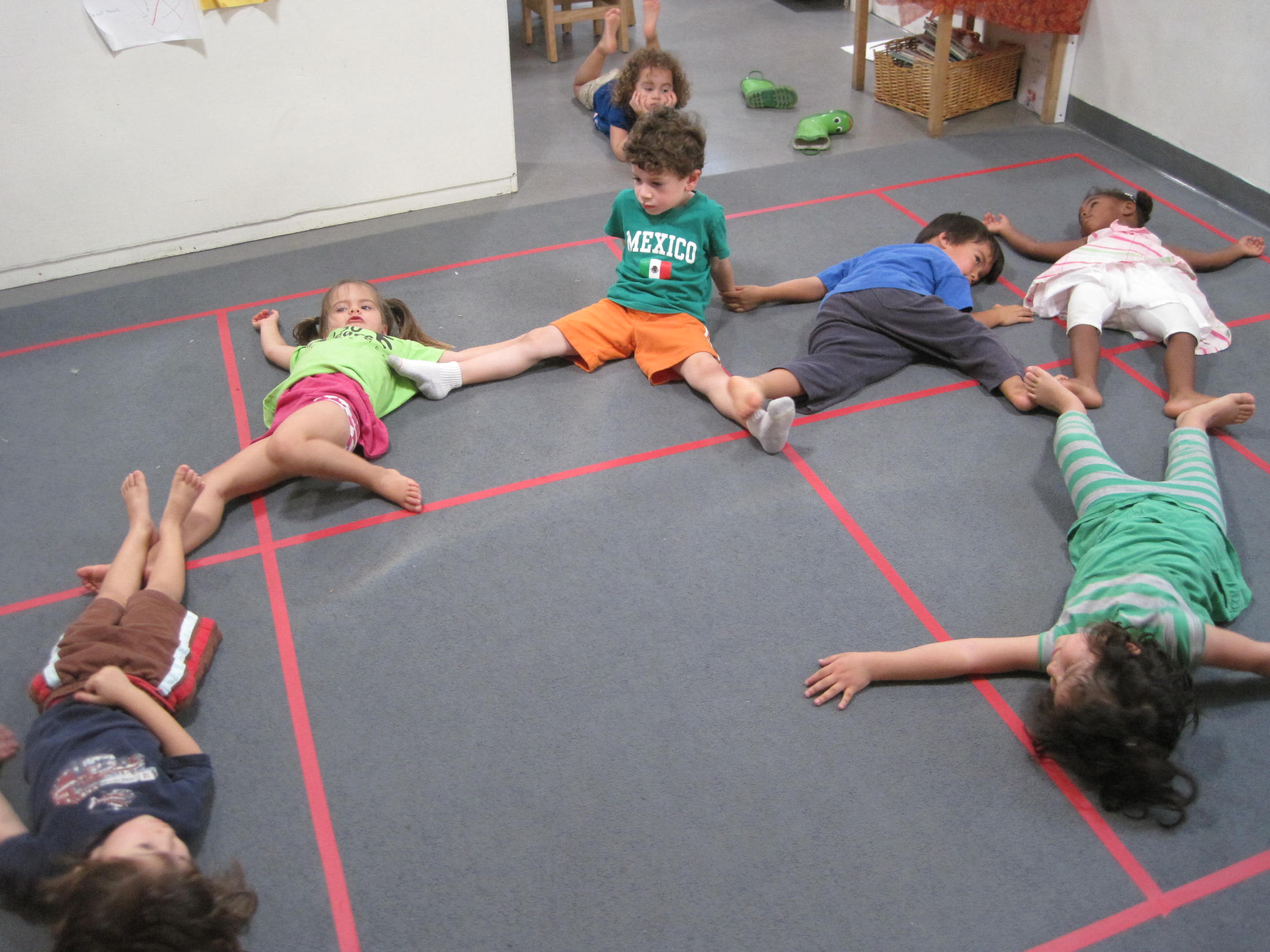
Sam and I put our heads together as we watched the children’s responses and made plans on how to help each group go deeper or feel more comfortable with movement as a tool for expression.
Our West Wingers, of course, come to the experience fresh. They are just learning about where they are in the world which is the perfect place to start asking questions like “Where are you on the floor?”, “Can you find your own place in the room?”, “Can you remember where you chose to start class?” Thinking about themselves in relation to the room helps guide their awareness of self.
Teacher Sam: “I noticed throughout the group that spacial awareness and finding their own space within a larger space was difficult. This skill is important for children to learn, for it affects how children play and function in a group.” The East Wing group had one more of experience with movement classes so we took the exploration to a deeper level. We started creating shapes with our bodies and connecting them in a sequence.
Shapes with our bodies combines the two basic concepts as children design space with their bodies. We created shapes, drew them, watched others making them, learned friends’ shapes and put the shapes together making choreography.
Learning sequence is a skill these children were ready to embrace. Yet each child is at a different place with this as Sam noticed: “One child was getting the sequence but wasn’t as fast at switching poses as the others. This stuck with me, because I felt that at one of her more successful moments, she felt unsuccessful.” Together Sam and I are strategizing how to give more time, space and encouragement to each child’s place of understanding and skill development. We want to give opportunities for the children to witness, copy, create, strategize and play in movement with each other as partners and individually. One of the games that has been successful in this realm is “tossing” and “catching” moves. Instead of a ball, we “throw” movement at each other and copy what we see. This works on memory skills along with having the children focus intently on each other, creates individualized movements, and shares friends’ ideas with the group. Next time we might work even more with partners to share and create movements together to create a direct focus on each other.
We are excited to bring in the next group for more body and space fun. During this session, we will work with the documentation committee to better share our process and the delightful ways the children create movement. -Ilaan Egeland Mazzini
2 comments for “Movement This Year”