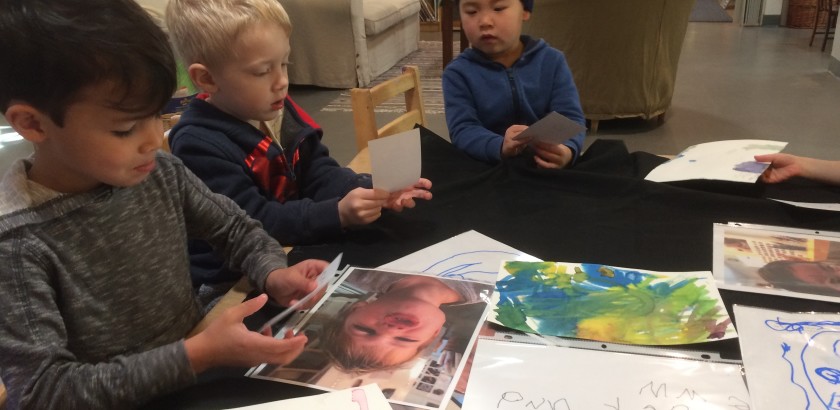
We’ve collected extensive artifacts in our quest to better understand non-verbal communication and emotions. Together we review photography, line drawings, keywords, watercolor paintings, and scenarios introduced by the children that have evoked or elicited a feeling. 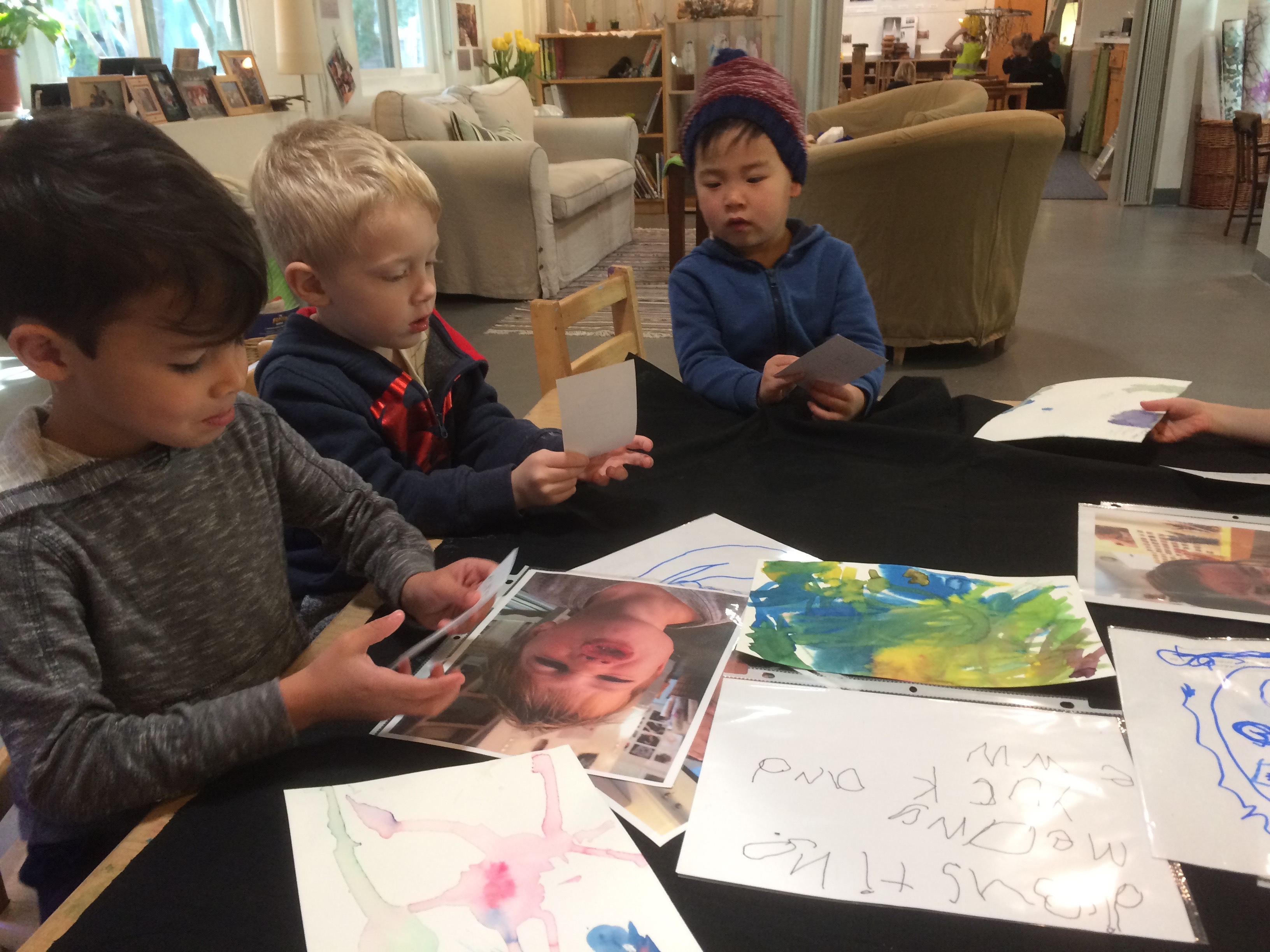
Jake creates a watercolor painting with a representation of a person experiencing an emotion. This is the first time a child in the West Wing has moved from abstract to representational work using watercolor.
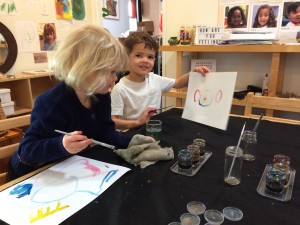
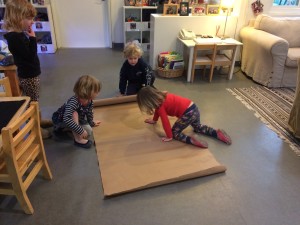
Now, as a teacher, I wonder how we can bring this back to ourselves and our understanding of our bodies. The teachers work together to formulate questions to invite the children to think about where emotions live in their bodies. Thinking about this whole body perspective, we find a large sheet of paper and trace Lily’s body.
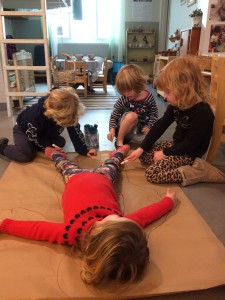
We then work to place the keywords within the body for a concrete experience with this abstract idea. We begin with a unanimous agreement as to where certain feelings live and then, we encountered differing opinions. For instance, “happy” is regarded as having a residence in the heart but when Agnes suggests that jealous also lives in the heart, Grey feels strongly that like anger, jealous is separate from happy and therefore must live in a separate part of the body.
Mason: Silly lives in your eyes.
Agnes: Frustrated lives in your foot. (stomps her foot on the ground.)
Lily: Angry lives inside… your hands! And happy lives in your tummy.
Grey: Happy lives in our heart, Lily. Happy doesn’t connect to angry. They are separate. Jack Skelington says that feelings live in your whole body.
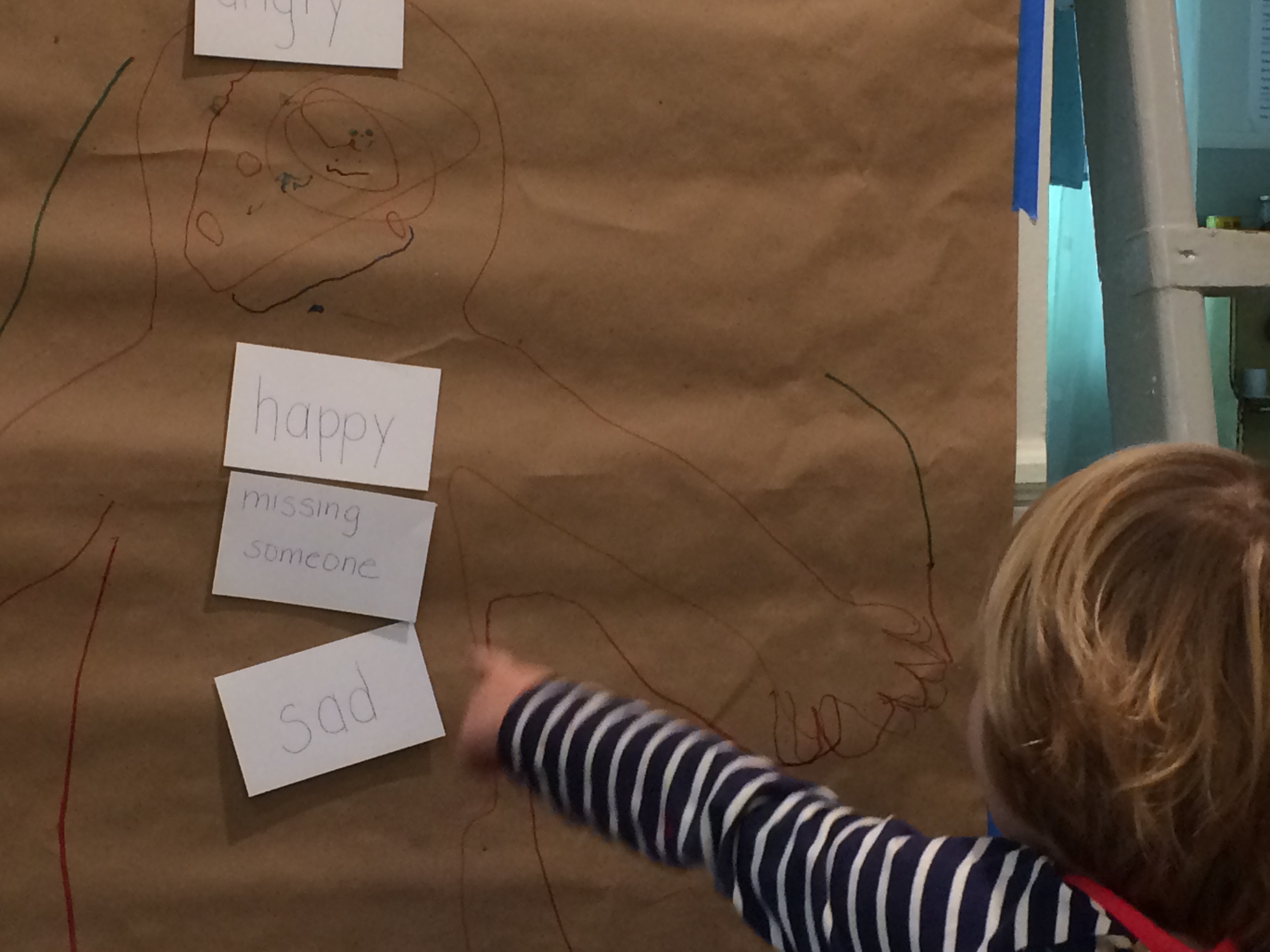
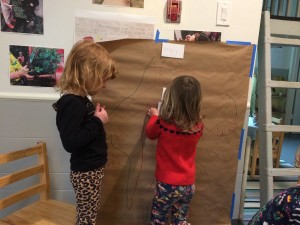
Estelle picks the emotion ‘quiet’. She approached the tracing of the body and held the word up to the throat then turned back to the group: Quiet doesn’t live here. It’s here (she says pointing to the back of her neck – introducing a 3-dimensional view of our body and how that might impact our placement).
Grey offers a solution: So you can put it here. (pointing to the neck)
Estelle: But it lives on the back!
This new development was taken back to the WW teacher meeting. We wondered how to support a 3-dimensional view of the body as we continue to explore this subject matter. We ordered a child-sized mannequin online and introduced it to the class. We are excited to see how this new tool will move our inquiry forward as we continue as a group to discuss where feelings live within our bodies. -Teacher Jessica