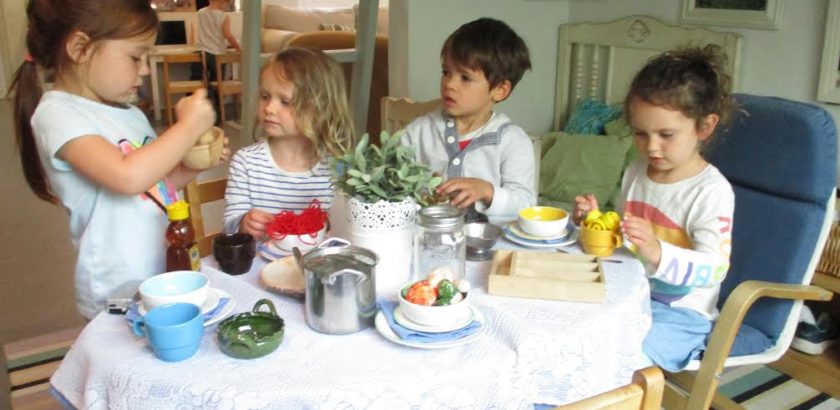
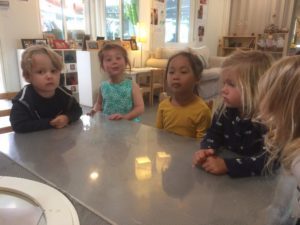
We have strong dramatic players in the West Wing and the teachers are making a conscientious effort to reflect on the children’s play with them to support the recognition that dramatic play is a form of storytelling. As we capture their play in words, we highlight the power of words to hold memories and emotions. These words act as a vehicle for sharing our stories at reflection meeting to expand the experience beyond the active players.
Watching the play in the House Area, I observe familiar themes and characters: The Big Bad Wolf and family members, a mom, sisters, and a baby. The Big Bad Wolf chases the family. As I watch, I write down details and plot points and questions to flesh out the characters when we gather to write down their story.
I wonder, “What does the Big Bad Wolf want? How does the family feel about his arrival? How does the wolf feel? Can the family communicate with the wolf? Does the wolf have a name?”
Once upon a time…
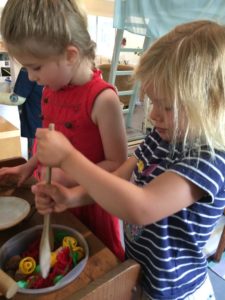
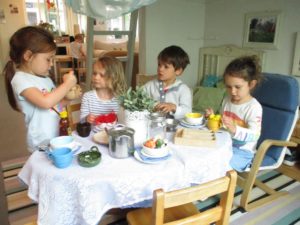
Liliana: Two sisters were making soup for everybody.
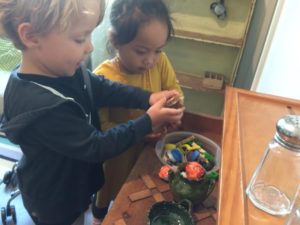
Fiona: But not the Big Bad Wolf!
Harrison: The Big Bad Wolf was angry and ready to eat the Momma.
Hayes: The family was scared!
Harrison: The wolf was going to find them!
Fiona: The sisters didn’t want the wolf to eat the soup or the Mom.
Ava: Or the baby!
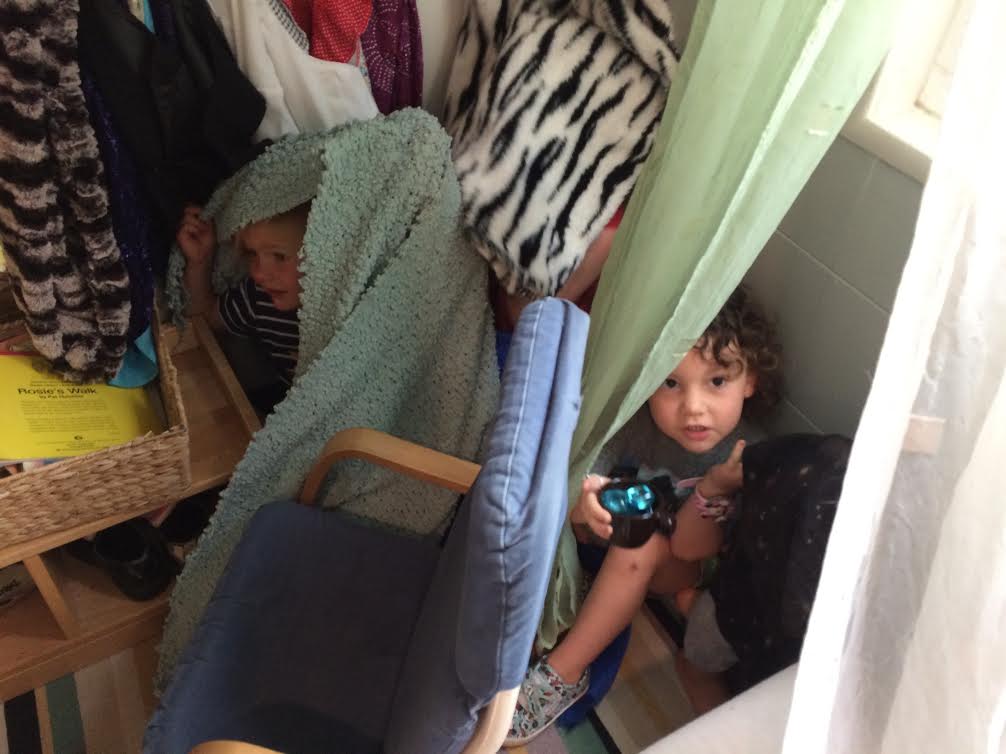
Liliana: They wanted the wolf to eat the really big “ginormous” bugs in the Mom’s garden.
Harrison: The wolf eats the bugs.
Hayes: And the Mom says, “You’re the best wolf ever!”
Harrison: Even though the wolf was angry, he felt happy all the way up to the bugs in his hair when the Mom said that.
Fiona: But the sisters said, “That’s disgusting!”
Ava: The family has a Mama Pig and she has three baby pigs.
Harrison: The wolf wanted to eat the pigs. The wolf ate one pig!
Ava: The Mama Pig was scared.
Fiona: It was the Mama Pig!
When writing the story, there were details that changed or that were expanded upon. We focused significant attention on the emotions each character was experiencing. When we neared the end of the story, the family was angry and the wolf was sad.
Hayes: The family pushes the big bad wolf away from their house.
Fiona: He goes to his cave.
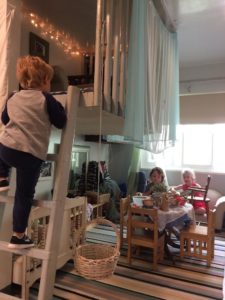
Harrison: The wolf feels sad.
Jessica: Is that how the story ends?
Hayes: I don’t know…
The group wasn’t sure how to proceed and repair the damaged relationship so we decided to seek support at reflection meeting. The larger group offered strategies to work toward repairing his relationship with the family. We made a plan to come back with another group and finish the story.
This practice of problem-solving to work through conflict, even though it is a conflict that arose in dramatic play, supports the children in identifying successful strategies for conflict resolution that they can implement if and when they encounter situations in the future. -Teacher Jessica