Lev sat at the clay counter rolling out the clay. After he had achieved a desired thickness he picked it up and pushed his index finger into the center of it creating a hole.
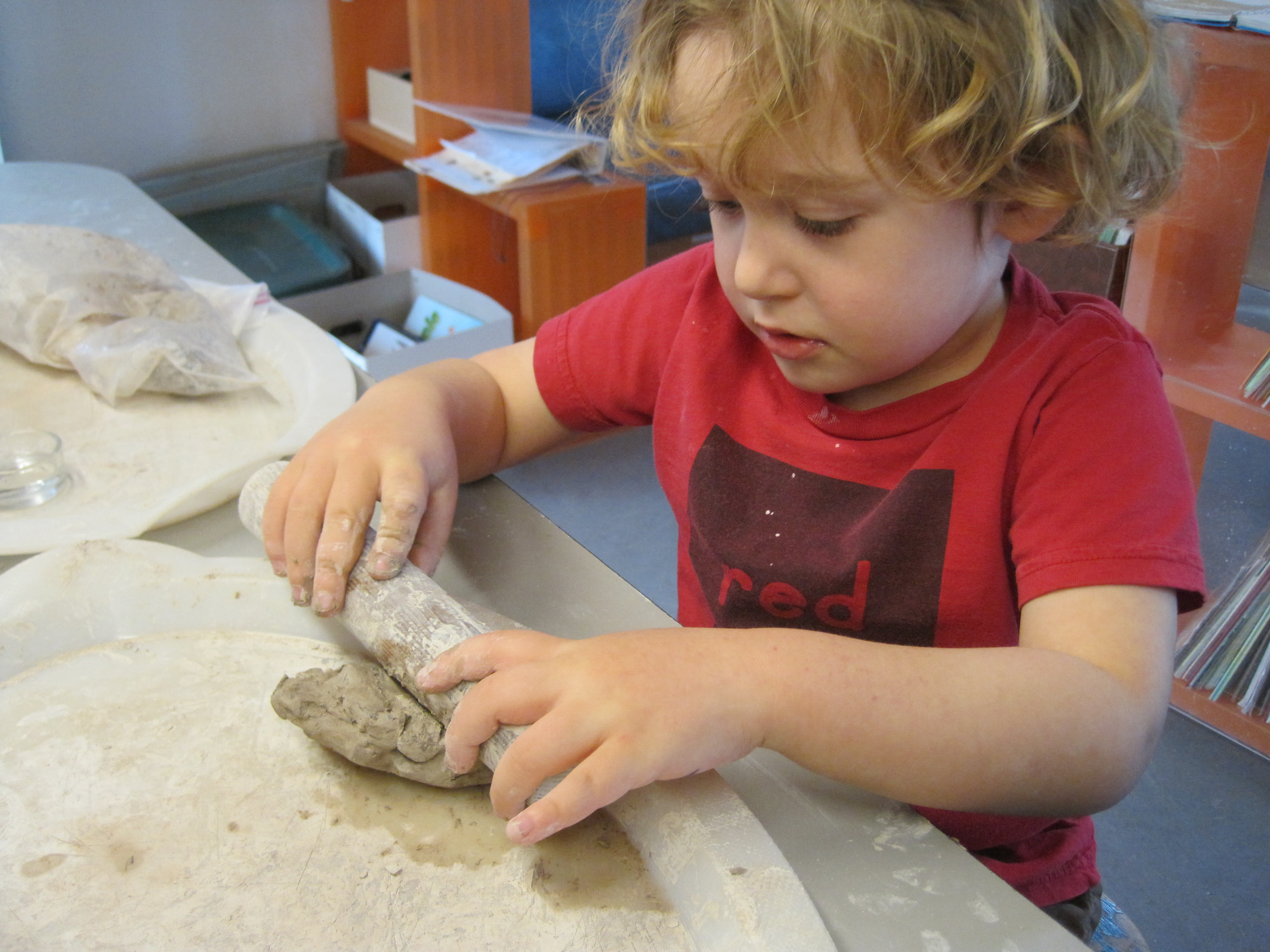
He finds Amy nearby watching and says, “I made a hole.”
While Amy admires his work, he holds it up in front of his face and says, “I can see you.”
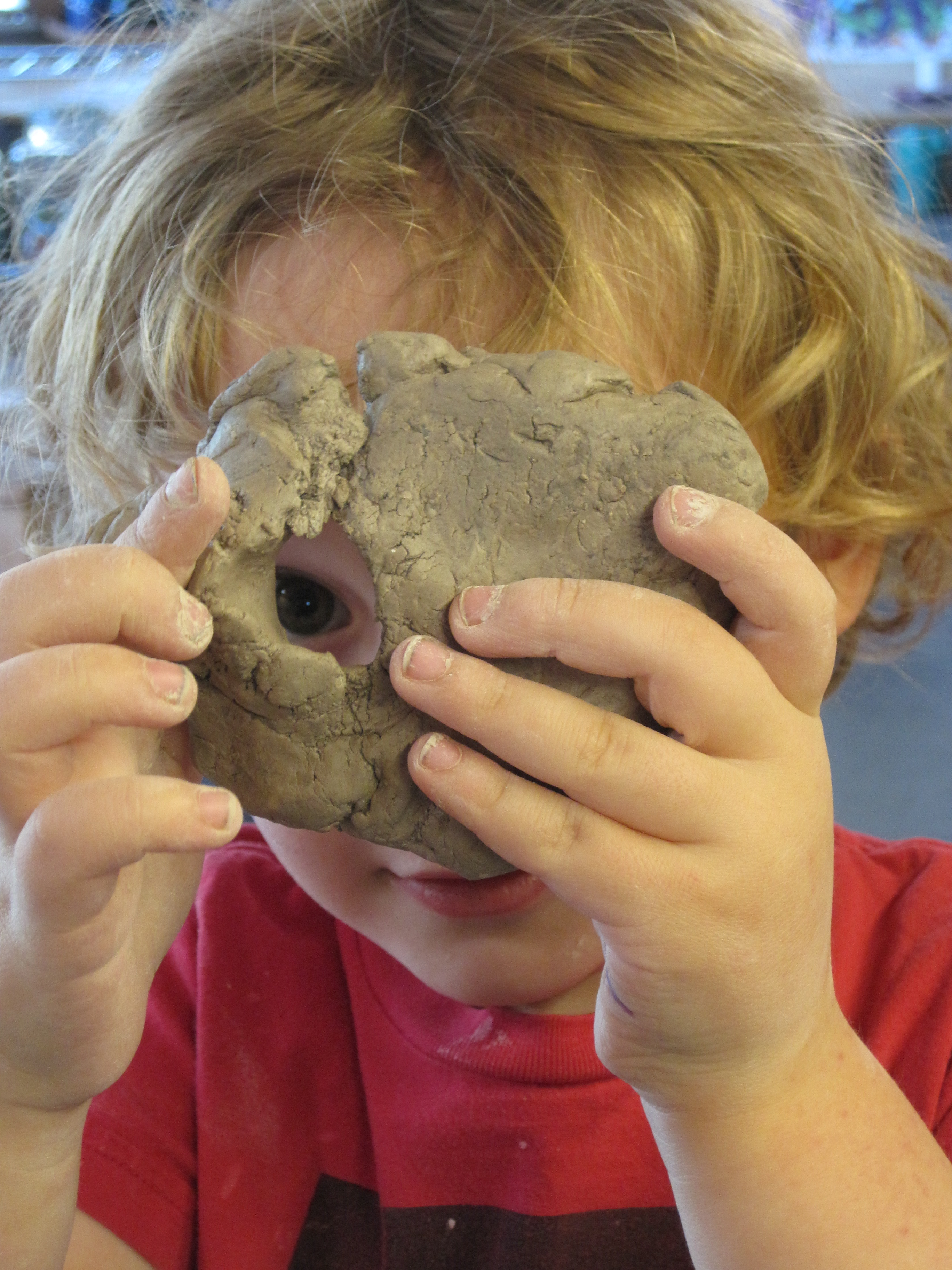
Amy replies, “I can see your eye.” Amy takes a photo of Lev’s eye through the hole and shows him. He examines the photo for a while.
“You can’t see my whole eye. I need a bigger hole.” He shoves his thumb into the hole making it bigger. 
Typically children who are in what Piaget calls the “Preoperational” stage of development (usually between 3-7) are strongly influenced by appearances and may already have developed theories such as “longer is more”.
Amy asked Lev, “Why did you choose your thumb to make the hole bigger? Why not this finger?” (Pointing to the middle one)
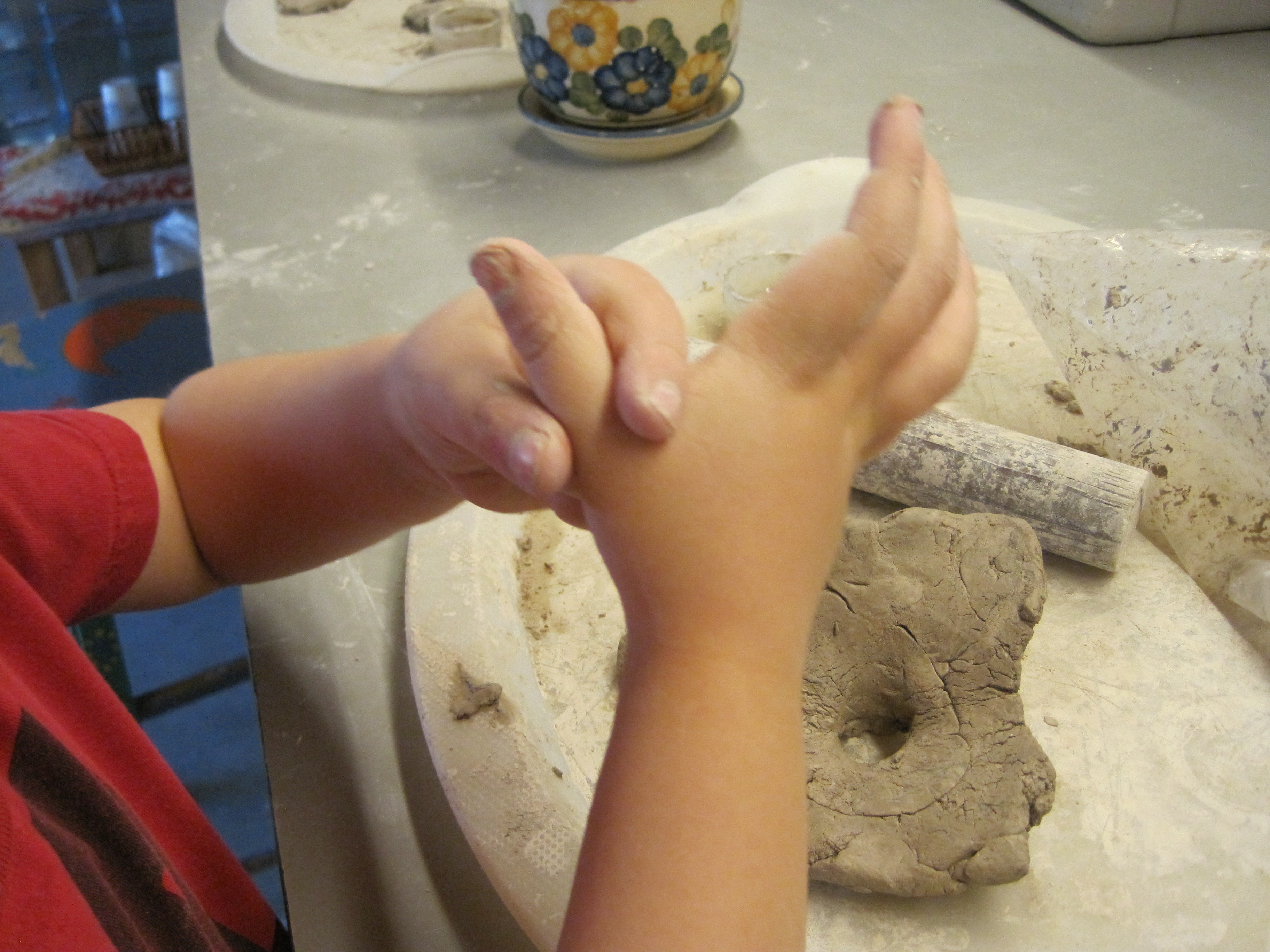
He quickly replied, “Because look it’s bigger!” He wraps the thumb and pointer from his other hand around the base of his thumb and turns them slowly. “This one makes the bigger hole.”
There are no hard and fast rules to say when a child will move from one stage of development to another, especially when each child moves at their own pace and they go in and out of stages so fluidly. This is only one portion of the Preoperational Stage and its exciting to follow the children’s progression as they test their theories in various materials at school.
Here is a conservation activity that parents can do with their children to demonstrate the conservation concept:
You will need two equal balls of clay or play dough, each a size that can readily be handled by a child’s palm. Handle them yourself, rounding them into a ball, and then hand them to the child, asking:
Is there the same amount of clay in each of these balls? Are they the same?
If the child agrees that they are the same, proceed. If not, say to the child: make them the same. The child may want to squish them a little or may actually shift some away from one ball to the other. That’s quite all right. When he’s done, ask him again:
Is there the same amount of clay in each of these balls? Are they the same?
Once he has agreed that they are the same, say to the child:
Now I’m going to squash this one into a pancake.
Squash one of the two balls into a pancake and place the two objects – the remaining ball and the pancake – in front of the child. Read the following questions exactly as written and record precisely what the child says:
1. Is there the same amount of clay in this one (pointing to the ball) as there is in this one (pointing to the pancake)?
2. Depending on the child’s answer to the first question, follow up by asking, Why is there more here? Or why are they the same?
Several development books are available to parents from the NSW lending library. See Kris or Roleen to ‘check one out.’