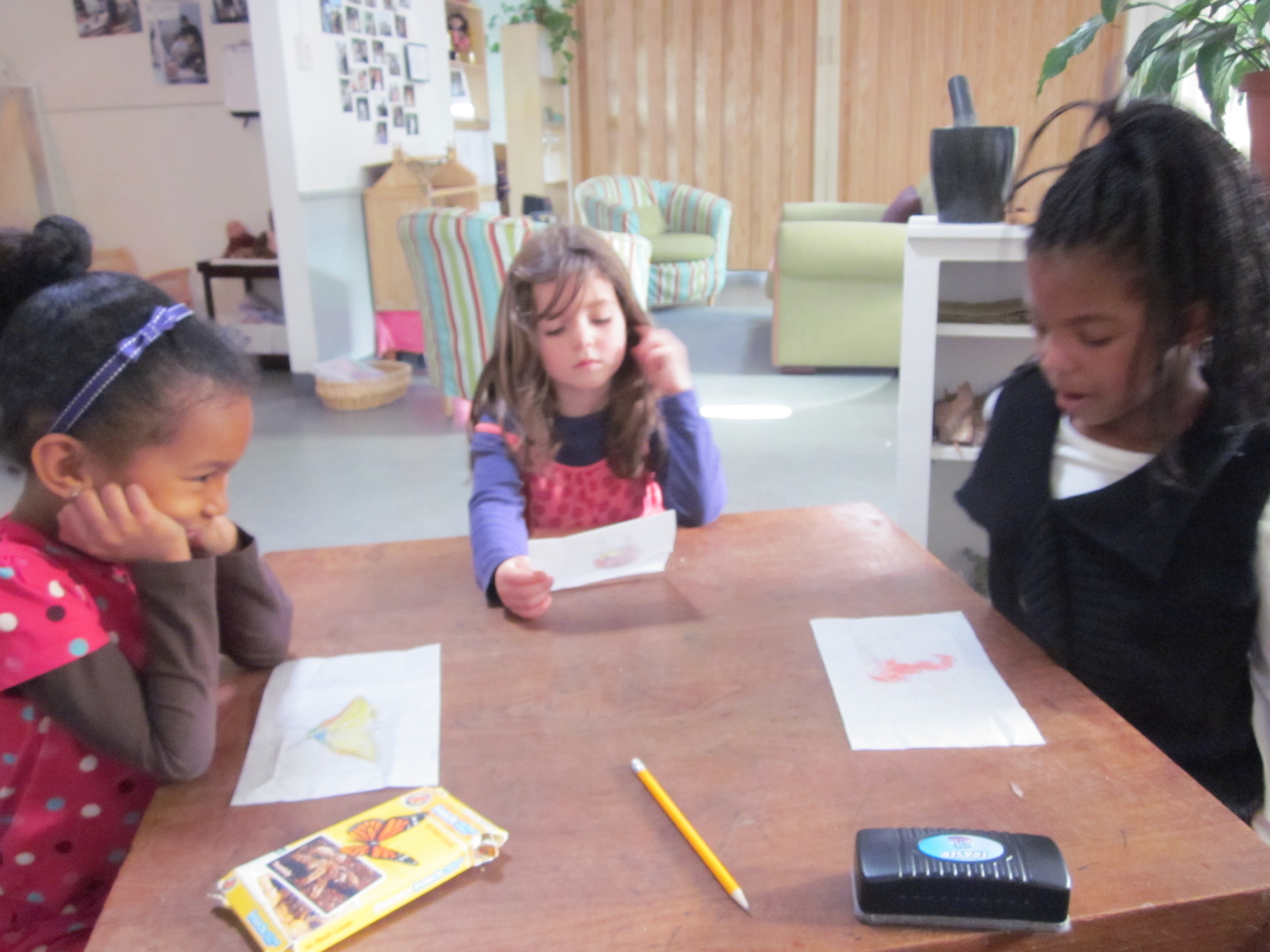
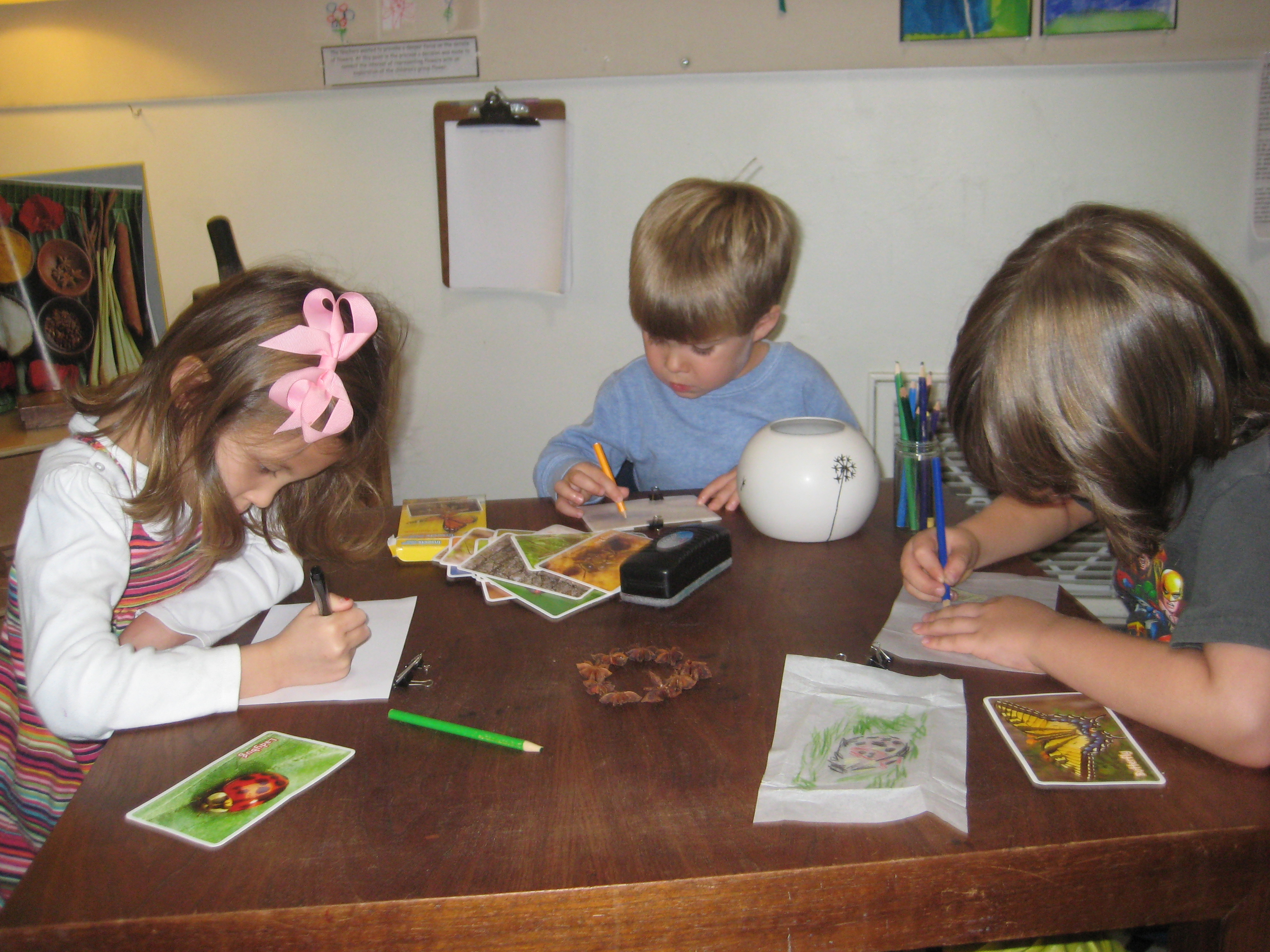
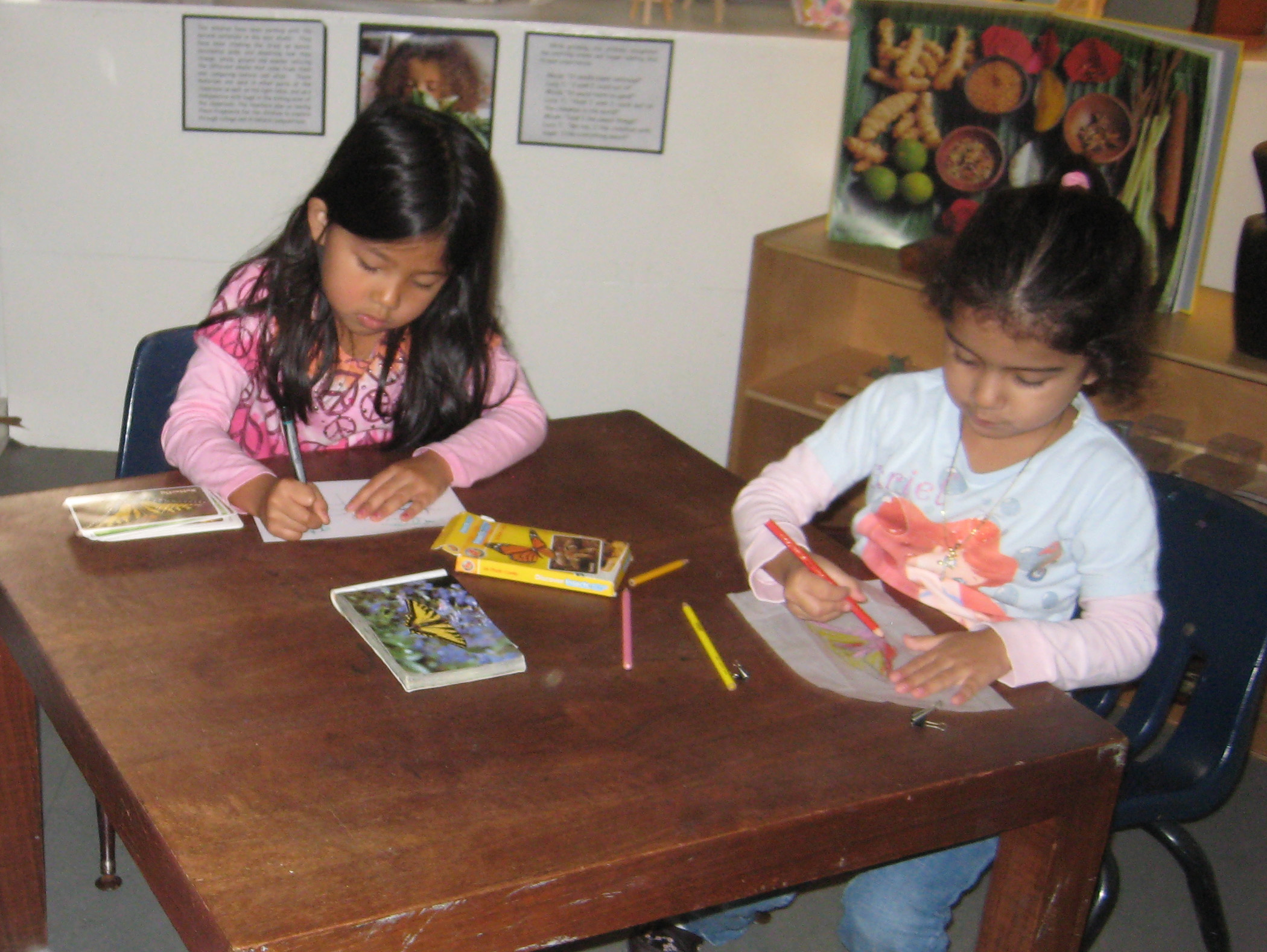
 The teachers have observed that the children continue to have a strong connection to bugs. At the Sensory Table in the East Wing, drawing tools and different types of paper are examples of many resources available to express their ideas and new knowledge as researchers. The children’s drawings of insects are a blend of what is noticed with what is understood or important to say. With this in consideration the teachers ask the children to talk about their drawings.
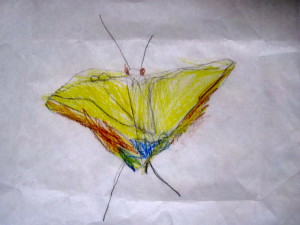
Lucy T: Referring to a butterfly she drew. “They have antennas because I think they are their ears but they don’t hear too good because they don’t have big ears to hear loud stuff.”
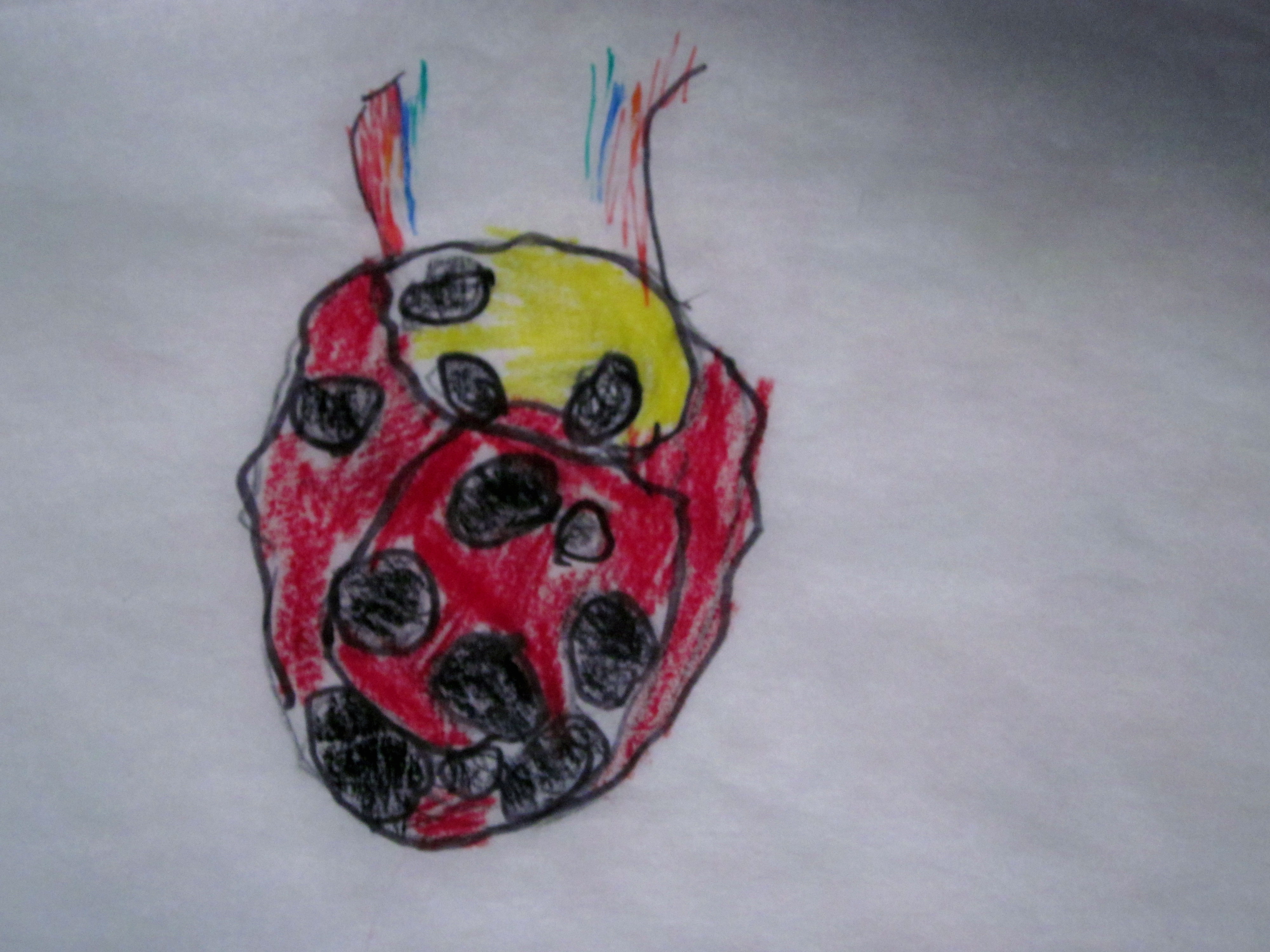
Devin: “I worked two days. I saw the shape and I made it with the pencil (reflecting on her hard work and tracing of a lady bug). Ladybugs have antennas to help see. They need to see so they don’t bump into anything.”
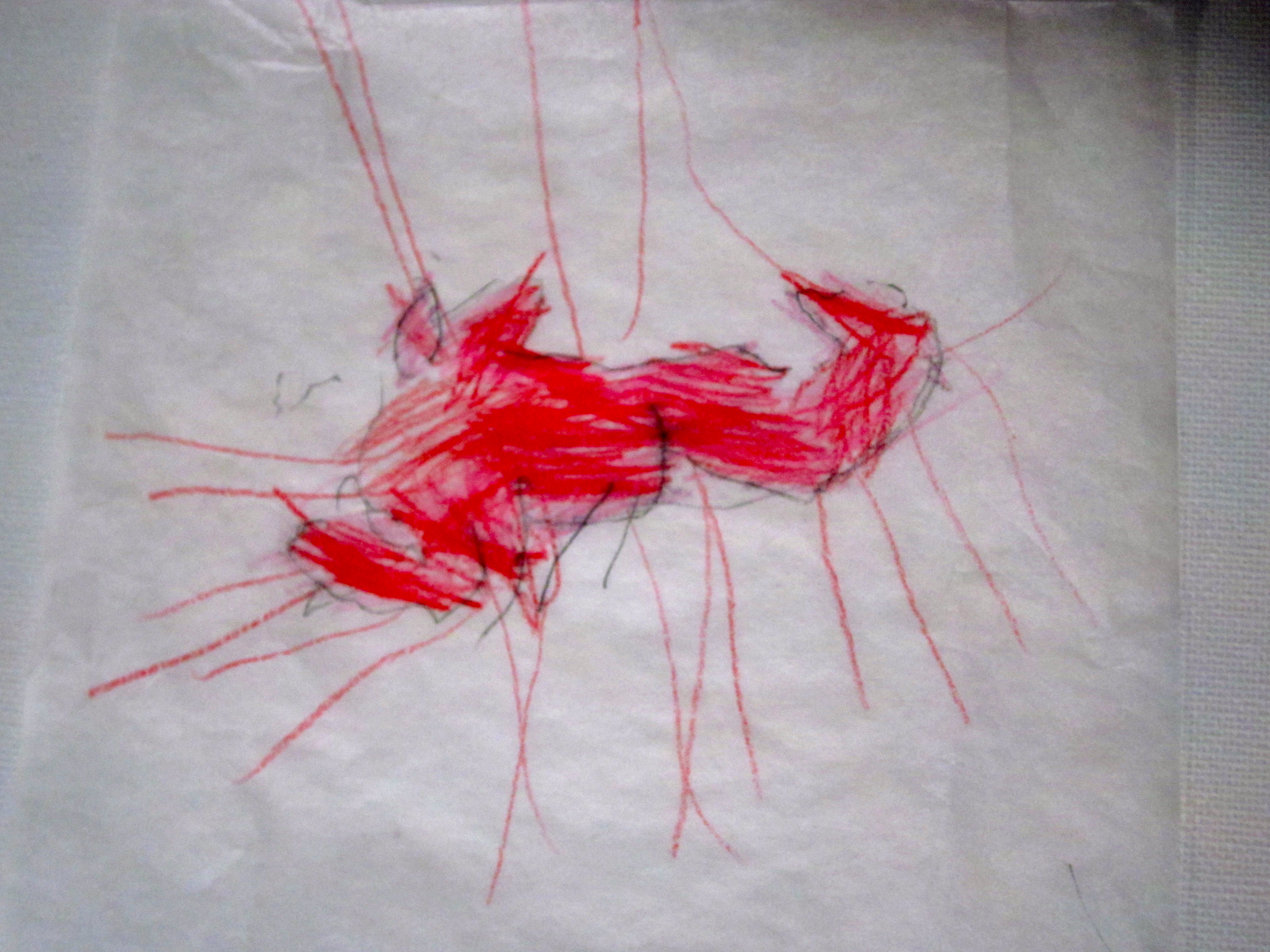
Leah: “I draw a scorpion because I like scorpions. They use their tail to cut like a knife so they can cut their food and eat it.”
Alejandro: “We can’t hear spiders because they are so little. They make little sounds.”
Another resource the children are drawn to are the insect reference cards. After using them to support their ideas, the teacher drew their attention to the back of the reference cards.
Teacher Silvana: “Did you know that there is information on the back of the cards? What would you like to know? It has information on size, color, where they live, what they eat, life cycle?”
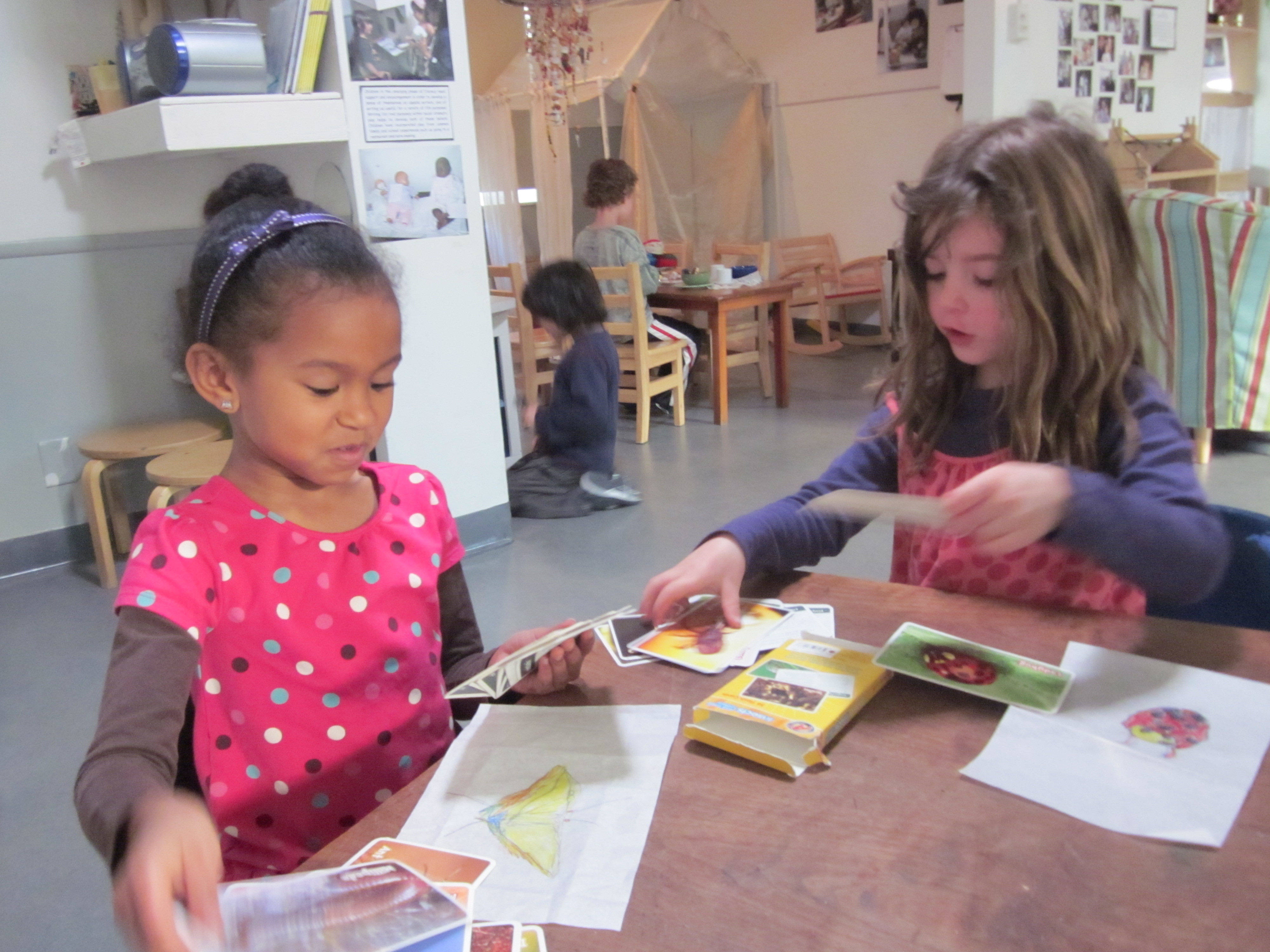
Laurel: “Yea, yea, yea, what they eat, what they eat!”
Leah: “Where they live!”
Devin: “Where they eat and where they live!”
“Considering children’s theories requires more than a careful transcription of what they say and do. Teachers have to dig. We have to abstract the meaning of elliptical sentences, aborted movements, or a confusing explanation, request, or description. Children are competent learners, but as teachers, we have to slow down, carefully observe, and study our documented observations in order to understand the ideas that they are attempting to convey.” –George Forman & Ellen Hall , ECRP vol 7.
After reflecting on the children’s theories and in consideration of our classroom intention to support receptive communication, the teachers intend to draw out the children’s focus to inquire how bugs use their senses and their habitats. As experiences accumulate, the teachers will continue to support the children in sharing and listening to each other’s observations about insects and continue to support the representation of their theories by offering other materials.