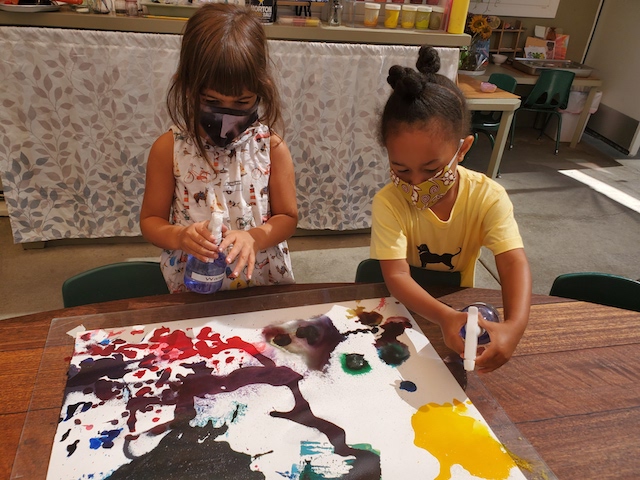
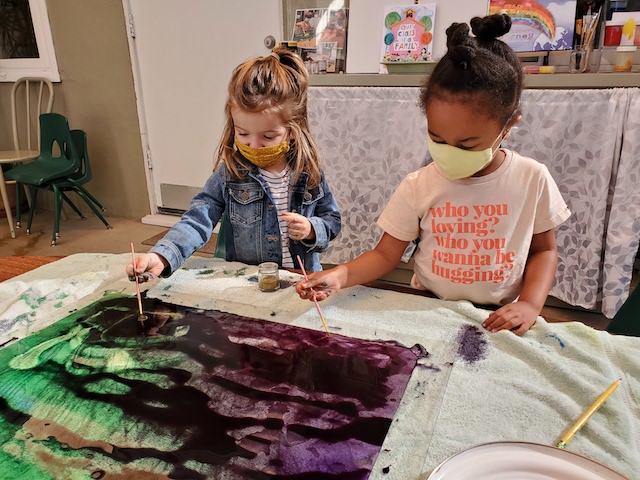
Color is all around us. It adds emotion to our lives and connects us to the world. Look around and, for a moment, imagine a world without color. As humans, color helps us categorize and make meaning and order in our lives. We feel that this categorizing and order needs to be more deeply examined. We began our research with the grey sky outside our window. Is this a clue to what the weather might be? Dark red strawberries might look tastier than a pink strawberry. Color can also be used to describe emotions. We can be red hot, feeling blue, or green with envy.
Recognizing children’s particular interest in color, we began with an experience that brings their observational, mathematical, and verbal tools into play.
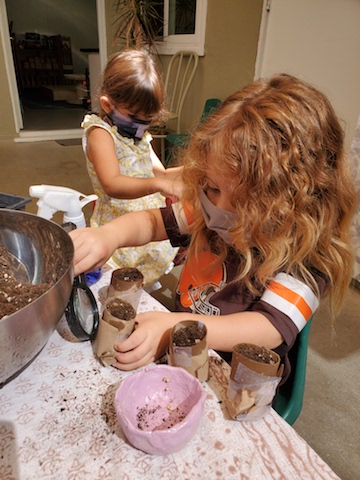
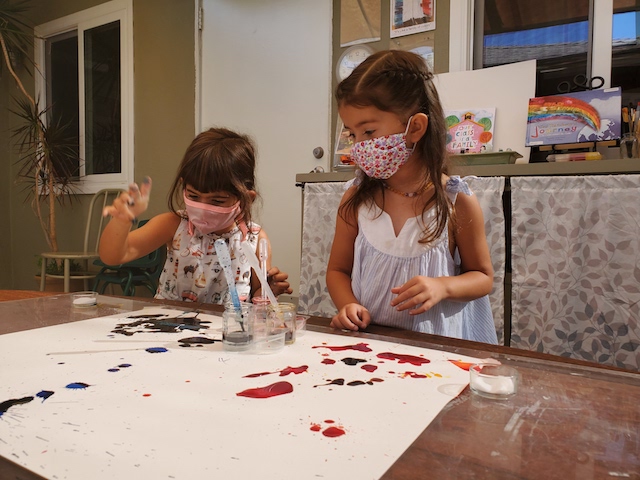
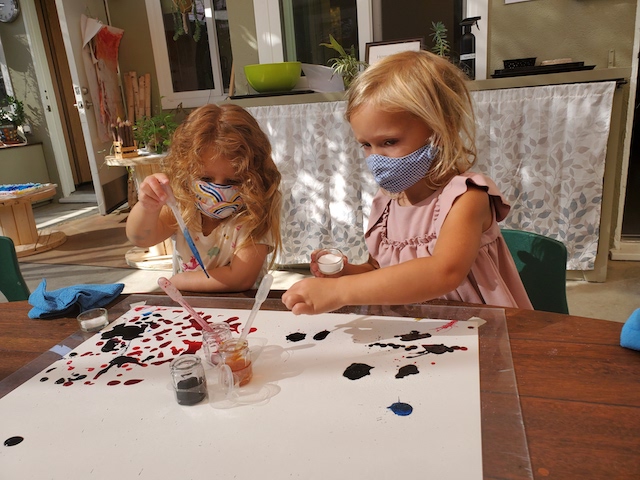
Colored water is introduced as one of our first opportunities. This year, our outside spaces are set up with water, liquid food coloring, and droppers which offers the children a method to create multiple hues and values of color in an open-ended way. As the children pour, squeeze, combine, and measure, they are strengthening their fine motor skills as well as developing a strong connection with scientific and mathematical concepts.


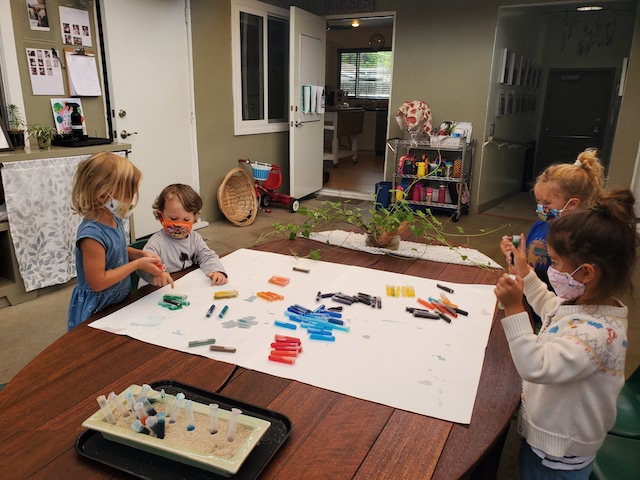
The children have been exploring color recipes and transferring them to small vials. As we collect the creations in the center of the table, Dot makes an observation;
Dot: Look! It’s a family of colors.
Cindy: All the colors together remind you of a family.
Oona, Jack, and Wiley agree and the group wants to make the family bigger.
Dot: Look, look, look. Yellow like the sun.
Wiley: I’ll make dark pink.
Dot: I’m trying to build a color. A new recipe.
Jack, passing a vial to Wiley: Here, Wiley. Make the pink.

As I listened, I recognized this as a moment that the children really connected to each other. A family is something they all have in common. They were excited on this day and the children filled multiple vials to make a big family. The next day, the idea was shared with another group and they too wanted to add to the family. The container became full and vials began to fall out onto the table. I felt this was a good time to revisit the idea of a family and to consider how a family of colors might want to live at our school. We made a plan to meet with a small group to gather ideas.

Cindy: I remember the idea that these colors are a family. There are so many of them and they are falling out of the tray. How would they like to live here?
Oona: Well, a family of colors is called a rainbow.
Cindy: How would we make the vials into a rainbow?
Dot: I know, with all the colors.
Oona: Yes, with all the colors. Green and. . .
Leo: . . .and purple
Dot, Oona, and Leo begin to collect colors from the center tray.
They are holding them tight in their hands.
Wiley: It need red. I want red (Dot passes a red to him) and orange.
I recognize that the group is beginning to become possessive with their collections and decided to focus back on the rainbow family by taking the work to the large table. At the table, the children spread the vials in the area in front of them.

Wiley, holding a selection in his hands: I like these ones. I am going to take them home. Cindy, can I take them home? I want to show my mommy.
Cindy: Remember the whole group created these colors? We are calling them the rainbow family. When I look at the colors now, I see that they are all separated.
Dot: We really like them. I’m keeping all of these. (Wrapping her arms around a large pile of vials).
Cindy: I wonder how we can show your families The Rainbow Family.
Leo: I know, we need to put all of the blue together.
Oona: And the green.
Wiley: I like pink. Let’s collect the pink together.
Dot: Yes, the rainbow will begin with pink.

The group appeared to share the excitement as they supported each other in color searching around the table. Once the colors were sorted, Wiley reiterated: I really wanted to take them home.
Dot: Me too.
Cindy: It sounds like you really want to share this experience with your families. All the Cilantros worked to create these colors and they are a part of our community discoveries. I wonder how we can keep them at school and still share them with your parents?
Leo: We can hang them there. He points to the plexi dividing the space between the Dandelion and the Cilantro groups.
Dot: By the door. Our parents come to the door. She points to the door in our hallway.
The group agrees and Wiley adds: But we need string or a rope or something. Maybe there is some hiding in the school?
Wiley: I think our names should go on top of the rainbow.
Oona: That’s good.
Dot: I agree.
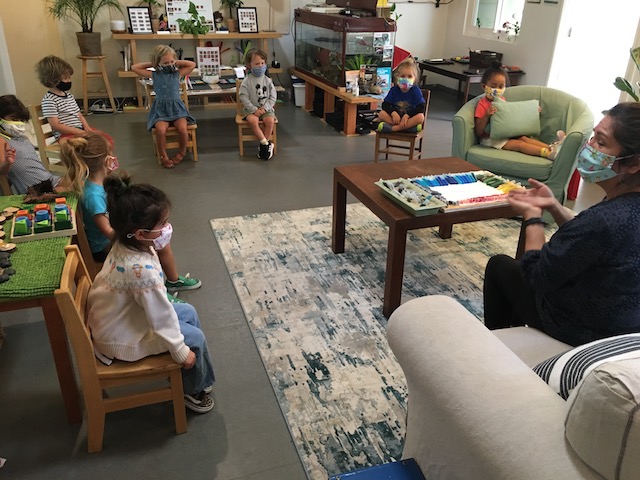
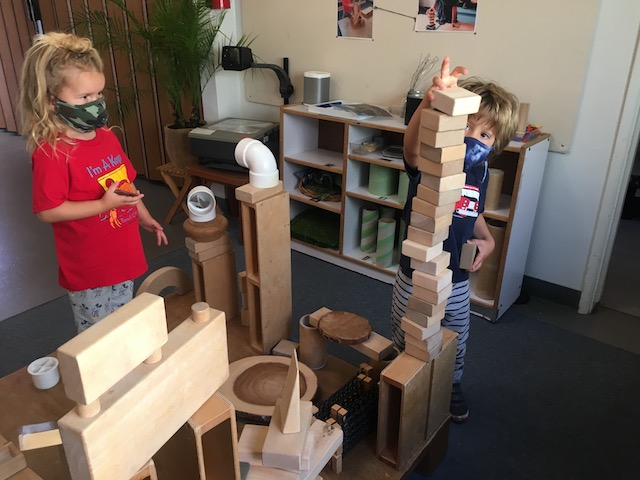
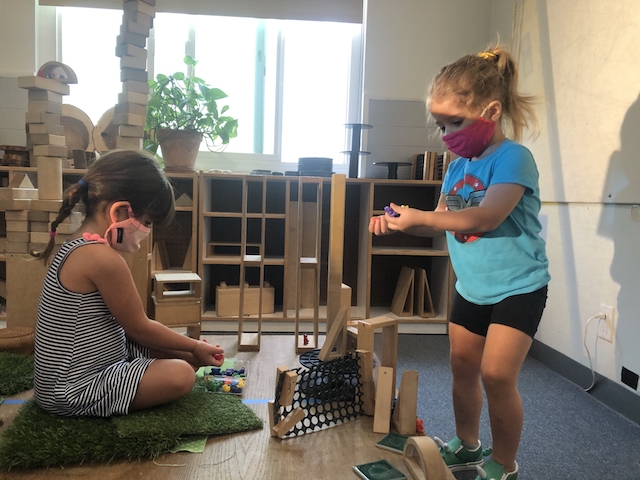
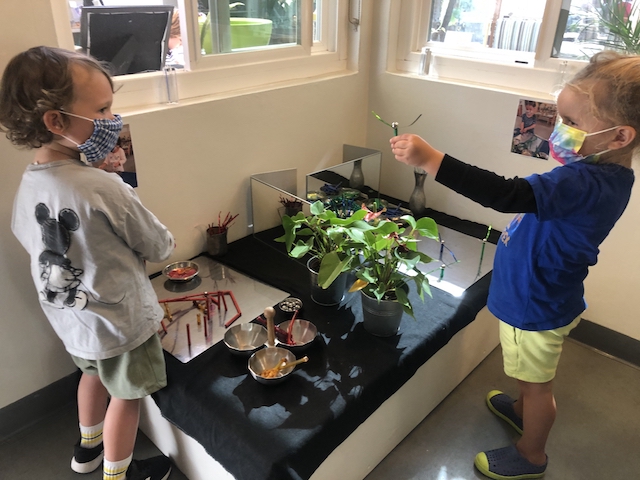
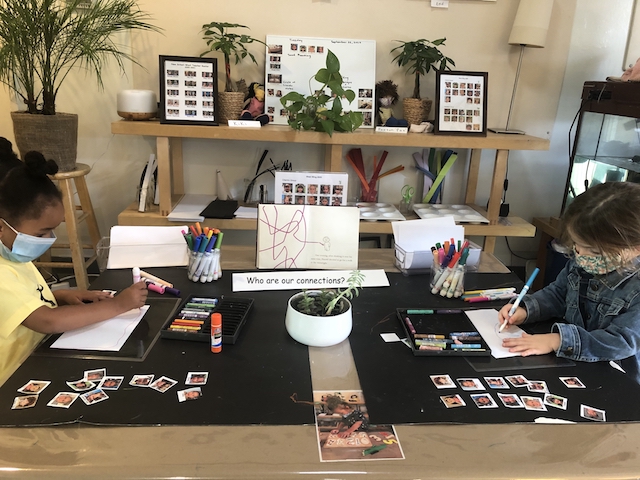
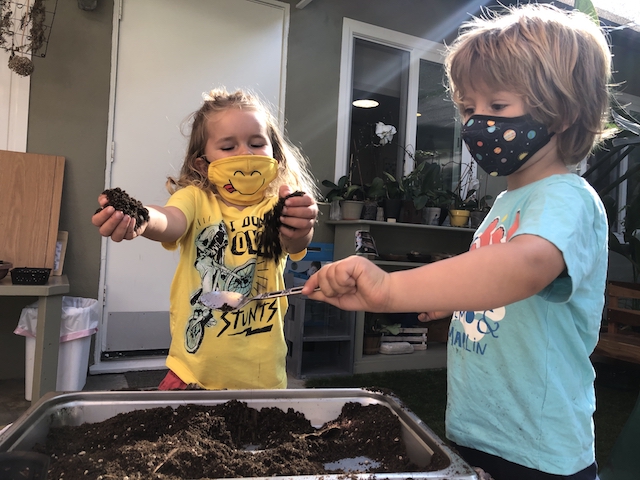
The desire to share enjoyable moments with people you love is part of our human nature. This group of children is clear that they want to share with the people who are important to them. As teachers, we value a strong home to school connection and seek new ways to share the work. We are wondering how these children might connect color with their life experiences and how we can influence those experiences to make connections with one another and as a diverse group?
2 comments for “WW Color Explorations”