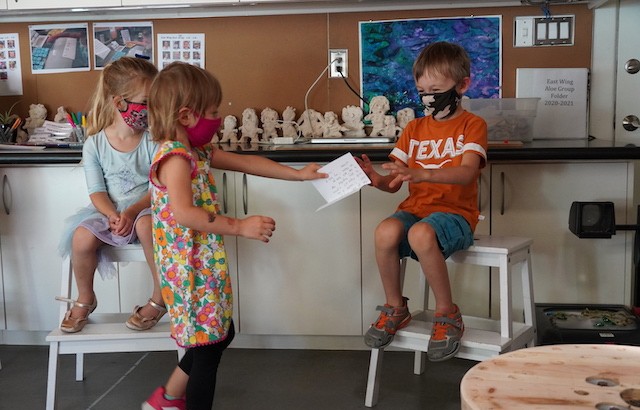
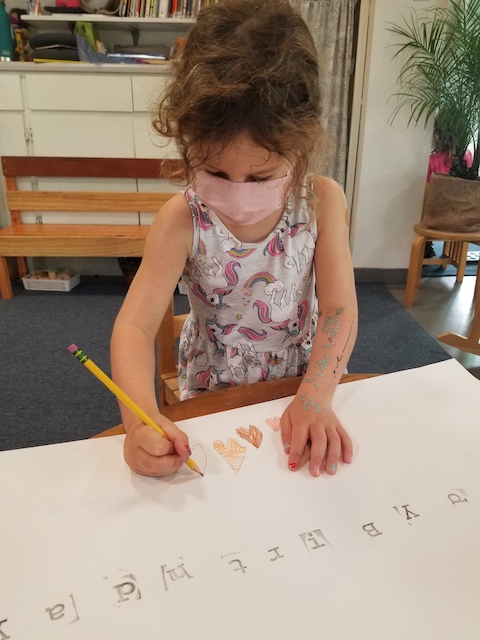
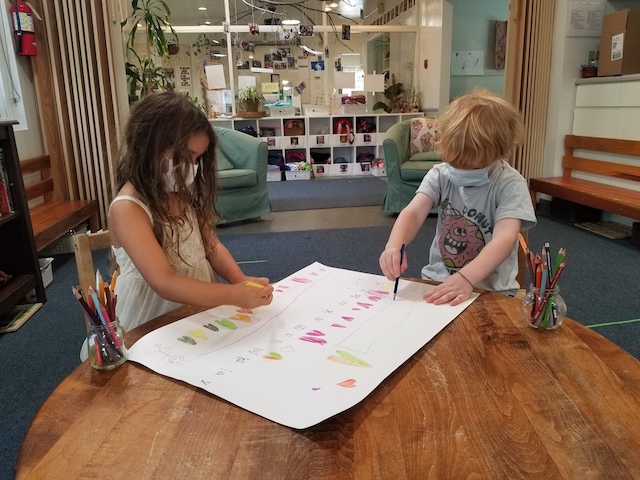
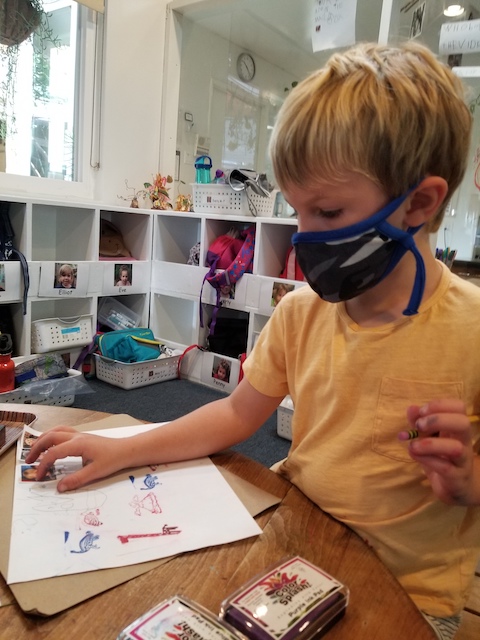
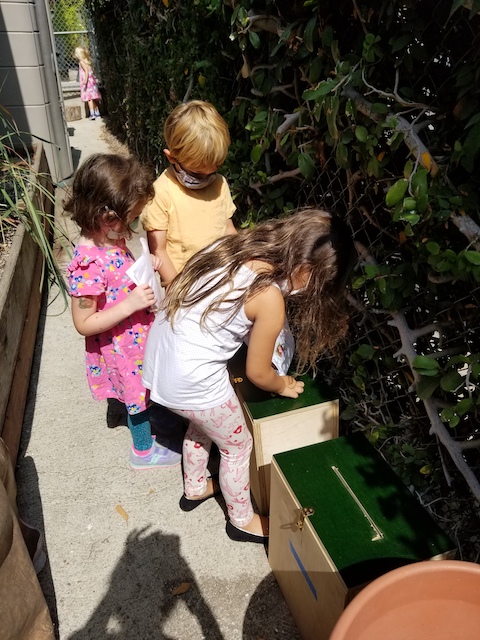
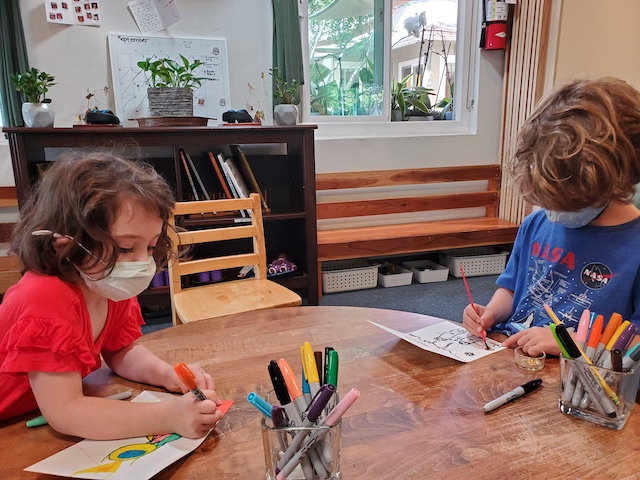
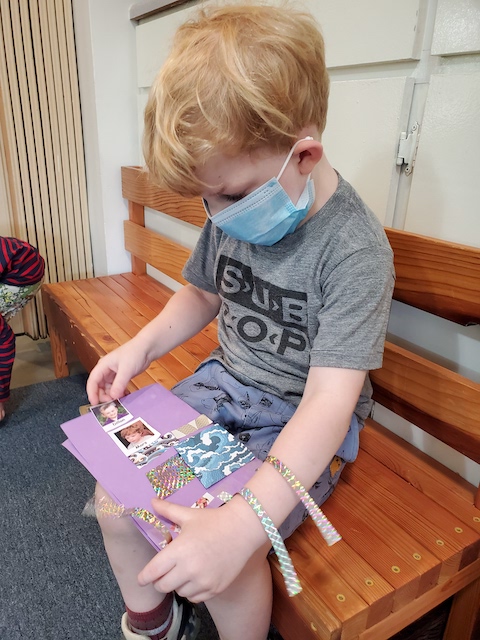
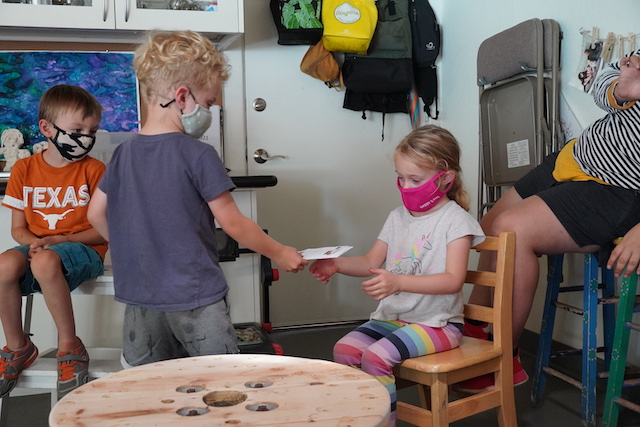
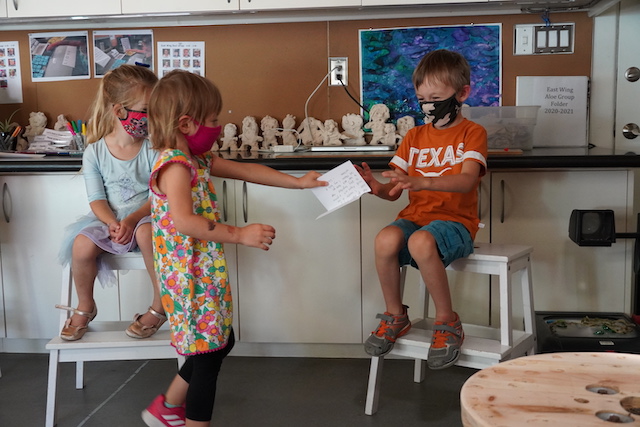
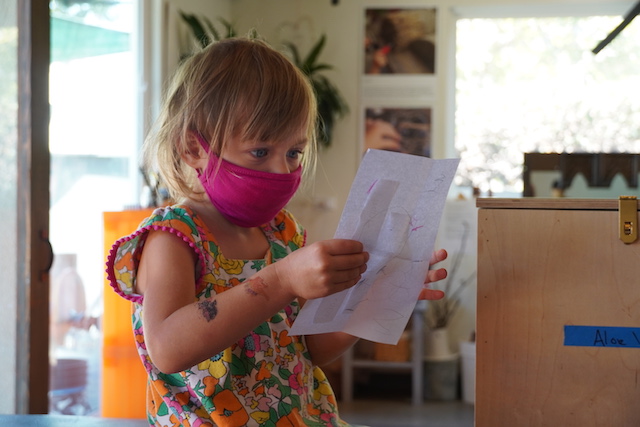
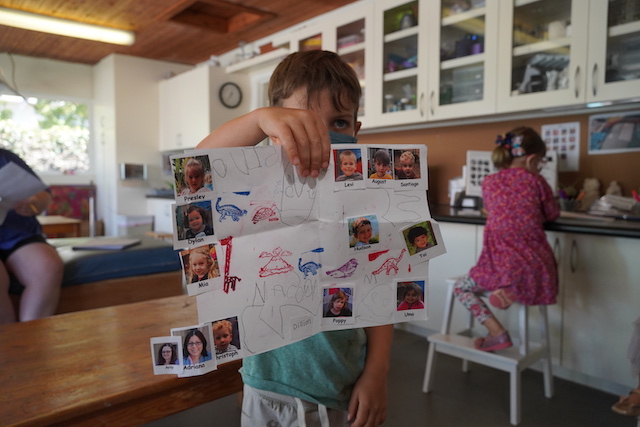
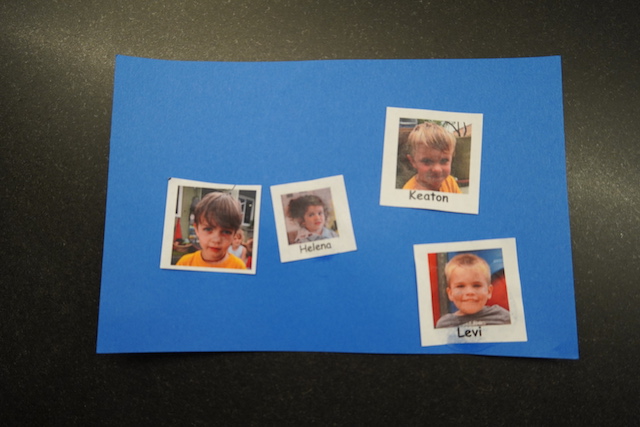
With messages in hand, the children in the Aloe Vera and Basil groups eagerly opened their mail to discover what lived inside. Some were filled with words, others included drawings and several held only pictures of the sender and recipient. The messages from the third category triggered curiosity:
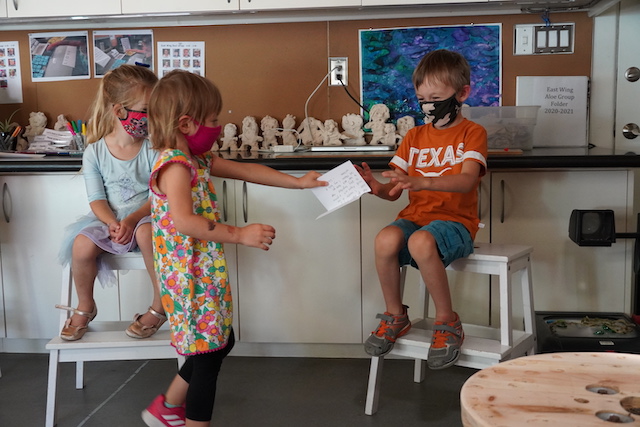
Keaton: I just have 1, 2, 3, 4, 5, 6 letters and nothing wrote and then my face.
Cynthia: Do you know what that means? This says Dillion.
Keaton: Why does it just say ‘Dillion’? Why doesn’t it have any drawings?
Everly: Why does this just have a face of Presley and me?
Recognizing this as an opportunity to engage the children’s imagination and discuss their ideas about the meaning behind these messages, we invited them to wonder:
ALOE VERA GROUP
Amy: What if you get a note from a friend and it only has their face and your face on it? What does that communicate?
Presley: Maybe our pictures want to play with each other and there is nothing else in the world. What if there is a little heart?
Dillon: That means love!
About the message with no words:
Poppy: Maybe it means ‘I don’t feel good’.
Levi: I always make pictures for friends and I always make drawings. If Miles makes me a note with no words, that tells me he doesn’t care about me…but he is my best friend.
Amy: Let’s pretend. What if Tallulah got a piece of paper and picked one of her pictures and glues it to the paper and she looks at all the friends’ pictures and picks out Dillon’s and glues it to the paper and puts it in the mailbox. What do you think she is trying to communicate with that note?
Dillon: Maybe she is saying ‘I love you but you can’t see the invisible string’.
August: You know Keaton gave me a note and it said ‘I miss you’.
Amy: How could we communicate a message to the Basils if we couldn’t write a note?
Dillon: We can talk to the Basils.
Poppy: We have to scream at them.
Levi: I care about everybody. I really do.
Adriana: How do you let them know?
Levi: I can get everyone’s picture and I will make notes.
Amy: Are there other ways we can let friends know we care without writing notes or screaming to them?
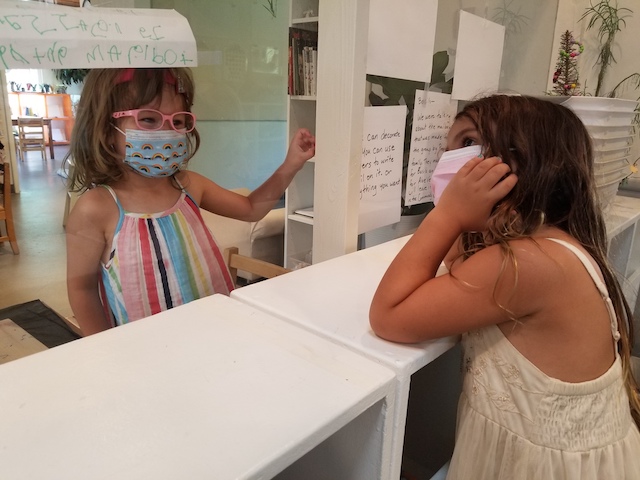
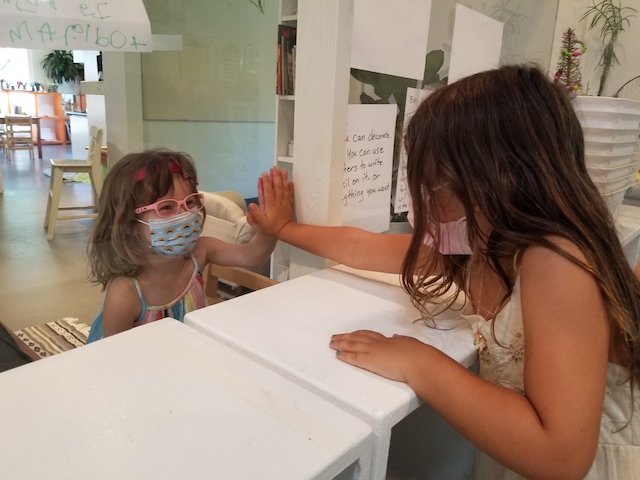
Presley: If we took the wall down we could keep telling our feelings. (Right now) we can’t share our love because they can’t hear us.
Santi: We can make eye contact and smile and hold their hand and say their name.
August: Maybe we can just tell them.
BASIL GROUP
Susan: When you receive a card without words or pictures, what do you think that person is trying to tell you?
Tallulah: You’re thinking about them.
Rufus: Maybe I miss you. I love you.
Everly: Maybe you can use a symbol. If you love someone, you use a heart.
Cynthia: How about if Elliot gave Golda a note with Elliot’s and Golda’s face on it?
Golda: I think he’s telling me that I love him and he loves me.
Everly: Maybe he forgot to do the note.
Susan: Have you sent a picture with just pictures on it?
Asher: I did. I sended one to my daddy. I draw a really good rocket ship and me and daddy. I sended it. I ran over to his room and put it on his desk and he read it. He said, ‘Is that us on a rocket ship?’ And I said, ‘Yes’.
Penny: I have always put a message with pictures and words on it.
Susan: I remember you were trying to talk to Amy at the window this morning. Amy was having a hard time hearing you and asked you to write her a message while making this (writing) motion with her hand.
Penny: I said I don’t know how to write. I want to know if she wants to come to my house.
Everly: You can draw the note.
Cynthia: If you want to ask Amy to come to your house, and you use the idea that Everly is suggesting, what could you draw a picture of?
Penny: Amy and me. Amy at my house.
Everly: We can use flowers. We bring the petals off and then do letters.
As we reflect on the children’s conversations, we recognized how important it is to set up an environment where asking questions is part of the classroom culture. A culture where children spark each other’s curiosity, and together they develop a safe place for dialogue. As we launched into this imagination of wordless messages, we reflected on the words from Loris Malaguzzi, “Observe and listen to children because when they ask, ‘why?’ they are not simply asking for the answer from you. They are requesting the courage to find a collection of possible answers.” We invite you to reflect with us as you think of these questions: What does it mean to receive a message? How do we know what the sender is trying to convey?
1 comment for ““You’re thinking about them.” – Tallulah”