Dashiell, Imonie, and Sasha are all playing a family game in the quiet space in the front yard. They have roles established, and have been engaged in their game for about 20 minutes. Liv, who finished her first appointment, sat down next to the quiet space and began observing the game.
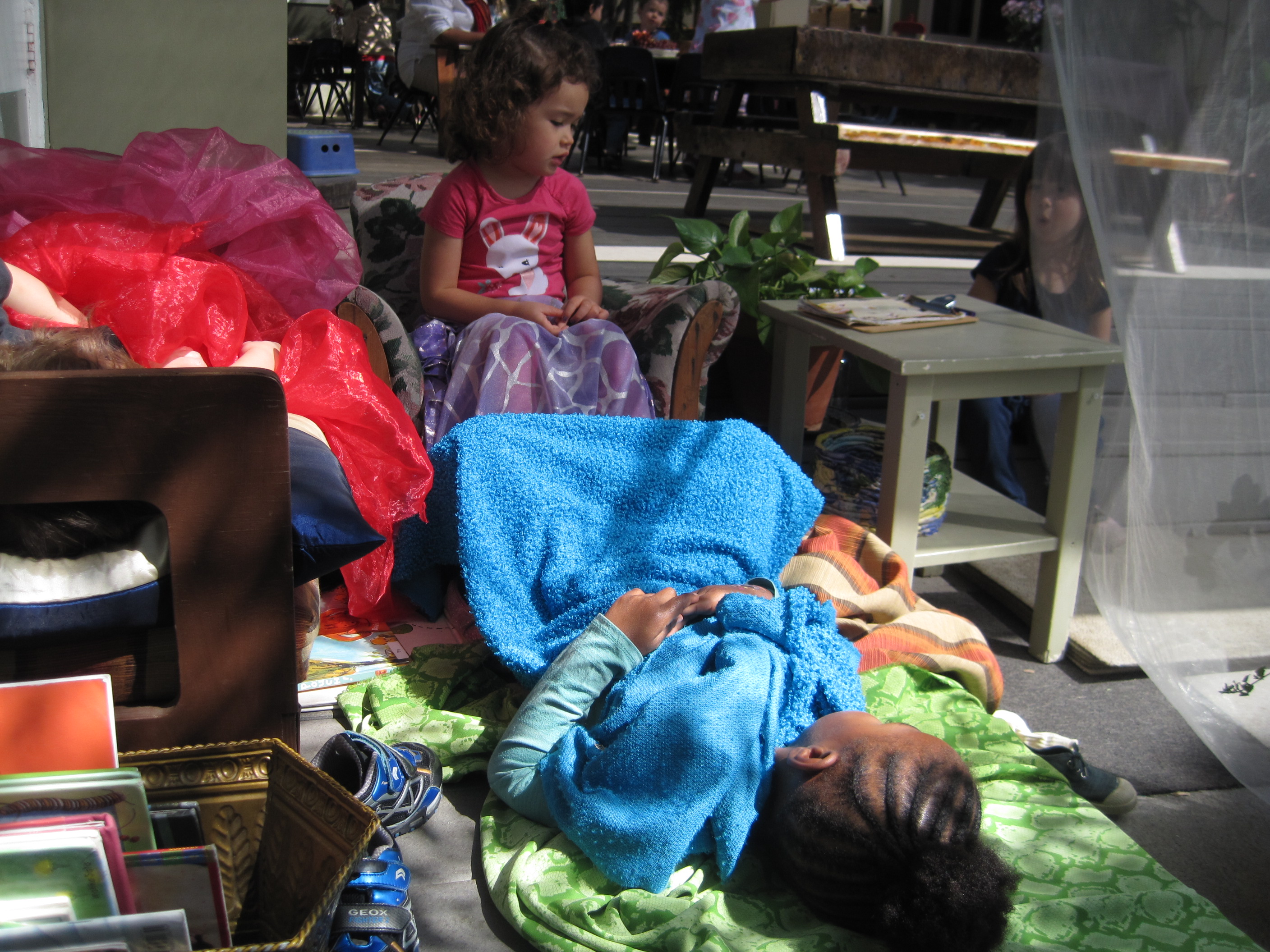
Dashiell: “Can I read this book in the morning?” Dashiell establishes his role in the game.
Imonie: “Sure.” Imonie assumes the caretaker role.
Dashiell: “I’m the baby.” Dashiell confirms their unspoken agreement.
Liv: “What are you playing?” Liv decides to enter the game.
The group looks at Liv.
“Family.” Dashiell acknowledges her.
“You can be the brother.” Imonie invites.
Liv, not satisfied with the assigned role, states: “But I want to be the sister.”
“Imonie is already the sister.” Dashiell states.
Liv asserts, “Well, I can be a sister, too.”
Imonie accepts, “Ya, there can be two sisters!”
Liv: “Where can my bed be?”
Dashiell: “Right on top of Imonie.”
Imonie: “Here right next to me.”
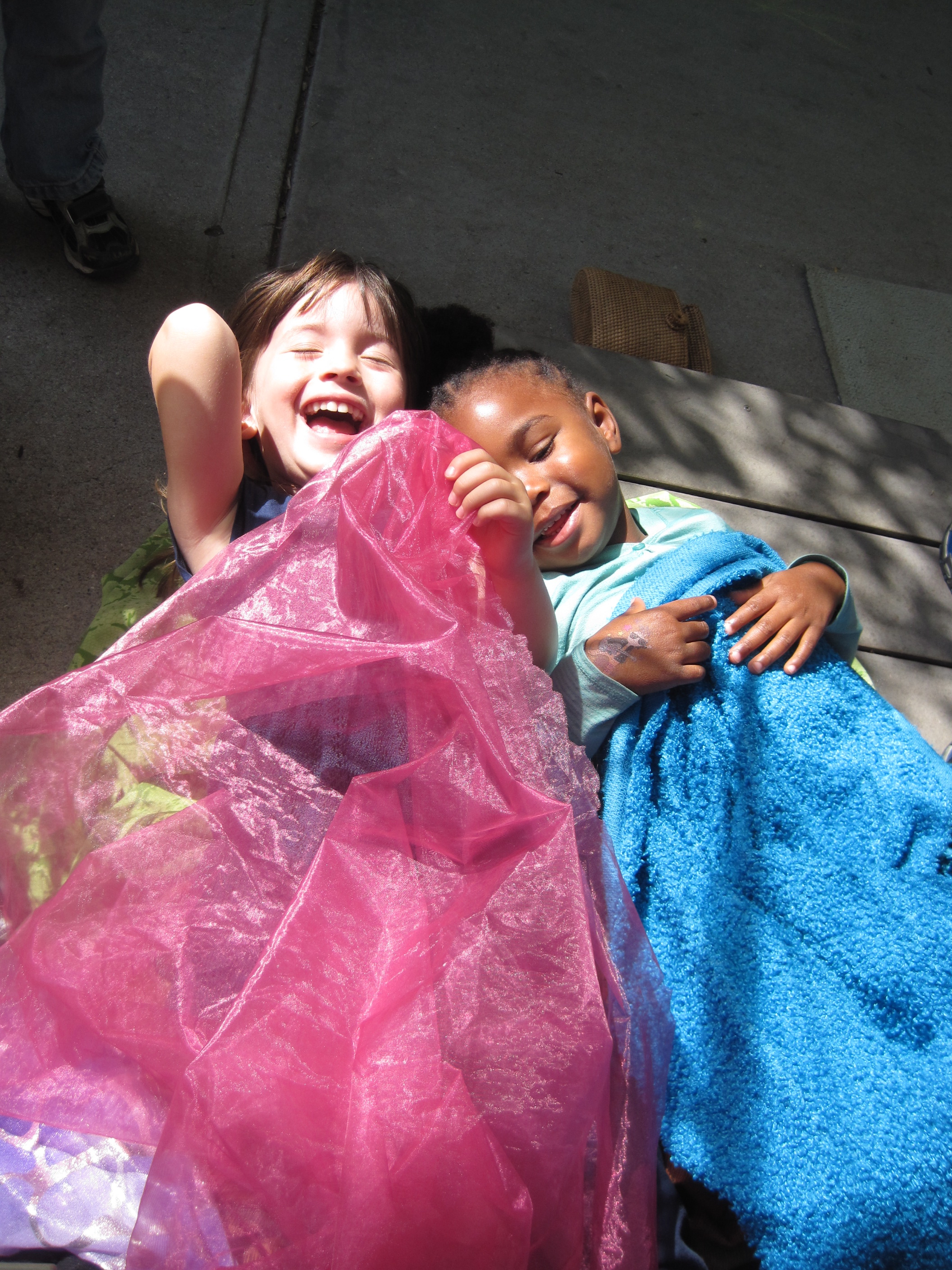
After I watched Liv enter the game and skillfully assert her role, I reflected with the team on the openness this group had in making space for a new player. Developmentally, children at this age have a hard time welcoming peers into a game that has already been established. Since our school intention is about building relationships, we’ve been supporting the skill of entering play and accepting new players since the children’s first days of school. It was a pleasure to see this group’s ability to facilitate this situation on their own, and thoroughly enjoy playing with each other. As a team, we will intentionally add players to this group so that they can model their skills.
Teacher Sam