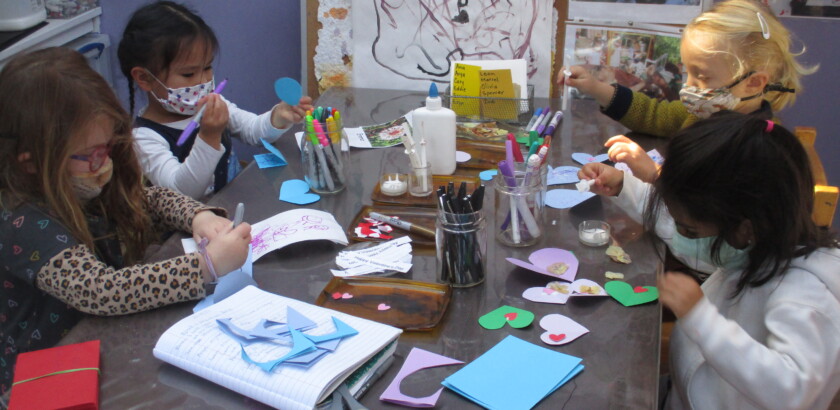
Messaging has been a staple for all the pods this year. They’ve ‘met’ each other through notes and gifts made from curiosity and reciprocity.
This culture of gifting is unique to this year of COVID restrictions. We’ve never before seen this kind of communication among children. Each pod has made gifts and sent messages and letters to those in other pods. Generosity and care are not unique to young children but not being present to enjoy the effect they have on another was unanticipated. But how does this support learning?
In the Dandelion group, children are 3 years old. This is an age that is very naturally experienced from only their own perspective as they have been sorting through tons of information daily to make connections for understanding the world. This is where the pedagogy situates itself – right where your children’s understanding is at this moment.
Children are empowered with multiple accesses to reality, multiple resources and different possibilities of relationship and elaboration. Children are interdisciplinary. They tend to keep everything together: the aesthetic, cognitive, interpersonal. We can’t work with children without updating our own knowledge of them.…Tiziana Filippini
They are working on expressing emotions in a way that preserves their budding friendships, respects others’ feelings, and satisfies their need to communicate effectively. They are on the cusp of thinking beyond themselves. When Teachers Flora, Evelyn and Dana held circle time on March 11th they shared some sign language for mad, sad, shy and laughing. Appointments included responding to messages they received in the mailbox.
Anticipating her group, Teacher Flora laid out glitter glue, paste, wire, string, scissors, multi-colored pens, papers and cardboard with printed images of Mint, Basil, and Aloe plants.
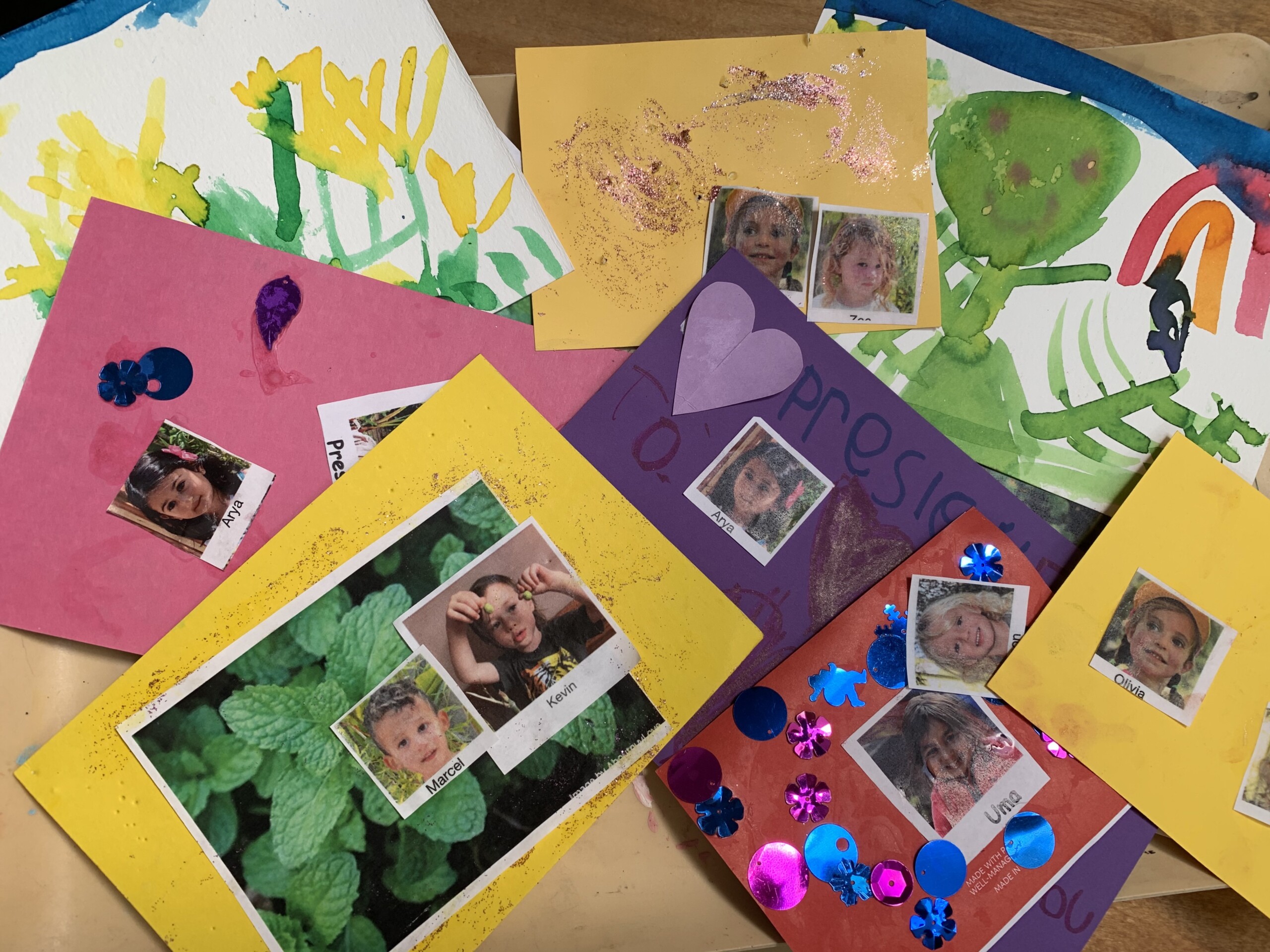
If we take the time to think about who wrote the message and look for clues in the illustrations of the original note, the children connect to others’ interests by working out and recognizing that others might be different than they are. This happens with careful teacher facilitation that asks children to reveal their thinking and reasoning. This initial foray into perspective taking is the foundation for many life skills. It opens the door for anti-bias, empathy, sympathy, flexible thinking, and collaboration. These are gigantic topics that inform our teaching. It’s our job to walk alongside your children on a path we create together that leads to these outcomes. It begins with intentional teaching, rich materials, and reflective thinking. A playful moment becomes fertile ground. As you see the last months of our school year unfold, we predict that you’ll never see glitter glue and sequins in the same way again. – Kristin