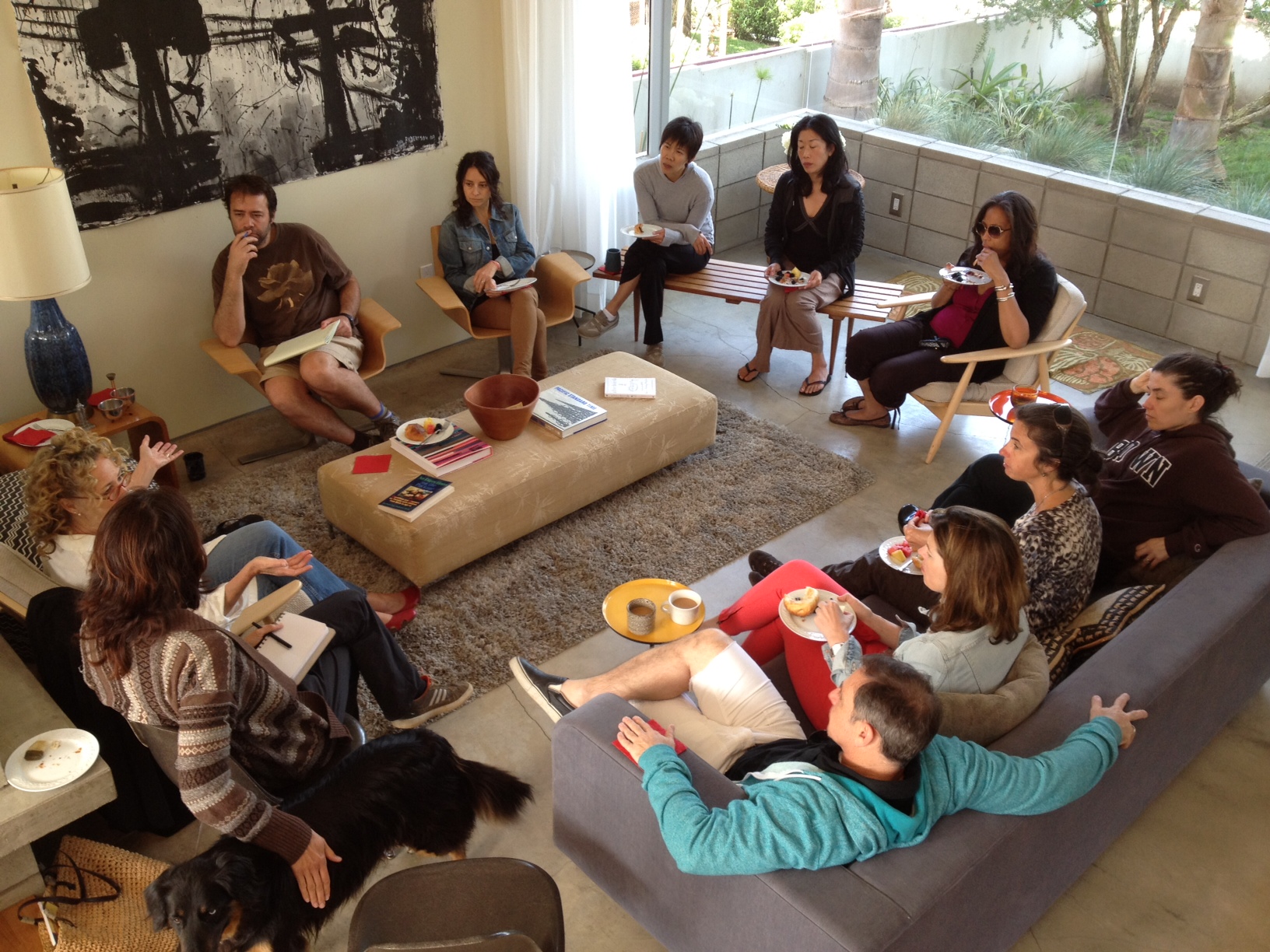
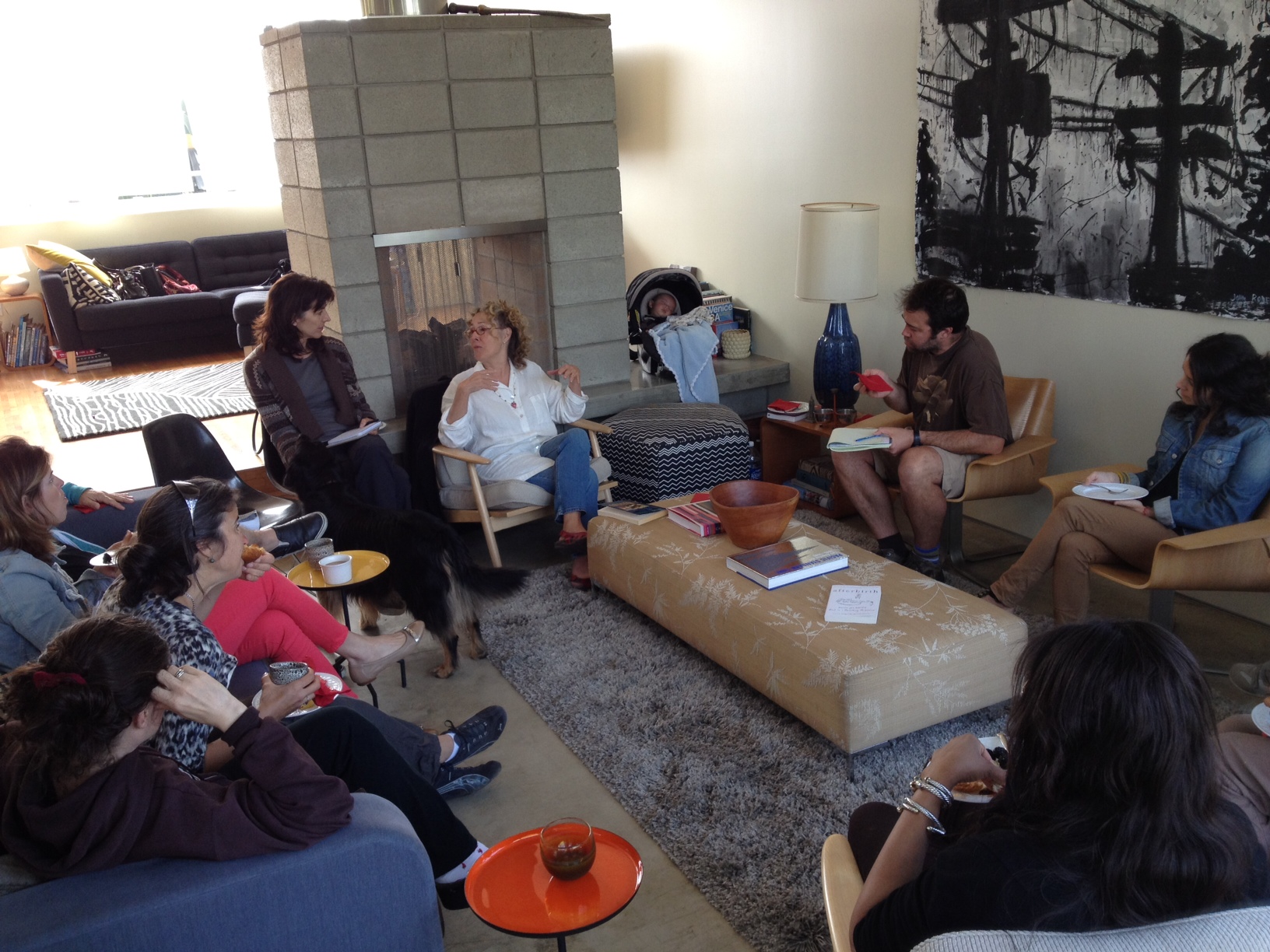
Coffee and Croissants and Champagne and a Fine April Breeze Through the Weber’s Open Door With Roleen. A wonderful and typically enlightening and validating gathering occurred Wednesday morning. Has anyone mentioned the laughter at these “Coffee’s”? There’s a lot of it. New School Westers are some funny folks, that’s the truth. Come for the coffee, come for the advice and community, and come for a laugh. Here’s a shorthand from the conversation:
Earthquakes
— drills are happening at school, talk with your kids about them
— remember the school has an emergency contact number out of state, in case phones are down locally: (307) 265-6712. It’s Roleen’s sister in Casper, Wyoming. Program it in your cell!
— good to discuss earthquakes at home, familiarize children with emergency procedures, location of supplies, etc. Talk about WHAT IF….?
Announcement from Michael (of Imonie, EW):
— try and buy your fundraiser tickets in advance, they will be more expensive at the door, and it helps the planning committee to figure out food, etc
–“There will be jello shots” (and a hundred other inspired, very fun details)
How to get UNSTUCK with your children’s behaviors….
If you are saying the same thing over and over again, as in a disciplinary situation, you may need to find a rephrase. Very often we can get STUCK.
We talked a lot about how to best manage changes in the home environment, such as a shift in work hours, a new baby coming, or a particularly stressful time.
— Have a family meeting, come together to redefine how the family works. “Have you noticed things are really different around here?” “Do you have any questions?” “What have you noticed?” “I noticed you fought me yesterday about a new rule. Do you have ideas about this new rule?” Give them a say. They need to agree, in some form, unless it’s about health or safety, which are non-negotiable.
About talking very firmly to a sensitive child, who “melts” under the pressure
— try and reflect back later, talk about what happened and why
— again: use WHAT IF’s. “What if you run out in the street? I might use a firm voice.”
More on preparing children for a possible future event
— Play it out ahead of time
— Google pictures of a school, or a place, or whatever before you go there. Bring up a YouTube video of the activity you’re planning, like skiing.
— Beware surprises involving basic routines, like sleeping and eating. Maybe think twice about rearranging their bedroom while they’re out of town with Grandma. That said, if a surprise does NOT go as planned, talk about it. “I thought you might really like this, it didn’t happen like I imagined it would.”
One idea about birthday parties: open presents when the giver is there. Prep the receiver with some social cues to use if, for example, they don’t like the present.
Book recommendation: “The Difficult Child” by Stanley Turecki. Offers very helpful delineation of various temperaments, which make it easier to acknowledgeyou’re your child is, takes the pressure off. Michael gave the example of Imonie clinging to his leg at parties. As soon as he gave her permission to do that, it was easier for everyone, and eventually made it easier for Imonie to integrate.
Roleen makes a suggestion about helping them learn to join a group: Sit on the edge of the action and say, I am here, you are welcome to sit with me if you like, and we can watch together. Whenever you want to play you can go. I’ll watch, I’ll move to a closer spot to I can really see you, but I’m not going to play myself.
About learning to be alone, a very important thing to learn…
— consider starting a regular time period, starting with even just five minutes, when you can have “alone time together,” possibly as a whole family, when everyone sits together and does their own thing. You can make a list on the refrigerator of possibilities to choose from. You can set a timer. Maybe an hourglass, which could in itself be the activity. And give them some What If’s: You might want to come over and do what I’m doing, but I’m going to keep doing it alone.”
If they are communicating discomfort with a situation, big or small, be careful about “fixing it” before you give them a chance to process the situation themselves. They may find their own solutions. When it gets really pressing, then you can step in.
Vacillating undermines growth. If you keep changing the object of growth, it’s hard to grow into it. The child doesn’t like peas, the peas disappear. The child doesn’t like carrots, the carrots disappear. The peas and carrots should never disappear — other things should be ADDED. Just one example…
Helping a child sleep through the night
— if night wakings are a new development, chances are it’s because the child senses something different going on, with the family, with the “primary” parent, etc. If this is the case, talk with the child about this new change
— Michael says that a sticker reward chart worked great for Imonie. Every morning after sleeping through the night she got to put a sticker on a chart. Seven stickers earned a reward, and filling the whole chart earned something mega. This method kept the situation very positive, as opposed to something more stern.
— Joy talked about teaching Maddie to fall back asleep on her own. “It’s normal to wake up at night. This is what Mommy and Daddy do… we roll over and close our eyes….” etc.
— Jamy uses very straightforward, transparent reasoning. “When I get up to help you in the night, I’m very tired the next day, and I’m too tired to do all the things I do with you during the day.”
— Lucca sometimes experiences nightmares and Kristin makes a deal with him: “You can sleep with me for 4 nights, then back to your own bed.” Another version of this could be sleeping next to them in their room.
— Many parents recommended a nightlight that can be set to turn from a moon into a sun when it’s time to get up. Here’s a link: http://www.goodnitelite.com/
Lev (EW) likes this other one, along the same lines, with the benefit of learning to read a clock face whenever that becomes appropriate: http://www.americaninnovative.com/products/teachmetime.php
— one more tip: have the “other” parent do the dirty work, which might shift the habit
Potty language and acting out, especially after school
— Roleen emphasizes the POWER OF CONNECTION AND RECONNECTION. The children need to reconnect with you, even if only for a couple one-on-one minutes. Without this reconnection, they might do it in a negative way, try and “get” you. Michael says that this is the single best piece of advice he’s gotten.
— One general approach with potty language is to identify if anyone (like, maybe, you) doesn’t like to hear that. If so (um, yeah) they need to find another place to get those words out of them. Roleen told a story (proving her own spontaneous brilliance) about taking all the words a child was saying, writing them down, putting them in a ziplock bag, and tacking the bag in a visible place. It worked!
— Also, if they are using the words to make something happen, give them other terminology.
Physical rage
— Some children are wired to need a big physical release, and if this is the case, it cannot be stopped, the brain needs it. What to do? You can have the release with them. You can have a conversation before (What If?) and after (I noticed this happened…) You can agree on a safe place to stage the release, like a pillow fight. They also need to have a sense of power about who they are in the family, and this can come from being involved in finding solutions.
Two final notes:
— Remember to recognize what’s going WELL in your family.
— Create rituals. These in turn create meaning, belonging, a sense of home. What would you like them to bring into their OWN lives as adults, to someday share with THEIR kids….? Whoah. Think about that one for a second.
and… two more book recommendations:
“No Directions in the Package” by Barbara Polland. A useful and substantial book in a question and answer format.
“We Can Work It Out” by Barbara Polland. Unique concept intended for both parents and children. Under the heading of various topics like “teasing” or “truthfulness” it gives a number of questions with which to begin a conversation together, to find THEIR answers. Folks seemed pretty jazzed about this one.
Thanks Roleen! Thanks Kara!