EAST WING OPEN HOUSE
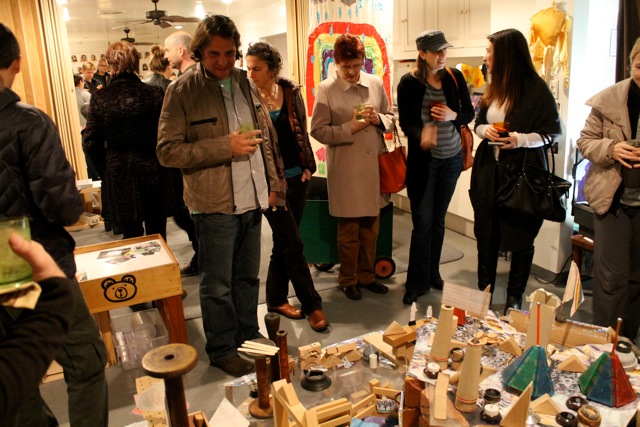
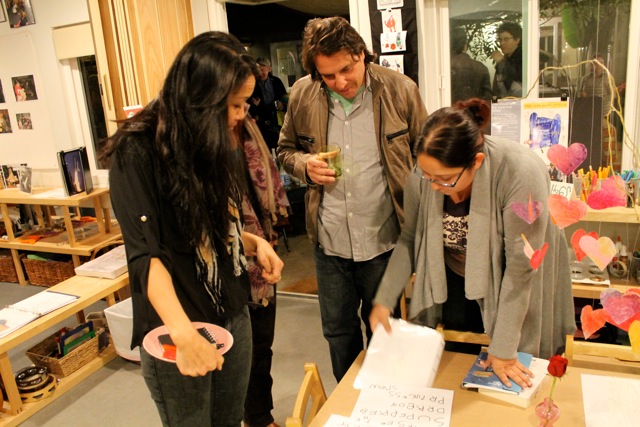
To all the parents who attended the East Wing Open House, Are we lucky or what?
What fabulous teachers our kids have and what wonderful opportunities they are being given to learn and explore and build and imagine!
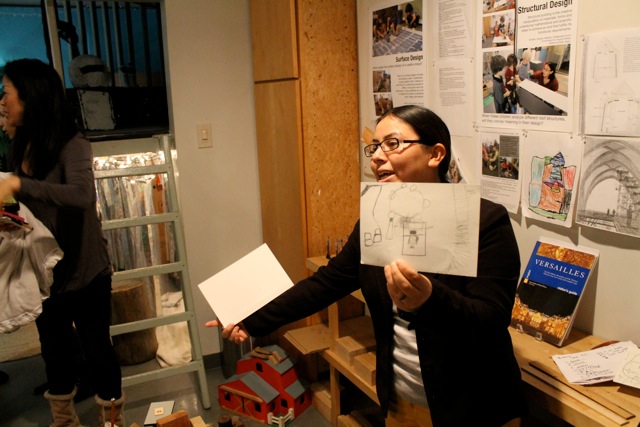
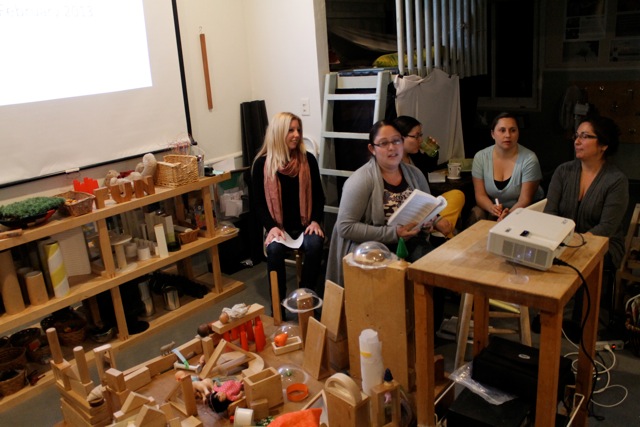
The evening was a beautiful presentation of the kids’ work by East Wing teachers Cynthia, Sam, Cindy, Jessica and Adriana.
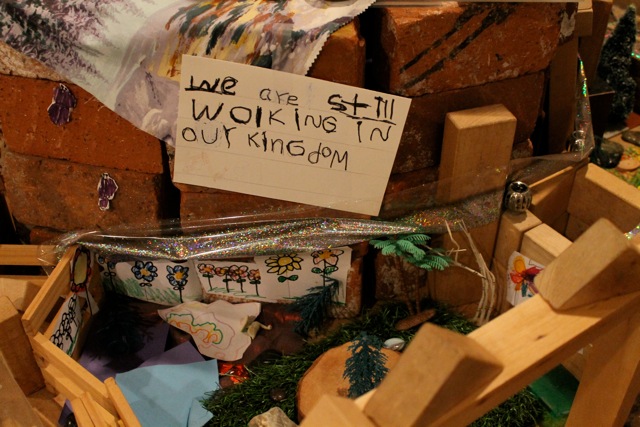
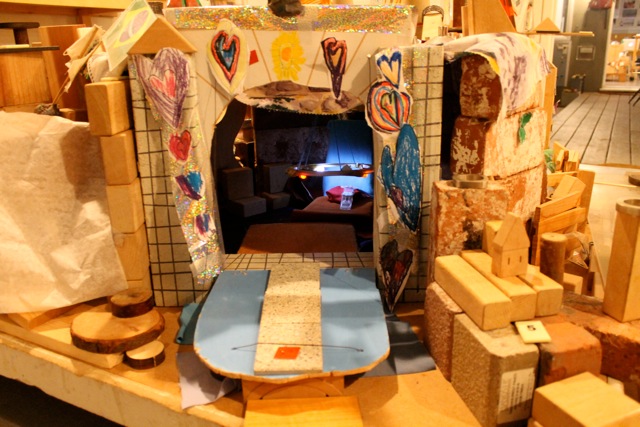
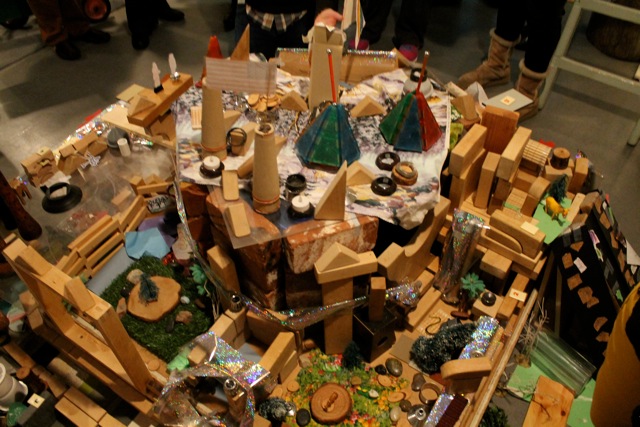
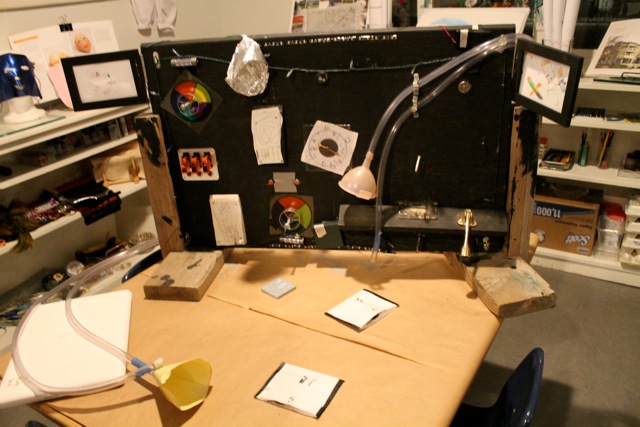
Each presentation was special in it’s own way. Cynthia spoke of the importance of story which incorporates language and literacy; Sam spoke about how children used music as a passionate motivation to extend narrative; Cindy talked about how budding inventors have worked on the rocket control panel for over a year and how they are integrating scientific methodology in their exploration of LED lights; Jessica talked about how mathematics is being incorporated in the house area through recipes and measurement and Adriana talked about the most amazing kingdom the children have made and continue to make, incorporating ideas about scale, geometry, and architecture. They are now working on their master plan and are preparing the newest addition to their kingdom: a ten story urgent care center.
As Adriana summed up: “Critical thinking is happening every day, but we have to slow down and listen to them and be passionate about what they’re interested in to see all this.”
If you missed the evening, and would like a blow by blow of the talk, please see notes below.
Thanks again to all the wonderful teachers in the East Wing!
Cynthia
Incorporating Language and Literacy
Through painting, collage, dancing the story space combines their interests in making a story.
There are many ways that literacy weaves through the story area, like making signs to invite peers to come and join.
Story plays mean different things to different kids, but it’s also a wonderful way for children to work with kids they wouldn’t normally work with.
Sam
Sam works with Stu and music and thought of a provocation to incorporate the children’s interest in music.
“There are at least two pathways by which learning of the arts affects cognitive life. The first is through an increase in focused attention. …The second pathway is an increase in motivation.”
Mind in the Making.
Sam wanted to use passion as a motivation and knowing children are interested in castle, she projected a line: “Once upon a time the king and queen started eating dinner….”
Then they started playing instruments. Sage started and each time they added a line, I asked, “What did that sound like?”
Kids jammed to their story.
Through this, Sam observed how the children used critical thinking skills and previous experiences to create different sounds.
Each chose a different dinner bell, silverware and chewing…..They wanted to incorporate everyone’s ideas and sequenced them for recording.
They also wrote their story out so those could be projected on the wall also with the images.
Cindy
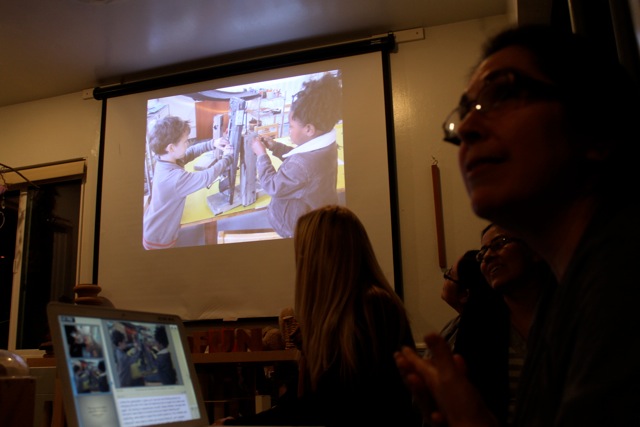
Through tinkering, budding inventors come to understand manual dexterity and the ability to use the mind’s eye. The Lemeison Cener of the Study of Invention and innovation.
Making a control panel for the rocket for over a year. For the kids, it’s never good enough because it’s not real.
Tested batteries and circuits and LED lights after winter break.
STEM: Science, technology, engineering and mathematics. STEM has been receiving a lot of attention in education
There’s an effort afoot to reconfigure STEM as STEAM to include art.
Can’t have STEM without art. Can’t invent without creating.
Began with the control panel. They are able to apply it to other ideas.
Keep retesting the designs.
Once they figured out how to get the positive and negative, they created a blue dragon. The blue dragon mask lights up now.
Then the idea of light began to spread. For example, to the block area. They love illumination, so in the building area they added a chandelier to the castle.
Another project was the rocket ship launcher: We need the three things in the back. Three main engines to blast off! We need to test it because it has to blast off. So they tested it with a fan.
Jacob: This is good. Has to go to the back of the rocket.
Piper: It has to go here.
Jacob: No, no. That’s the front.
So now they’re in negotiation about where to place it. The engines fit perfectly in the back, so eventually they compromise. Jacob says, we can put it in the back for now, until we figure out how to make a fan work.
Going back to the control panel.
Brought to the back patio, and they fixed the control panel. They took the wires apart and were there for a bout an hour. When it was time to play outside, they were torn. They really wanted to add two more things to make it work.
Jessica
“The only way to learn mathematics is to do mathematics.“ Paul Halmos
They’re always cooking in the house area, but what else can we put in there? Measuring cups. Started adding more stuff. Why don’t we do cooking?
Started juicing.
How many drinking cups would fit into this pitcher? Started guessing. And it was 18.
A few days later, in the house area, Ella starts taking a measuring cup. I have two of these and four of these. Husam has his stuff going on. I need two corks. I need to add one more in there. So measurements and numbers become part of the recipes.
ADRIANA
It just may be that these abilities are found on basic core systems of representation that emerge very early in human life and that—at their foundations—are what makes it possible for us to become mathematicians and scientists.
Math and science are difficult subjects in school because we need to carry information and use it. And these children are doing this while they are building.
Maybe we’re not good in science and math because we don’t have those early life experiences. It’s important to create these opportunities for the kids.
At the beginning of the year, we noticed that children loved building in the building space. The children were talking about: surface design, structural design and micro-climates.
Talking about the surface of the castle is different than the houses.
Why do we need windows on a house? So air and lighting can come through.
There is a reason windows are on the inside. And a roof is one top Why do we need a roof? To protect the princess from a dragon. To protect ourselves from the rain.
Because of these conversations, we were able to really move to the next step.
These children are talking about scale and perspective.
Dashiell says, “I would like to add a mountain so that horses can come up for more grass.”
Imonie says, “I can help you,” and starts cutting trees and flowers.
They say, “No, there’s only trees on the mountain, they are on different levels.”
So they start thinking about different levels.
Aurora from the West Wing comes and has her appointment in the building space. They’ve been building this kingdom for three weeks. And she says, ”I want to go inside of the castle.”
You should see the faces of the other kids. “You don’t fit inside. You cannot fit inside.”
“Oh yes I do.” If she stands up, she’s not going to fit.
Sage goes and gets measuring tape to show her that she is not going to fit.
They decide to use their knowledge to help her understand why she doesn’t fit in the castle.
Way to compare. This is the castle. This is you. You can’t fit.
Aurora is like, “Okay. We can make a bigger castle.”
They built the bed with scale. Lamp and two little chairs. Chandelier.
We brought in architectural master plans. They said, “We need to do a master plan. So now they’re building a master plan.”
Has to use bricks because that’s what they used that way. Life changes and we get new technologies.
Critical thinking is happening every day, but we have to slow down and listen to them and be passionate about what they’re interested in to see all this.
Quotes from parents:
“I was so happy that I went because you know how everyday you ask your kid, ‘What do you do all day?’and they say, ‘We played in the front yard.’ It was great to see what they are actively involved in. And it made me remember why we’re there. The level of what they’re working on is incredible. That castle was crazy! ”
1 comment for “East Wing Open House – Notes”