To support the development of new relationships, the expertise of children who are familiar with the school areas is considered when assigning appointments. In this experience, Hannah was receptive to Raven’s guidance as their play and building evolved:
Hannah: “This bear needs to go here.”
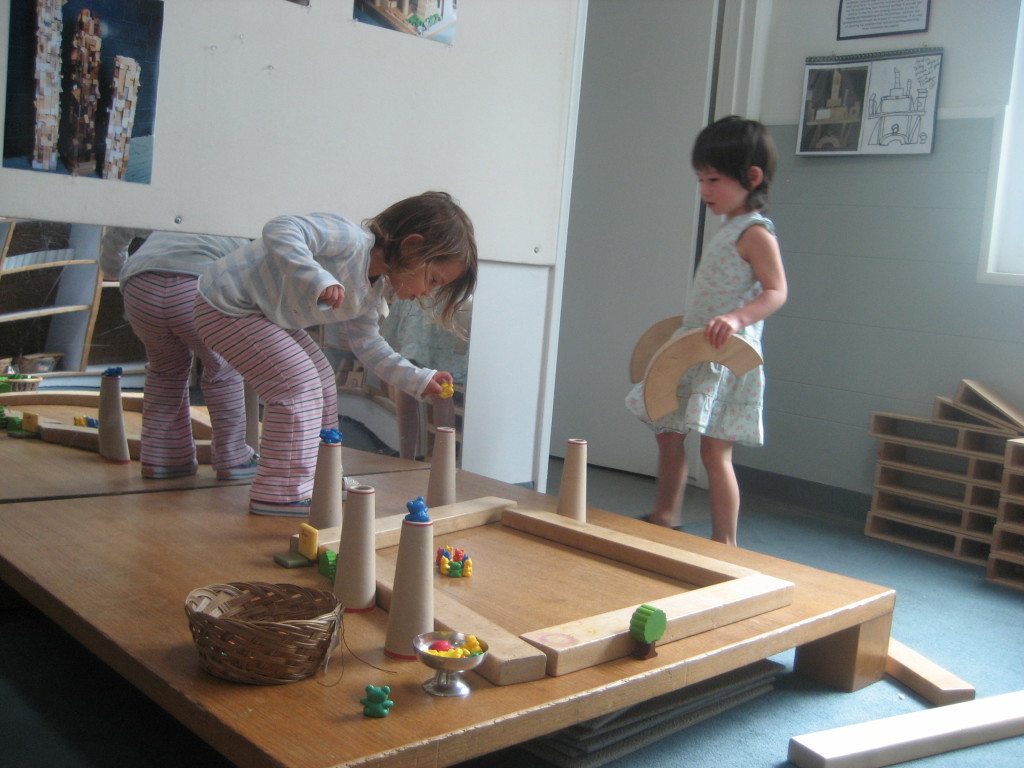
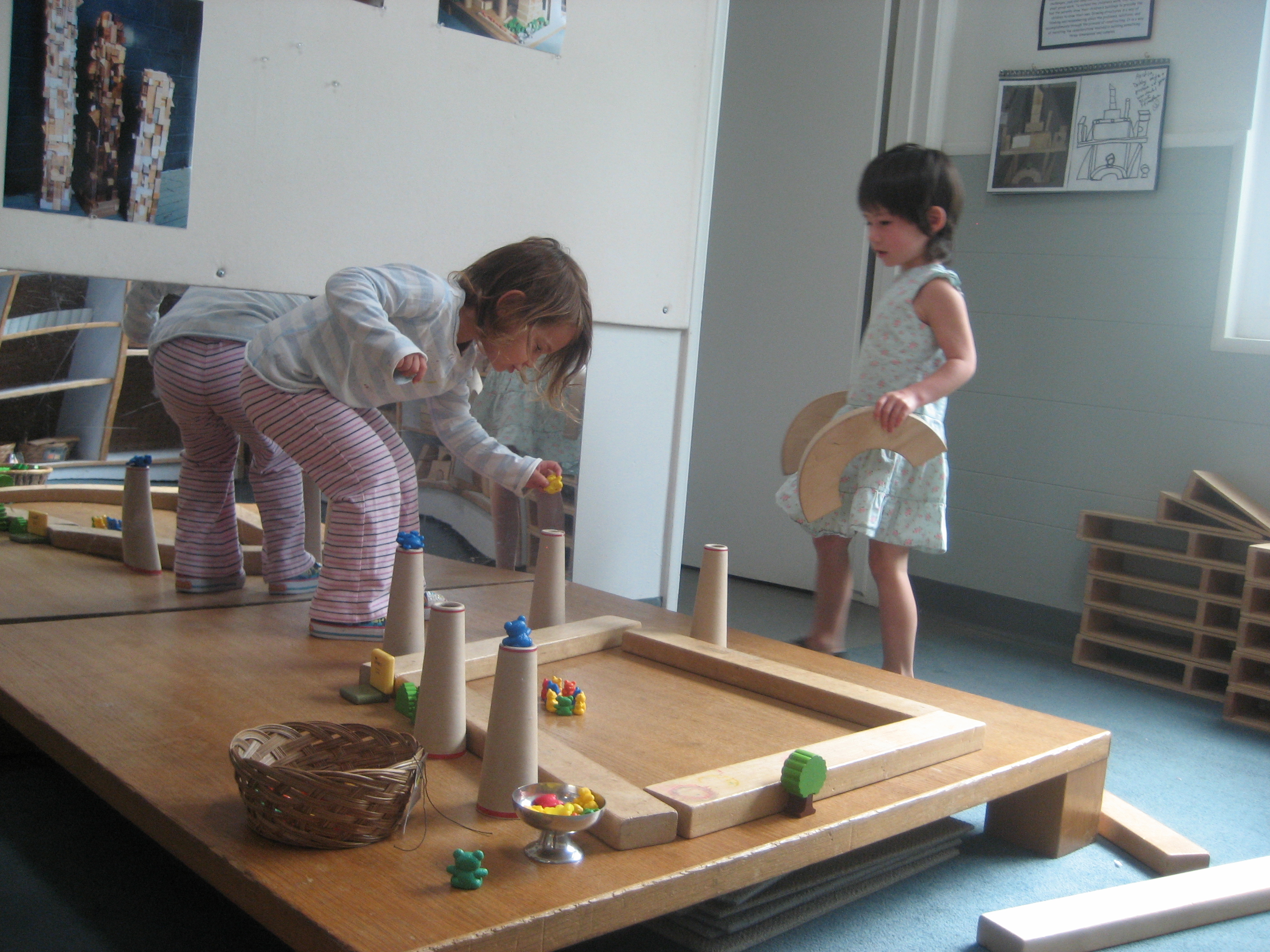
Raven: “No more bears, no more big ones. We need some rocks.”
Hannah: “Yeah, we need some rocks.”
Raven: “The rocks are going to go over here. Everybody who has circle time is going to sit on these squares, right?”
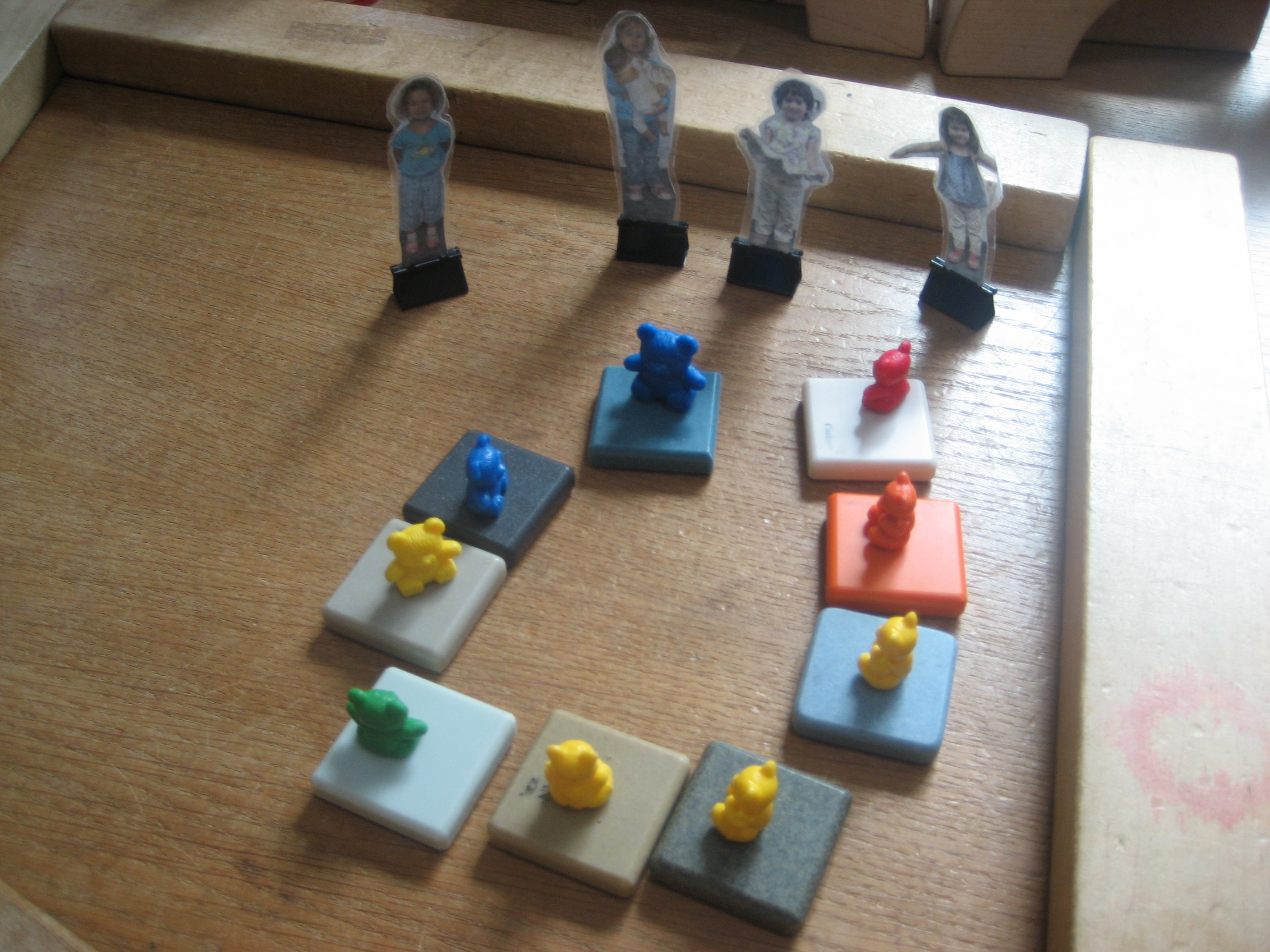
Hannah: “Yeah, orange goes on orange.”
Raven: “Blue goes on blue.”
Hannah: “Red goes on white.”
Raven: “We’re having circle!”
Hannah: “Yes, we need a teacher.”
Raven: “We’re making a classroom with the blocks.”
On a different day, we see Hannah guiding David and Sergio in the House Area. Hannah applies what she knows from prior experiences to engage the other players more deeply, and extends the play for 45 minutes.
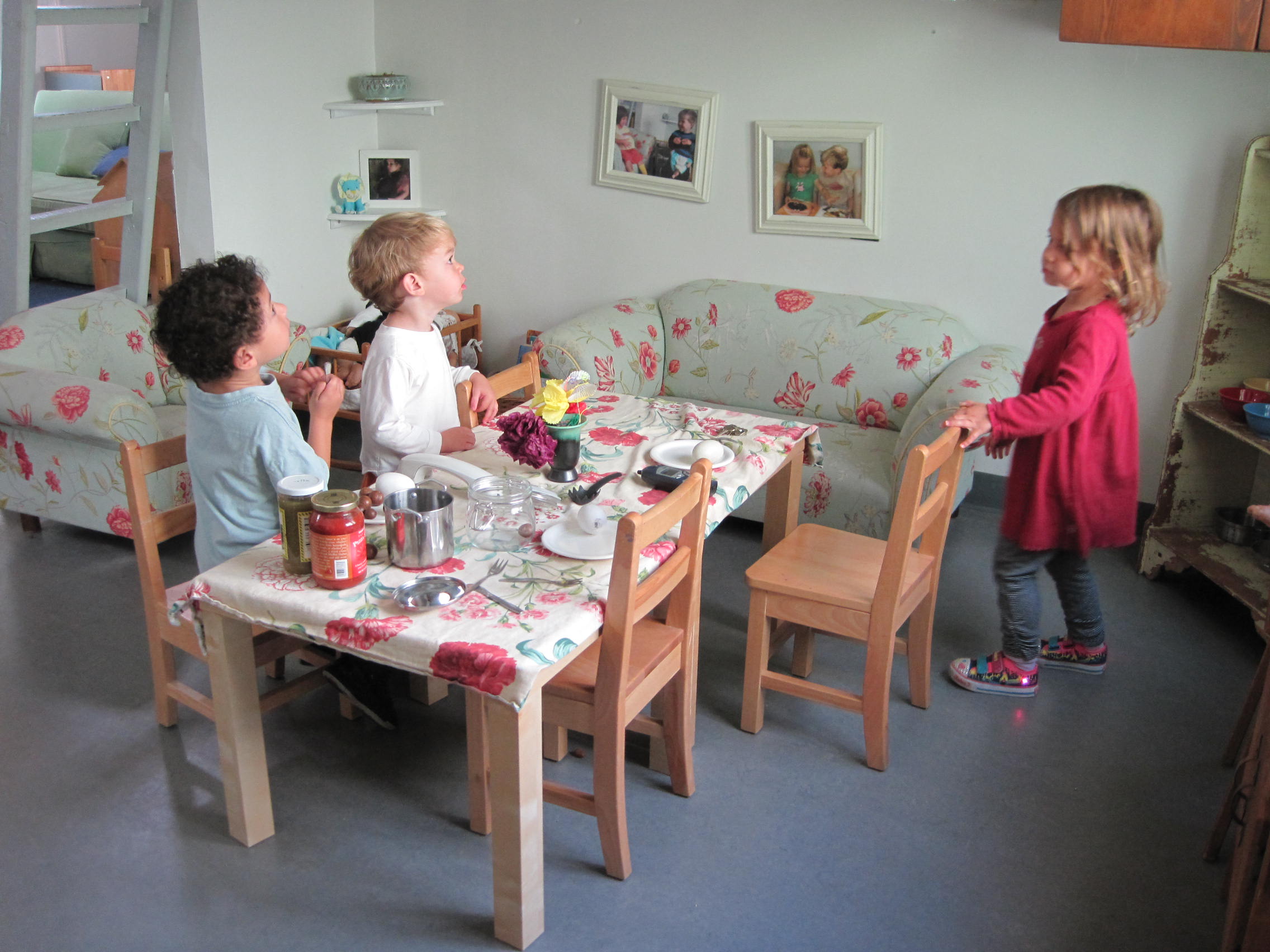
Hannah: “I’m going to a meeting. A girl meeting. Isn’t that fun?”
David: “I want to come.”
Hannah: “You can’t. You said you were tired.”
David: “I’m not tired anymore.”
Hannah: “Ok, you can come.”
Hannah: “You need to help me make dinner.”
Sergio: “Oh, someone is calling! Hello?”
Hannah: “Anybody need some lipstick?”
David: “No.”
Hannah: “Do you need it when you go to the meeting?”
David: “No.”
Often in play, the teachers are observing for succesful relationships; meaning they are looking for children who work well together or who need assistance in learning the routines, or who know routines well. These observations will be translated into appointments to develop further skills. The expert players, who can extend the game, assist greatly in allowing ample time for teachers to observe as well as model for others, a deeper engagement in the work of play.