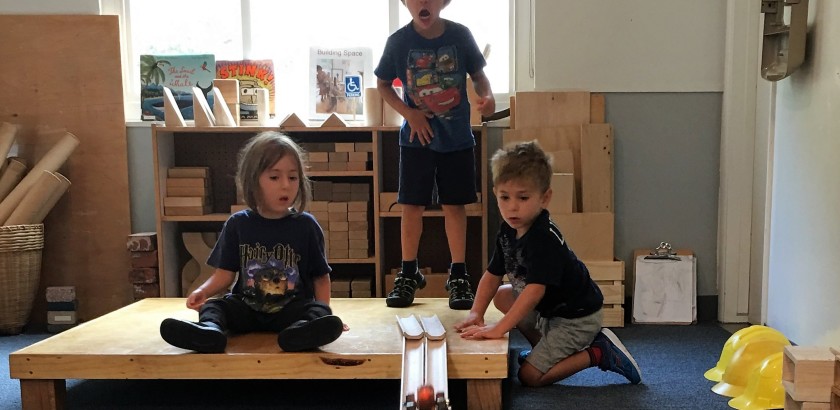
While testing the first prototyped car, the children noticed the movement of the wheels – the repurposed milk caps only rolled when the car was pushed and sometimes they dragged along the floor. These observations motivated the group to explore metal and rubber wheels independently and then in conjunction with the car.
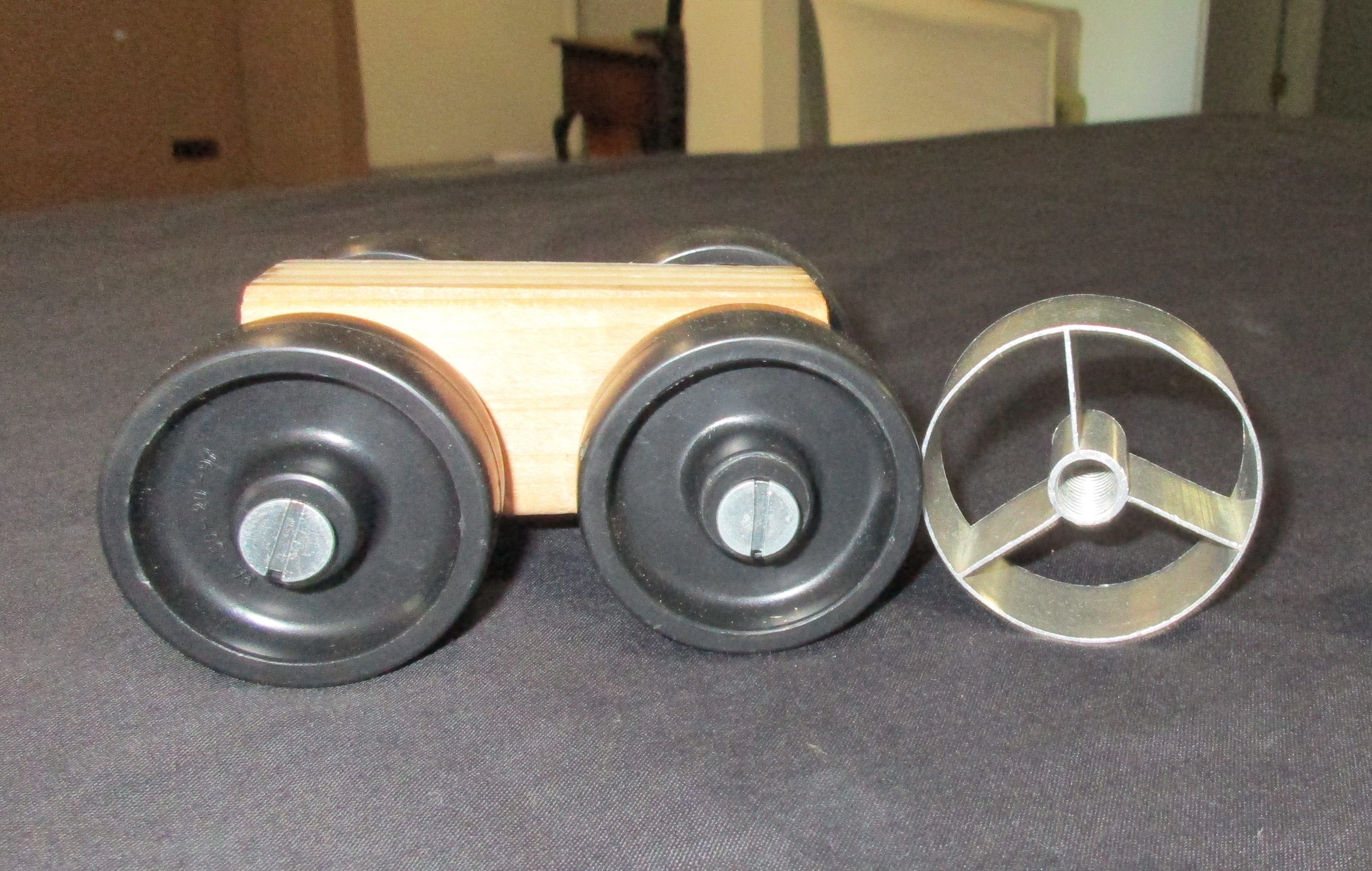
Jillian: They’re soft (holding the rubber wheels).
Lily: These ones are harder (metal wheels).
Teacher Susan: Let’s see how they roll.
Eloise: This one (rubber) rolls more than this one (metal).
Jillian: This one goes wiggly (metal) and this one goes straight (rubber).
Julien: Yeah, it’s balancing.
Eloise: This one is faster and went further (rubber).
Nathaniel: This time, that one went further (metal wheel).
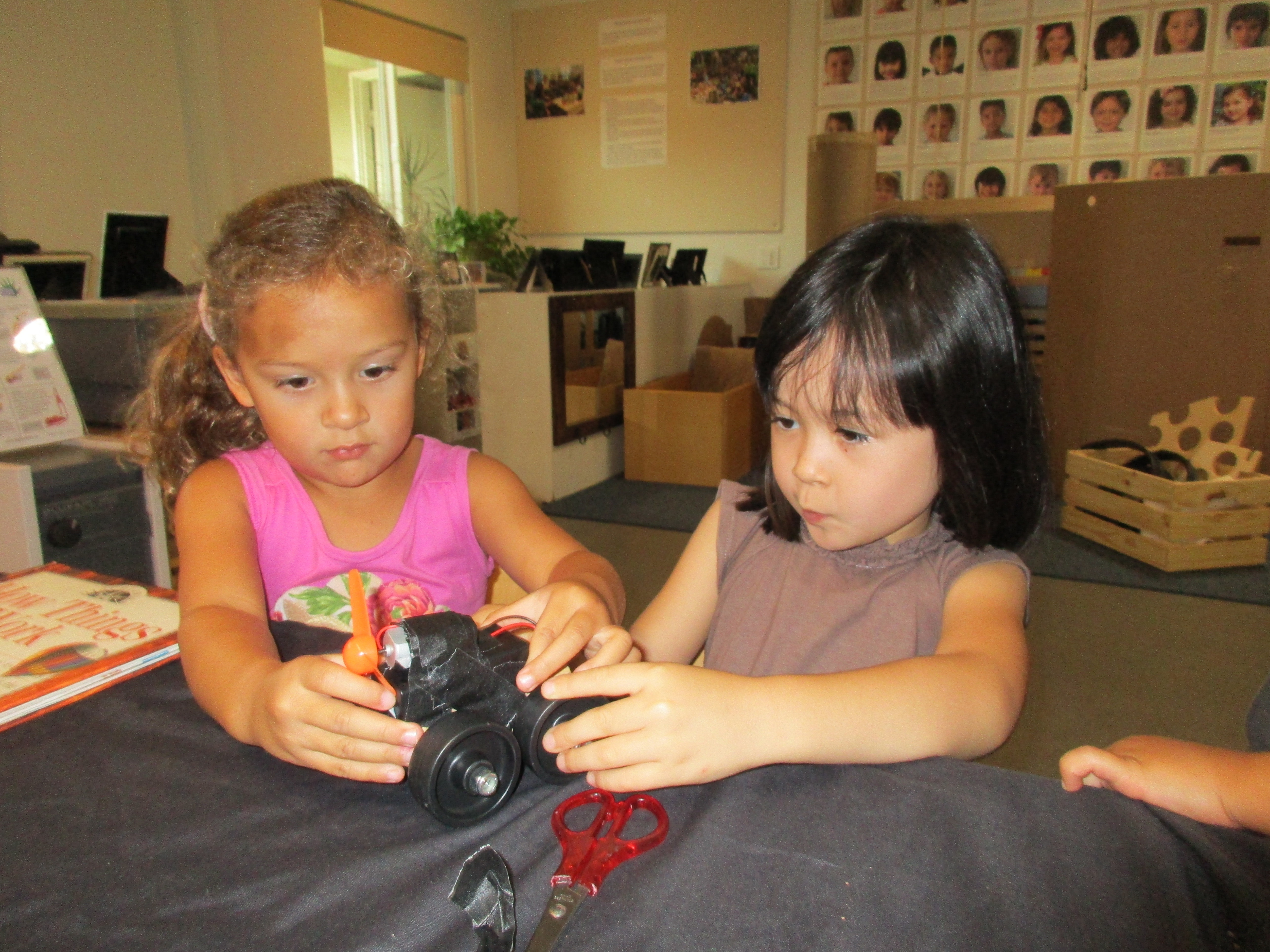
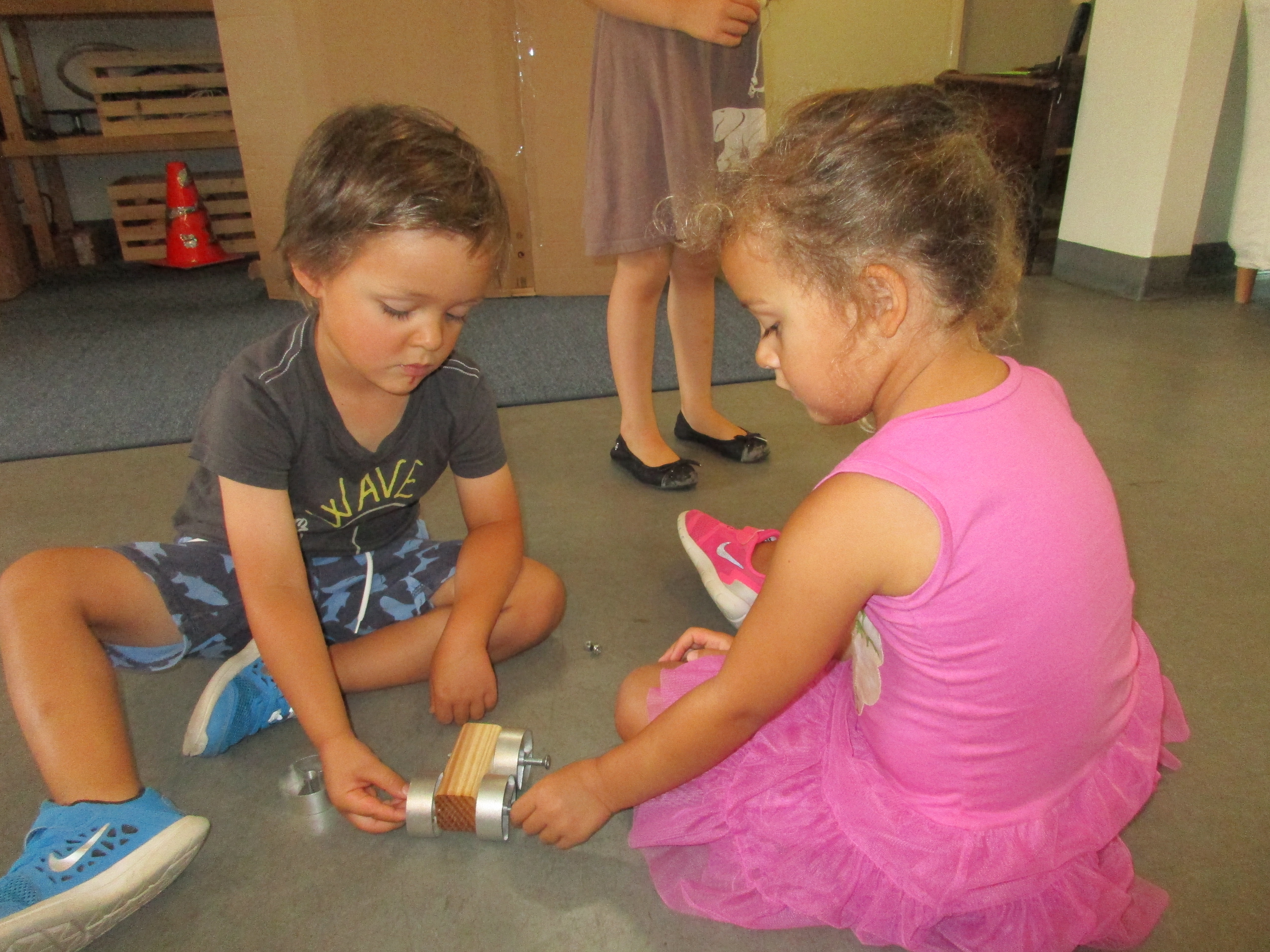
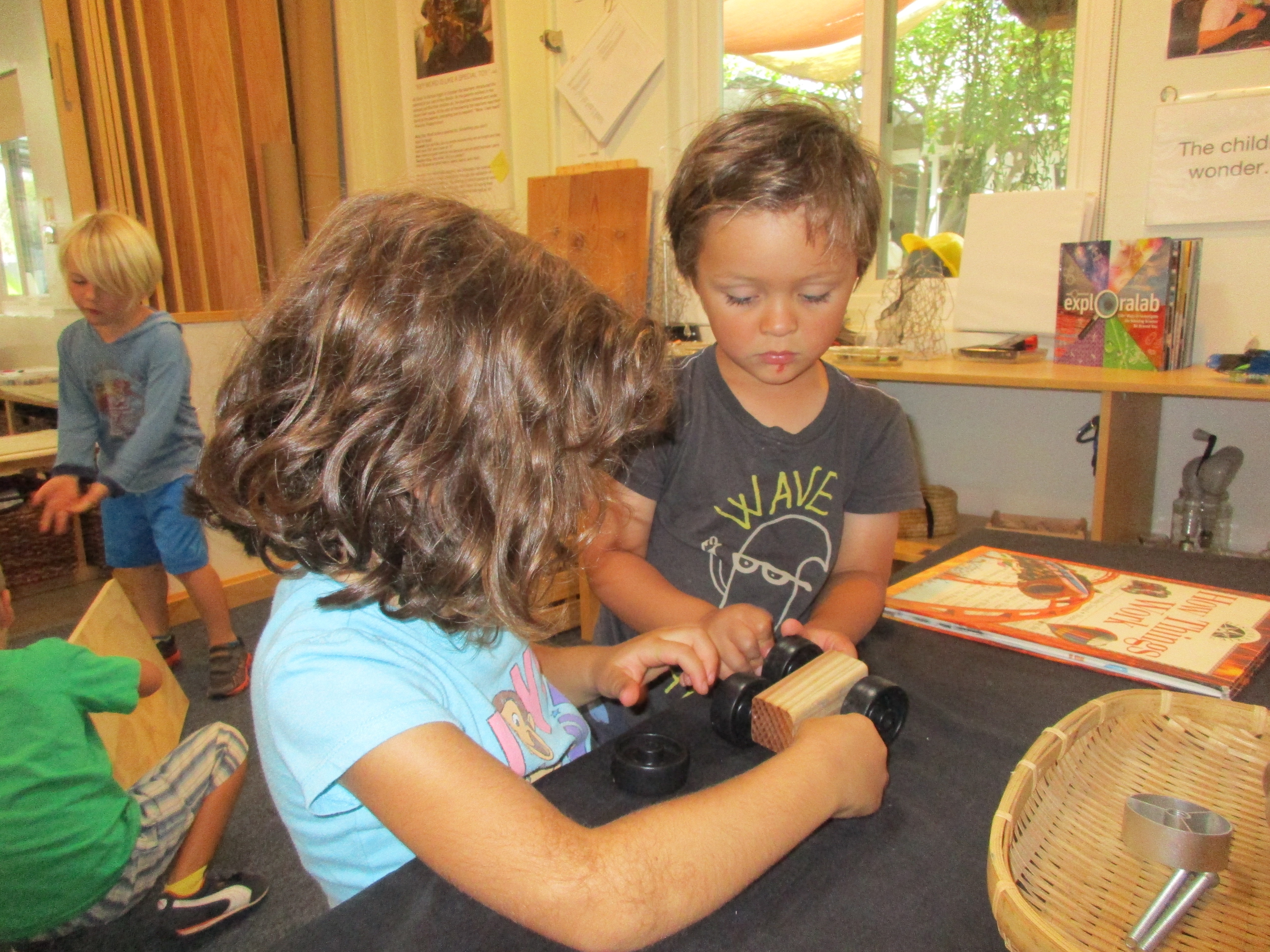
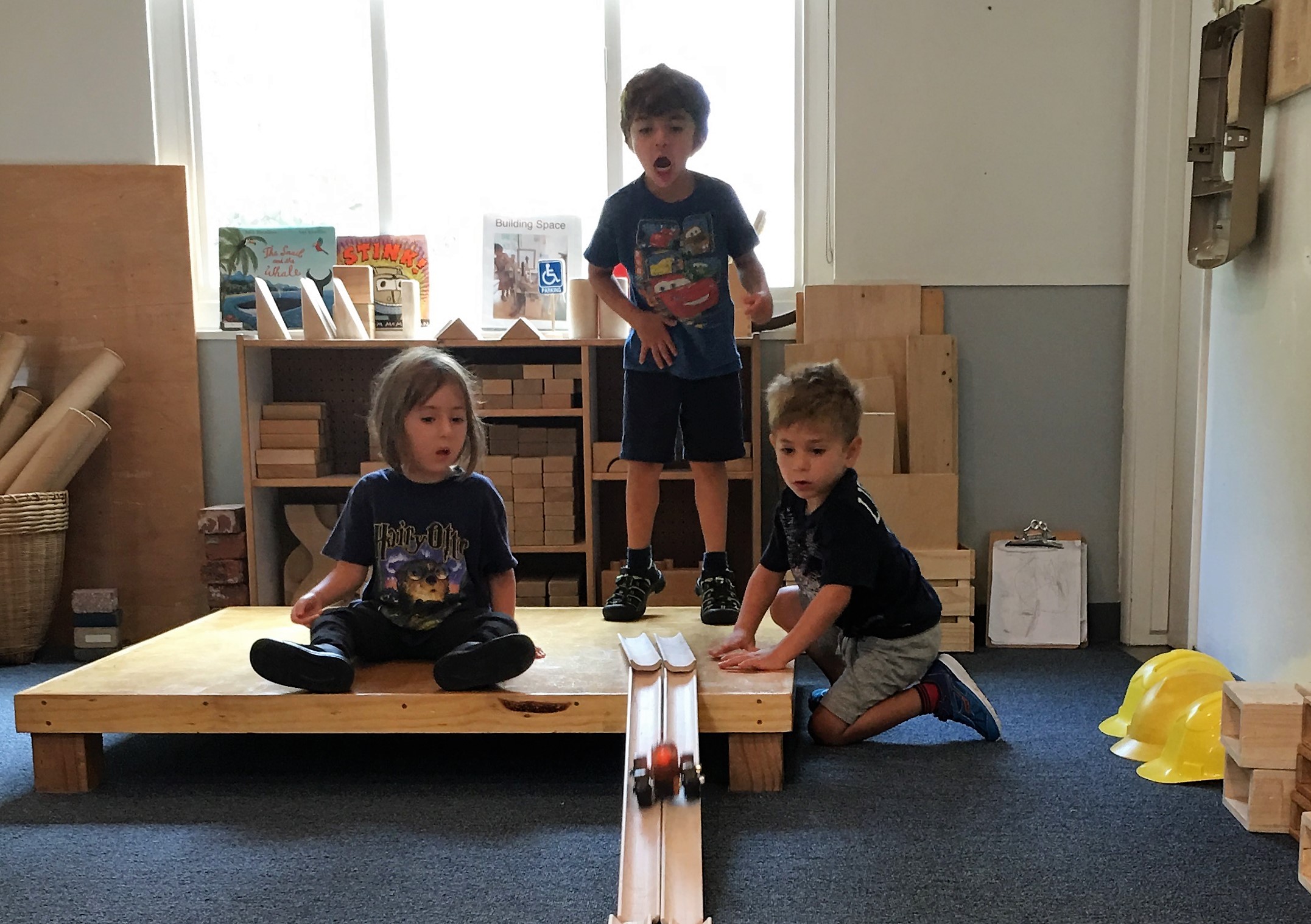
After experimenting with both, they decided to select the rubber wheels for the redesign. Then the children added the motor and predicted it would make the car move faster. Yet when they turned it on, they noticed the car remained stationary. Since they wanted to see the car in action, they pushed the car forward and also created a racetrack with a decline. By doing this, they were able to see the car in motion and were convinced the motor was driving the car forward. As we continue to test ideas, we wonder about their continued fascination with motion and how we can tap into their knowledge of simple machines to find alternative options for propulsion. -Teacher Susan