During this season of touring potential schools and filling out applications, you might have wondered what our approach to different kindergarten readiness skills really is. This blog is for you! =)
During our parent-teacher conferences for our East Wing class, we had many opportunities to discuss our approach to different kindergarten readiness skills. We thought it would be helpful to address literacy since parents inquired most often about this skill.
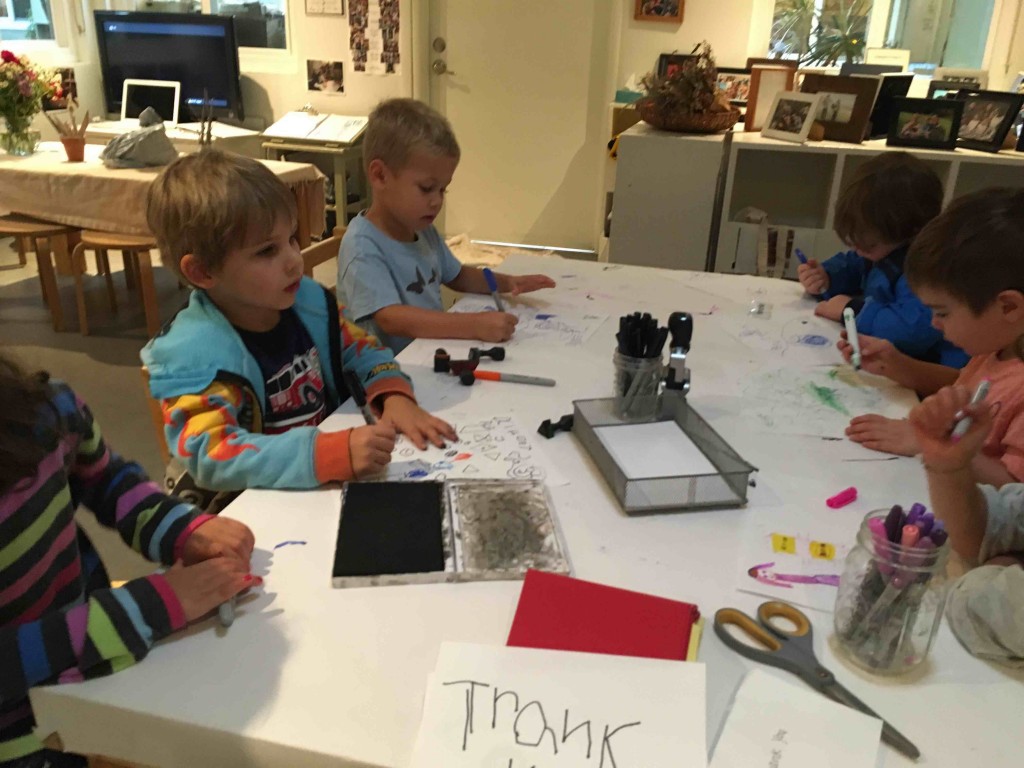
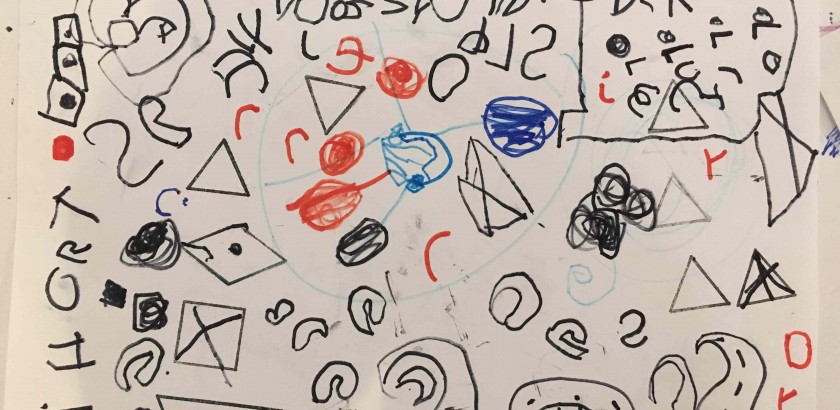
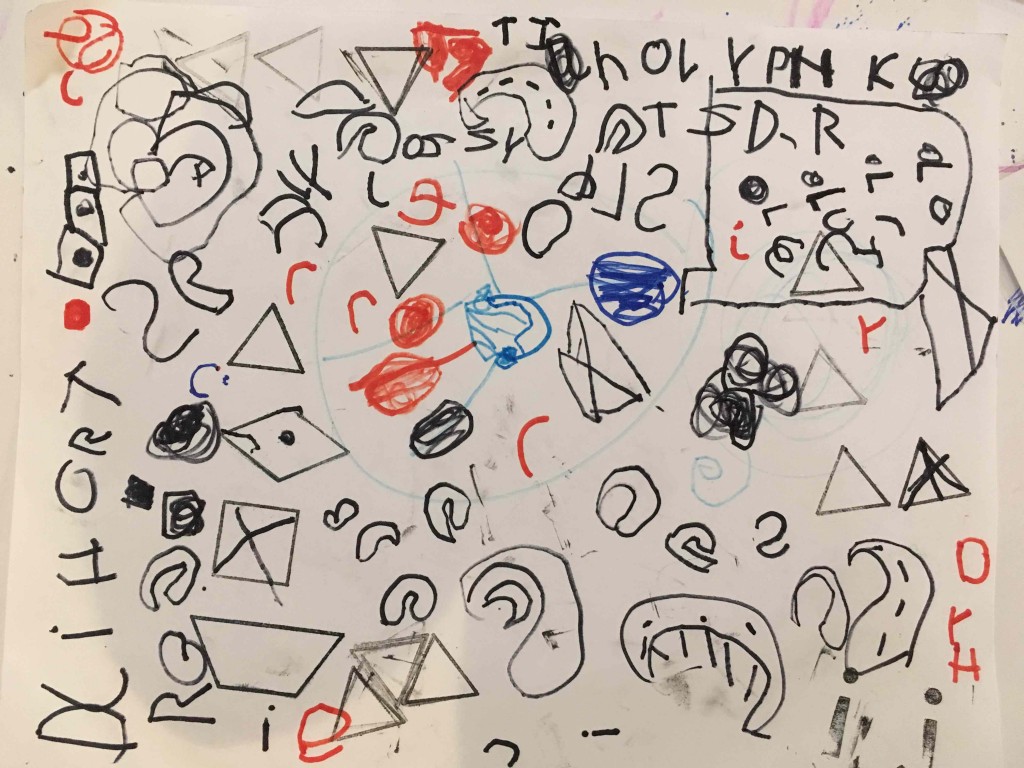
First off, this is one of our greatest passions, to support children in their love of literacy. Obviously, this starts in the West Wing with a classroom full of symbols (“the emotion legend”) that carry strong cultural meaning, ample time for reading rich and meaningful books that connect them to themselves and each other, and collaboration through the social construction of symbols using materials.
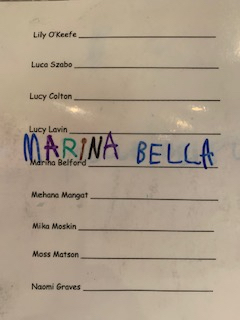
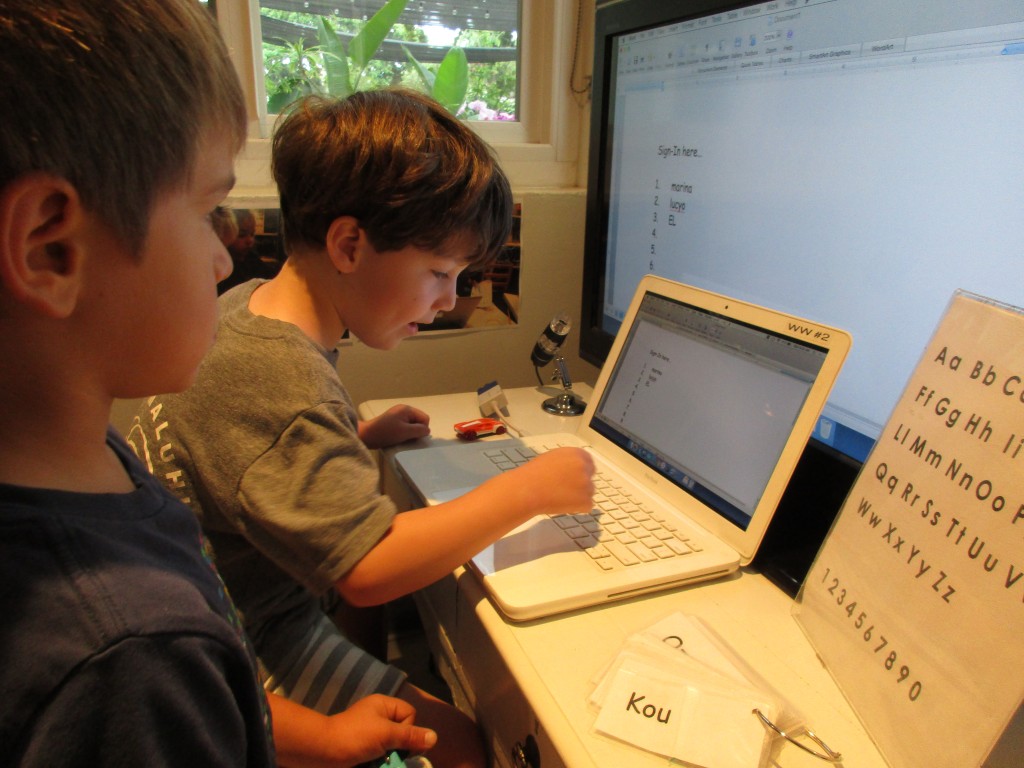
Signing-in on the sign-in sheets in the morning reinforces literacy concepts as well. As we considered the start of the East Wing year, the teachers reflected on where everyone’s skill level was and designed provocations to deepen the literary culture we’d begun. As we brought over the sign-in sheets, we included the children’s last names to create a challenging goal.
We noticed that though many were comfortable signing-in in this way, others were apprehensive when writing their names. Also, some children, based on their individual growth goals, needed a few more approaches (see list below). Our number one requirement was that it would be a challenge just far enough out of reach to be fun.
We connected our sign-in process with the computer monitor that was introduced in the West Wing. We included simple directions on how to use the delete, return, caps-lock, and spacebar buttons so the children can use them autonomously. Since the keyboard includes capital letter options, this required the children to be able to recognize both upper and lower case letters. We added the upper and lower case alphabet to support the decoding of which letters were which. This helped the children familiarize themselves with the upper and lower case letters but more importantly, the why, when, and how we use those letters.
The children understand why we use capital letters, what it means when something is written in all caps, what happens to a sentence when it ends with an exclamation point, question mark and so on. Their notes are in a folder next to the computer – take a look!
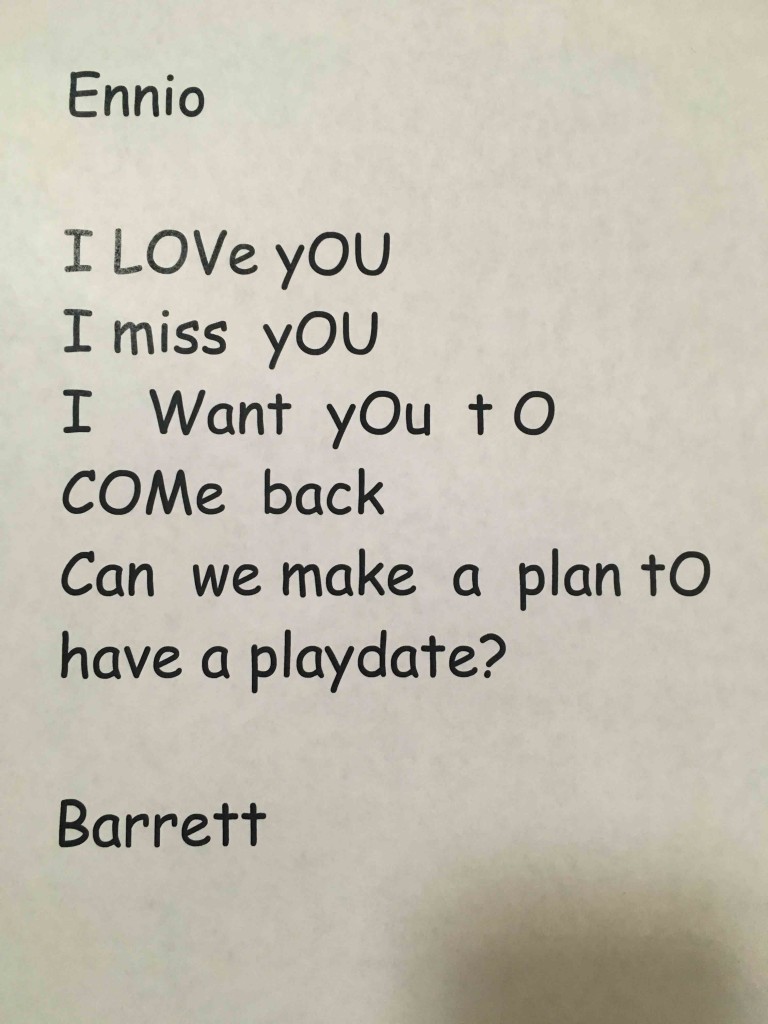
One day as the children were sitting on the benches for morning meeting, we overheard evidence of their continuing to research literacy in small, unstructured moments:
Juliette observed that: The kids are like letters and words and we need a spacebar between each other.
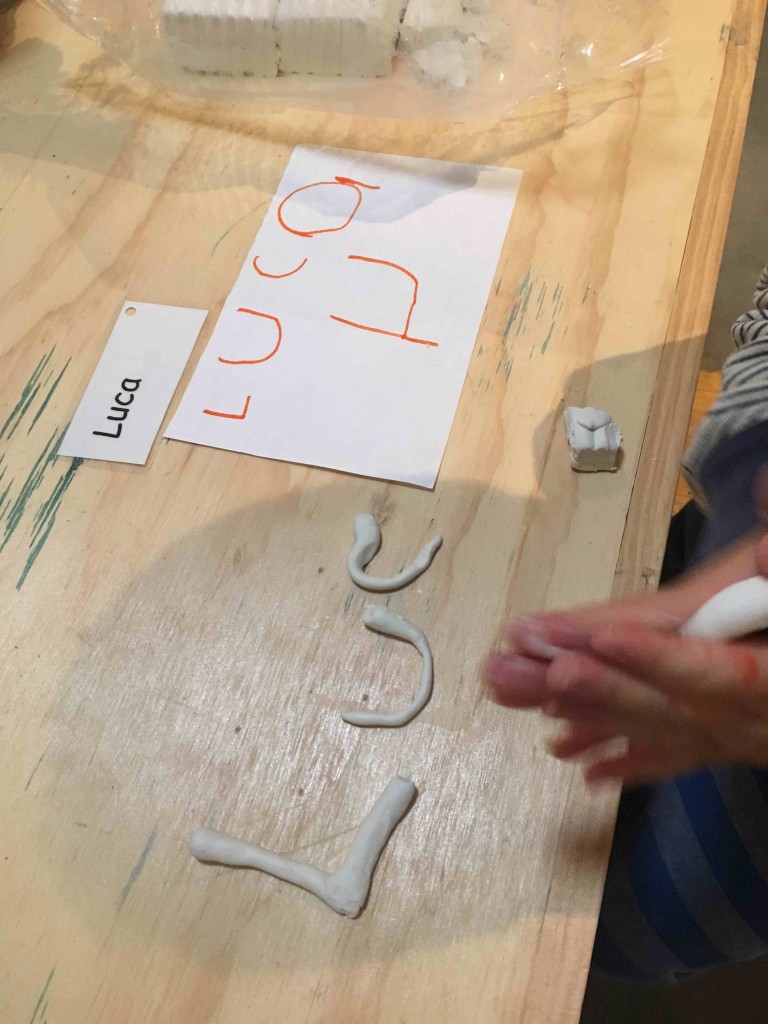
Other playful approaches we have used:
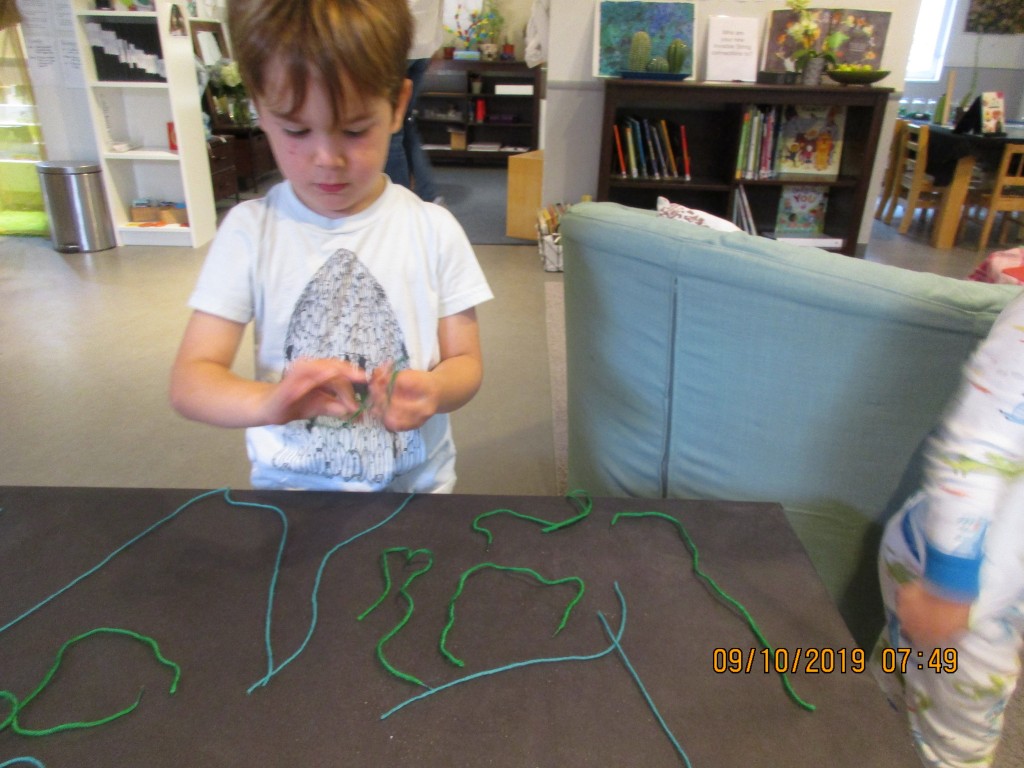
- Wiki sticks
- Wire
- Clay
- Scuplty clay
- Large floor and wall palet (using water, tape, etc.)
- Dry erase board
- Kinesthetic (“body writing”)
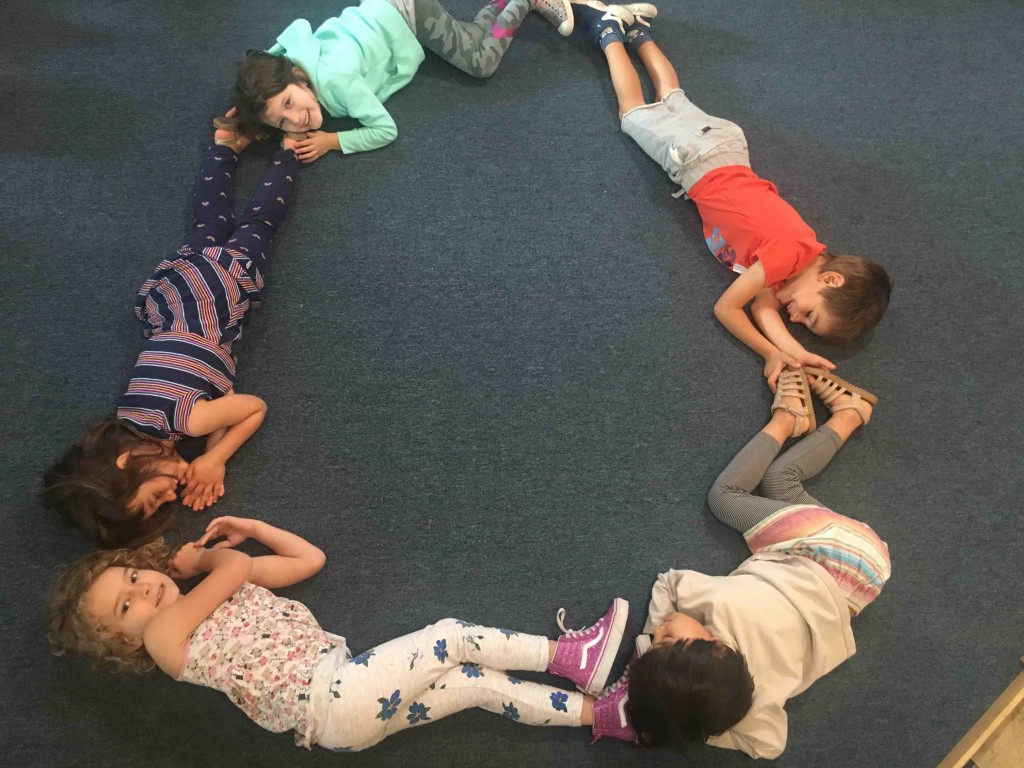
- Storytelling -verbal and reading (and most importantly reflecting on the content and asking deep questions that require comprehension and relating)
- Messaging (typed)
- Decoding audiobooks on iPad with letter recognition
- Games (similar to “hang-man”)
- Music/rhyming/letter-sound sounds
The children who were more apprehensive about signing their names at first are now much more confident in signing-in which means they will continue to practice and refine their skills.
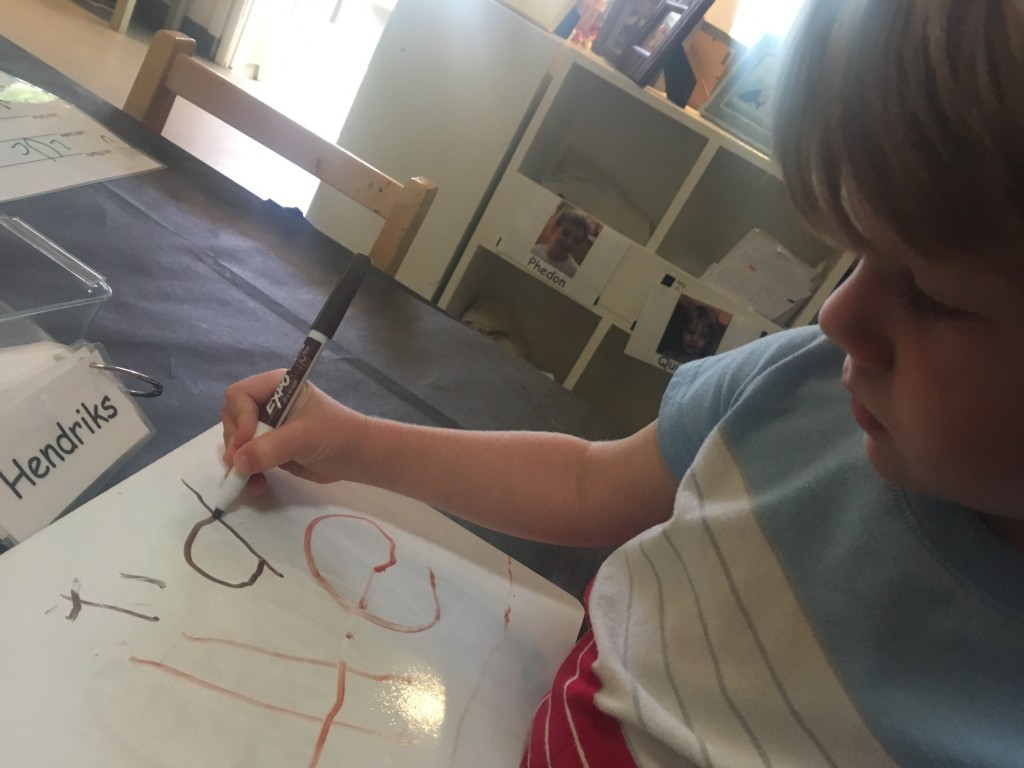
The children look to each other and the resources for support as they see each other as very capable.
1 comment for “What’s our approach to literacy?”