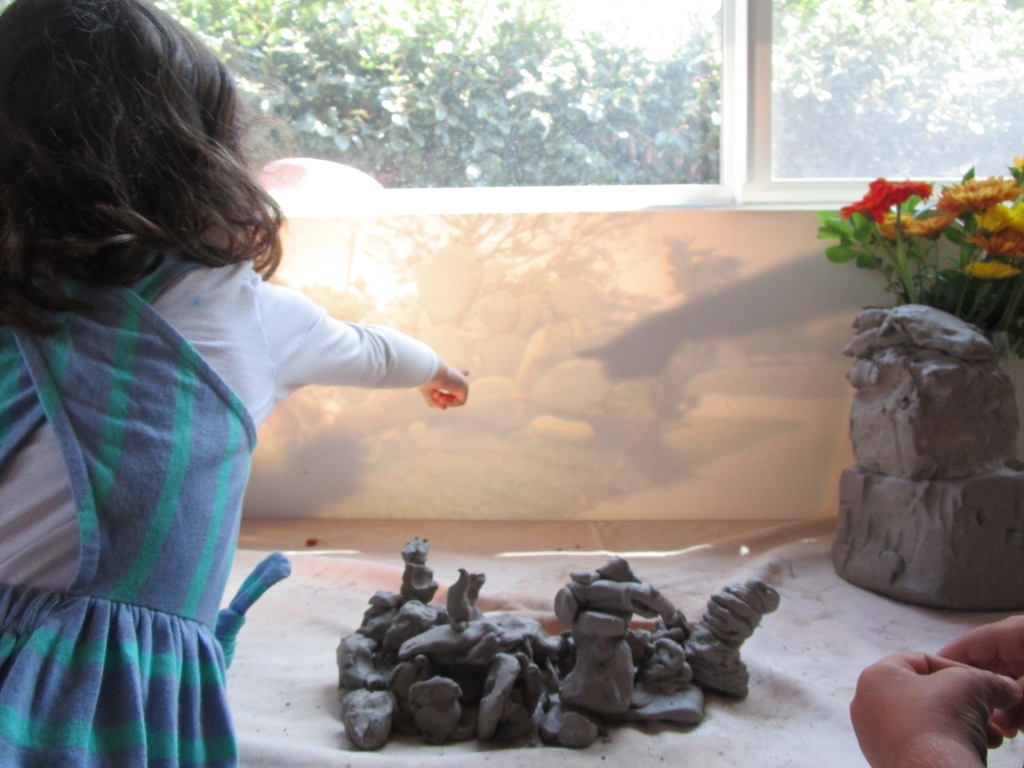
Knowing Cactusland was a favorite neighborhood destination, I projected a photo the children took of it on the wall near the clay exploration table. Small groups worked over a period of days as they familiarized themselves with this sensory-rich, three-dimensional medium. As they played, cactus representations emerged.
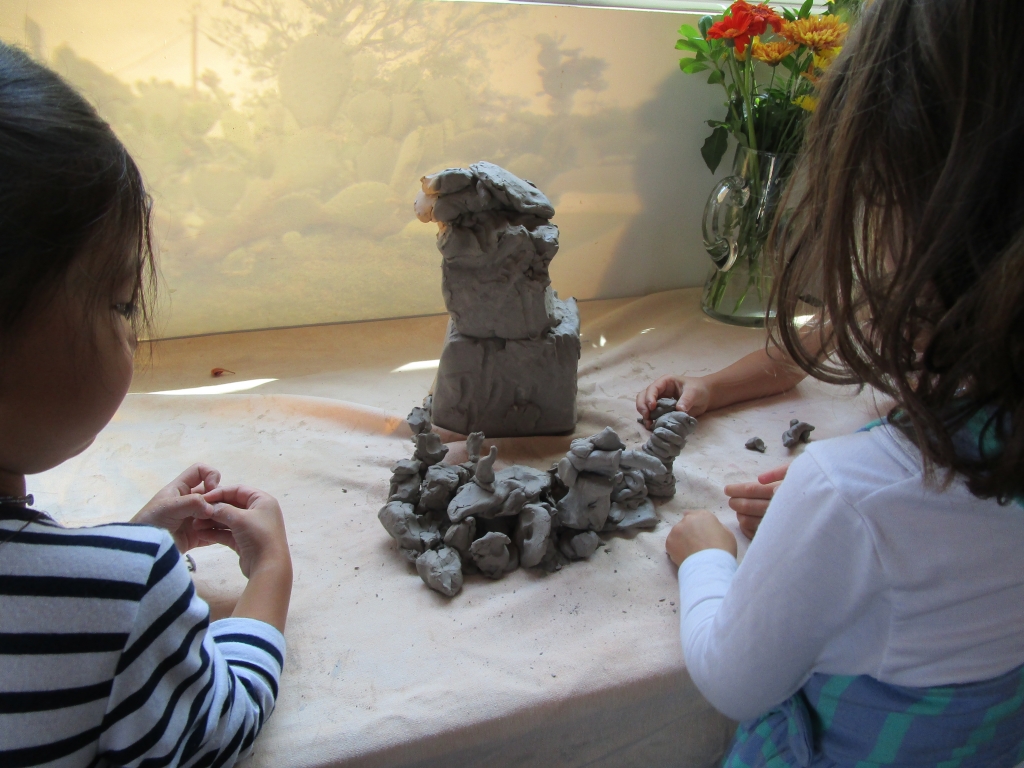
Sonia, Zoe, Mika, and Juliet create a collaborative clay cactus castle and they are being observed by peers playing at an adjacent table:
Phedon narrates as he works: I want to make a cactus. Look. It has two arms but I’m going to add. (Remembering a book he continued) I want to make three armed cactus and it can be a Cactus Hotel.
During the reflection meeting, he shared the idea of creating a cactus hotel that could be part of a larger group of cacti.
Phedon: This is a three-armed cactus. We can fire it and put it in our Cactusland in the Atelier.
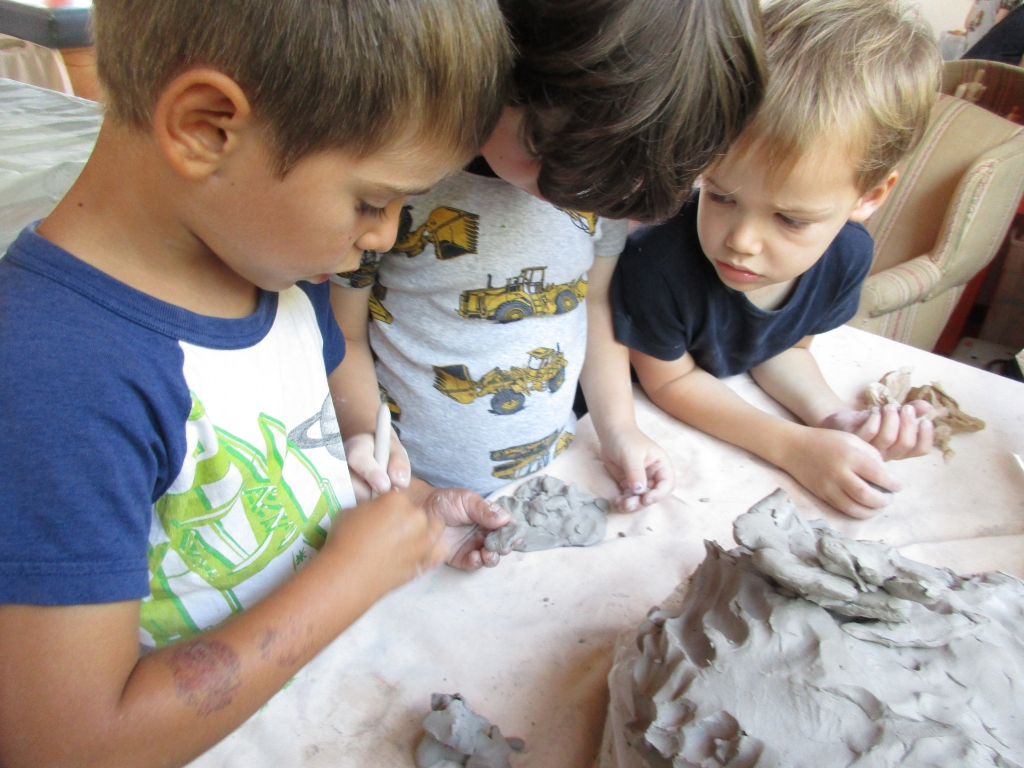
Many of the children were interested in contributing to the idea of habitat and a plan was made to revisit the clay in small groups.
Sawyer, Luca, and Eli join Phedon in the Atelier to work on sculpting clay cacti for a habitat. As they work they incorporate vocabulary learned from our Field Guides:
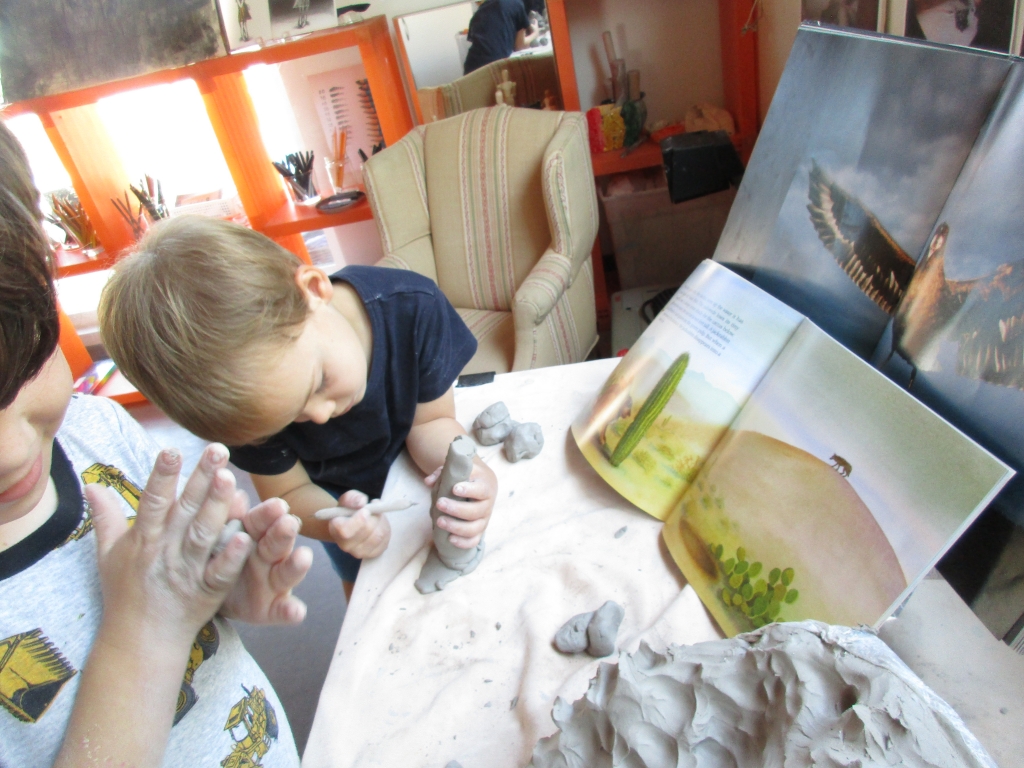
Sawyer: Look. I’m adding the crown.
Luca: And here is a cactus with ribs and a hole for the birds.
Sawyer: This one has prickly pears for the animals.
Eli: And this one has aerials for the spines.
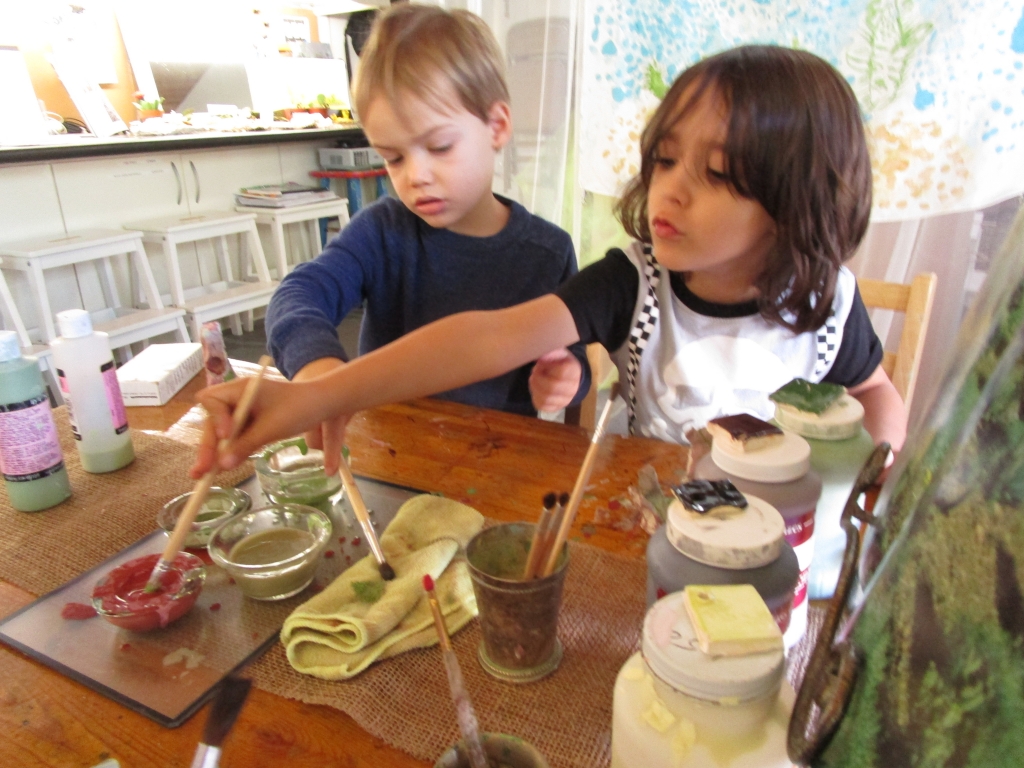
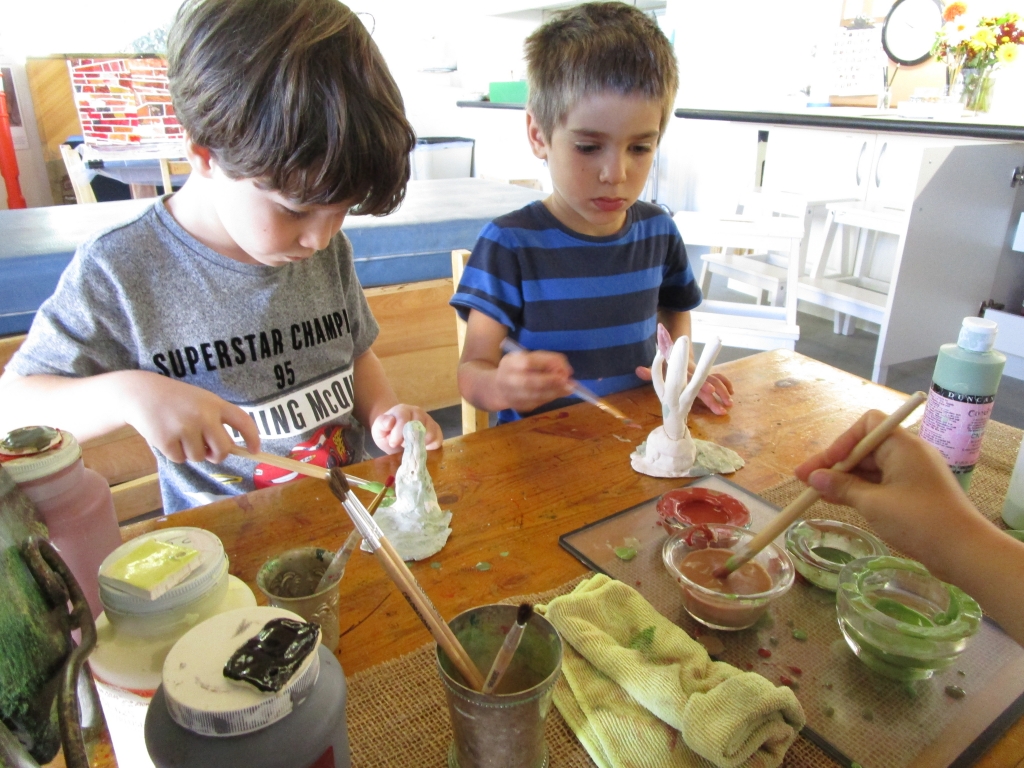
During the appointment, these children seemed to recall what they knew of deserts from books, resources, real-life experiences, and possibly even from my own questioning. After the firing and glazing, the group was excited to update our mini Cactusland in the Atelier. Together they worked to create a miniature 3D play space for the whole community where small groups come to play out stories in a land full of cacti.
Sawyer: The birds fly all around. There are scorpions under the ground and they come up to eat the cactus.
Eli: Rabbits are hopping around. The cactus keeps them safe from predators that want to eat them. They attack with their pokey spines.
Luca: And foxes and wolves look for the birds, rabbits, and cactus. They like to eat them. But when they eat cactus spines they help keep the people safe but they don’t know that it keeps people safer.
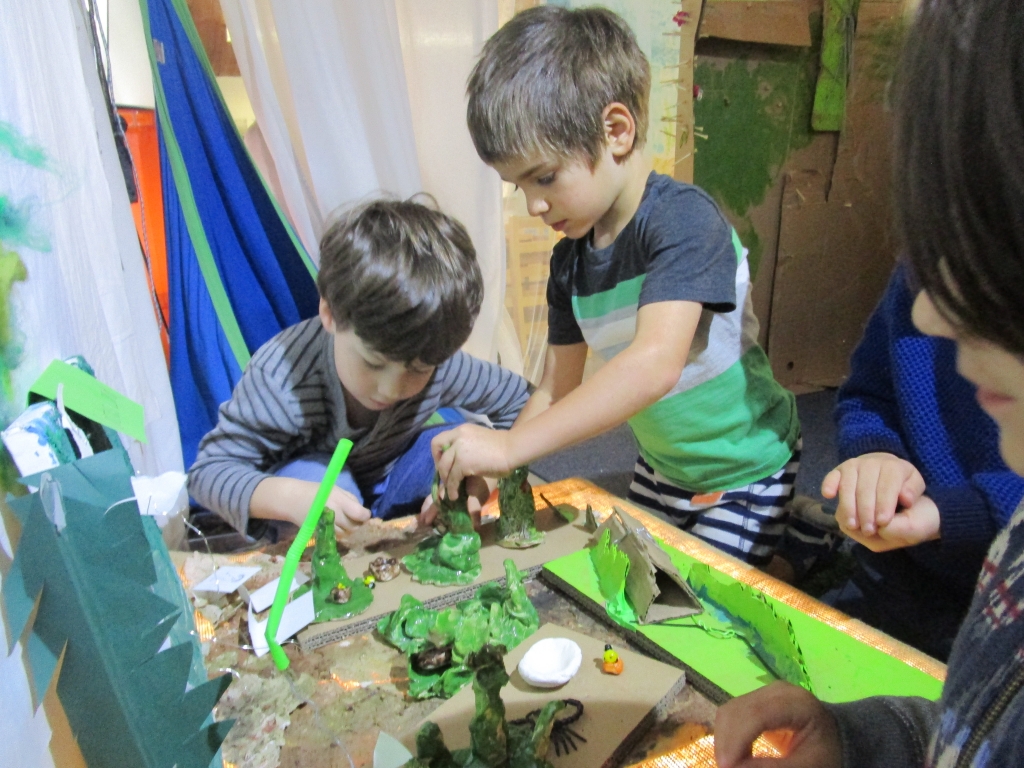
The fox and wolves are inadvertently making the cacti safer for the people and the cacti are keeping the birds and rabbits safe from those predators as the scorpion munches away on the cacti at will. As I reflected the work back to the teachers and listened to the dialogue, we knew we needed to slow down and ask the children: How are the people feeling about the fox and wolves? Do the fox and wolves have feelings for the people? What is the rabbit’s relationship to the attacking cactus? What is the scorpion’s opinion of all these interactions? All these questions will be posed to reveal the children’s thinking and exercise their imaginations. – Cindy
As they played, I stepped back into the observer mode and quickly became aware of the difference in the narrative. As they were sculpting in the clay without an adult presence, their creative and dramatic storytelling took them into a new world of discovery. This was a reminder of a recent conversation via Skype on 12/10/19 with Tiziana Filippini and Loretta Bertani about this cacti interest:
The imaginary is the exercise for the brain. Children live in their dreams and we convey children’s dreams through our questions and documentation.
When we foster creativity in an arena where children can play out their dreams, we are fostering a curious mindset. Strengthening their ability to question, make theories and discoveries. As we continue our walks to their beloved Cactusland in our NSW neighborhood, we are now modifying our questions from “What do you notice about the cactus?” to questions that will foster “the imaginary”. – Cindy