Upcoming Calendar Reminders
Monday, February 15th: SCHOOL CLOSED for Presidents’ Day
Friday, March 5th & Monday, March 8th: SCHOOL CLOSED for West Coast Collaborative Reggio Conference with Teachers
In case anyone still has the remnants of the original short NSW calendar sent last spring, we have also changed two days that were intended to be closed for staff retreat and inservice — February 12th and March 26th — and will now be open on those days in place of these. We have made this plan to be sure teachers have this opportunity to collaborate with our local colleagues and mentors from Italy. We are grateful for your flexibility and support as we continue to value these professional development opportunities during this challenging time.
Monday March 29th through Friday, April 2nd: SCHOOL CLOSED for Spring Break
Flowers
Flowers freshen up our small tables and then offer exploratory investigation along with representation possibilities as they dry out.
Here’s the link to our SignUpGenius for classroom flowers: https://www.signupgenius.com/go/30e0449afa629a02-flower
Parent Zooms
Thanks to everyone who was able to join us for our Parent Zooms on Wednesday. If you missed our parent zoom, or would like to revisit the conversation, here are the relevant links:
Cilantro: https://vimeo.com/502860577/67b4aa833b
Dandelion: https://vimeo.com/502827204/17d88810d7
Our next Parent Zooms will be on Wednesday, February 17 at 2:45pm (Cilantro) and 3:15pm (Dandelion).
Cilantro
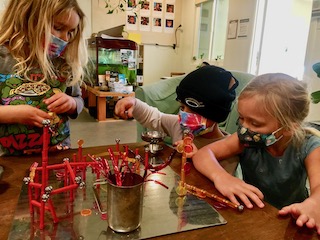
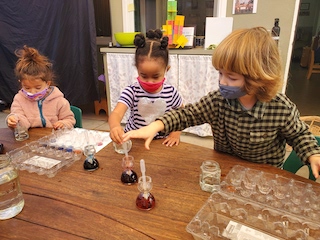
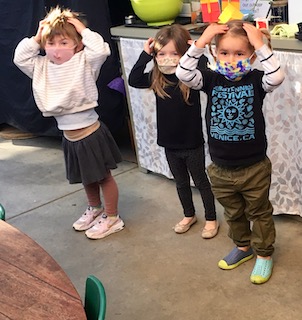
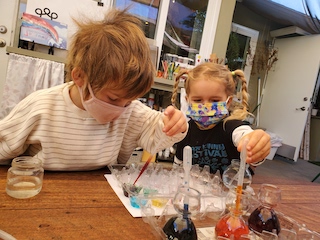
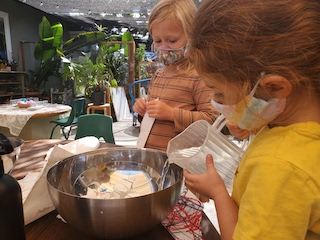
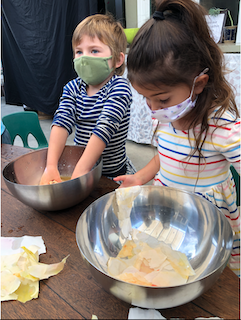
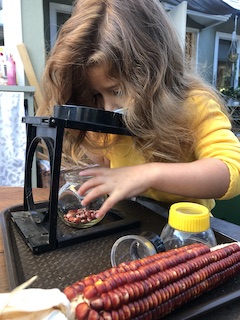
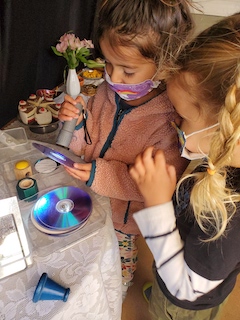
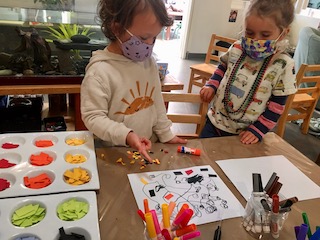
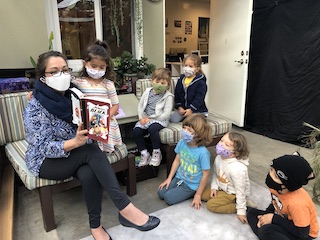
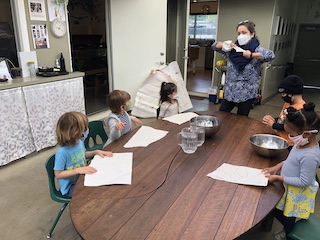
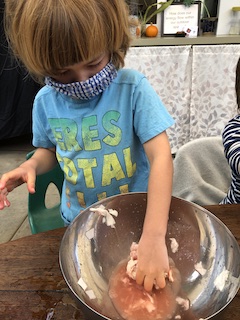
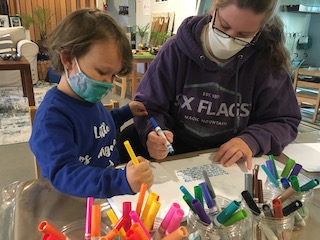
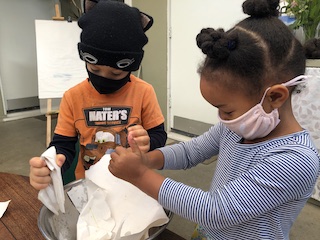
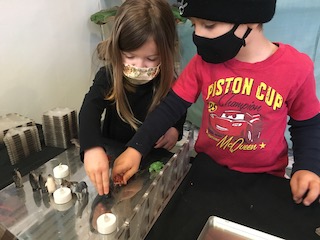
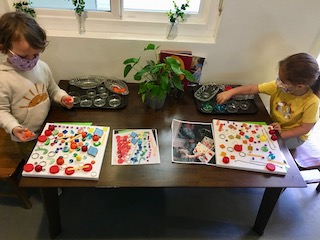
Sometimes a child’s emotional reaction can take another child by surprise. Things that haven’t caused a huge reaction before are suddenly harder to work through. In our morning meetings, we have been discussing how to better understand our feelings and come up with healthy ways to express them.
Emme: If I want to use something that someone is still playing with, I just listen when they’re done and then I get it.
Teacher Silvana: You think that to yourself in that moment. That’s a great tip to remember. Thank you, Emma.
Colette: I hug my mommy when I’m feeling mad or get a drink of water. Sometimes my dad takes me to my room when I don’t want to.
Teacher Silvana: Why do you think your dad took you to your room?
Colette: Because I wasn’t listening.
Teacher Silvana: I know being heard is important to you. It is for your dad too. I think it’s important for all of us to have someone who listens to us and for us to be listeners ourselves.
Leo: At home, I didn’t want to see anyone. I wanted to find a place to hide with my lovey.
Teacher Silvana: What would you call that space?
Leo: An alone space.
Teacher Silvana: Sometimes when I feel angry, I can’t find kind words. I want to be alone. I go to my room to take some time in. Then I find Ernesto (Silvana’s husband), and it helps me when I talk to him. I wonder where in your home you would want to create an alone space?
Leo: I’m a dragon with smoke coming out.
Teacher Cindy: What feeling would you connect to that dragon?
Wiley: Angry! I scratch or hit myself when I’m angry.
Teacher Silvana: What can you do with those feelings that’s not hurting yourself?
Luka: I do this when I’m so angry (demonstrates how he clenches his fists).
Teacher Silvana: Can we do what Luka is doing? Our hands are telling us we’re angry without hurting ourselves or anyone.
Some children model other gestures like stomping their feet and crossing arms. Teacher Silvana plays the “Angry Song” from Learning Station and repeats their gestures throughout the song.
When we reflect on mindfulness with children, we support them with the tools they’re building to gain confidence, cope with hardship, and work through uncomfortable or challenging moments. The earlier we do so in their young lives, the greater the opportunity to help them cultivate resilience and develop their mindfulness practice as they get older. A go to phrase when a child is working through big feelings that we can say is, “It’s okay to take a moment. I’m here to listen when you’re ready.” Going down and meeting children at their level shows you are there with an empathetic ear and available for a comforting hug. With the children’s strategies, we are gathering coping skills and encouraging them that wherever you are, wherever you go, you can create a quiet space where you can step out and take time in.
Link for helpful tips to build coping skills https://copingskillsforkids.com/managing-anger
Here are links to songs we’ve been listening to
Angry Song. https://www.youtube.com/watch?v=SYv2WkhDvB8
Hello Song https://www.youtube.com/watch?v=gghDRJVxFxU
One From the Left https://www.youtube.com/watch?v=2CX-jFsVtR4
Puff, The Magic Dragon https://www.youtube.com/watch?v=IlRrb5LOnM4
One, Two, Buckle My Shoe.
Dandelion
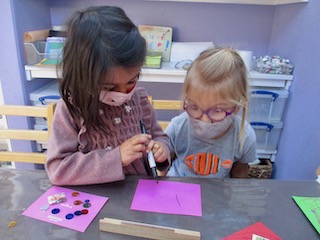
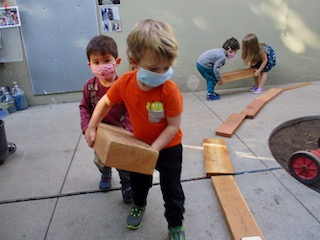
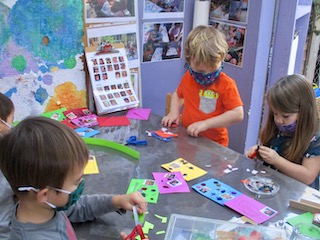
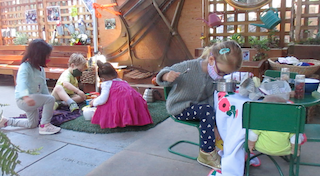
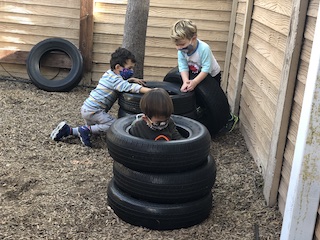
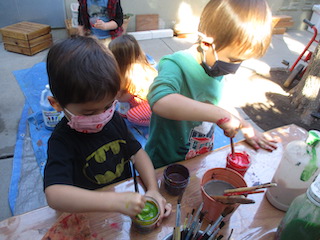
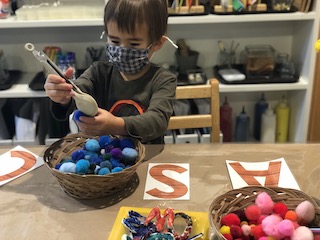
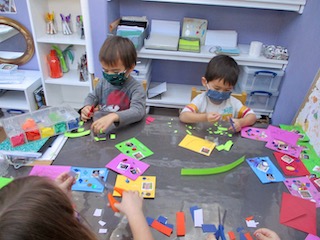
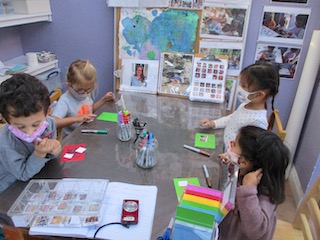
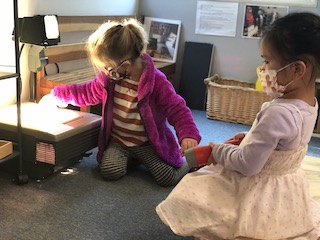
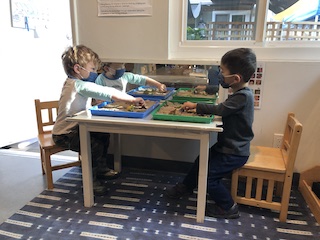
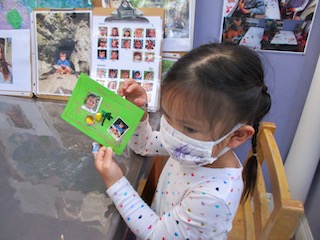
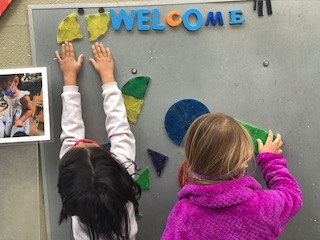
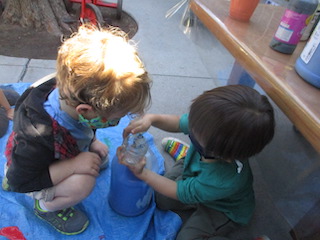
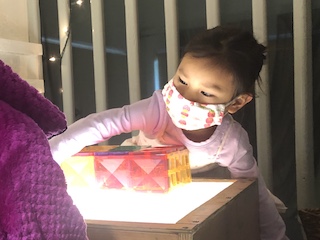
This week, we welcomed back Evyn, Eddie, and Dana to our classroom (and we continued to send good thoughts and well wishes to Olivia, Leon, and Zoe: we are thinking of you, and we hope to see you soon!). We supported these transitions and renewed connections by inviting the children to work together to create spaces and to provide materials for the whole Dandelion community.
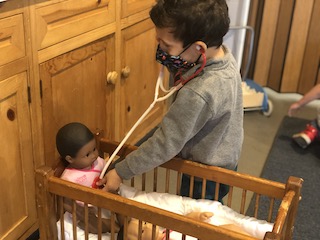
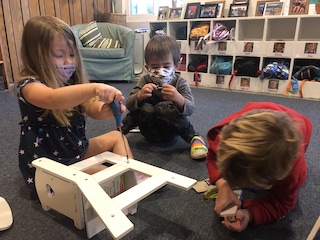
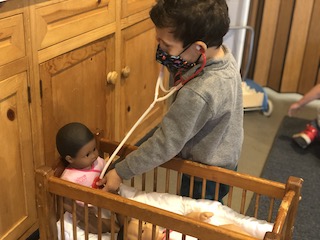
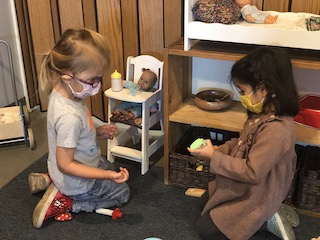
In the classroom, we have been noticing that the children have been engaging in dramatic play involving the care of babies — both as family members and as doctors and nurses — so we’ve introduced new materials in the House Area: baby bottles and food, Black and Asian baby dolls, a doctor’s kit, a high chair. Since the high chair did not come assembled, we invited a small group of children to work together with the pictorial instructions, some screws, and two screwdrivers. We laid out the pieces — conveniently labeled A, B, C, D, E, F, and G, which also supported our literacy work — and took turns looking for the different letters to follow the sequential steps of assembly. Then the children supported each other holding the pieces together, inserting the screws, and using the screwdriver. We also printed out some photos of the assembly process and displayed them on the shelf next to the high chair to remind the Dandelions of their role in creating the chair.
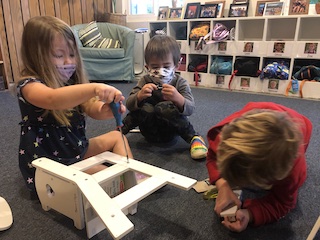
Once the high chair was ready, we set it up in the space for play. Between the indoor House Area and the outdoor House Area, the children have been engaged deeply in rich and multilayered dramatic play that speaks to their growing interest in caring for each other: giving each other check-ups and checking in with each other when someone looks sad or angry or upset; feeding the babies and preparing food for each other; forming relationships with each other as a family and as a community. According to Vygotsky, a psychologist who stressed the critical importance of social interaction for development, “In play a child always behaves beyond his average age, above his daily behavior; in play it is as though he were a head taller than himself.” This type of make-believe play where children imagine a scenario, take on and act out specific roles, and follow a set of rules according to their role, leads to the development of important cognitive and social skills. This is how children grow — and how communities grow. We are so excited to see it happen.
When the children are immersed into play, life is real to them as much as disagreements and misunderstandings. When either one of these occur, it opens a window where teachers intervene as a facilitator or observe and wait to see if the children reach an agreement on their own (we always remain close by and have our active listening on). Here is an example of a scenario where the children are setting up a picnic in the outdoor house area:
Child 1, holding a banana with a pair of tongs: Who wants a banana?
He gets two responses from child 2 and 3.
Child 2, without saying anything, takes the banana out of the tongs.
Child 3, sitting at the table pretending to eat breakfast: Me! I want a banana.
Child 1: Hey, you [Child 2] took the banana out of the tongs. Give it back to me.
Child 1 continues to ask Child 2 to give the banana back without success. When Child 2 puts the banana on the table, Child 1 picks it up. Child 2 notices and becomes upset.
Child 2: Hey! .
Teacher: I saw what happened. Let’s talk about it. When you asked, “Who wanted the banana?”, you held it close to Child 2, and she took it. But it sounds like you were planning to hand it to Child 3.
Child 1: I didn’t like it when Child 2 just took it from the tongs.
Teacher: It sounds like Child 1 wanted to hand it to Child 3 before Child 2 took it out of the tongs. And that made Child 1 feel “sad.” Child 1 “didn’t like it.”
Child 2: Can I have the banana?
Child 1: I wanted to give it to child 3 because she asked.
Teacher: Please let Child 3 know that Child 2 wants a turn when she is done.
Child 1, handing the banana to Child 3: Here.
Child 3: I don’t want the banana.
Child 1 drops the banana on the ground.
Teacher: Remember the plan to give Child 2 a turn when Child 3 is done.
Child 1 hands the banana to Child 2, and the game as well as other “family” interactions continue.
This was just a small moment in the whole 45 minutes to an hour that the children spend in one space. Our spaces and activities for the children are created with the intention for children to build and nurture relationships. Before friendships are born, children explore agreements, disagreements, and moments of joy and discovery. Every new day children come back and practice these skills again and again. With time, we hope that by supporting and scaffolding their trials, we earn their trust and the relationships with each other only strengthen and last a lifetime.