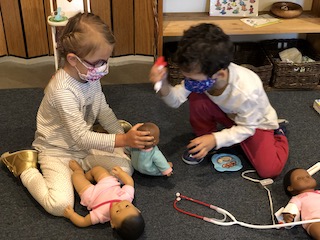
After noticing the Dandelion children’s interest in role-playing as doctors during imaginative play, we introduced a wooden doctor’s kit into our indoor House Area, along with a couple of new Bitty Baby dolls. We then observed, curious to see how these new materials might facilitate the roles that the children take on, the ideas that they express, or the stories that they tell through their dramatic play.
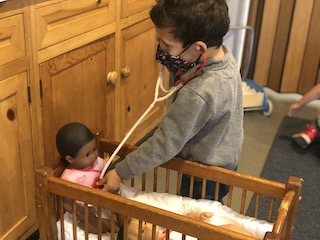
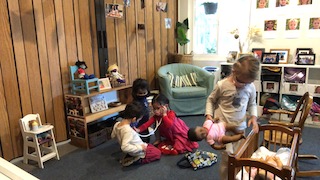
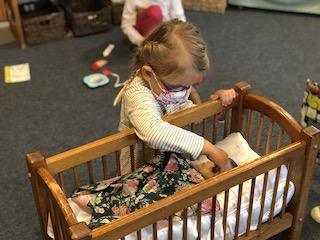
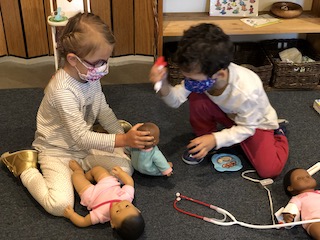
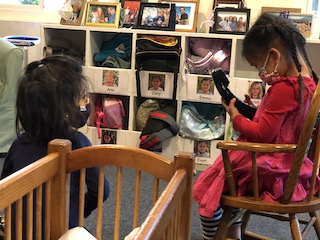
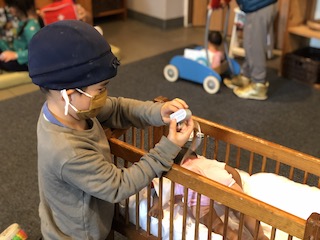
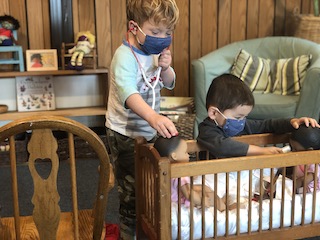
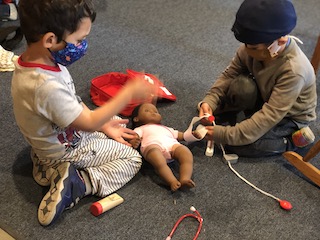
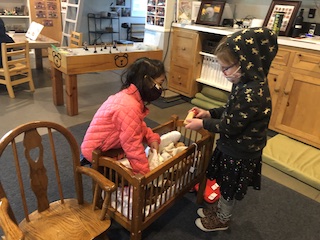
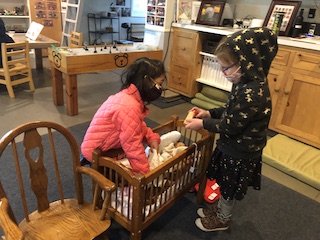
Emma: It’s time for the babies’ check up!
Marcel: I need a check up too.
Emma, using the stethoscope: I need to check your heart.
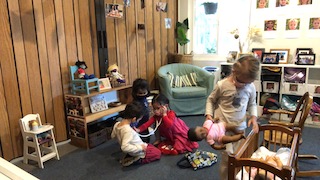
Marcel: Ba bum, ba bum, ba bum.
Ana: This baby needs a check up.
Emma: Okay, after Marcel.
Marcel: I want to be a doctor too.
Emma: Okay, doctor, this is the baby.
Arya: I am a doctor too.
Marcel: Ba bum, bum, ba bum. We are doctors. Now I am going to check the temperature.
Dana: How is the baby feeling?
Emma: Not good.
Marcel: Sad. He needs a book. He needs to watch Paw Patrol.
Ana, bringing over a second baby: This baby is not sad. This baby is happy. I’m taking care of this baby, so she’s happy.
Marcel: This sad baby needs help.
Emma, picking up the phone in the House Area: Hello?
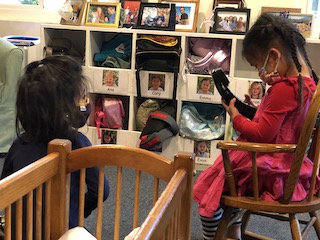
Arya: Are you going to call a doctor? A real doctor?
Marcel: I’m a real doctor. I can help.
Teacher Dana: What does a real doctor do?
Emma: Real doctors help by giving everyone a check up. And then the families help the people feel better.
Ana: I’m a doctor giving the baby a check up. Now I’m the big sister putting the baby to bed. See? There you go, baby.
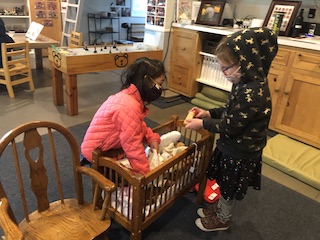
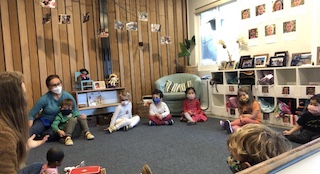
We brought back a couple of questions to our Reflection Meeting: How do doctors support us? How do families support us?
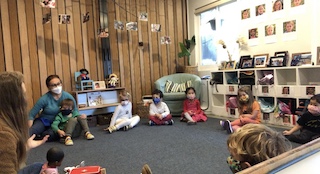
Evyn: Doctors help people feel better.
Dana: How do they help people feel better?
Emma: They give them a check up. They are like Doc McStuffins.
Spencer: A doctor gives you a shot. Sometimes you need a shot after your birthday. There’s a sharp part and it pokes through.
Evyn: They have a prescription. It’s medicine. And then you can put the medicine in [the person’s] arm with the shot.
Emma: The family holds the baby’s hand during the shot. That helps the baby feel happy.
Ana: I held the baby’s hand when Marcel gave it a shot.
Eddie: Doctors don’t help when you are sick. They help when you are hurt. If you stay home, you are hurt. You are sad.
Marcel: My mommy helps when I am sad.
Eddie: Mommo and daddy and Henry help me. Henry’s my brother.
Cary: I have a brother too.
Dana: Does he help you feel better?
Cary: Yes.
Doctor play is always popular in young children while they process the immunizations they are scheduled to take, get regular checkups, and visit when sick and hurt. In a year where so much of the adult conversation around them has to do with health and sickness — Covid19, tests, vaccines, germs, etc — it is no wonder that the children are exploring these topics through their dramatic play. Psychologists say,
“Through observing children at play, we recognize what their worries, concerns, and fantasies are. We learn about their basic needs, their feelings of love and anger, their rivalries and fears of failure, their secret wishes and desires.” – Dorothy and Jerome Singer
We can also see how emotionally connected these children are with one another and what comfort that those connections can bring. Their play with the babies, who are not necessarily “sick” but are “sad,” underscores that emotional feeling is just as important to take care of and nurture as physical feeling. We recognize the importance they give offering support and helping a friend feel better by holding their hand, checking in on them, and being there for them through tough emotions. It’s a beautiful look into the hearts of these children as they explore feelings of empathy, compassion, and caring for the babies as a “family,” bringing them closer in their relationships as a school group/community.