The teachers noticed a theme of ‘pet play’ in the East Wing House Area, and made a decision to take a closer look at the children’s interest in pets. How do the children define the word ‘pet’?
Following a visit from Coke the hamster, the children have been invited to bring in a pet. At morning meeting the children share their animal and then the animal is brought to the communication table to investigate in smaller groups.
(paste this link into your web browser for a video of the East Wing sharing in a dialogue about Jackson’s pet chinchilla.) http://www.youtube.com/watch?v=z2HCi8dOy8w
While at the table, the children began to converse about pets, making connections with their own experiences and developing theories on how or what the pets may want or need.
Looking at Hanami’s frog:
“We feed them little worms. You just drop them in. But for Rosie, the little one, you need to put the food near her mouth. They live in a tank with water in it and you can get plants and rocks for them. They don’t need them but you can get them. I added a fish named Lefty to the tank. It’s purple and pink. The funny thing is that the fish can’t see his own food but he can see the frog food. The frogs eat the fish food and the fish eat the frog’s food and that’s what’s going on in my tank.” Hanami
“It’s hard for me to look at them because they make me think of my frog. It died and we didn’t even have it that long.” Owen
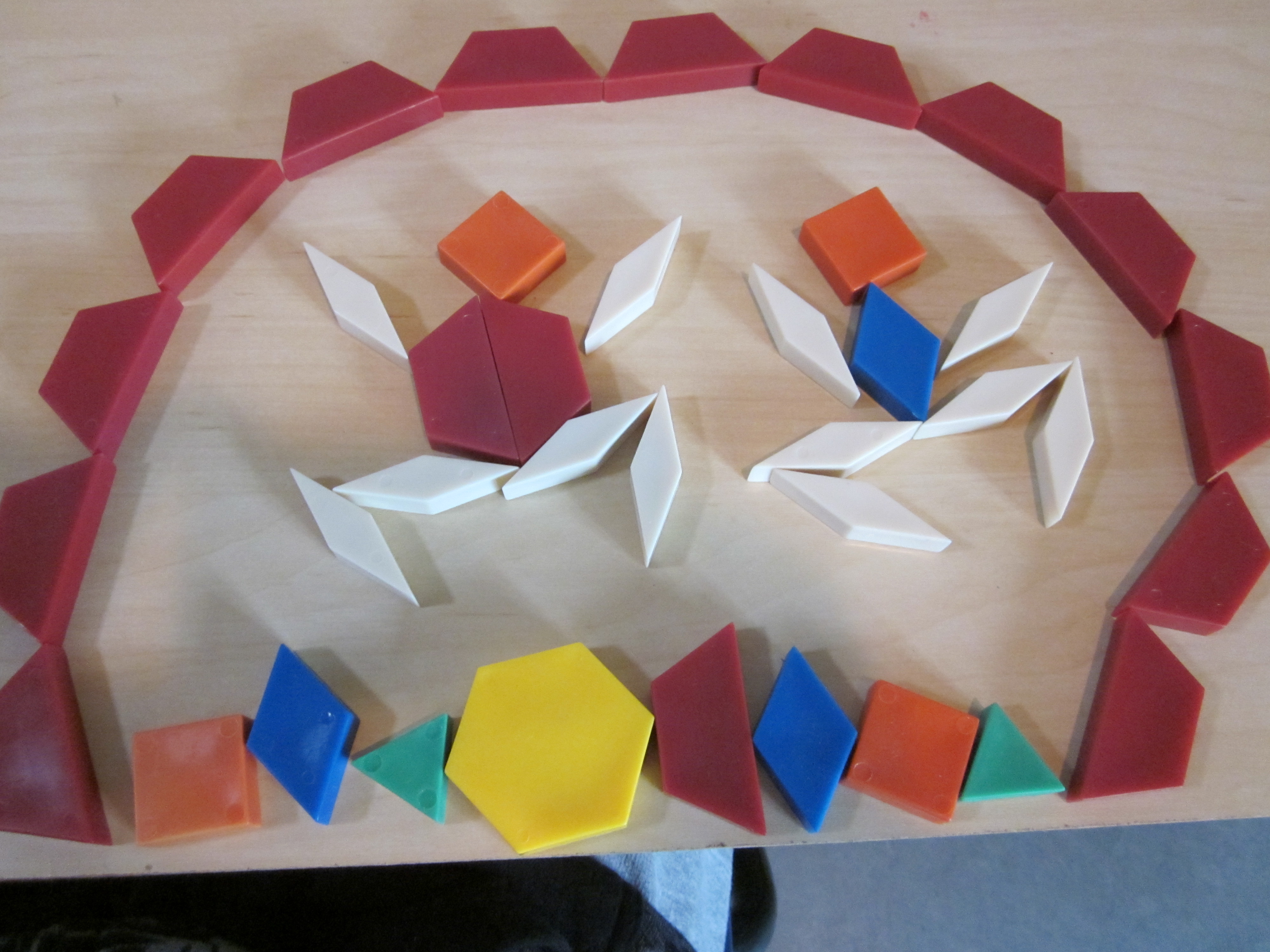
Owen went to represent frogs in tangram shapes.
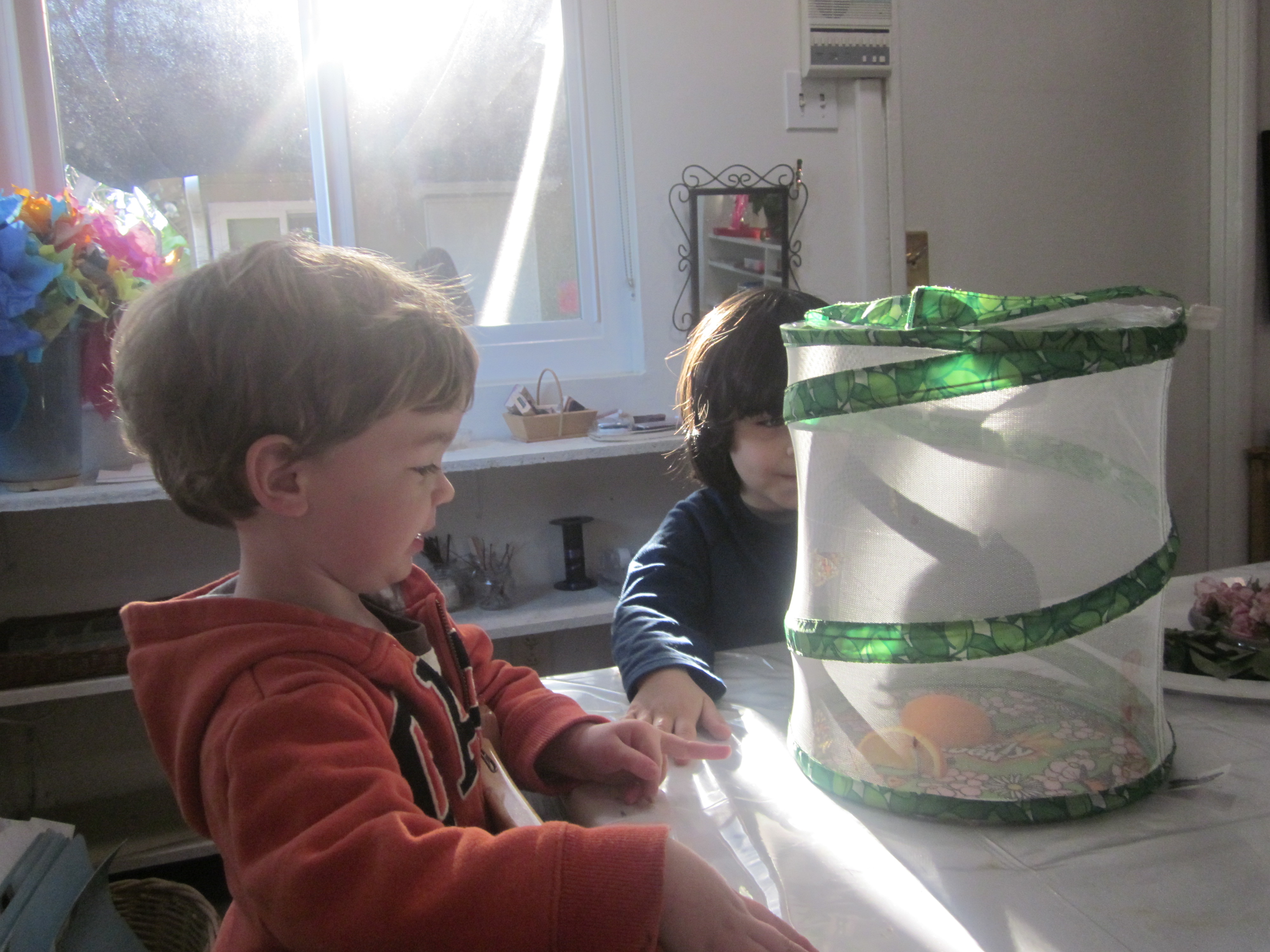
Julian’s Butterfly
“The butterflies love pollen. Pollen is their juice. They drink it for breakfast. At home we saw them hatch. Their wings were wrapped around their head and then they opened them. We had directions to feed them oranges and not to wiggle them. The directions said when we saw them flap their wings, we get to let them go. I brought them to share and to let them go at school. When went to set them free. One jumped on my hand and when I lifted my hand up it flew away.” Julian
“They eat pollen. You have to check on them every night. Don’t touch their wings because they will rip off and then they can’t fly and it would really hurt. If you step on them then they won’t be a part of nature anymore. They would be dead and then they can’t come back to life.” Lucy C.
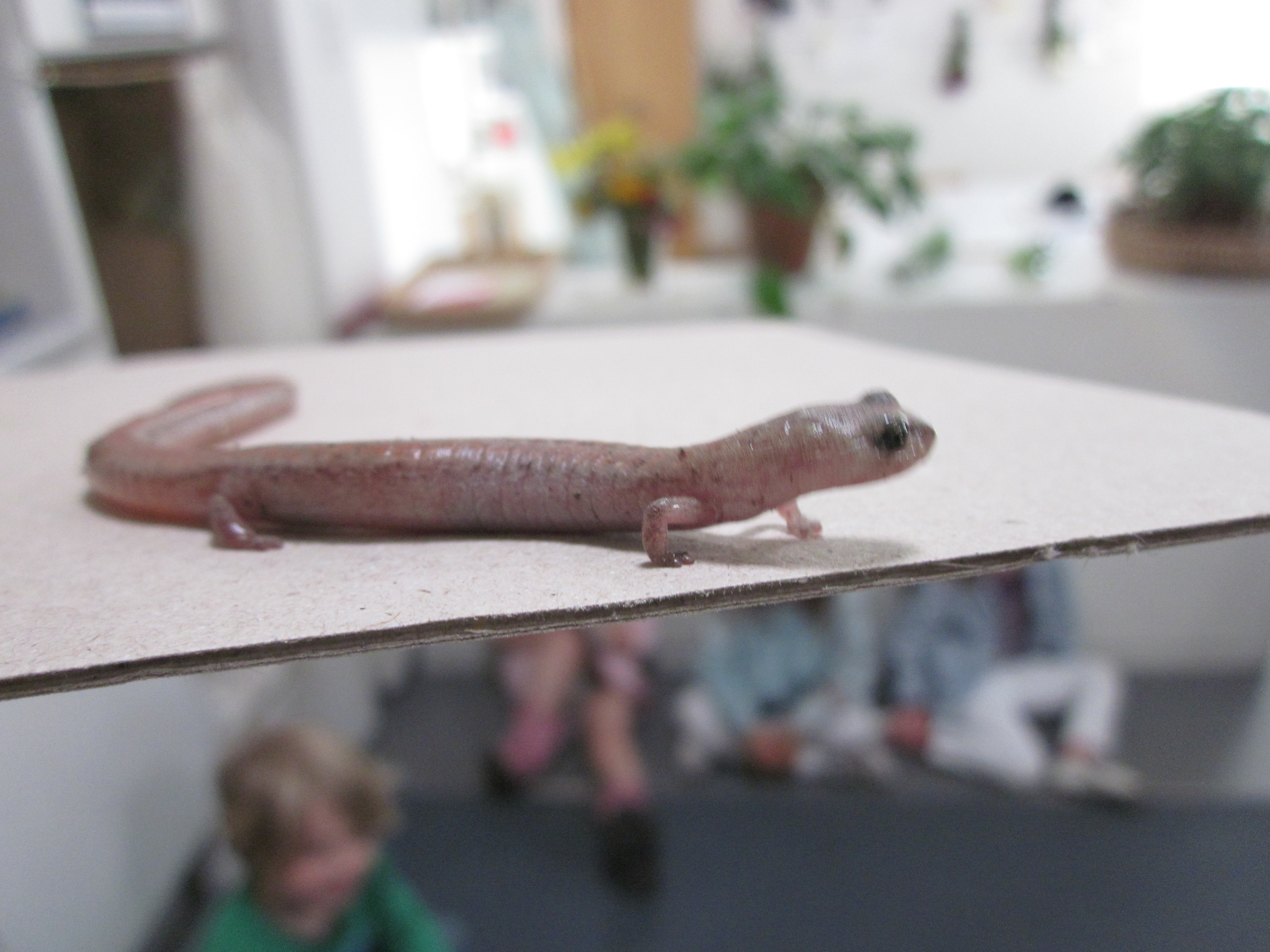
Max’s Salamander
“My neighbor found this salamander in his yard. He knew I would like to see it so he brought it to me. I’m bringing it to school to show for one day and then I am taking it back to Mike’s yard to bring it home. We need to keep it moist because if you don’t put in enough water he’ll dry up. He likes to eat insects. I know he likes me ’cause he crawled on me up to here (shoulder).”
“They’re hard pets cause they sliver away. They are like worms, they like the dirt and they like to swim in the water and near lakes. Birds eat them but they can camouflage. They shouldn’t be pets.” Dex
“They are awesome. It’s against the law to keep them as pets but I don’t know why.” Max
These children have experiences with many materials and are using them as tools to represent images of their friend’s animals.
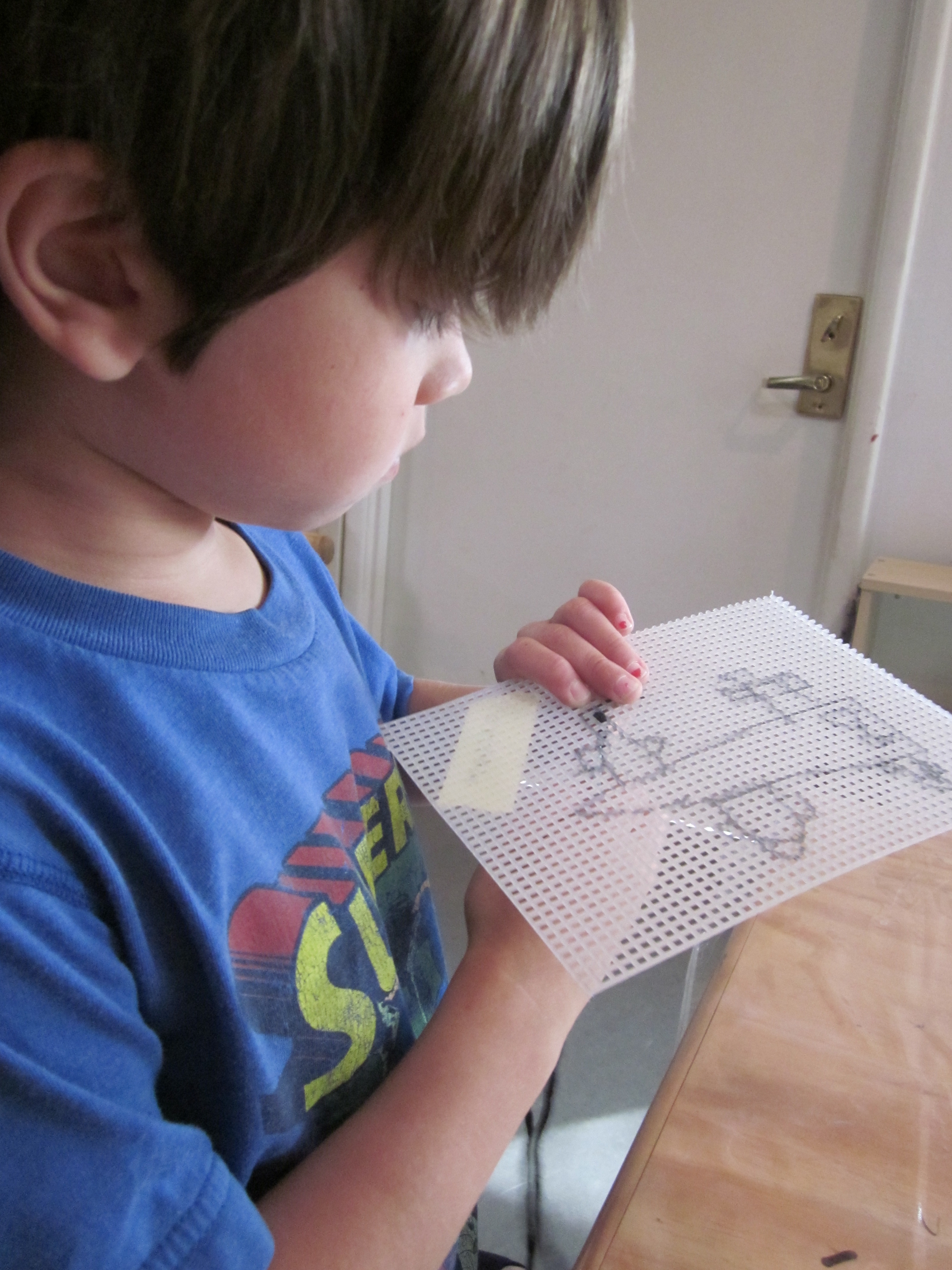 Declan represents the salamander
The children have used wire, clay, drawing, painting, tangrams, mosaics, photography and sewing as a way to express their memories, feelings and ideas. We’re still gathering informaiton on the effects pets have on the children and what connections they make through visiting with each other’s pets. Talk with Cindy if you’d like to bring your pet in for a day.