Coffee with Roleen 11/16/10
Transcribed by Kathe (Jake’s mom WW)
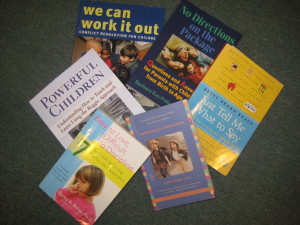
Another of our monthly Coffees, and may I say again that if you haven’t had a chance to come, consider doing so. It’s a lot of laughs and a ton of fantastic information and parenting togetherness. For those of you who couldn’t attend, the notes are in the “Coffee With Roleen” category on the right of our blog page.
This month we met at the beautiful home of Michael and Jeff (Imonie, WW). Before we got officially started, I described the pen I am using to take notes because it became such a hot topic. Here’s what it is: The Echo Smartpen, bought at Best Buy. It is a pen which records as you take notes, and then downloads the notes and the recording onto your computer. It does wondrous tricks. Now, onto the meat of the matter.
Roleen pointed out that there is a search mechanism on the blog. Therefore, if you want to know anything that’s been said about a particular issue in past notes or topics, you can search by keyword there. We are covering a lot of great information in the Coffees with Roleen (CWR’s), and the blog search may help you find what you are looking for.
For example, last month we discussed the Time Timer. One of the parents had forgotten the name, so here it is again: The Time Timer is a timer that uses color to help children visualize how much time they have left for play, or before bedtime, etc.
POWER
Then, Roleen read an email she’d received from Pam (Lola’s mom WW) about an experience with Axel (Lola’s brother) who is now in Kindergarten. It was a great story about how he had learned to navigate a difficult situation. (Check it out for yourself. We have it listed in the “Articles” section under “Parenting” on the blog).
It was an example not only of the communication skills that Axel had learned, and how he was able to use them, but also of what the children are capable of if we don’t rush in to “solve” their problems for them. Though you may want to give them answers, you need to give them time to figure out their own answers, the ones that feel right to them. What Axel came up with ended up not only being much better than the solutions of the adults, but also, very much his own. You want to be involved to throw out suggestions, but you also want to allow their ideas to emerge. The subject of the email was the problems Axel was having with a kid who was being aggressive and confrontational on a daily basis. Roleen said that “bullying” is a hot topic right now and we must be careful not to attach a label onto a child because of the behavior they are exhibiting. That’s hard because as parents we want to protect our child from uncomfortable situations. But behaviors mean something and recognizing that keeps us from the judgment that prevents us from moving in the direction of supporting positive social interactions. It is a behavior that needs to be looked at within its context—what is going on with the kid who is “bullying”? How is my child learning to find his or her voice in their world? (These are conflicts that can also be played out with persona dolls, farm animals, dinosaurs, etc. Working through the “what if?” situations in a safe arena).
The question asked was “Is it EVER okay to push back?” You want to brainstorm all ideas, go over all sorts of options and discuss them. You’re helping the child find out about how they feel. Speaking about it gets it OUT. We’re so often afraid of these conversations, afraid to address the anger. But the playground is their world. As you are going over ideas, the solution has to be where the children “find each other.” If your child is trying things and they don’t work, they might say that to the other child—“I’m trying everything, and I feel like I need to push you ‘cuz you’re not listening.”
We as parents have to get our own feelings in check and feel comfortable letting our children play out their feelings. One thing to consider is temperament. If your child is very sensitive, they may say they’re being hit when they’re not—they may be absorbing other experiences as if it’s happening to THEM. It’s important, then, to remain in the researcher mode. Find out the facts before taking things that are said literally. Also, do not be afraid of their “violent” language. You can say, “You have really big feelings. This is really upsetting you. I’m here.” You want them to play out these feelings and not hold them in. As Roleen pointed out, (to great effect), “In the creative play area, babies are stuffed in ovens….. mmmmm. . . .could it be that they’re just processing what’s going on with this new baby in the house? “How come no one asked me if I wanted a baby?” (and even if they did want one, is the reality what they bought into?) “Wasn’t it great when it was just me?!”
One parent described their child carrying a huge toy sword around their house, attacking everything. Parents get worried about Power Play, or playing with guns. Even the way the game is designed, and how they make up the rules can be about power. But children, especially 4 and 5 year olds, need to have that power, and work through those feelings. All that matters is that everyone is safe. What about strong language, like HATE or KILL? It’s important to recognize that what your kids are saying reflects their feelings. Too often we go right to the discipline of stopping the words without first validating the feelings that brought on the words. Of course, hurting people’s feelings is never okay and you should address that but first you must understand and reflect what your child is feeling. There are three things that guide the teachers and children at NSW: We must respect and take care of ourselves, respect and take care of others, and respect and take care of the environment. “We can’t hurt people” (either physically or emotionally). “If you don’t want to play, you can tell them that. If you need help so they will listen, you can get help.”
Another parent told a story about her daughter drowning her mermaid doll in the bathtub which was upsetting to her. Think about why something’s bothering you. Is it because you feel you always have to teach them that it’s important to be nice? With that, you’ve got to be careful not to invalidate what they may be feeling. Roleen had us looking at this as a window to see what she might be trying to process; something she is working through. It’s not about the mermaid and what looks to be violence (that alone scares us). She’s playing something out. We want them to play their feelings out. You could take another figure and play it out WITH them if that works for you. Or you can note the play and watch for other signs of shifting behavior and provide a time for reflecting together. “Something seems to be bothering you.” But be careful not to intrude in their play all the time. It’s a little dangerous to always make everything a lesson.
SIBLING RIVALRY
It’s exhausting. Ideas were brought up to help out with the constant conflicts. For instance, in terms of Who Gets To Do _______, there was a suggestion that one child gets even days, the other gets odd. Yes, this can get sticky when it’s a 31-day month, but you just keep to the evens and odds. They can switch the next year! One parent gave out Captainships—“You’re the Shoe Captain. You get to decide what shoes your sister wears,” or “You’re the Bath Captain. You decide which toys go in the bath.” This can also help an older sibling feel a little more in control, since so often they have to accommodate their younger sibling(s).
CONTROL
We have to get past the feeling that we do things better, and that they should do it our way. What part can we let go of, and what do we hold onto? One parent reminded us that “our stuff” is laughable at times. “The anxiety I feel when she pulls out the wrong pair of shoes!!!” He talked about the struggle in allowing his daughter control about getting her to school, or when it’s time to eat. “She fights with me more, hitting and kicking.” This is a good time to give choices. But there are some things that aren’t negotiable, like getting up and out of the house. Rules that are not negotiable should be clear but discussing those rules together and involving the children in the process (at a time when brainstorming ideas can be heard, not when you’re “in it”) is important and brings the best results. Children must feel they have some say in life’s day to day and decisions. It is when they feel powerless, that you get the most resistance. It’s important to remember that children work hard everyday and knowing that there’s a break coming, helps. It’s like when we have a date on Saturday, everything seems easier and more doable during the week. Children can’t look that far ahead and the “now” is where they live. That’s why the calendar is a great tool for them, to let them know what’s coming. You can always bring these things to the family and talk about them. “Have you noticed that we seem busier than usual? Everything’s moving so fast. Let’s try to figure out how to manage all this so we can still have some time together.”
Again, taking some extra time to reconnect at pick-up has been very effective. Taking that extra 15 minutes can make all the difference. You can say,
“I recognize that we’re hurrying so much, we need to make a shift. We are really rushing all the time. I’m missing you. Let’s take some time together.” This is great for transitions. But routines are important, they offer safety, so if you’re going to mix it up, you want to tell them so they are prepared. It’s all about expectations. The hardest part about going to and from school is the transition.
BRAINSTORMING
If you look at what your kids are doing, they are telling you what’s going on with them. If for instance, they don’t want to take a nap, take some time to have the conversation about that. Brainstorm some ideas that might make the process easier (at a time that everyone can be heard, not when you’re “in it”). You want to value that they are thinking, that they are being critical thinkers. Brainstorming is really healthy. It’s just what you do in business – you take all the suggestions. That doesn’t mean that ultimately you don’t choose which ones work for everybody. We must remember that our children are not just our future. They are our present. They are participating in their own discipline. That doesn’t mean you don’t offer guidance in that discipline. It’s not healthy to give them total control and they must be involved in the process. “Ok, that’s our plan. But what if you change your mind? What should we do then?” You can say, “We made an agreement.” You can even get them to sign a contract and hang it on the wall. “Now, what if you change your mind? What do you think the consequences should be?” Oftentimes, their ideas of consequences go farther than even yours would. And you can always say, “Let’s come up with some other ideas, because that doesn’t work for me.”
One parent talked about conflict when her two boys are playing together, and the little one keeps wrecking what the older one is doing. Roleen suggested she involve the older one in the discussion. “This must be so frustrating. Your brother thinks you’re the King of the World and he always wants to do what you do. What do you think? What could we do?” Involve him in the dialogue—what it means to have a brother who______. At the moment, you can validate the feelings. Then later, you can have a deeper discussion.
It’s not that we allow things to happen that shouldn’t, but we need to remember to be REPORTERS and play back the action. Instead, so often we go right into teaching moral lessons. We have to remember to validate the feelings without preaching and if we don’t remember, know that it’s really okay to go back and address that. “I wish I would have done that differently” is the “apology” that we wish we would’ve had in our own growing up years. We all have deep experiences from childhood that come up. Even if we say, “Why did you do that?” there’s a judgment that comes up. It’s a gut reaction. So remember to REPORT, with no judgment. They will stop and listen to you as you re-play what happened: “I heard a loud scream and when I came in you were taking his toy away or….”
All we want (children and adults!) is to be noticed.
WHAT ABOUT WHEN YOUR CHILD DOESN”T EXPRESS THEMSELVES?
Stay away from bombarding them with questions. Play back the action. “That’s really frustrating. You had an idea and it didn’t go that way.” “You were working on that drawing (or puzzle, or lego or. . .) and it didn’t go the way you wanted” or “that’s really upsetting, he came over and moved the pieces. . .” If he doesn’t make suggestions, you can ask him if he’d like some ideas from you. “We can talk about suggestions” or “I’m still thinking about what happened earlier….”
Remember to prepare for conflict-filled scenarios. Let’s say they don’t like it when THAT BABY comes over to visit. Prepare them ahead of time. “The baby is coming over. Look around. Is there anything you don’t want her to touch? Maybe you can create a basket for the baby with all the things she can play with.”
GIVING
One parent talked about the holidays and wanting her son to give away his older toys that he doesn’t play with to someone else.
Betsy Brown Braun has links on her blog that speaks to this (and many other topics of concern). Click here to gather more information: Betsy Brown Braun.com/blog/
Giving is really great. It’s the reciprocity of love in the friendship but so often we forget to involve our children in the gift giving. Bring them with you to give the toys but only after you have involved them in the process. If you’re worried about taking your child to the store to buy the present for the birthday party he’s been invited to, then get their ideas about what to give. Have them write a card. “Tell me about your friend. What things does he like to do? What could we write to him, or draw, or make?” Remember that if you ask, “What should we buy them?”, the response will more than likely be something that they themselves want (that’s developmental). Roleen told a story of making a card in the Communication Center in the EW for a friend of hers who wasn’t feeling well. The children naturally gravitated to the table and immediately related to the story. They are natural “givers of love”. It’s about poetry, communication, and togetherness. Making connections. It’s what all of this is about.
DEATH (more information on this coming soon on the “Articles” section of the NSWparents blog)
A lot of us weren’t told things growing up, and so as children we weren’t able to process the feelings that were sparked by certain events in our lives. The Death topic is scary for us and we never seem ready for it. The most important thing to remember is to facilitate the dialogue. Children are curiosity and that’s a good thing. There are many answers. Find out what they are really wanting to know.
When animals die, this is a great opportunity, a great moment to talk about these things. Where did it go? Shall we have a funeral? A memorial? It is GOOD to have these emotions. Again, we operate with this poor image of the child and that they need to be protected and we should keep them from feeling sad. In reality, it’s important they have these feelings. It’s great to have something tangible when they are processing something as intangible as death. A memorial. A picture. An empty cage. A painted rock. A newly planted tree. “What do you remember about Petey? What did he like to do?” Make a little book, a memory book. You don’t need a lot of words with these hot topics. Stay away from giving them more information than they’re asking for. And don’t forget to say, “You have some really good questions. I wish I had all the answers.”
Children’s books like Tough Boris (about a Pirate and his parrot that died) should be a part of the children’s everyday library.
RACE AND DIFFERENCES (check in the “Articles” section in the NSWparents blog for some great information about helping children to learn how to resist bias)
Next there was a discussion about Race, and whether that issue comes up at school. Roleen said, “They are all about classifying, sequencing, and organizing and so color and shapes are a part of all that. Our problem is that as adults we connect an emotional component to comments and feel the need to give a lesson. It’s more important to listen to what they’re saying, play it back and try to figure out what they’re really talking about. It could be an investigation—people are all different colors. We say it doesn’t matter, but it does. They are putting people in categories.
When we see someone in a wheelchair, for example, and you’re child points or stares and asks why, you might go right to the place of responding to your own embarrassment and instead of giving your child the answer (“Their legs aren’t working as they should and so they need the wheelchair to help them get around”), we say don’t talk about it, it will hurt someone’s feelings or even totally ignore their question and quickly move away.
But they are thinking about it and want to talk about it, i.e. when they say someone is “fat”, our response can be that people come in different sizes. It is important to model social skills and sensitivity to others but do so without judgment and blame. You can say, “Some people may be uncomfortable if they hear you talk about them. I can answer any questions you may have when we get home.” If your kids talk about their own color, or your color being different (interracial families), they may just want everyone to be alike. Feeling badly about that is probably just what you’re feeling. More than likely, they’re not. They’re just trying to figure out who they are in their world. There are so many things that are different in the world and so many things that are the same. “We’re one of those families that are different colors.” Our reactions and responses to these things are ours, but their experiences are different from ours. We all have ways in which our families are different: race, age, number of siblings, wealth, nationalities, disabilities, lifestyles, etc. It always feels to us like everyone else is the same, and we’re different.
Remember, we can’t control what goes on outside our home. We can only control our reactions or even better, our responses. Right now, when they are so young, this is the EASY part. All we need to do is to be present, facilitate, talk, and brainstorm ideas. We have all this angst about giving the perfect answers. But that’s about US.
This time (early years are from birth to 9) is an exciting and most precious time. We are building relationships that stay strong. That’s why discipline is important, firm limits are important. “I’m making this decision because it feels right for our family. We can talk about it, but right now I’m saying No.”
When parents get into trouble is when they haven’t had strong limits and then in adolescence they try to reel their kids in, when that’s the time they need to be reeling them out.
Everyone wants the same thing. It doesn’t matter where you are in your lifestyle. If we get caught up, we’re missing huge moments. Kids don’t want that, they just want you.
2 comments for “Coffee with Roleen – notes from 11/16/10”