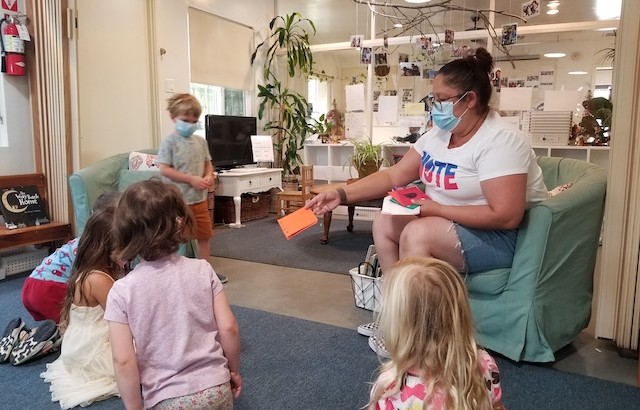
Once the mystery of the East Wing mailboxes had been solved, the children’s excitement shifted into creating messages for their friends. The first batch of mail included birthday cards and notes that engaged the entire group. The ones that followed were more individualized. Checking the mailbox in a group setting created a context for the children to feel the emotions of their expectations being met or unmet. What was evident was both the children in the Aloe Vera and Basil group experienced similar feelings when they opened up the mailbox and discovered what was, and wasn’t inside.
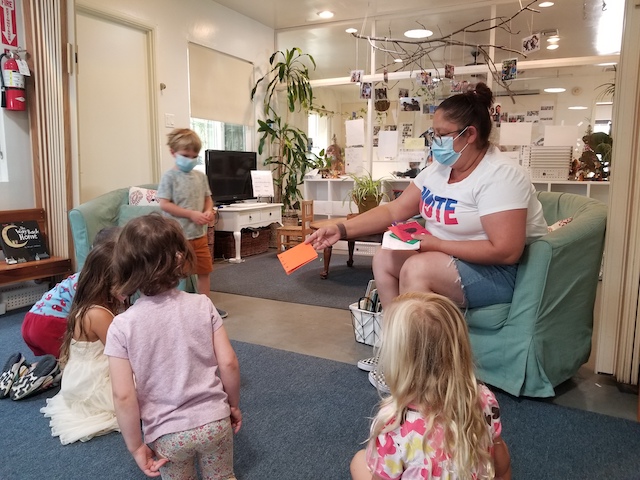
ALOE VERA GROUP
Amy: Some of the friends had feelings yesterday when we checked for mail from the Basils.
Presley: Yeah, I was sad.
Levi: When the mailbox was empty, I guess they didn’t care about us.
Amy: There were notes in the mailbox for me, and Adriana, and Uma. Did it feel empty because there wasn’t one for you?
Presley: Not one for me. Maybe they just made notes for their family.
Amy: Did you make a note for any of the Basils?
Levi: No
Amy: I wonder if the Basils who didn’t receive notes from us were also feeling like we don’t care about them?
Levi: But I care about them (the Basils).
Amy: How were we feeling before we opened the mailbox? Remember when we closed our eyes to be surprised.
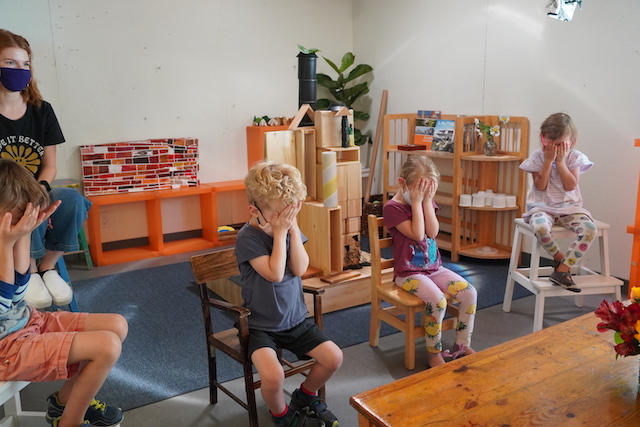
Poppy: I was feeling hopeful that there was a message and then sad.
Presley: Can you believe when we opened it, there was nothing? Not one for me or for Santi or for Dillon.
Santi: Sometimes we get mail and sometimes we don’t.
August: Maybe they were missing their other friends and then they made them messages.
BASIL GROUP
Mars: I want one.
Keaton: Why isn’t Mars getting any?
Tallulah: This one is for all of us!
Cynthia: Is Mars the only one who didn’t get a card? Look around, who else didn’t get a card?
Eve: I didn’t get one either.
Cynthia: How does that feel to not receive a card?
Jack: Bad
Keaton: Well, we can share our notes together so it feels like we all have notes. The people who don’t have notes can look at our notes. You want to read it?
Mars: No, I want one for only me.
Penny: Are you sad because you didn’t get a note?
Cynthia: How do you think the Aloes are going to feel if everyone doesn’t get a note?
Keaton: I’ll just make one big note for everybody, even the teachers. That’s why it’s going to be on big paper with all of their faces on so they know it’s for everybody. It’s going to be a together card.
Asher: I got none. I got nothing from the mailbox. Nothing today, nothing on Saturday. Nothing!
Susan: Who do you think you wanted a message from?
Asher: I just want them to send one to me.
Cynthia: Are you saying that you just wanted a message, and it doesn’t matter who it is from? Were you feeling left out?
Asher nods
Keaton: I want a note from Asher.
Asher: I’m going to make you one.
Keaton: And I’m going to make you one!
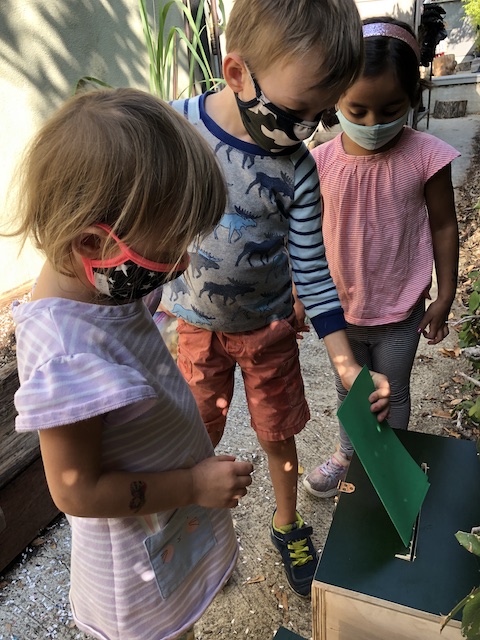
In reflecting on this shared experience, we noticed how each protagonist approached this moment from a unique perspective. As teachers, we recognized the value of opening up the mailbox during meeting time with all the children present. This created a space for the children to express their feelings, wonderings and insights to the group. It also invited them to listen to another person’s point of view and imagine ways to support those who were feeling discomfort, disappointment, and left out. From this interaction, we see the beginning stages of empathy and as the book The Yes Brain states, “Empathy is not just understanding how others feel and what they want, but about developing a brain that actually cares for other people. It’s about discovering how interconnected we all are. Empathy allows us to keep in mind that each of us is not only a “me”, but part of an interconnected “we” as well, which becomes a “ MWE.”