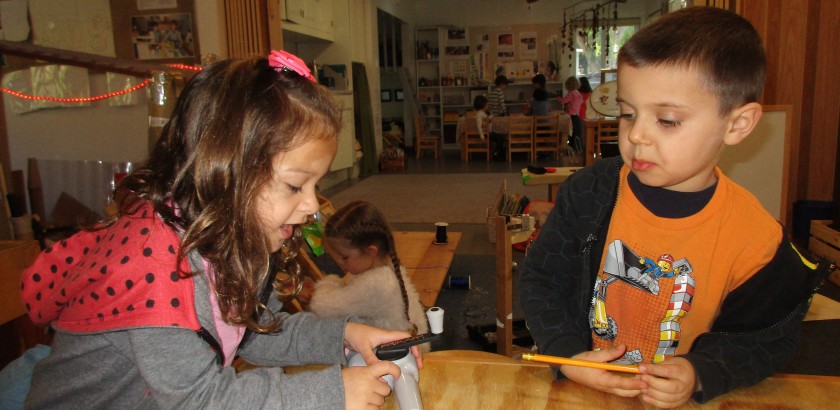
During a morning appointment, a group of children in the East Wing used a variety of woodworking tools to construct a balance scale. After an active morning of construction, most of the children were ready to transition to a different space. Eloise wished to continue and while she wielded the hand drill she asked, “How does that (drill bit) twist?” I asked her what she thought. After spending some time to ponder, she proposed a hypothesis: “I think there’s a little thing right here (pointing to the crank) that goes all the way down and makes these ones (chuck and drill bit) turn.” Noticing Eloise’s potential for clarifying her thinking through representation, I encouraged her to draw her idea.
Once completed, Eloise explained her representation, captivating Jai and motivating him to articulate and then represent his idea.
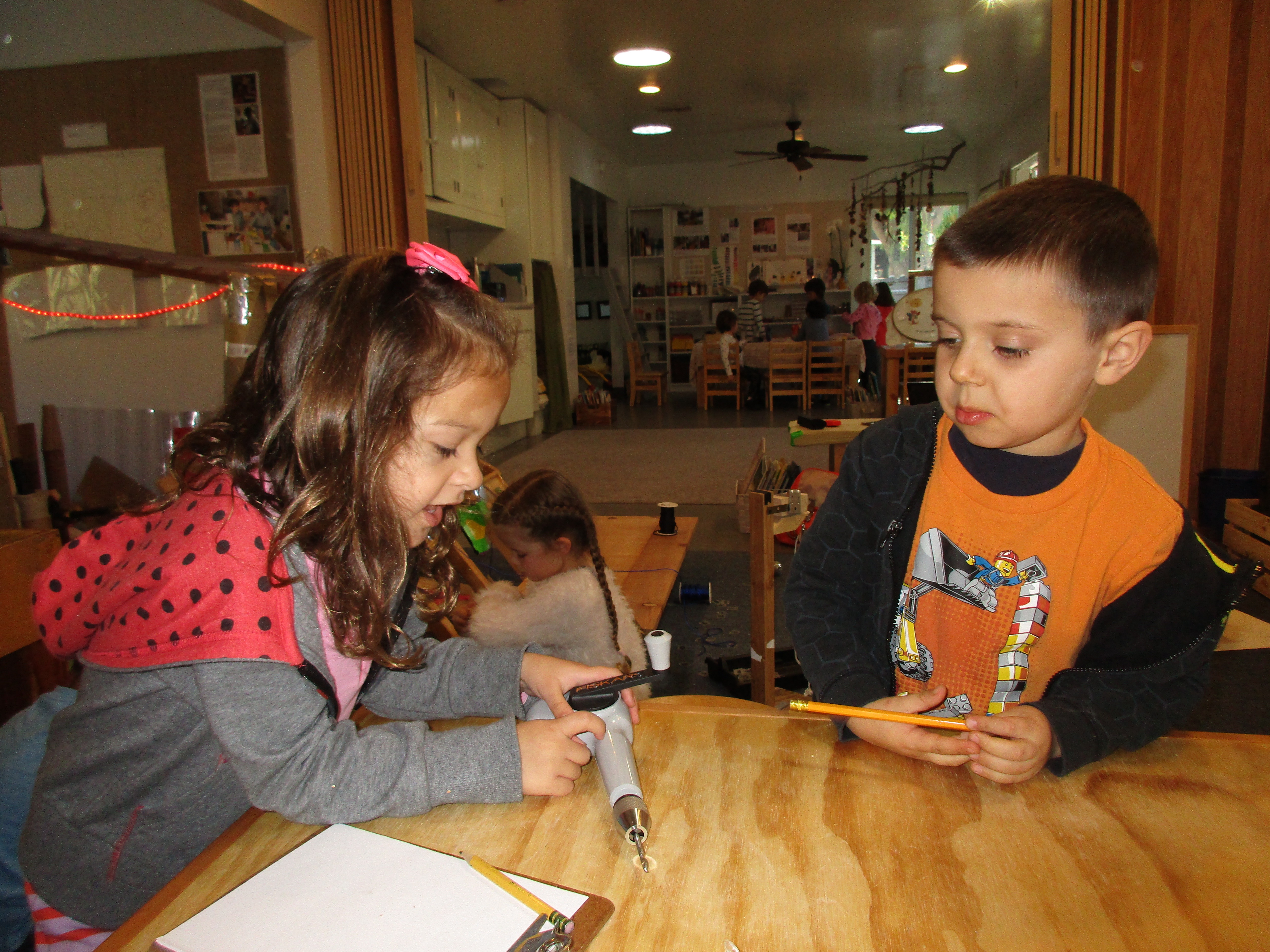
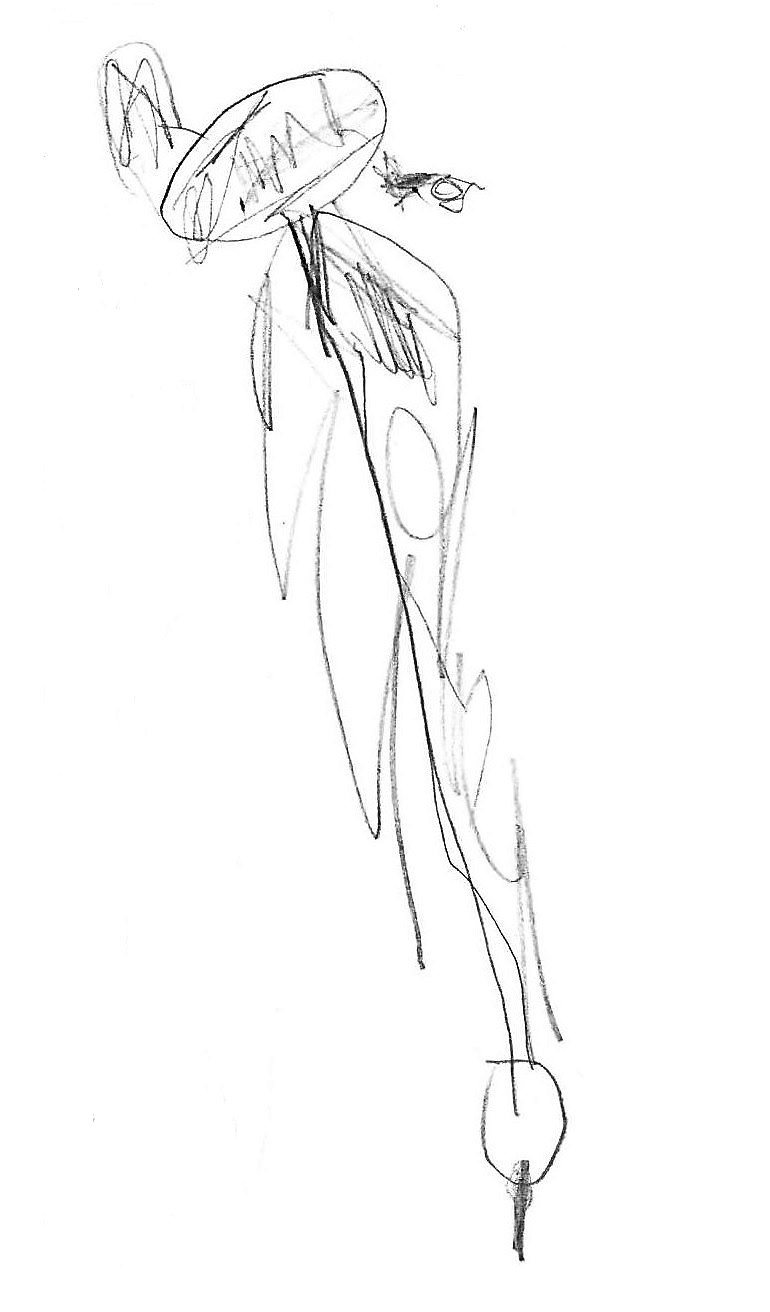
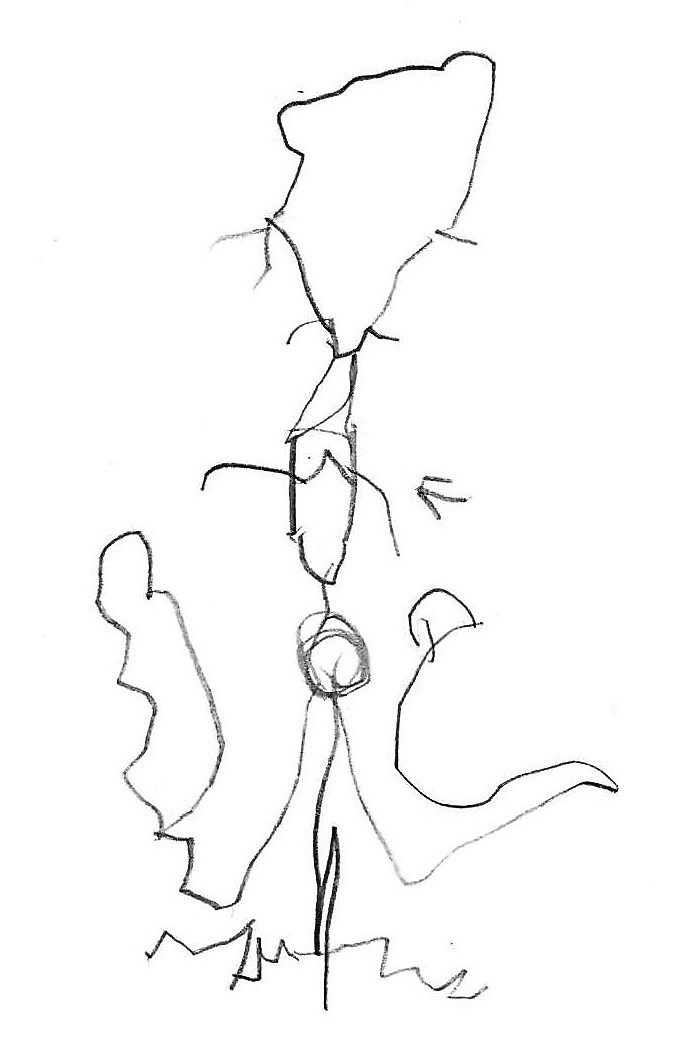
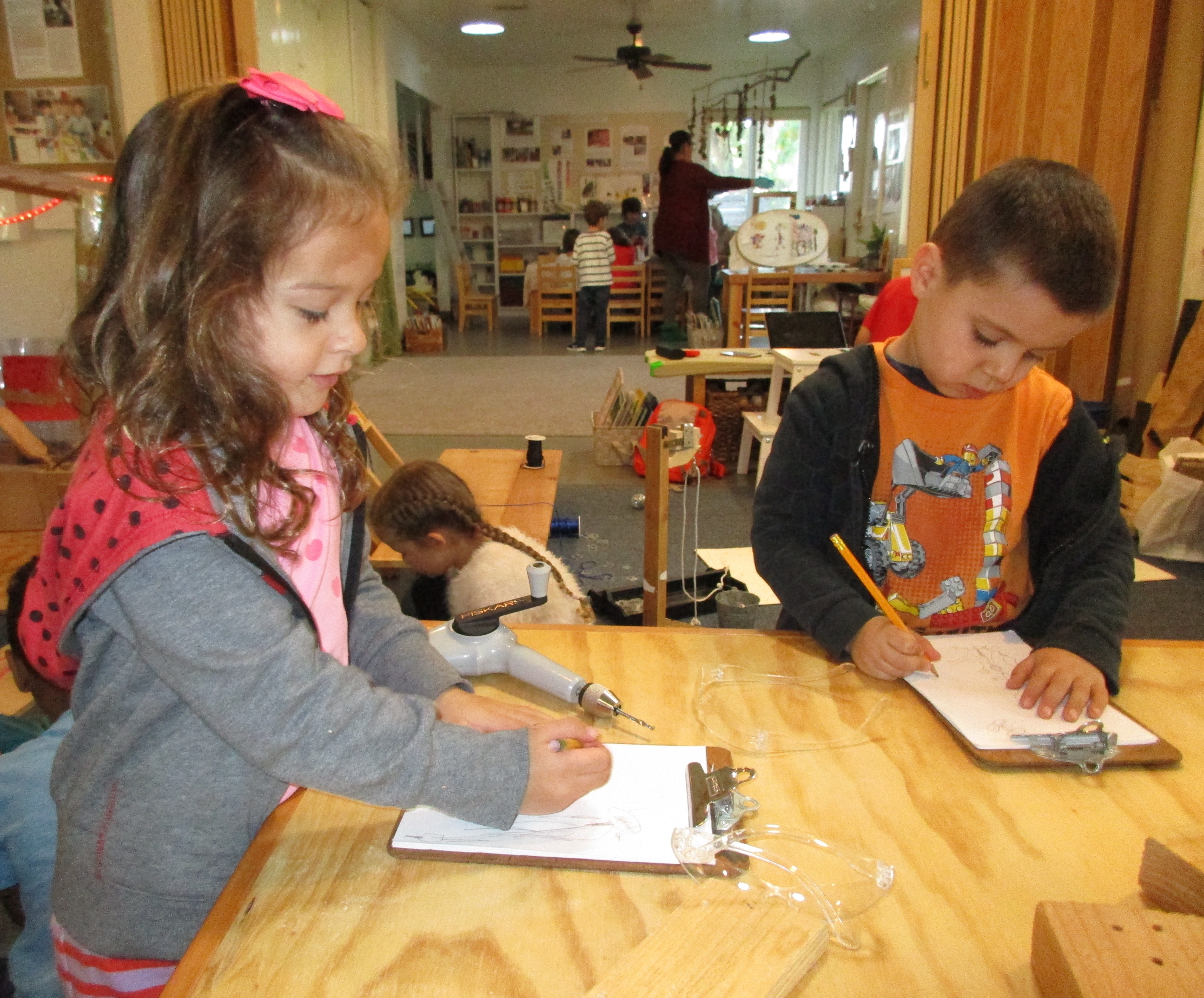
Afterwards, the children decided to bring their hypotheses to reflection meeting and gather feedback from the group. As a school, we understand the value of slowing down and providing contexts for children to seek meaning and build theories. In this scenario, drawing not only acted as a meta-cognitive tool, motivating each to think about their own thinking, but also served as a way for them to communicate their mental images and slowly work towards coming up with a common meaning. Once the children share the information to the group and hear their feedback, we’ll encourage Eloise and Jai to revisit their drawings and eventually represent their ideas in a different medium. Teacher Susan