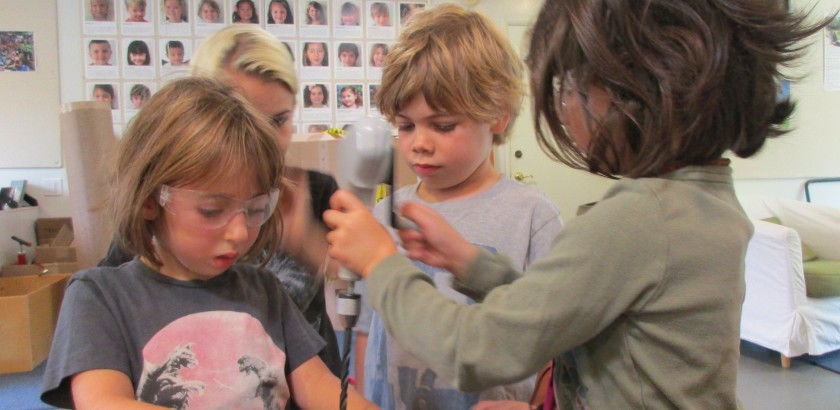
Last year, the current East Wing children investigated how motion, force, and incline interacted in their racetracks and boobytraps. As they tested race cars, they noticed how easily they moved down the ramps yet struggled to move up varying slopes. During reflection meeting, they described the obstacle they encountered. The discussion with peers elicited feedback which generated the idea of using a battery-operated car. Valuing the suggestion, we began to explore circuits. This year, the children are building upon their knowledge of woodworking and circuits to construct a functional motorized car.
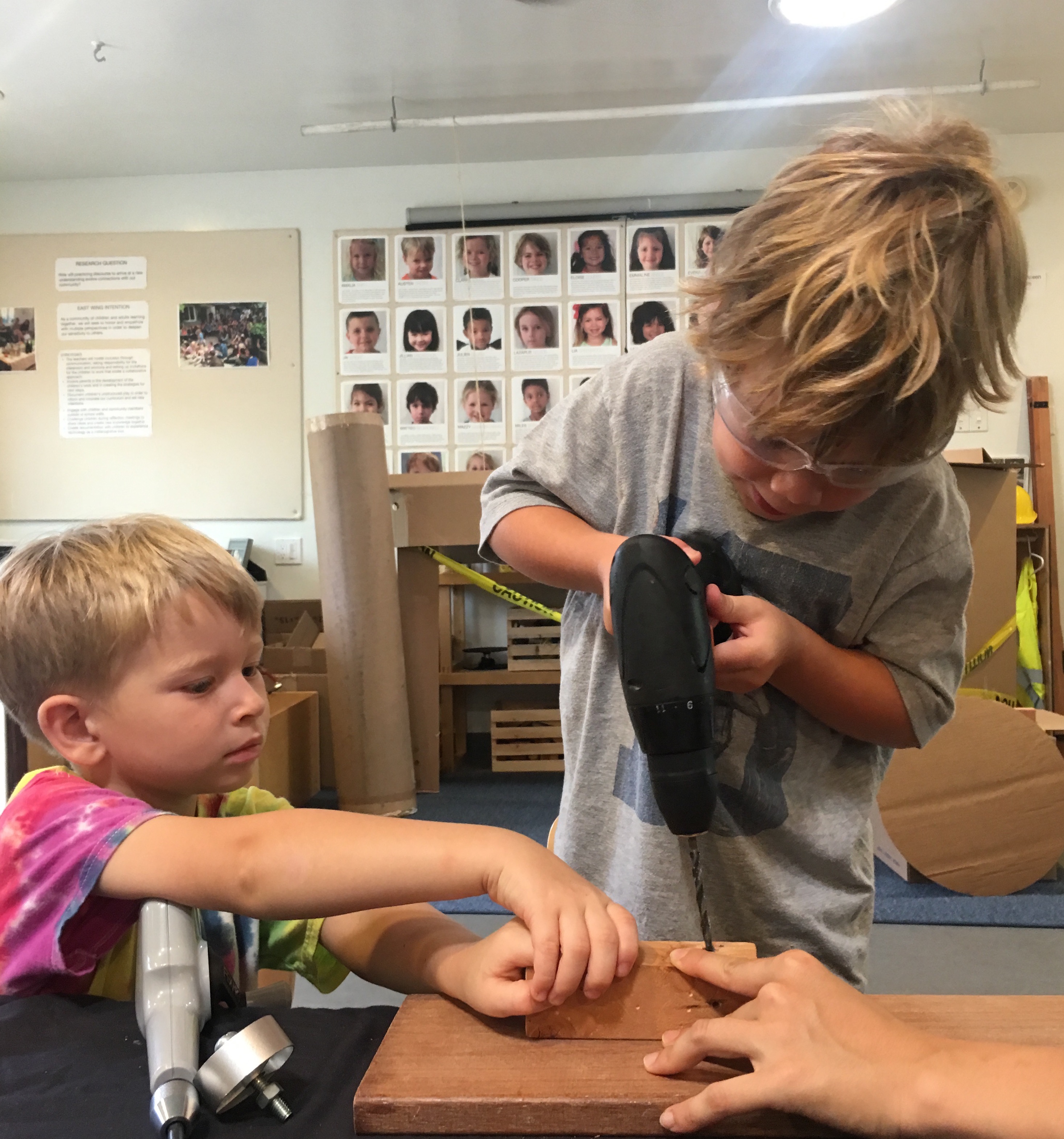
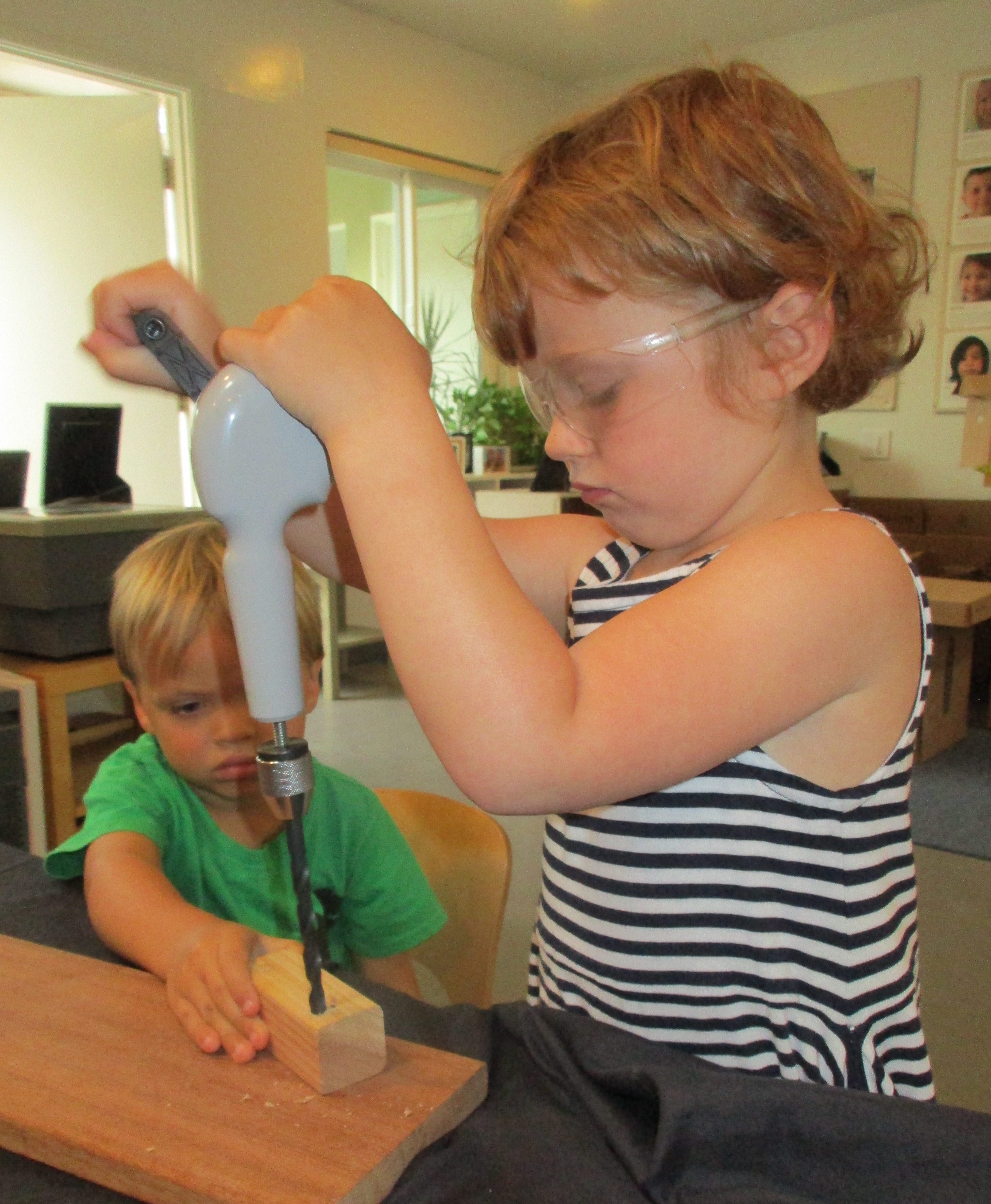
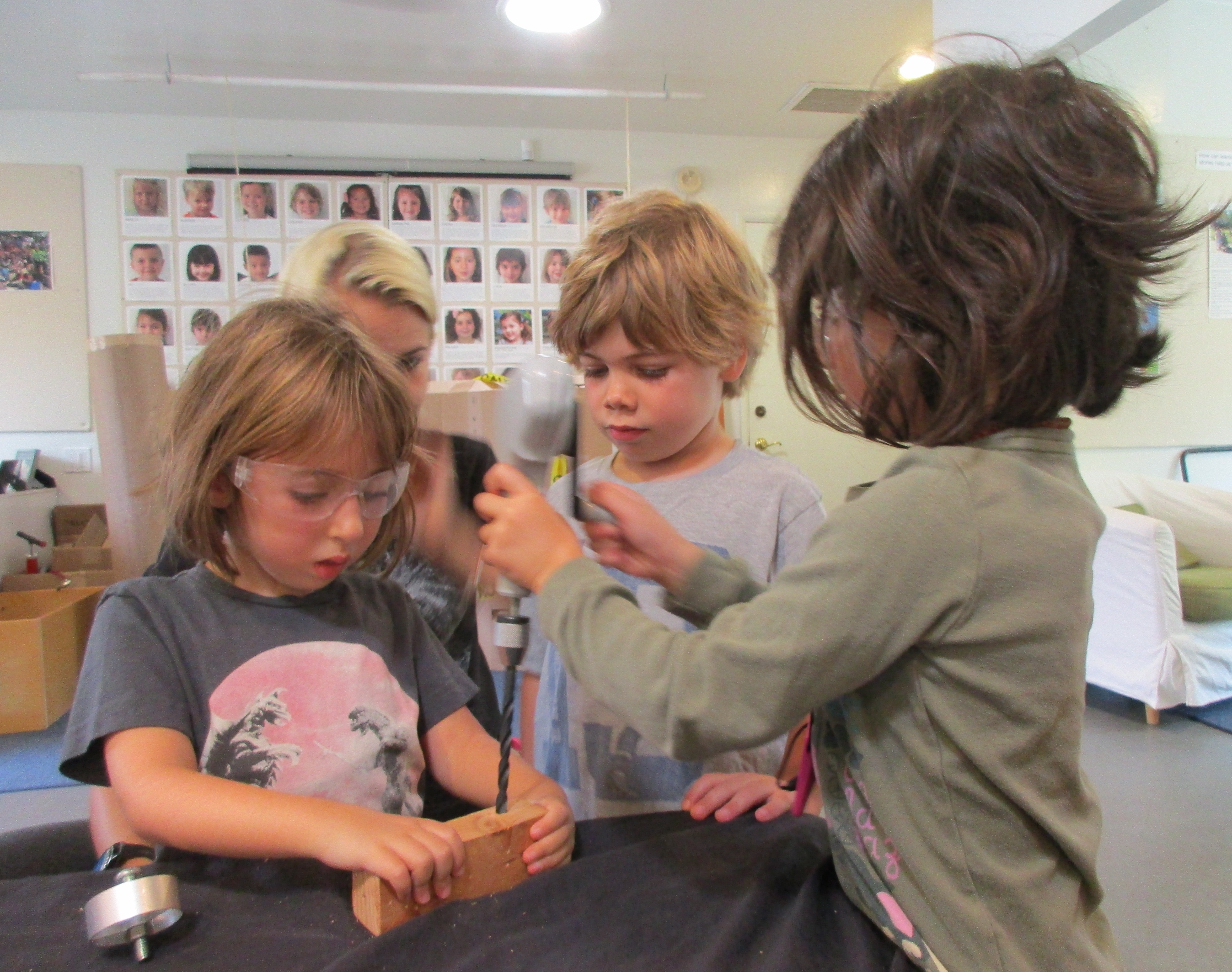
After completing their first prototype, they tested the car, made observations, and redefined their goals.
Julien: It’s not moving.
Teacher Susan: You’re noticing the car isn’t moving. What part of the car is moving?
Julien: The propeller
Teacher Susan: What part of the car needs to move for it go fast?
Sammy: The wheels. We can get a blowing thing. Then we can turn this on (motor) and put it on a race track. Then it can go super fast and fly in the air.
Quinn: Maybe we can tie a balloon, and then it could fly.
Julien: Maybe we can turn the propeller on and the balloon will go on and then it will fly so fast.
The children tested the idea of adding wind behind the car, first by placing it in front of the door to allow wind to propel the car forward and then using a bike pump to push air onto the propeller. When these ideas failed, we once again revisited the problem
Julien: I think I know why it’s not working because it drags and the wheels are, like, stopping.
Teacher Susan: What kind of wheels should we get?
Julien: We need the wheels to be bigger and to be like the tires on this car (pointing to the garbage truck used in the building space).
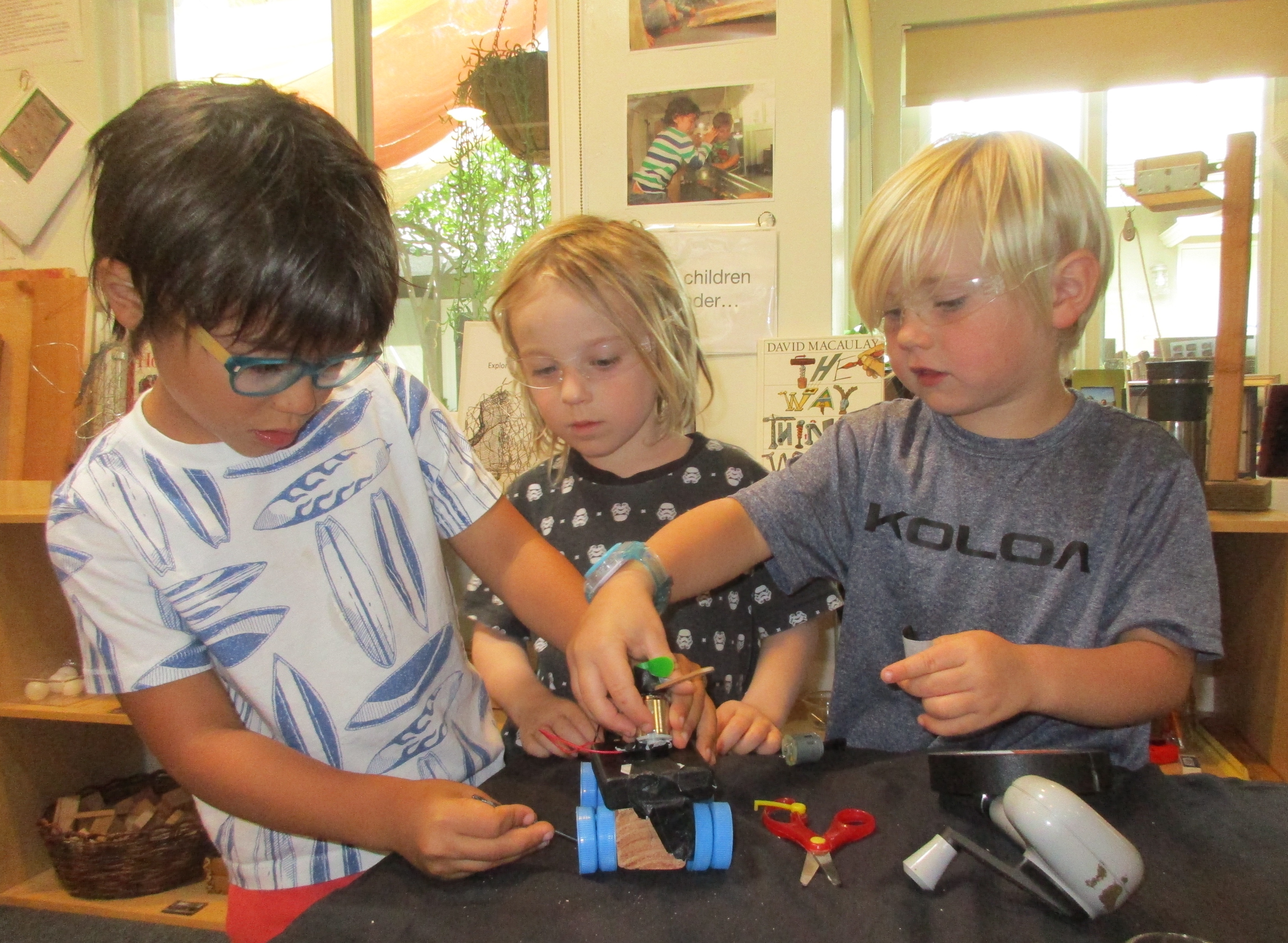
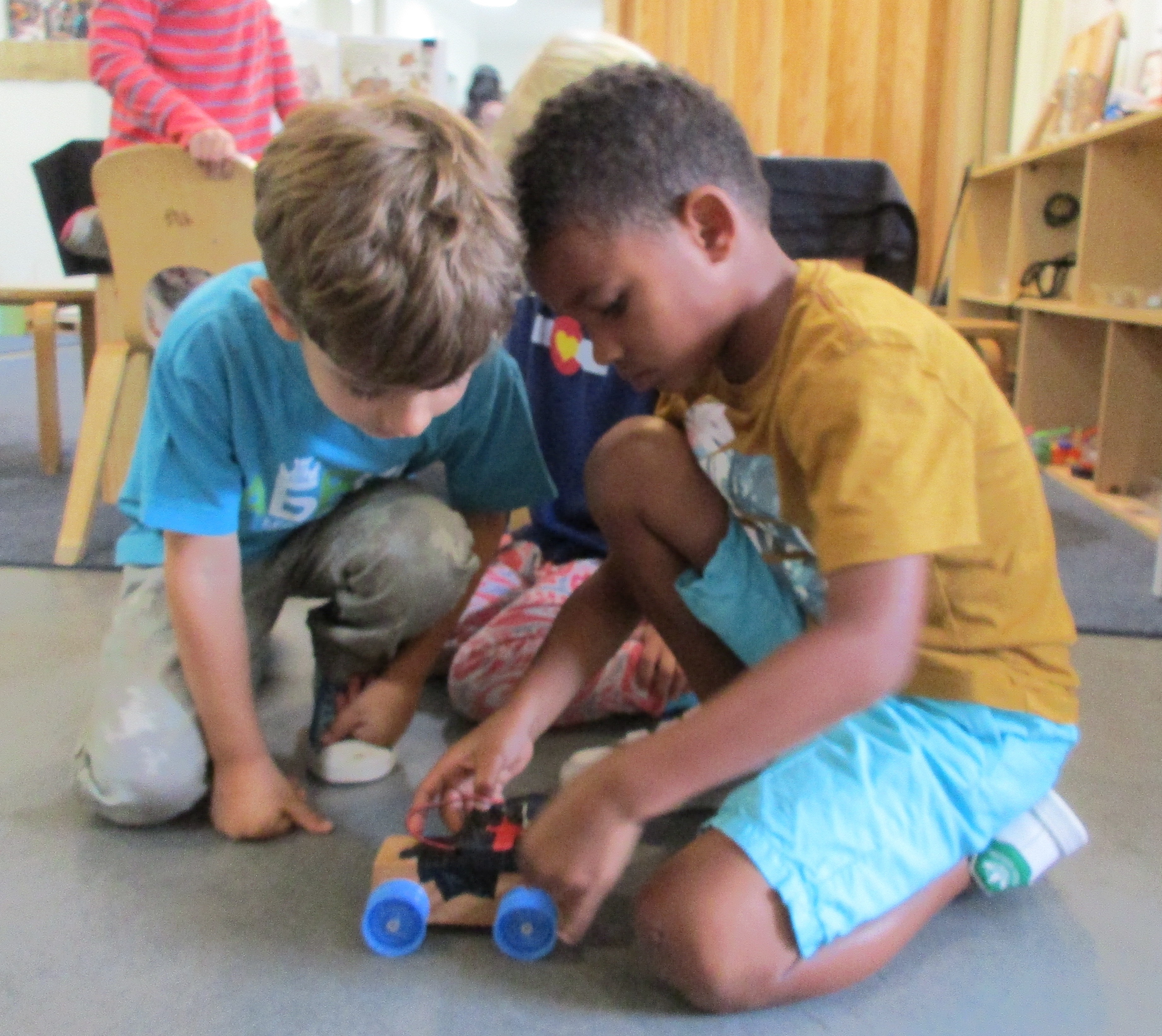
After this experience, we decided to collect more ideas, modify the design of the car, and test the various prototypes. While the children collaboratively work, they are engaging in the design thinking process which is an iterative approach to solving problems and creating contexts to engage in discourse. As we continue this investigation, I wonder how these experiences will support us in viewing individual ideas as an avenue to build collective bodies of knowledge and move away from claiming ownership of those ideas. -Teacher Susan