West Wing
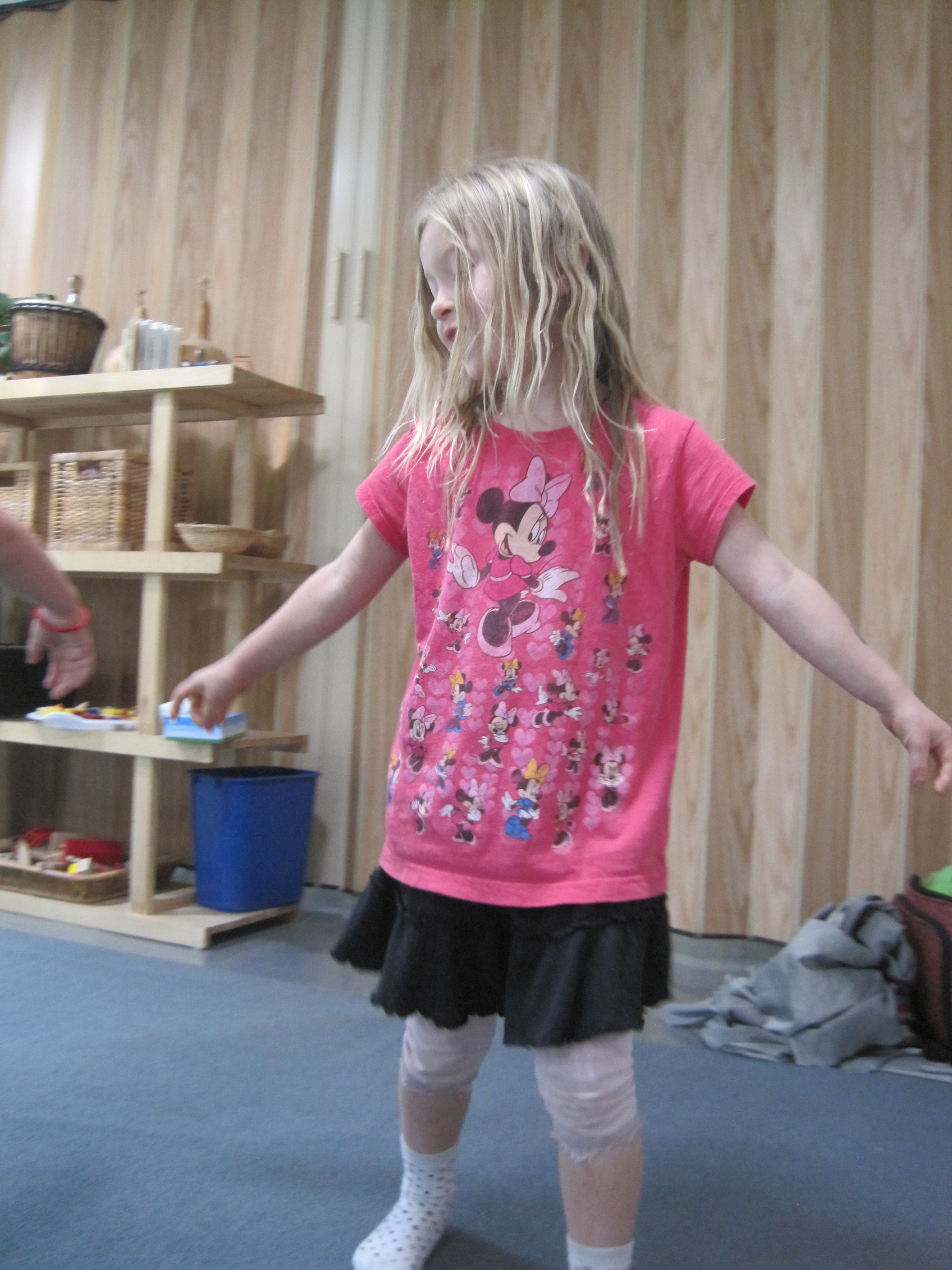
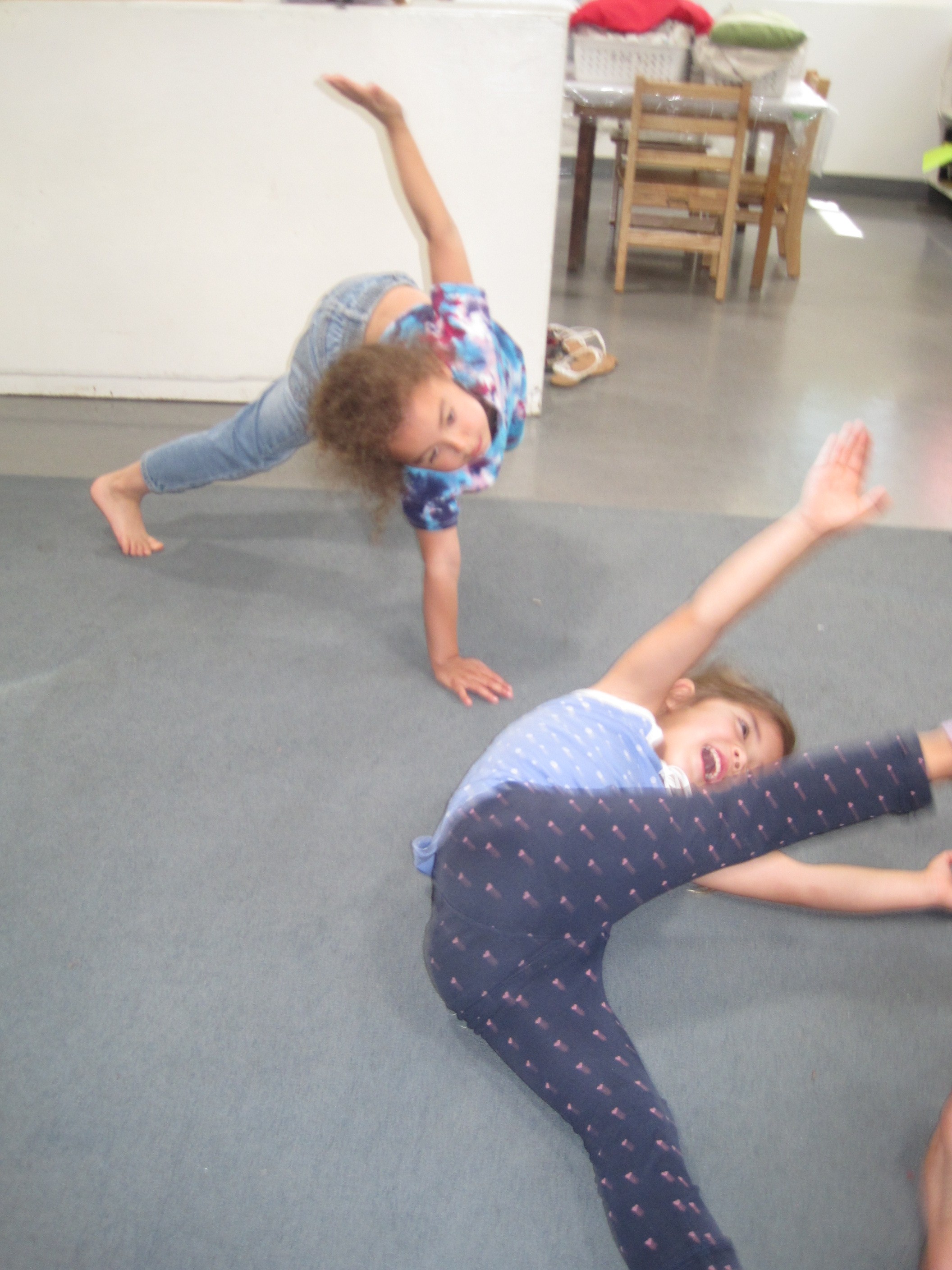
There are many ways to express ideas and it’s a personal joy to discover a group passionate about movement as a form of expression. This highly kinetic group met with Sam and Ilaan and moved in a full body way while simultaneously being able to safely negotiate the space between them. The work we do together will add stillness and direction to their expressions.
The work begins with locating ourselves on a fabric square and doing our usually stretch warm-up ending with making shapes with a focus on straight and curved lines.
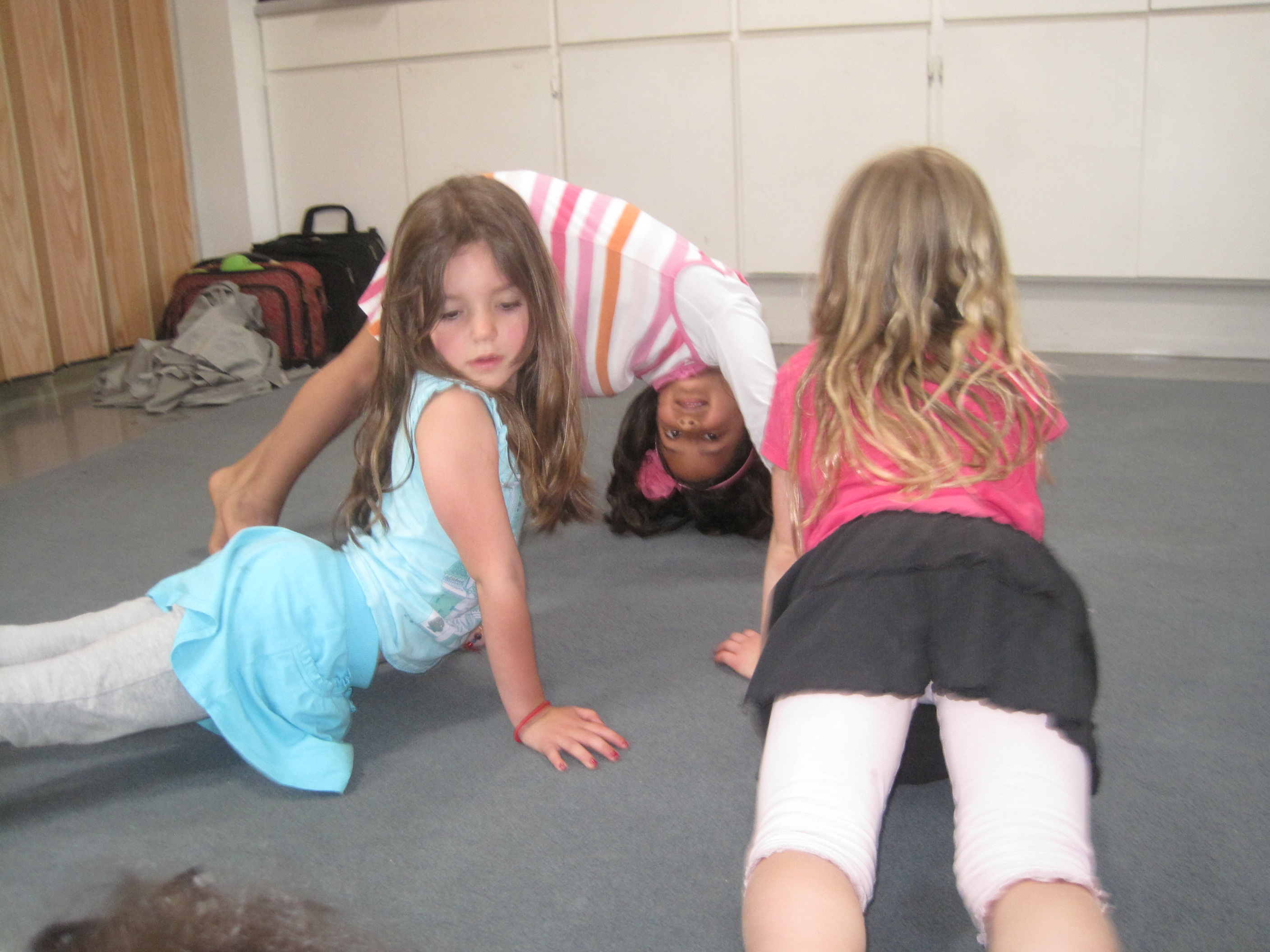
Working in pairs, one person makes a shape while the other traces the curved or straight lines of their partner’s body with a finger. This action assists the children in defining themselves in the space through a kinetic language.
We continued this exploration by making straight and curved lines with our bodies in various games. Ilaan was excited to see that when these children created shapes, it again was in a full body way.
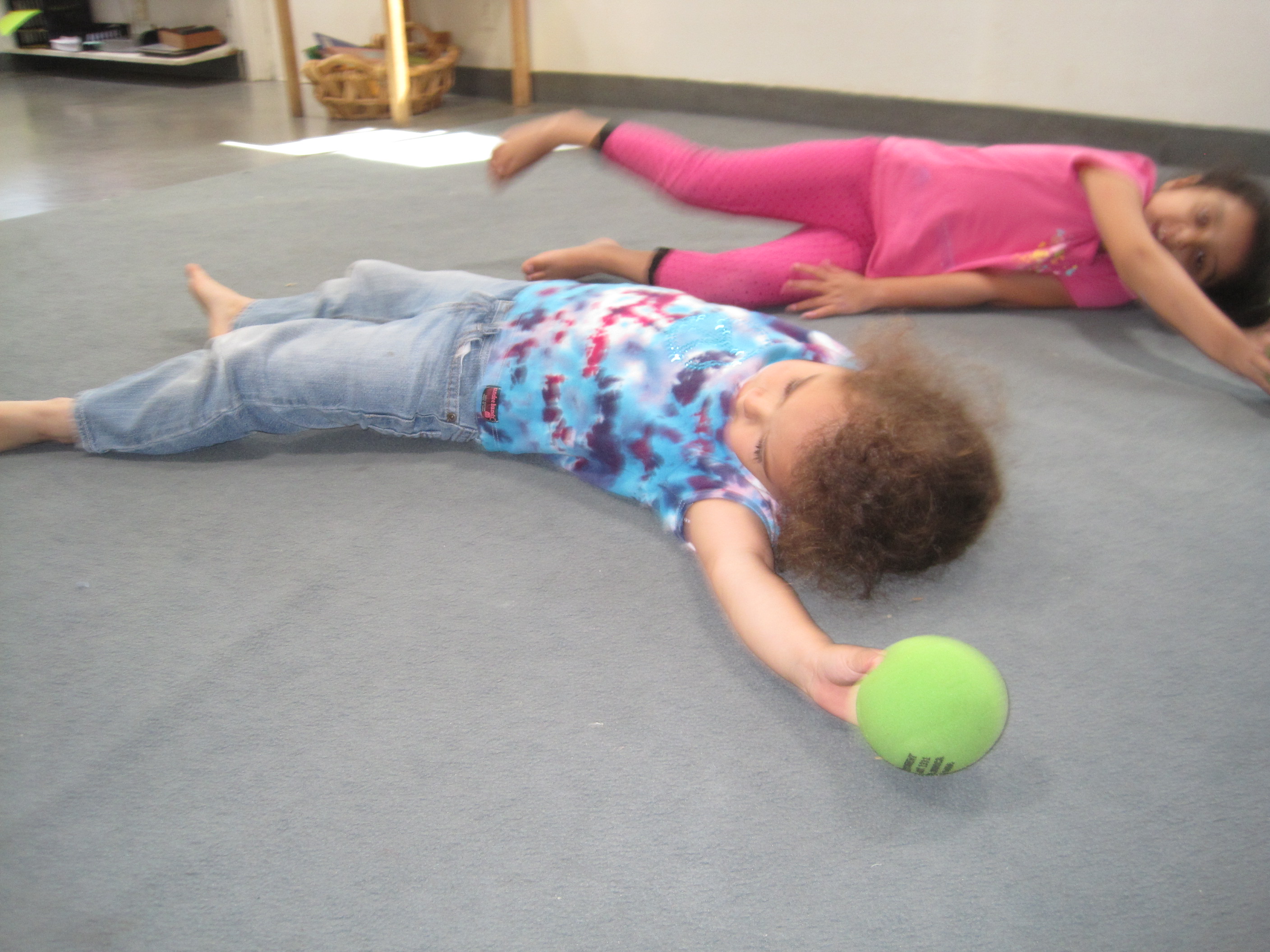
We played a community building game where the children hand the ball to friends while looking in their eyes, making sure it’s a clear hand off to emphasise connecting with another person and achieving a stillness, then freely spin their bodies around to recognize their internal need to move.
Another game was to move why holding the ball in our hands, following the ball like the engine of a train. The ball carves the space and the child gets to decide it’s path, creating an intentional form of following self-direction.
We worked high, low, close to ourselves, and moving across the floor. The last part of this class was working to devise a sequence of movement with the ball being the prop. We stepped on it, jumped over it, ran around it, held it between our knees and under are arms, we sat over it, and stretched with it. The process helps the students work to remember sequences and follow directions.
Next Class – We will continue to work with sequences, memory, lines and curve and devising original movements.
East Wing
Working on interpreting original poems the work was shared at circle and from that a new group of children chose to come to the next session to create a “poem dance”. The enthusiasm was high.
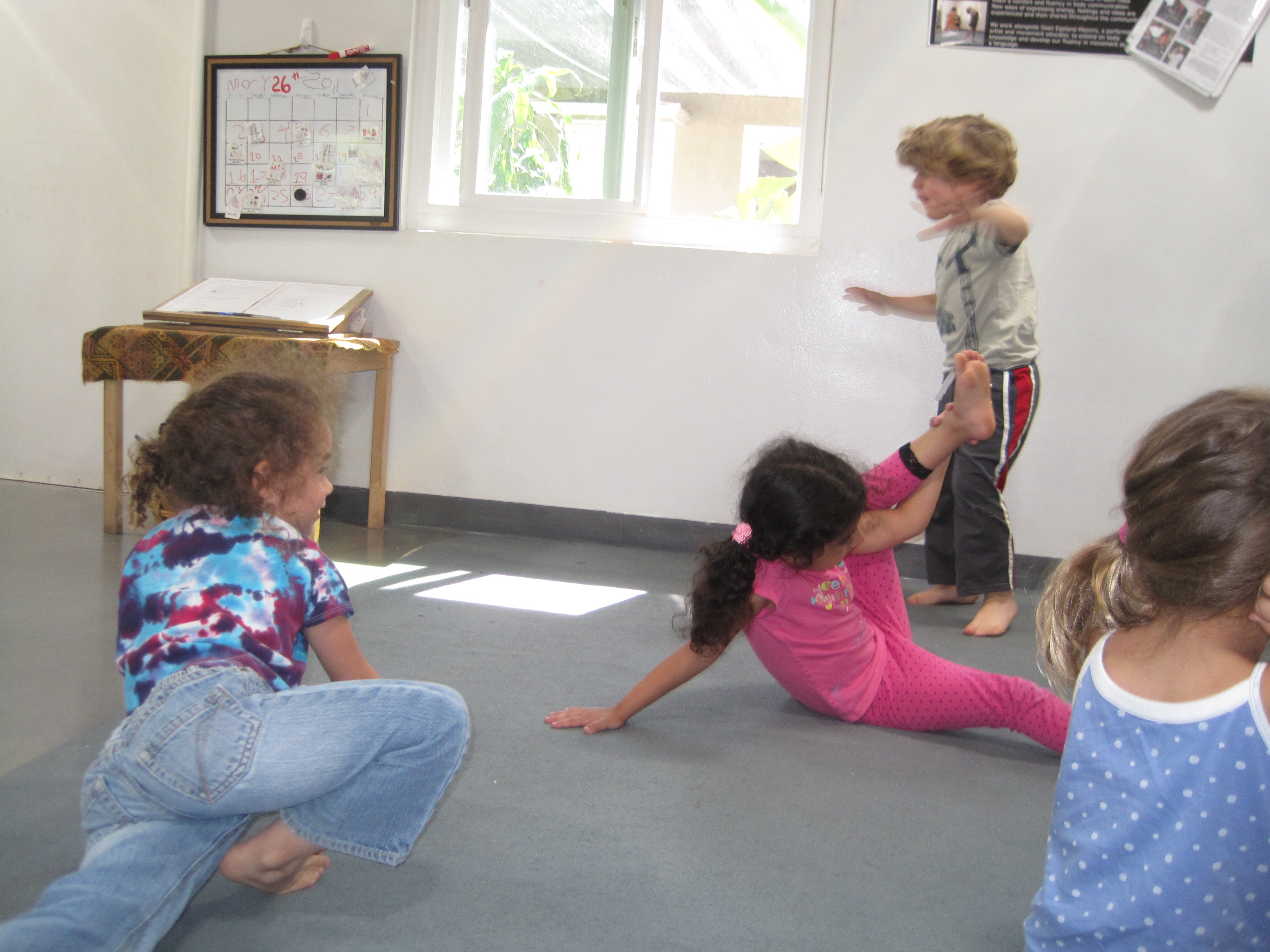
We delved right in with reading a number of the children’s insect poems and getting a feel for which one we wanted to move to (this is still in progress). The group needed to move right away so we started this class with moving across the floor as various insects.
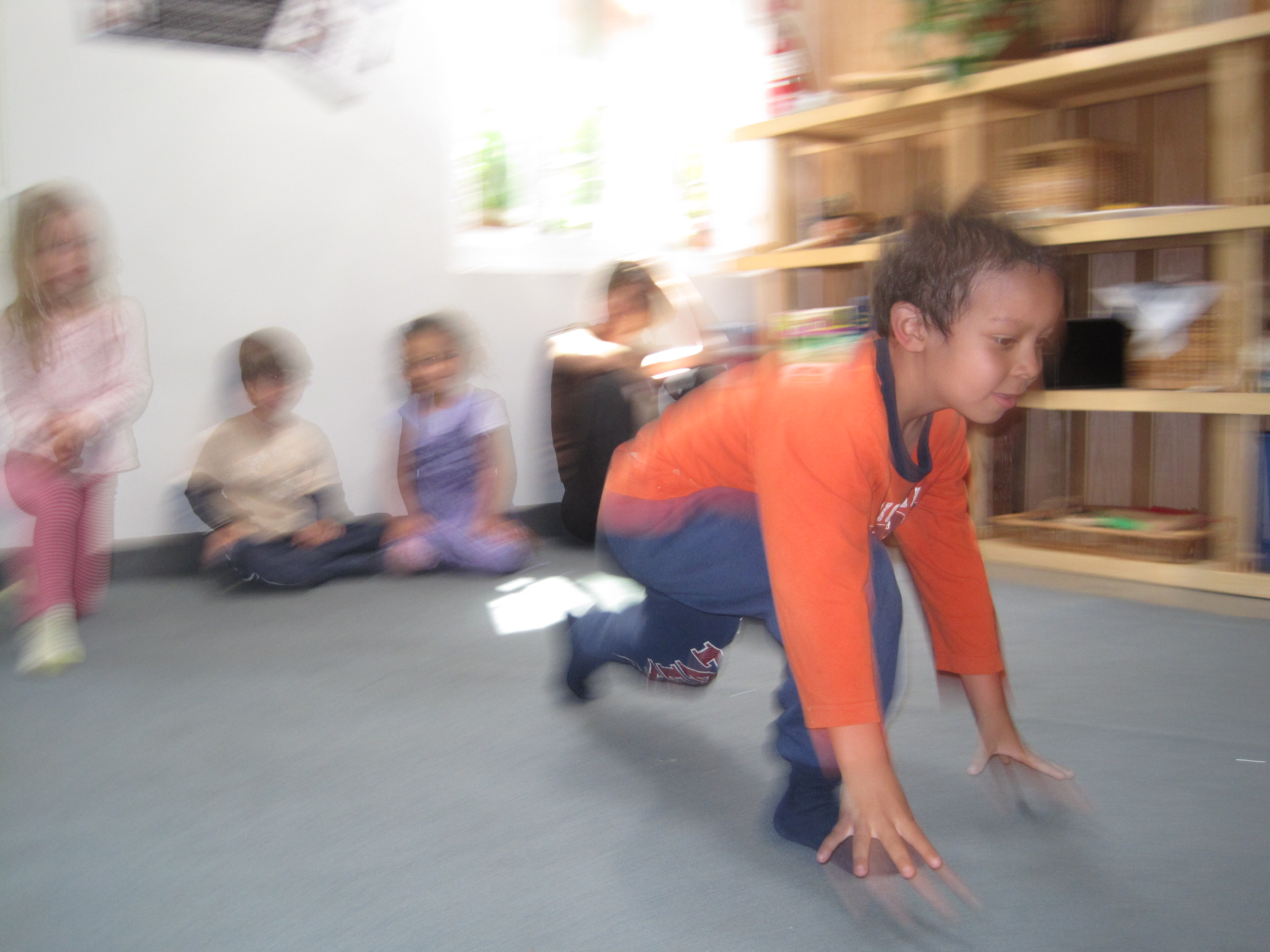
In fact most of our time this class was spend doing this activity because of interest and focus. Different children showed examples of moving as insects and the group copied these movements. They were able to distinguished subtle differences between moving like a frog or a jumping spider. They were able to physically execute these differences which demonstrates a more developed sense of eye-body coordination. To prepare for building movement vocabulary we spent the last part of this class doing a game where in a circle we simply watch each other and mimic what we see. It is again viewing and executing subtle movements and looking at smaller movements. The game did lead to the children initiate larger movement, especially kicking.
When Sam and I looked together at the poems after the class I suggested that ones that had action words or movement descriptions might work best for us to interpret. Austin’s poem includes references to Karate and we thought this might be a good choice given the children’s interest in quick, leg movements.
Next Step – Work on the children creating movements and remembering them. Work lightly on the action words of poems.