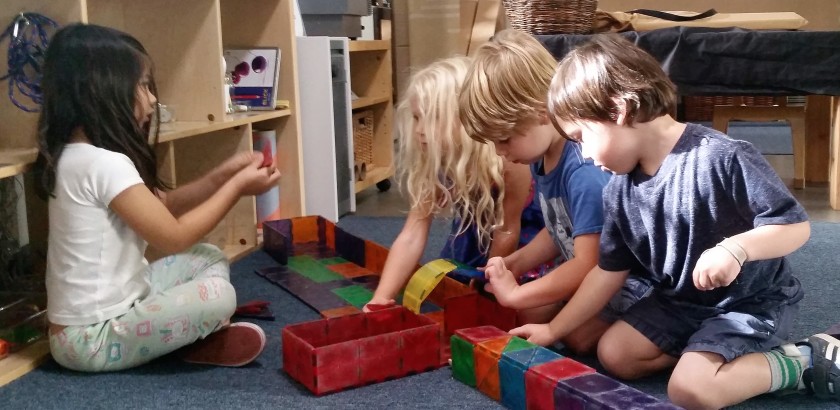
The East Wing Exploration Room has a constant goal of creating a track for balls. During an afternoon appointment, a group of children convened and discussed constructing a track and an abutting castle to capture the balls. Once at work, Amalia and Naia used magnet tiles to erect the castle. At the other end of the structure, Van and Cooper set a footstool on top of the building space platform and placed a rubber ramp on top, adding sandbags underneath to elevate the track. Then they added wooden tracks and incorporated magnet tiles for tunnels.
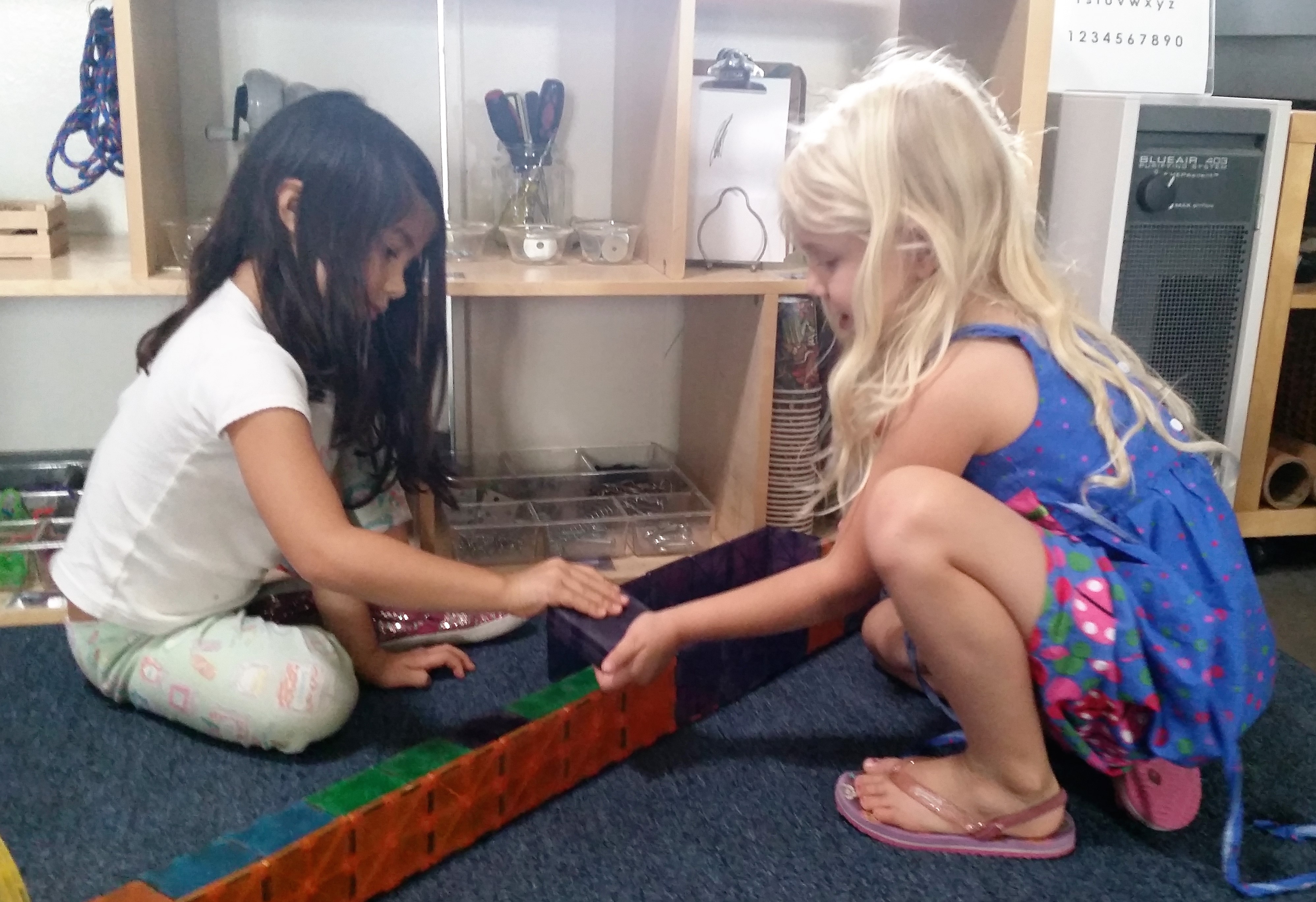
Amalia: I wonder what they’re making.
Cooper: We’re making a wall for the balls, so they don’t fall off the track.
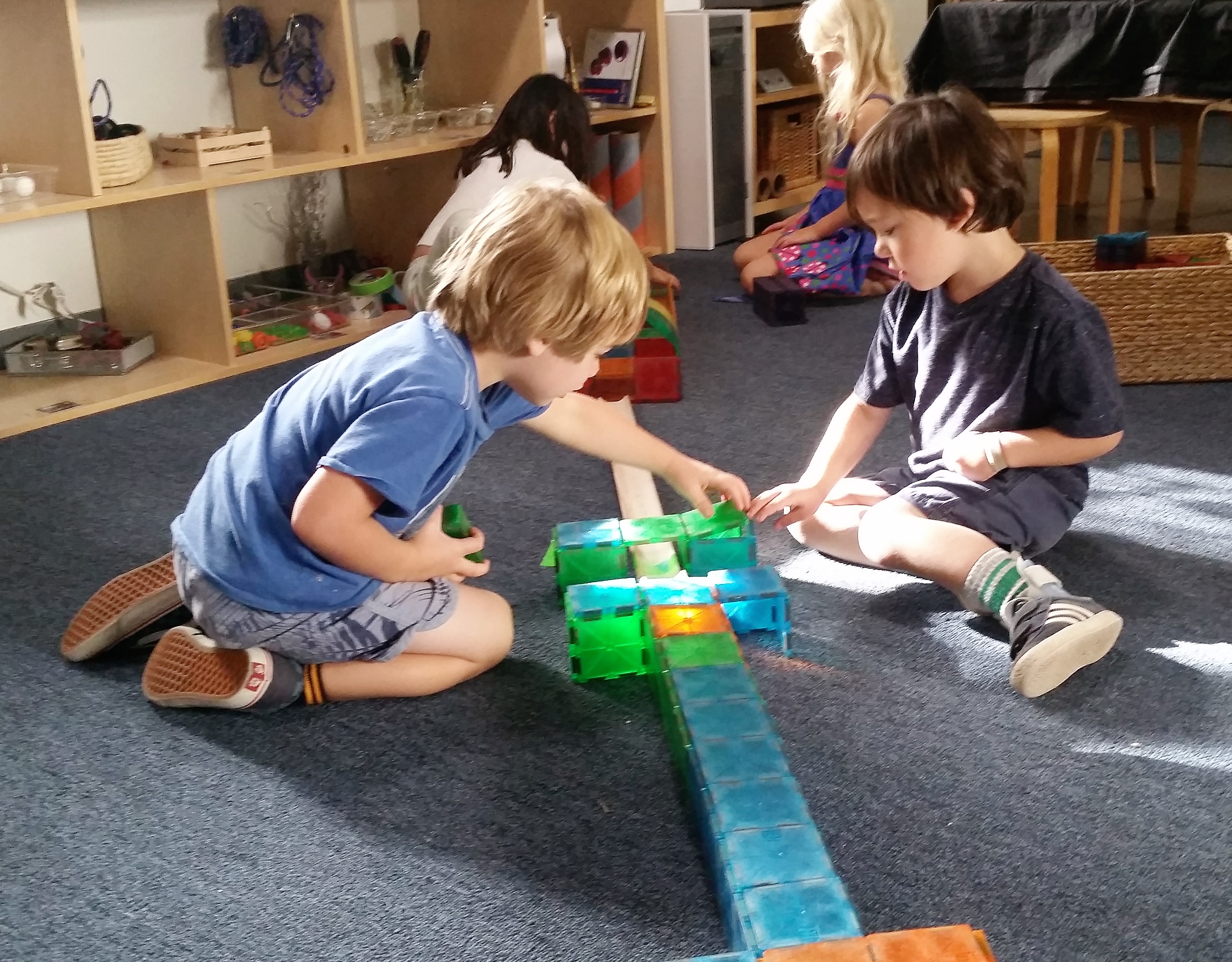
While building the tunnel, Cooper noticed they used all the square magnet tiles around them.
Van: Look, you can connect two triangles (to make a square).
Cooper: No, I just want a square. Oh, I found some!
Van: Hey, I want some.
Naia: Hey, guys, do you want more?
Cooper: Yeah.
Amalia: We don’t have much.
Naia: That’s okay.
Amalia: We can use these (triangle magnet tiles) to make magnet tiles like these, right?
Naia: Yeah
Cooper: We’re going to connect the tunnel all the way to the castle. While stepping over the castle to get more magnet tiles, Cooper accidentally knocks it over. Oops, sorry.
Amalia: Nooooo!
Naia: Don’t get frustrated.
Cooper: We can repair it. Hey, Amalia, can you help me?
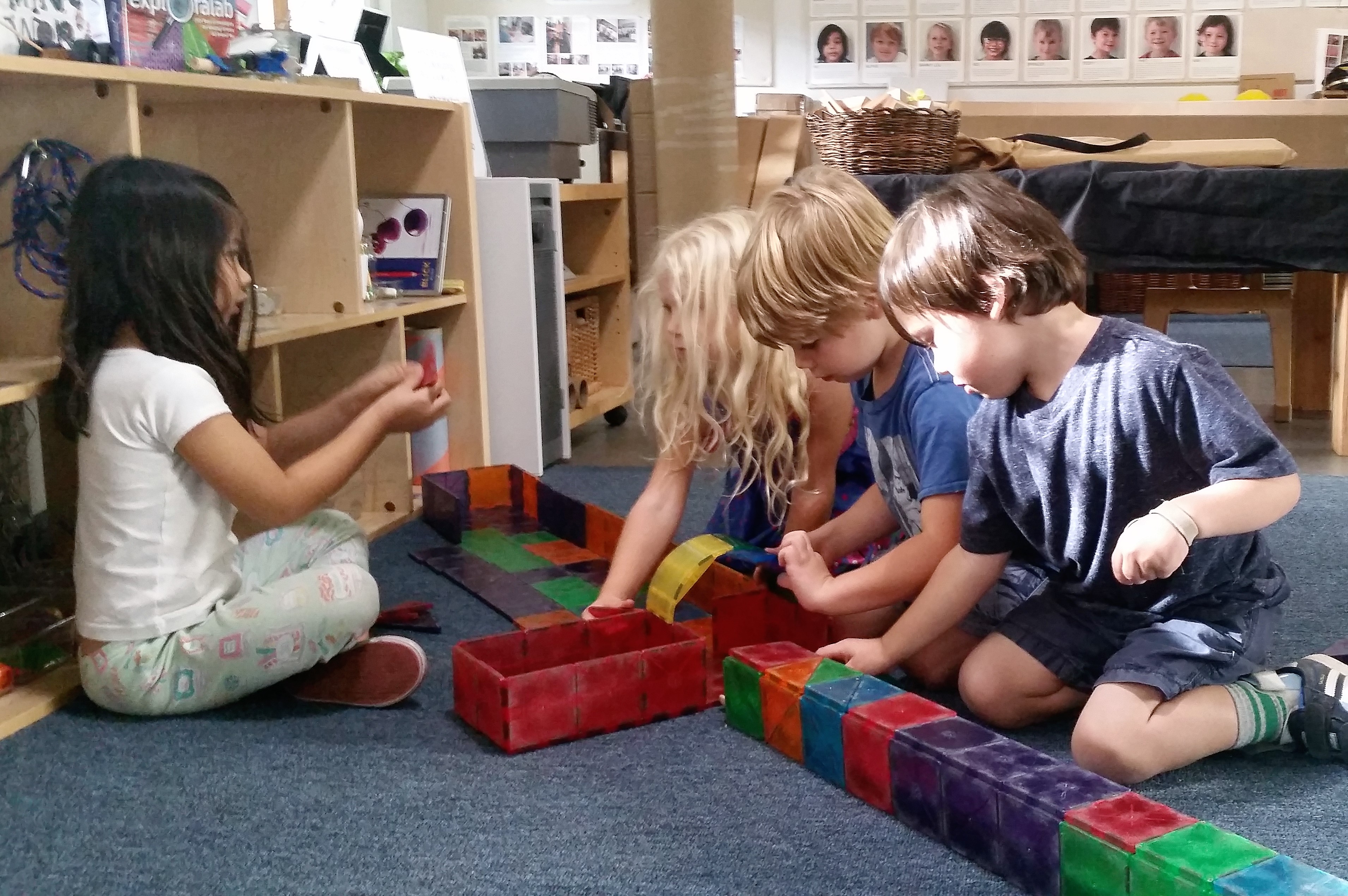
With Amalia’s support, they attempt to reconstruct the tunnel, but it keeps collapsing.
Teacher Susan: What can we use to support the sides of the tunnel?
Cooper: Did you notice we used sandbags to support that? (pointing to the sandbags underneath the rubber ramp). We can use sandbags to support the walls.
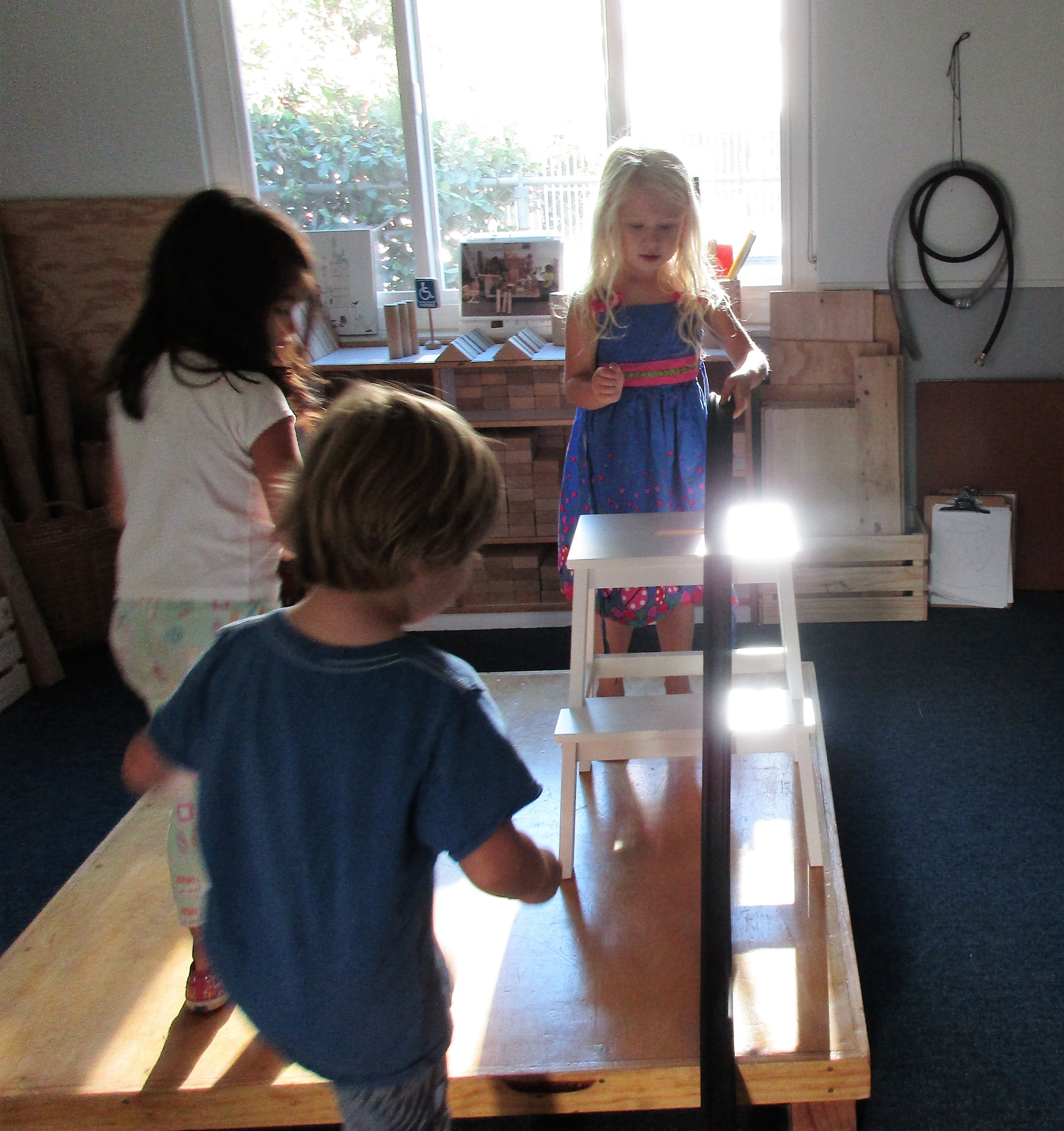
With this discovery, the children collaboratively finished constructing the tunnel, linked it to the castle and began testing the ramp using various balls. Throughout this experience, the children encountered multiple challenges. While some of these were met initially with frustration, each was overcome when the children practiced resourceful problem solving, steadfast resilience, and emotional scaffolding. These actions not only make evident the culture we’ve fostered, but also demonstrate how strong peer relationships facilitate the children’s ability to work together to extend their relationship with materials.