The Cilantro group has had a lot to say about the ocean. They share an awareness of ‘a mountain’ on the horizon which we believe is Catalina. They’ve identified their points of interest from the shore where they stand:
Sticks
Sand
Hermit crabs
Shells
And what strikes me as ingenious in their ocean articulations is their knowledge of layers. When Cindy asked them to represent the ocean, they painted different hues of blue; ocean blue, light blue, and cinnamon blue, and said they were different layers.
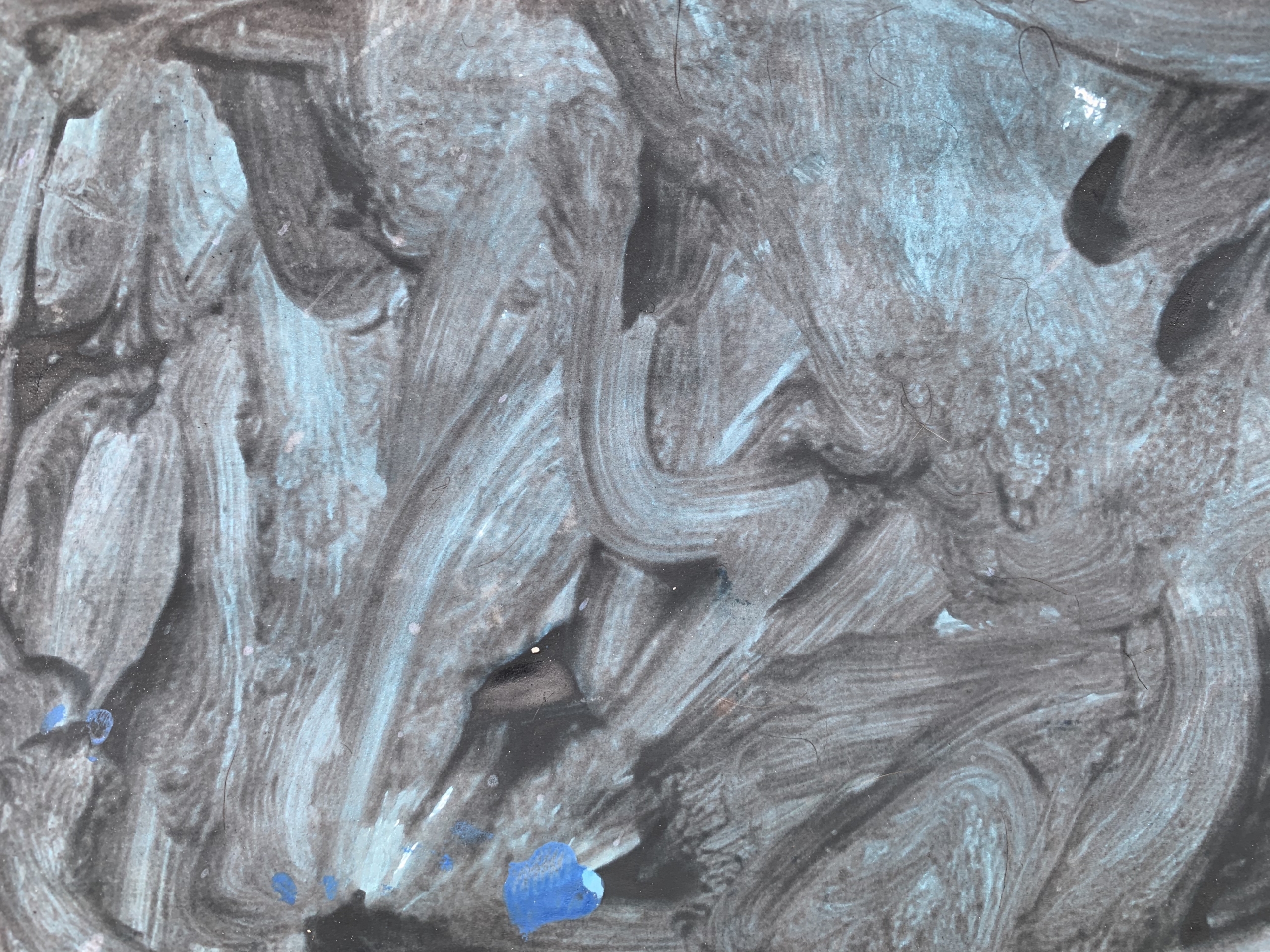
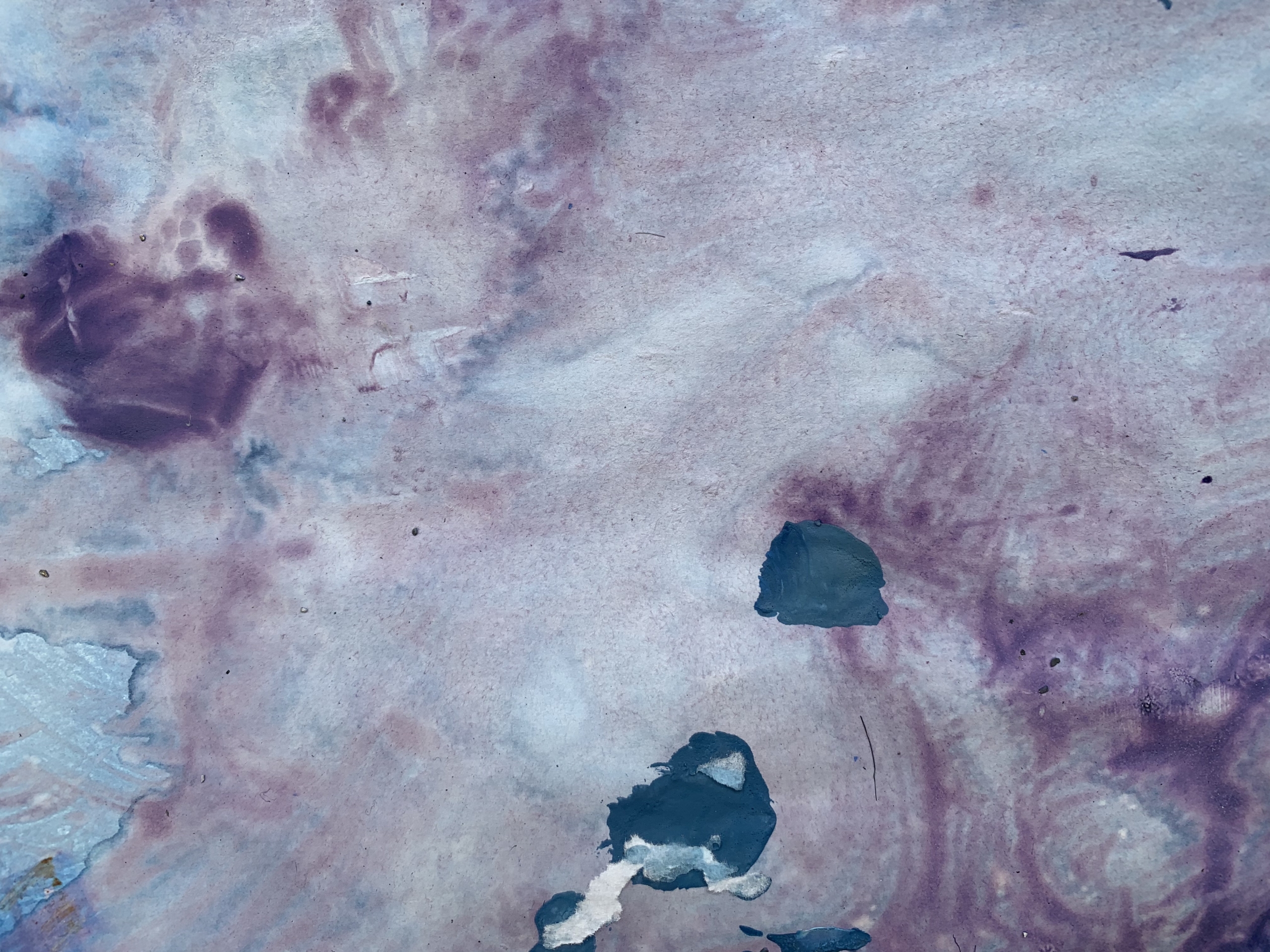
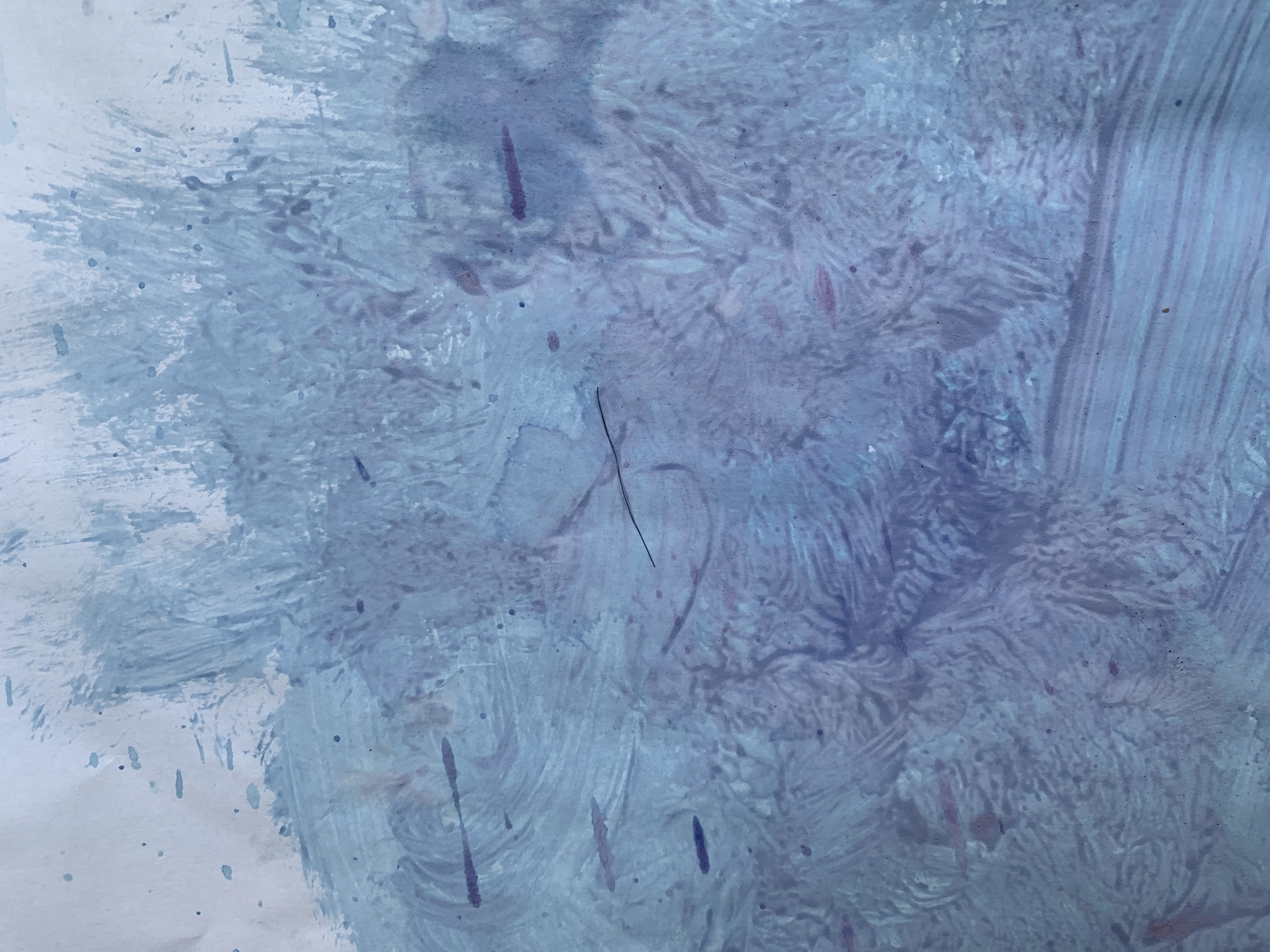
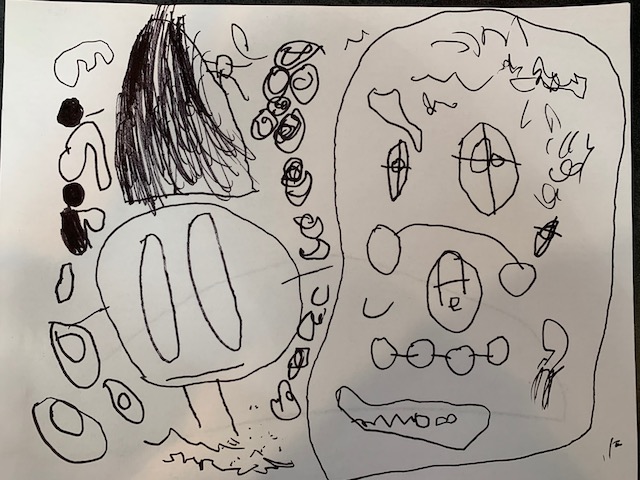
When she asked them to draw their ideas, there appeared a very interconnected scene of the beach, with personal portrait, the water, the mountain too – more layers.
Then Cindy provoked them to redesign a Middle Courtyard space as an ocean and yet again they insisted on layers of blue materials with turtles and shells and rocks and hermit crabs occupying specific layers.
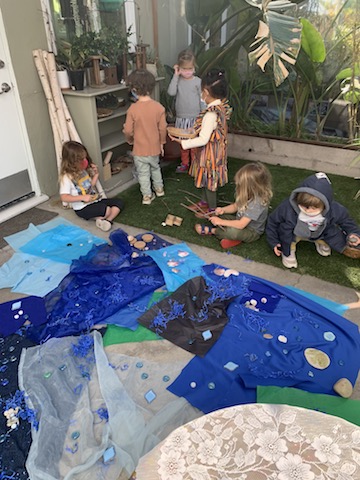
This approach to the experience and their strategies for sharing it is a clue to their thinking. This clue reminds me of the way we, as adults, have been taught to learn things separated from each other: math, science, language were all in different classrooms. As Tiziana Filippini says, “unfortunately the school is not helping us to connect all this. They continue to disjoint knowledge that should be interconnected” (NAREA winter conference 3/18/21). The way we are taught to learn is not helping us to face our worldly problems because they are complex and intertwined. When children are young, they naturally embrace and embody all learning altogether. It’s layered – none of it exists without the other.
Cindy and I will be sharing this documentation with our West Coast Collaborative colleagues to further enrich its complexity for the children. As a whole staff, we plan to research ecology, Bronfenbrenner’s layers of ecology, and environmental systems of intra- and interactions. With additional voices to stretch our own perspective on this work, we can support the children’s learning so that they can continue to articulate and calculate and hypothesize. Through revisiting their work and consolidating their knowledge through metacognition (thinking about their thinking) we anticipate sharing rich learning contexts with you as we document and learn together. – Kristin