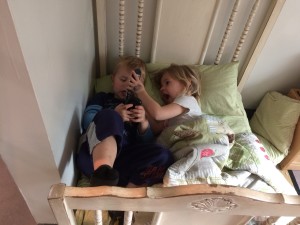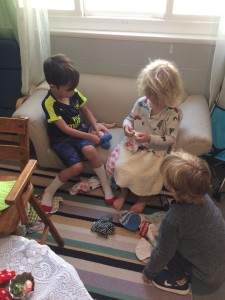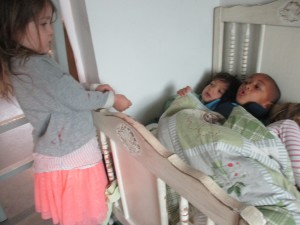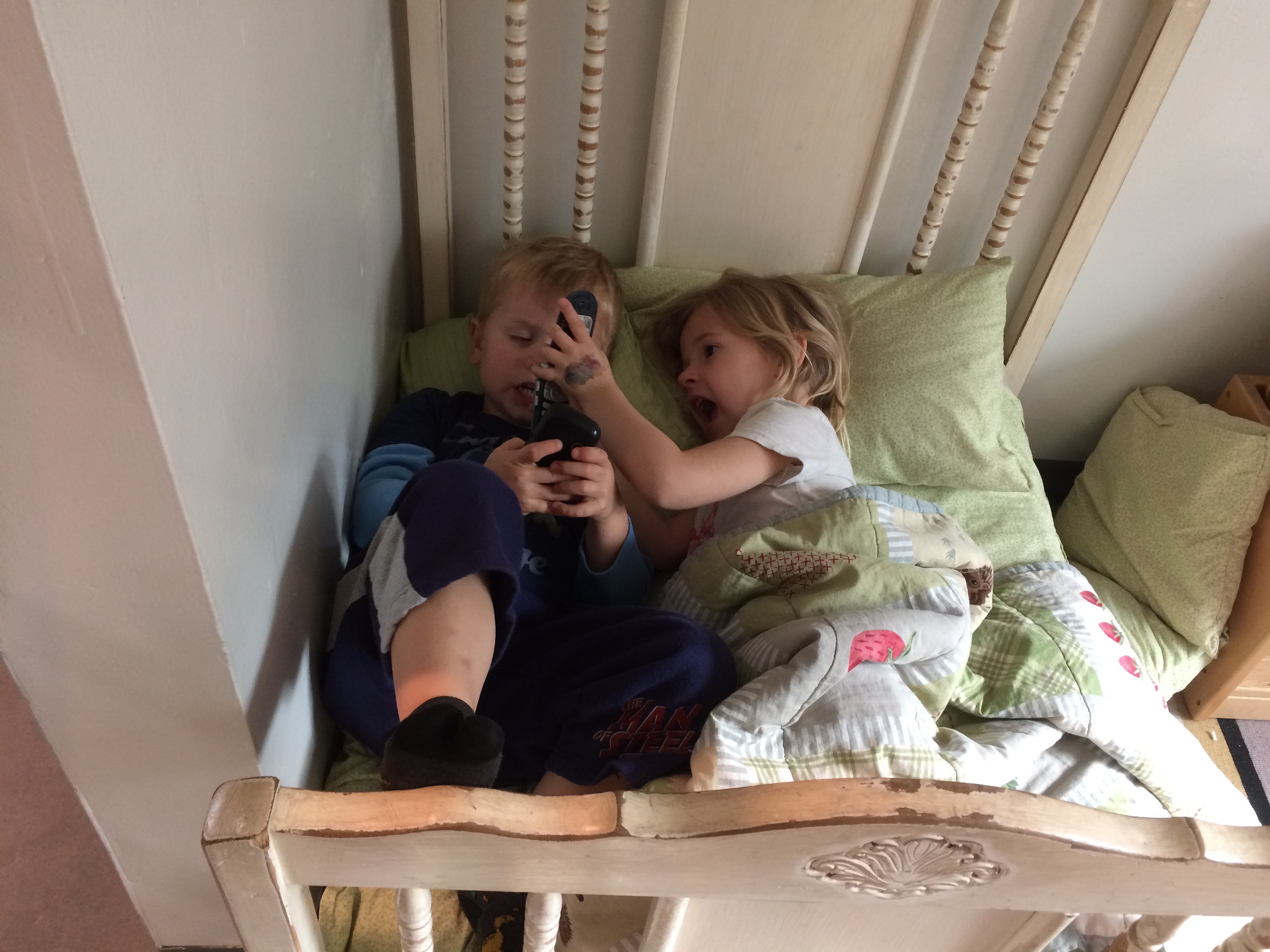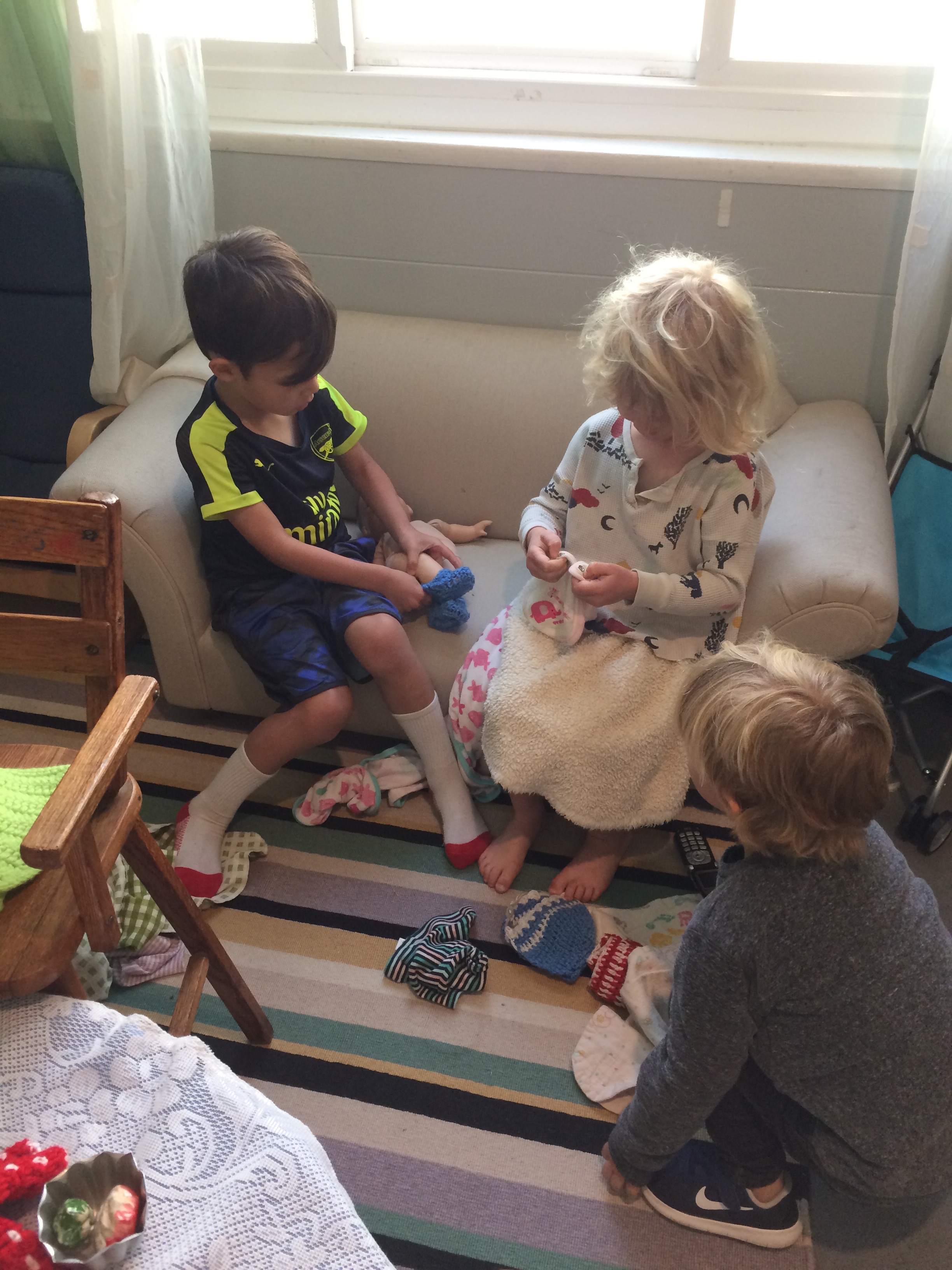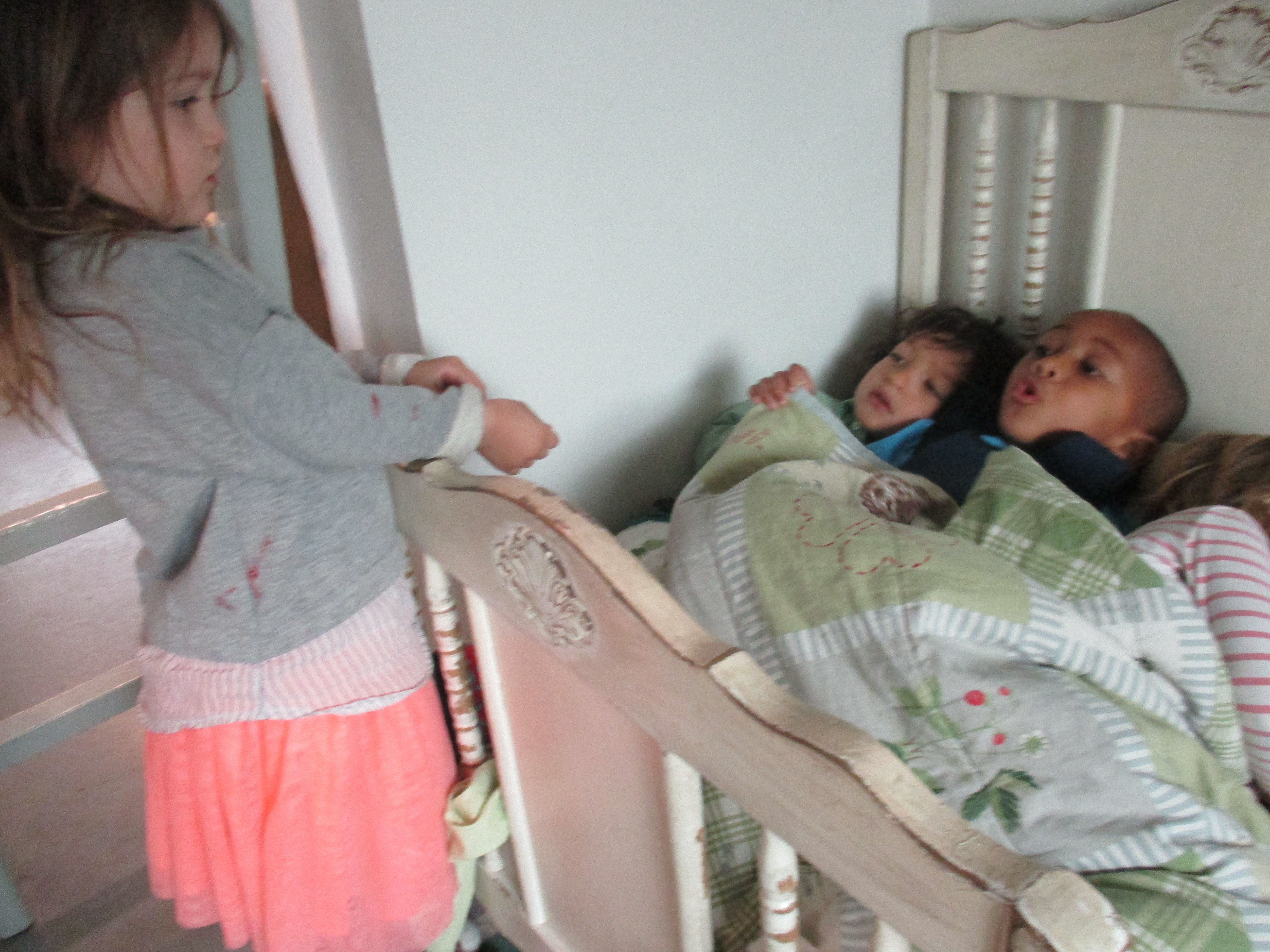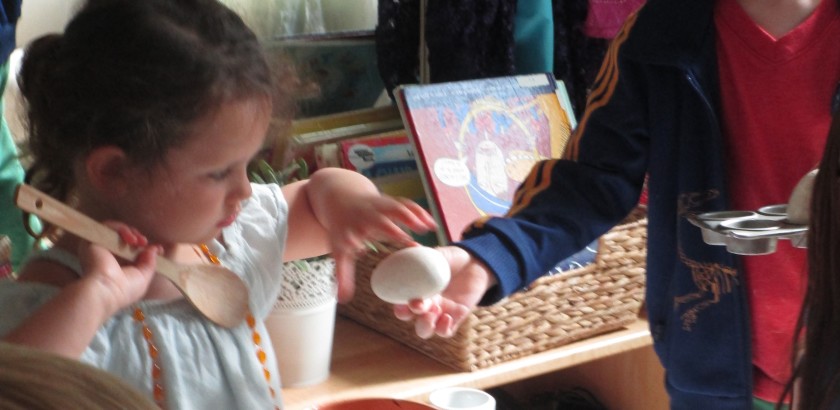
At one point during the day, I watched as some of the children in the WW agree to play “family.” While planning roles, they mentioned the big bad wolf, the three little pigs, and a witch.
Caitlin: Pretend the big bad wolf is chasing our family and trying to get the three little pigs!
Estelle: Pretend I am a witch!
During play, the role of the witch quickly captures the attention of all the players. Estelle, the character of the witch, rides a broom chasing the family (Arrow and Caitlin) and their dog (Leo). Because of the strong interest and curiosity – I hypothesize in regards to the power dynamic – the children decide that the whole family is now witches, including a witch dog. The witch mom, Caitlin, begins to make dinner. The daughter witch, Estelle, is sick.
Estelle: Pretend I’m so sick I have to stay in bed all day.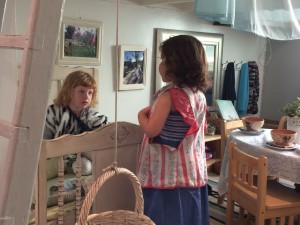
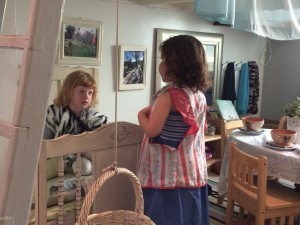
The play shifts quickly to keep up with the demands of family life. The witch children need to get dressed and they require food and medicine. The witch family plans a camping trip. Arrow and Caitlin agree to switch roles. Arrow becomes the mother and Caitlin, the baby witch.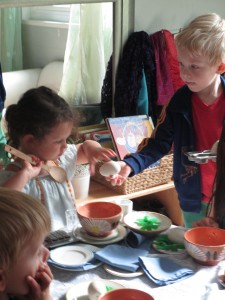
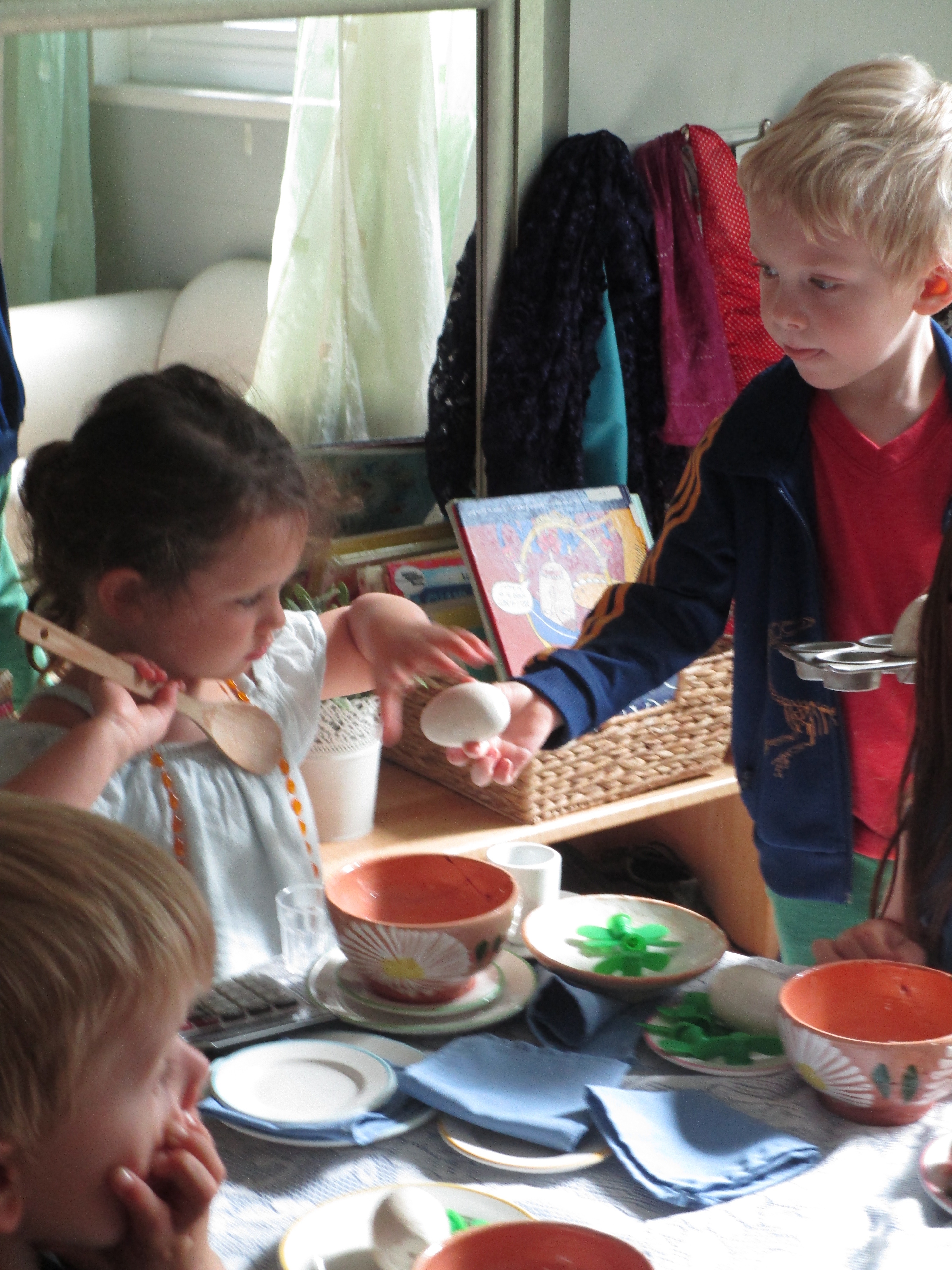
To express these shifts, the children are heard saying, “pretend I… ” or, “do you want to pretend that…?” The phrase signifies important changes to the storyline and is a strategy employed to ensure that all players have input and keep up with the story evolutions.
Leo and Arrow pretend they are the mom and dad getting married. By this point, the witch idea seems to have fallen away, the children having resolved the fearful element present earlier in their dramatic play.
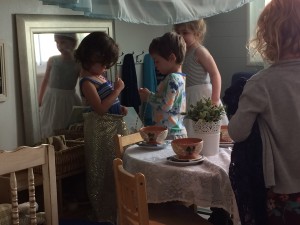
The House Area is a space that offers opportunities for teachers to observe free play, peer relationships, conflict negotiation and discourse, threads, and themes of particular interest to the children, and flexibility of thought in their play.
Again and again, we see powerful, often scary, characters enter the dramatic play of the children. These characters capture the interest of the children and they all become curious to try out these roles. In doing so, these characters become absorbed into the familiar family roles and we observe these scary characters becoming more nuanced. I wonder if, by playing and becoming these roles in the dramatic play, the children feel more powerful and capable in the face of real-life feelings of fear and in situations with power imbalance. I wonder how by observing them becoming these scary and powerful characters more closely, we can better understand their needs, wants and perspective. In essence, I wonder if we are able to move past the fear of the unknown to a place of understanding and compassion. Teacher Jessica