A couple of weeks ago, a small group of 3 and 4 year old children visited the Charity Garden. They observed a web on one of the plants and debate started when Maddox asked, “Is the web good for the plants?”
After the initial discussion among the children, we concluded:
With all this contention, we decided to consult the scientists for more information. We plan to visit the school library to find out about the spider’s role in the garden.
In reflection, the teachers decided that seeking the answer through an expert would too quickly bring this investigation to an end. This would rob us of the opportunity to understand the children’s theories better and encourage them to express them to others. Amy worked with them to draw their theories and Teacher Samantha videotaped more focused dialogue.
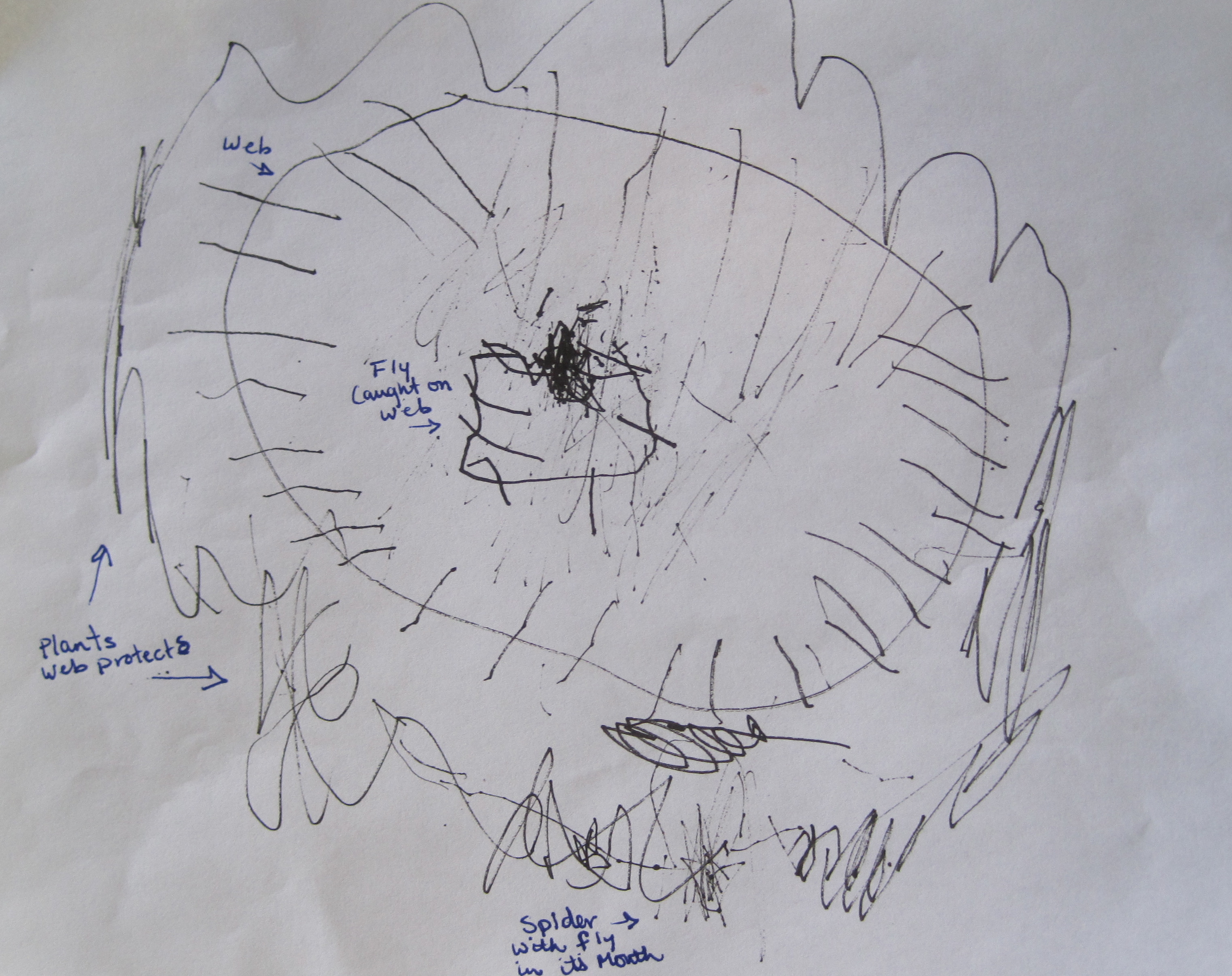
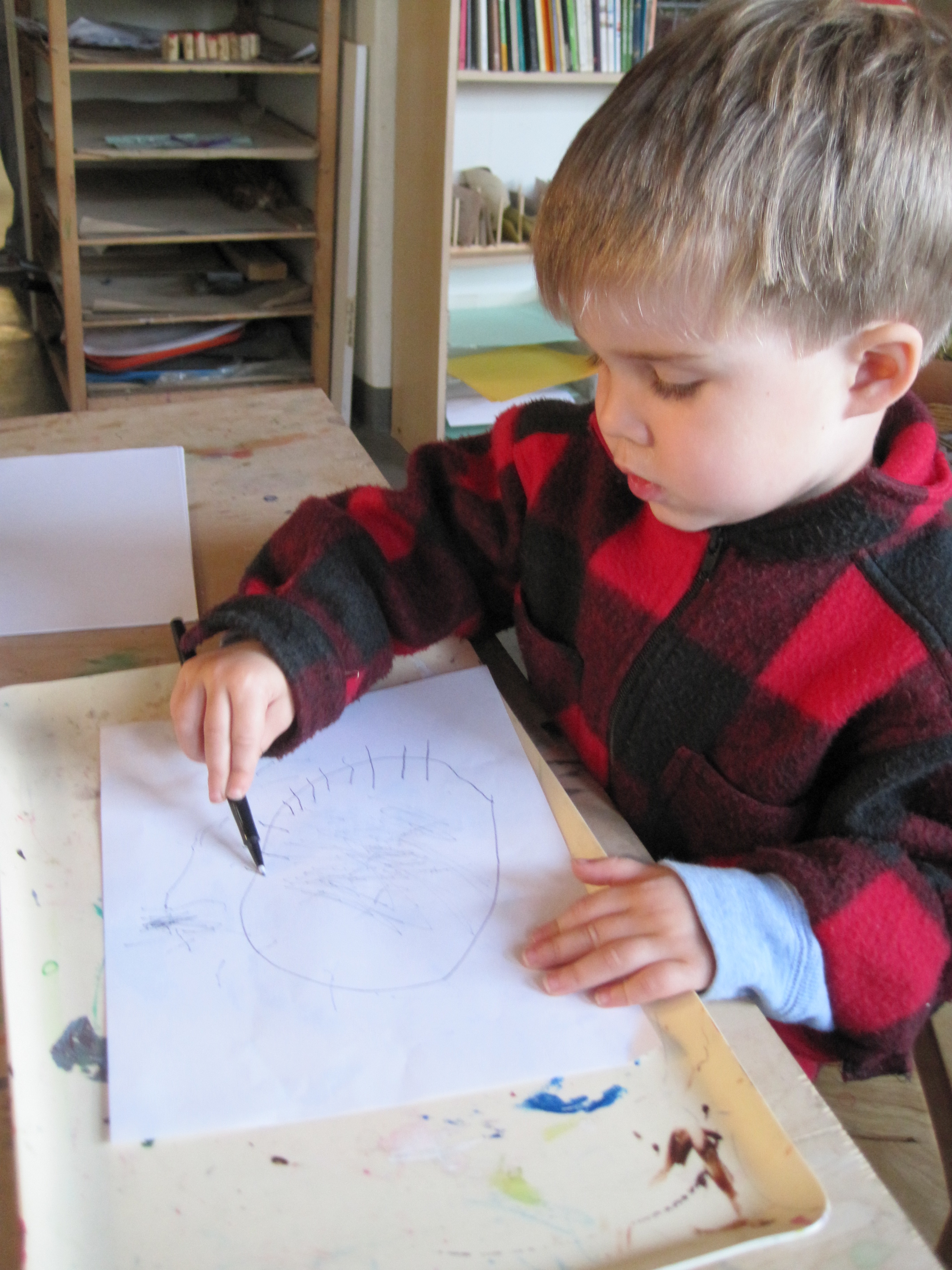
"Because flies eat plants, so the spiders eat the flies."-Brendan
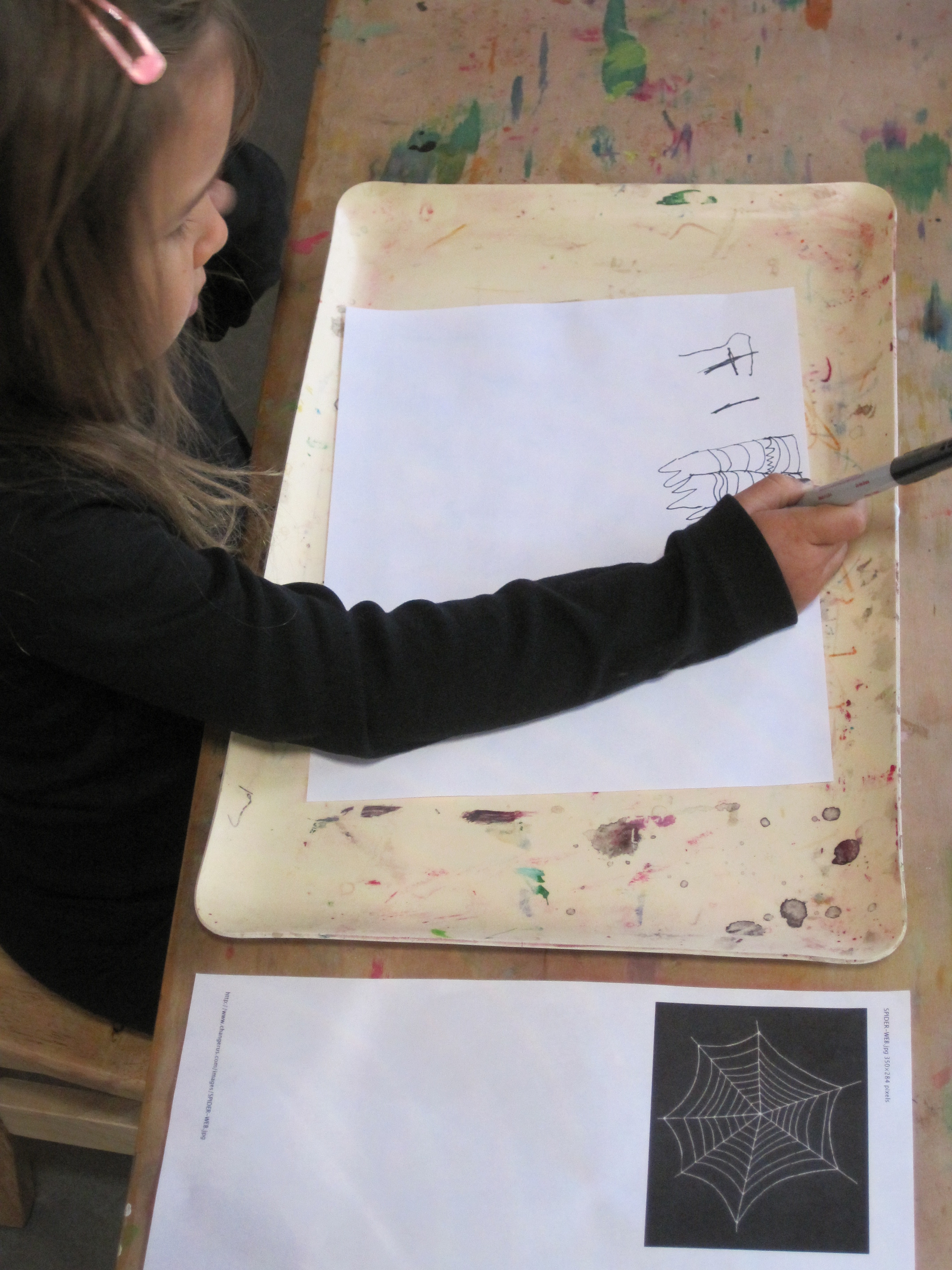
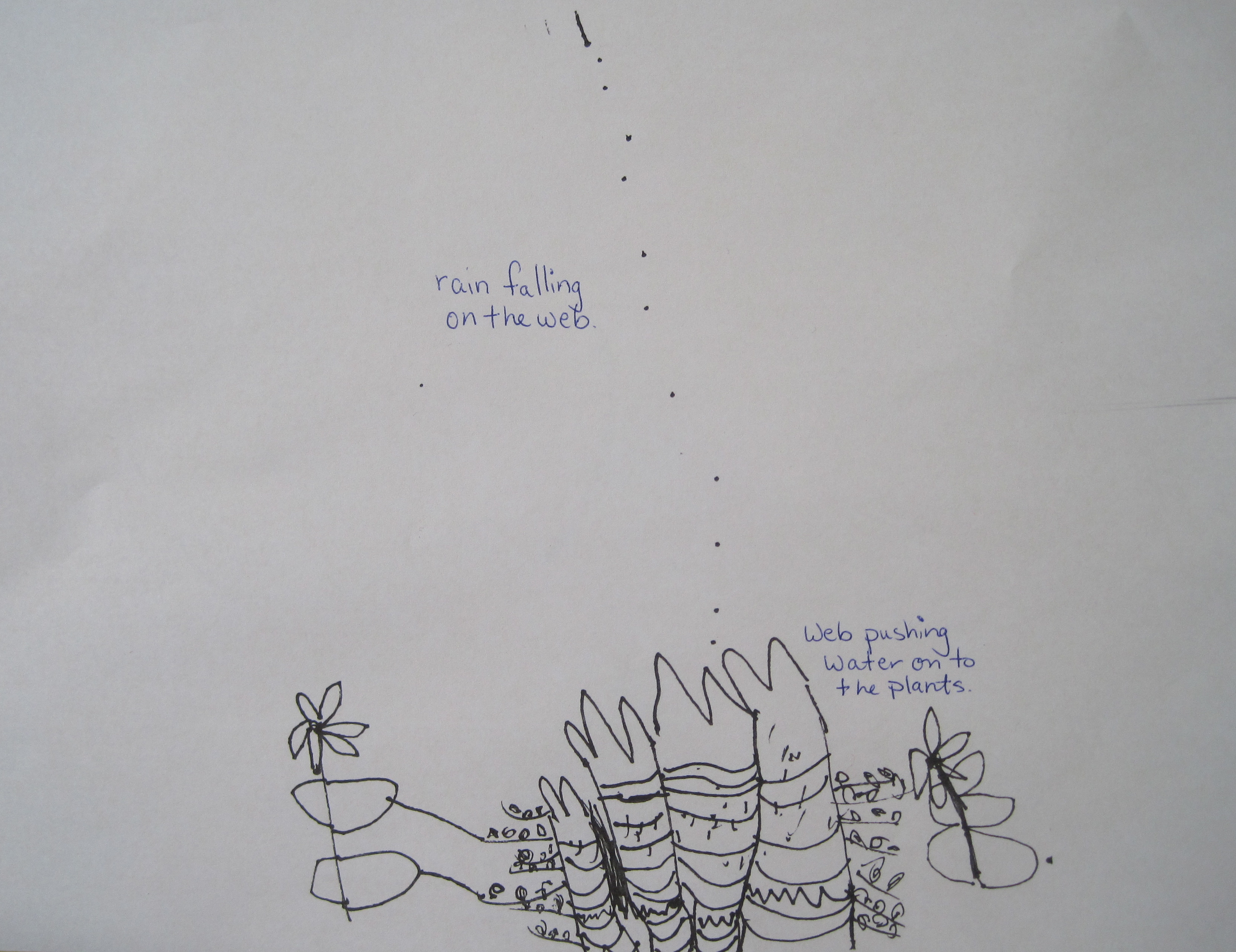
” I think the spider webs are good. They connect to the plants and when it rains, the web gives the plants water.” –Hanami 4yrs old