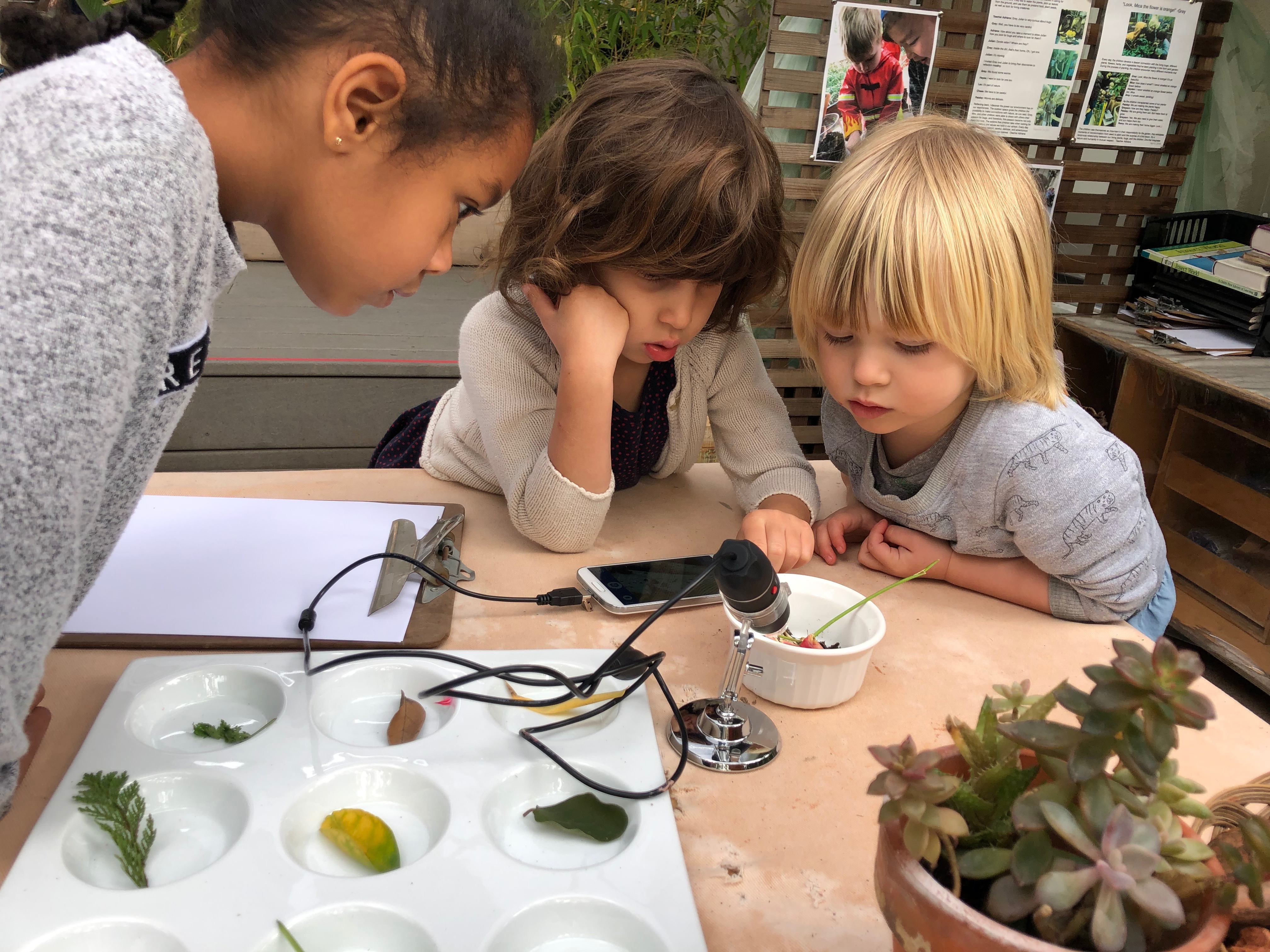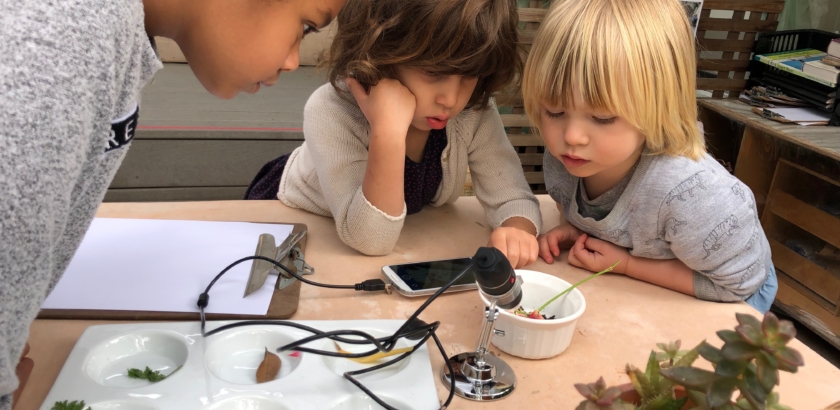
 As the children use the digital microscope and discover the micro-organisms that live inside a leaf, they begin to shift their perspectives about what a home for a bug looks like. Reflecting allows us to re-frame our thinking about bug homes and we ask: What are the essential things a bug needs for survival vs. what a human needs? This research is important in order to separate from the subject while maintaining interconnectedness with it in our world. To analyze further, we are wondering what the children see in the relationship between the worms and spiders.
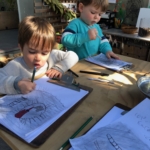
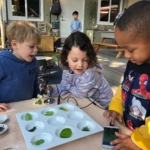
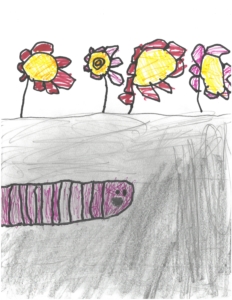
We are using the digital microscope to examine the worm and charcoal and paper to articulate the children’s understanding:
Arrow: Moss, I think the worm is feeling happy when we are gentle with him. I’m making a home for the worm. They like leaves.
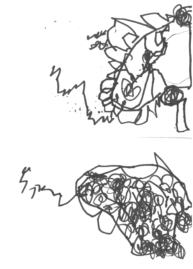
As the children try to create a visual drawing to demonstrate their thinking about how the bugs spend their time underground, we realized we had to slow-down their drawings. We offer sketch pencils to support their discussion.
Avey: I think they are coming out because they need air to live.
Moss: Spiders love the dark. They love underground.
Adriana: I wonder what is the relationship between these bugs?
Jake: They all live underground. That’s their house. They are all a family of bugs, even the tiny little bug that Mason found on the dead flower.
Adriana: Then what is the connection between the spiders and worms?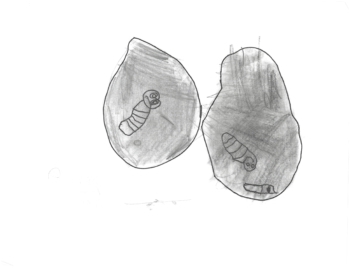
Leo: Here in my drawing. The spiders are making a house. The house is not for both of them (referring to the worm and spider). They are not family, they are more like friends.
Will: They take a nap underground together.
Aliana: Will, when they are underground they are taking a nap together and if someone steps on them they will get so sad.
Agnes: They are TOGETHER underground. They just have a different home.
Jacob: You know what? The worms will die if we take them out of the dirt!
We understand the children are on the edge of considering their effect as part of the worm and spider habitat when they speak about their response to our stepping on the ground and our actions of removing them for study. With our investigation into the intersection of nature and technology, and the children’s budding awareness of others perspectives (demonstrated here by taking the bug’s perspective), we realize we need to introduce the human element into the focus. How will this process of investigation influence empathy and understanding of the interconnection between nature and humans? -Adriana, Cindy & Kristin