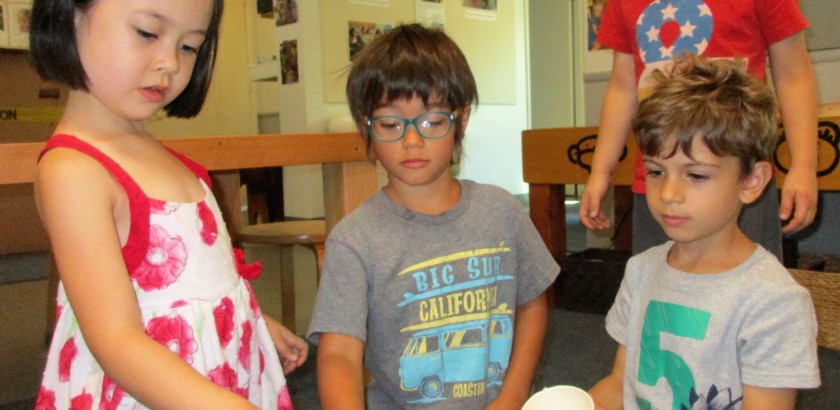
Designed to include a variety of loose parts, the EW Exploration Room offers these open-ended materials to welcome children to collaborate, invent, construct, evaluate and modify. Such an event transpired when Sol combined a tube, wooden board, washers and clothespins to invent a game and then invited Quinn to join him.
Sol: Hey Quinn, want to help me play this game? You get a clip from here. Go like this (push the washer to the side of the board). You have to try to get it in the clip.
Quinn observed Sol and attempted to grab the washer with the clothespin.
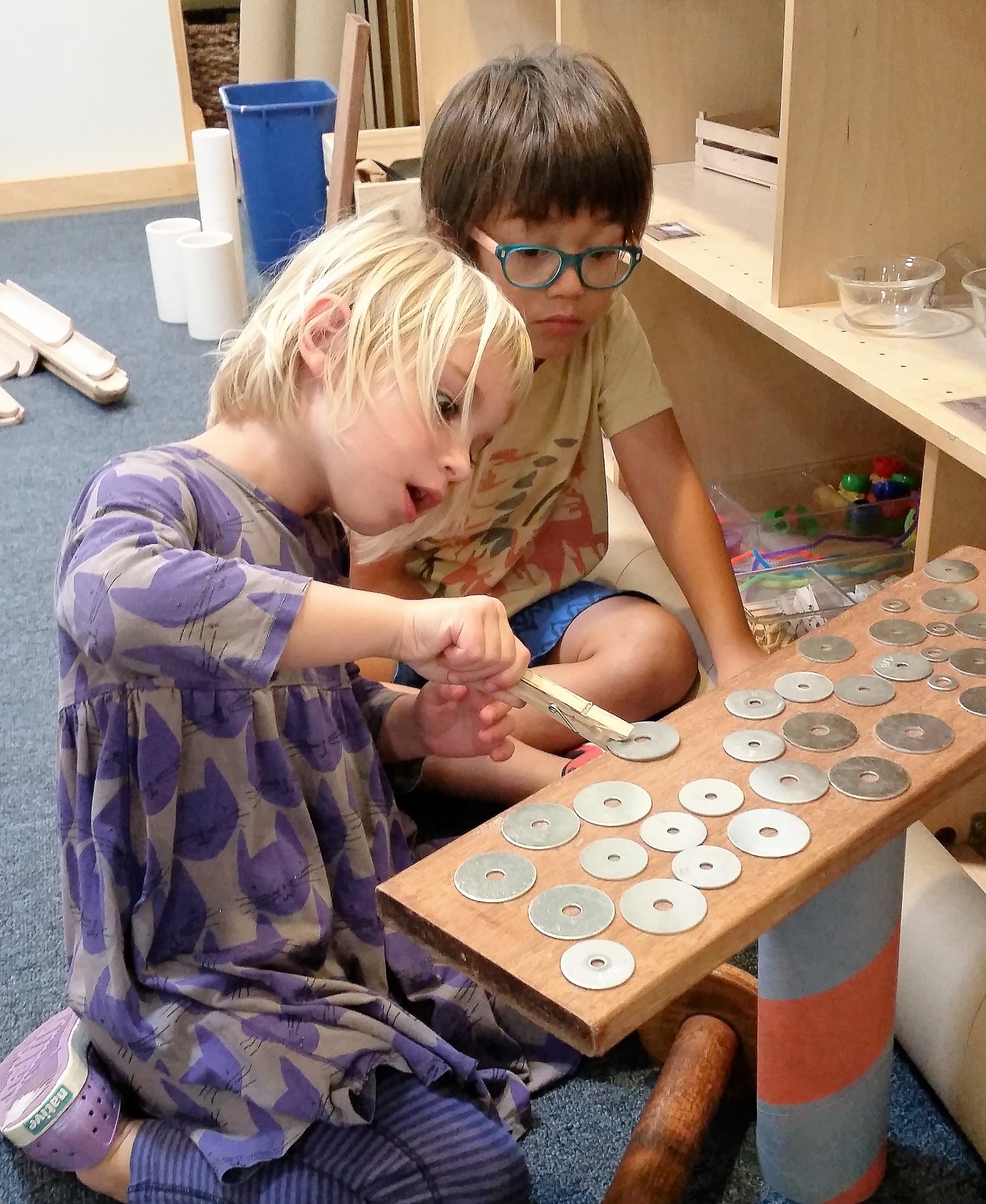
Sol: If it falls off, you try again, and I set it up for you. You got one!
Quinn: I think we need a little bit more.
Sol: Okay, look at how many you have to do. Are you up for it?
Quinn: Got one!
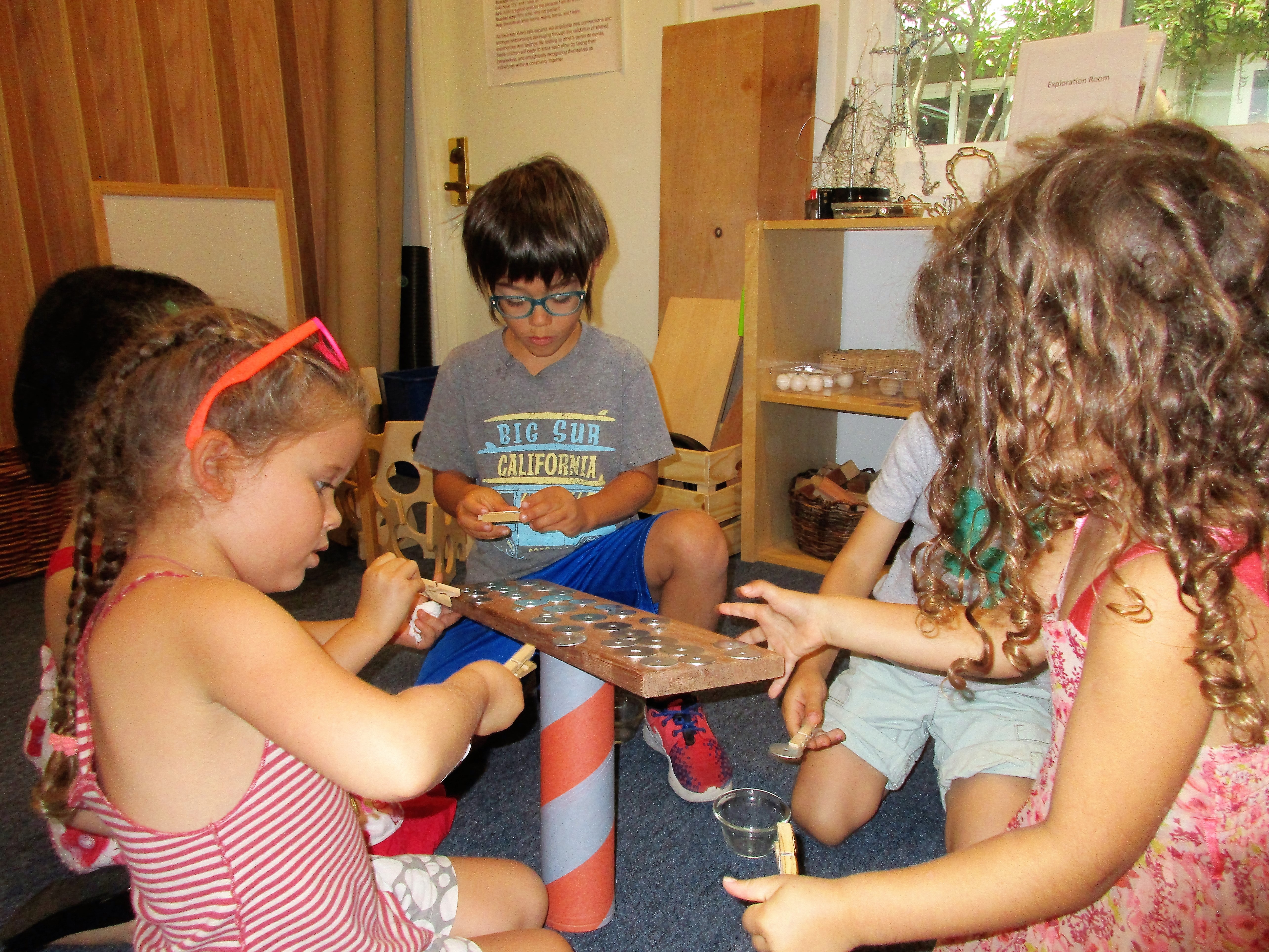
During reflection meeting the game was shared. The following day, a group played the game and I observed it organically evolve. The wooden board kept wobbling and collapsing.
Clarke: We can put the tubes under to make it stable.
 The children introduced paper cups to capture the washers. At one point, all of the washers were removed and replaced by cups and then a counting and balancing game ensued. A wire/mesh piece was then added to act as a trap.
Jillian: What I try to do is push them in the cup.
Philippos: And then I take it and put it in there (cup).
Matan: There are 10 cups!
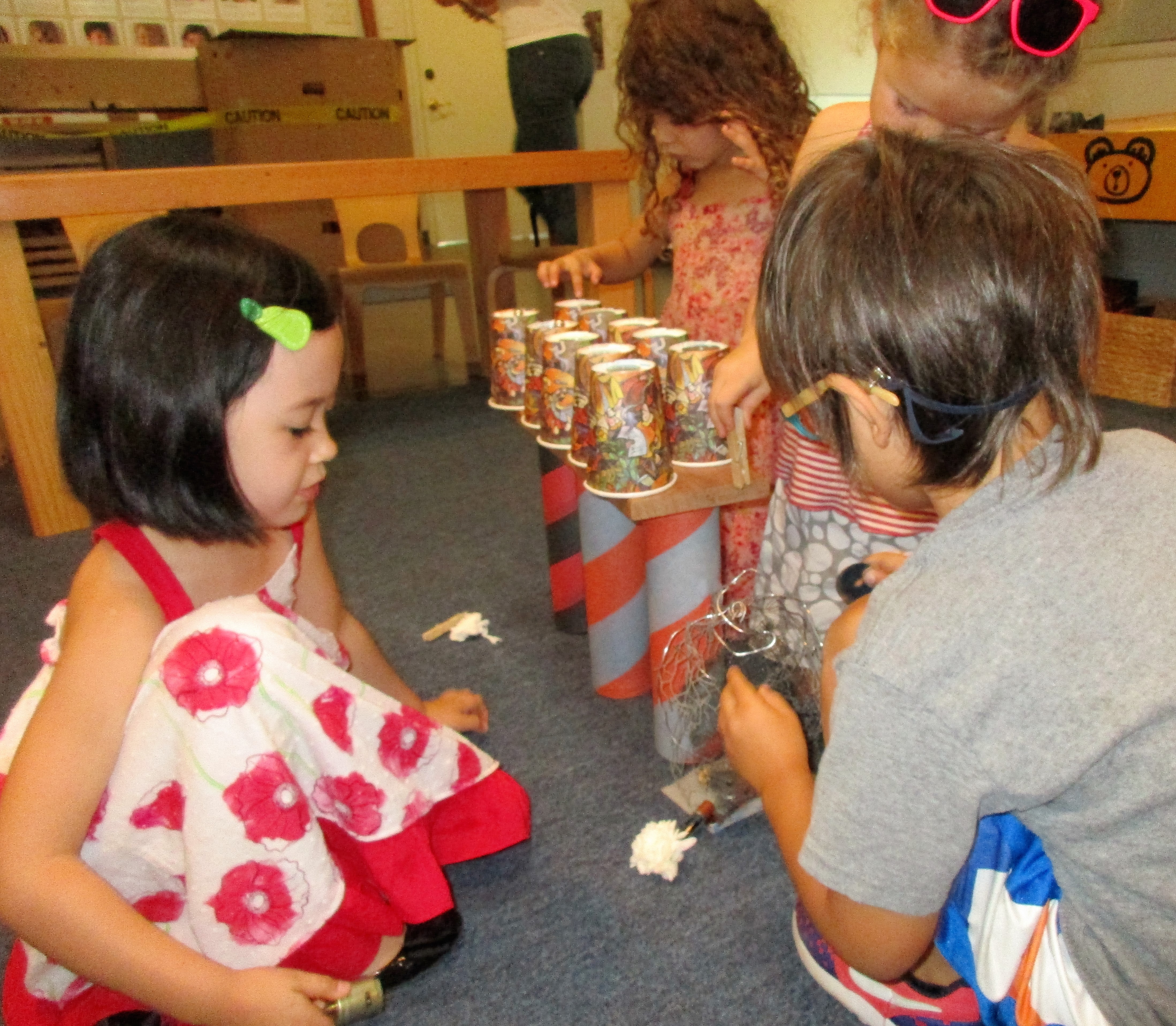
While the children played and modified the game, they exercised the affordances of each material – clothespins grab, pinch and push; tubes stabilize, capture, and support; washers slide, represent numbers, and fall; and cups hold, transfer, and balance. These experiences also highlight our intention of using language and reflection meetings to foster a culture of collaboration and collective sharing of ideas. A game invented by an individual can belong to the community once shared and understood by its members. As different groups play the game, it morphs based on the ideas of the group. How those ideas are negotiated and how the children’s understanding of the materials’ affordances orients them to determining a collaborative goal. -Teacher Susan