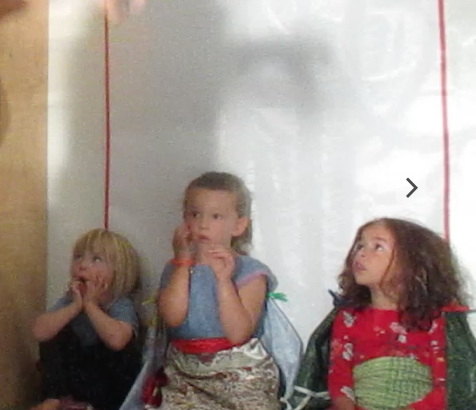
The children’s first opportunity to “act out a show” together in the Cactus Theater in the East Wing was approached individualistically. The teachers kept hearing, “I want to be…!, My idea is…!” and the characters didn’t have a clear role yet. Listening to each other appeared difficult and no clear agreement between the players was made.
Harrison prancing and roaring at Juliet: You are a butterfly and I am a lion.
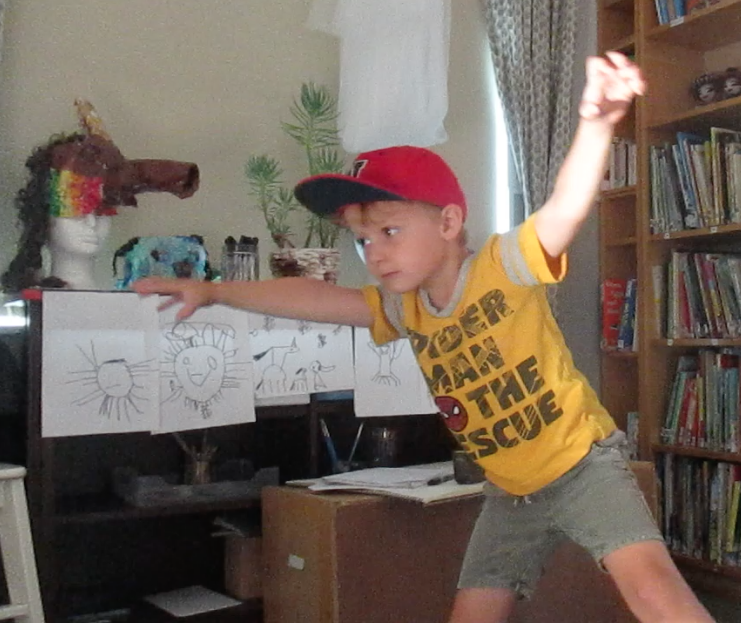
Juliet turns to confront him: No, that’s not true, Harrison, because you were too scary for me and Moss is being too loud for me.
Harrison defending his character idea: I can pretend to be a super scary lion.
Juliet trying to justify the two ideas: I can turn into anything happy.
Harrison: But I can turn into anything mad. I could only turn into…
Juliet Interrupting Harrison’s assertion: I was still talking!
Moss: I…
Juliet Reaffirming her position: Moss, I was still talking. I can turn into anything happy because I have a magic unicorn and I can also transform and stuff.
Moss: I can turn into anything happy too.
Harrison: I’m the scariest one in the story.
Lucy L.: I can turn into a butterfly.
Juliet: I am the Queen butterfly. Moss, do you want to be the King butterfly?
Moss: Yeah, let’s do that.
Lucy L.: I want to be the Queen butterfly too.
Harrison perhaps challenging Juliet’s power: And Juliet can be the mom butterfly, not the Q
Juliet: We can also change.
Lucy L.: We can change into butterflies or into anything.
Juliet: Into happy stuff.
Harrison: Starting to walk like a lion and fitting himself into the play: I am a “niiicee” lion.
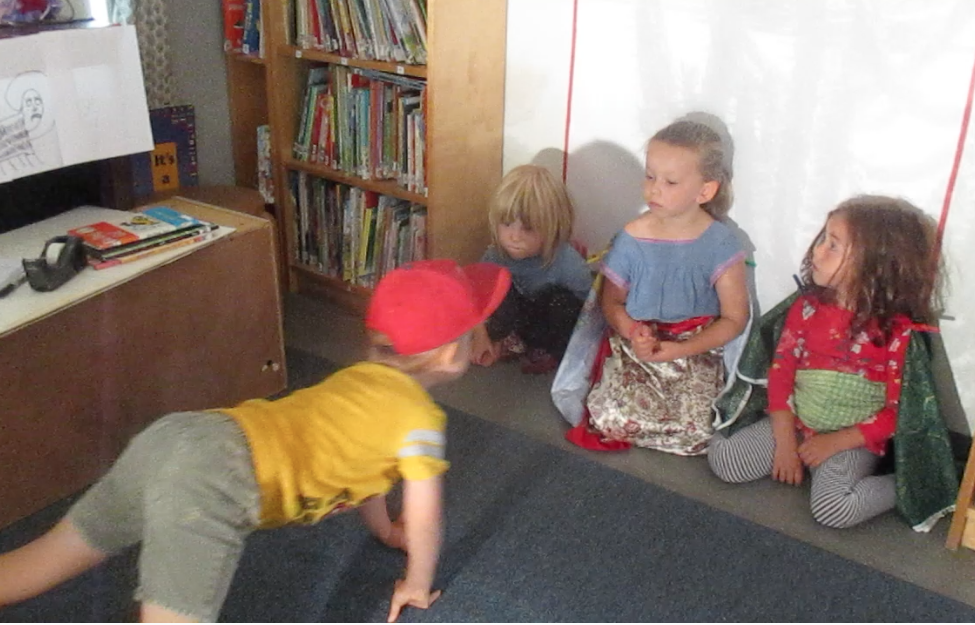
Moss, Juliet, and Lucy
We see the dynamics between the children appearing in their play here in this scenario and with so many others throughout the day. With our classroom intention which is to interconnect our community, we referred to one of our strategies: “Ask for similarities between ideas, people, and senses to provide complexity” and we asked the larger group to offer a story-ending:
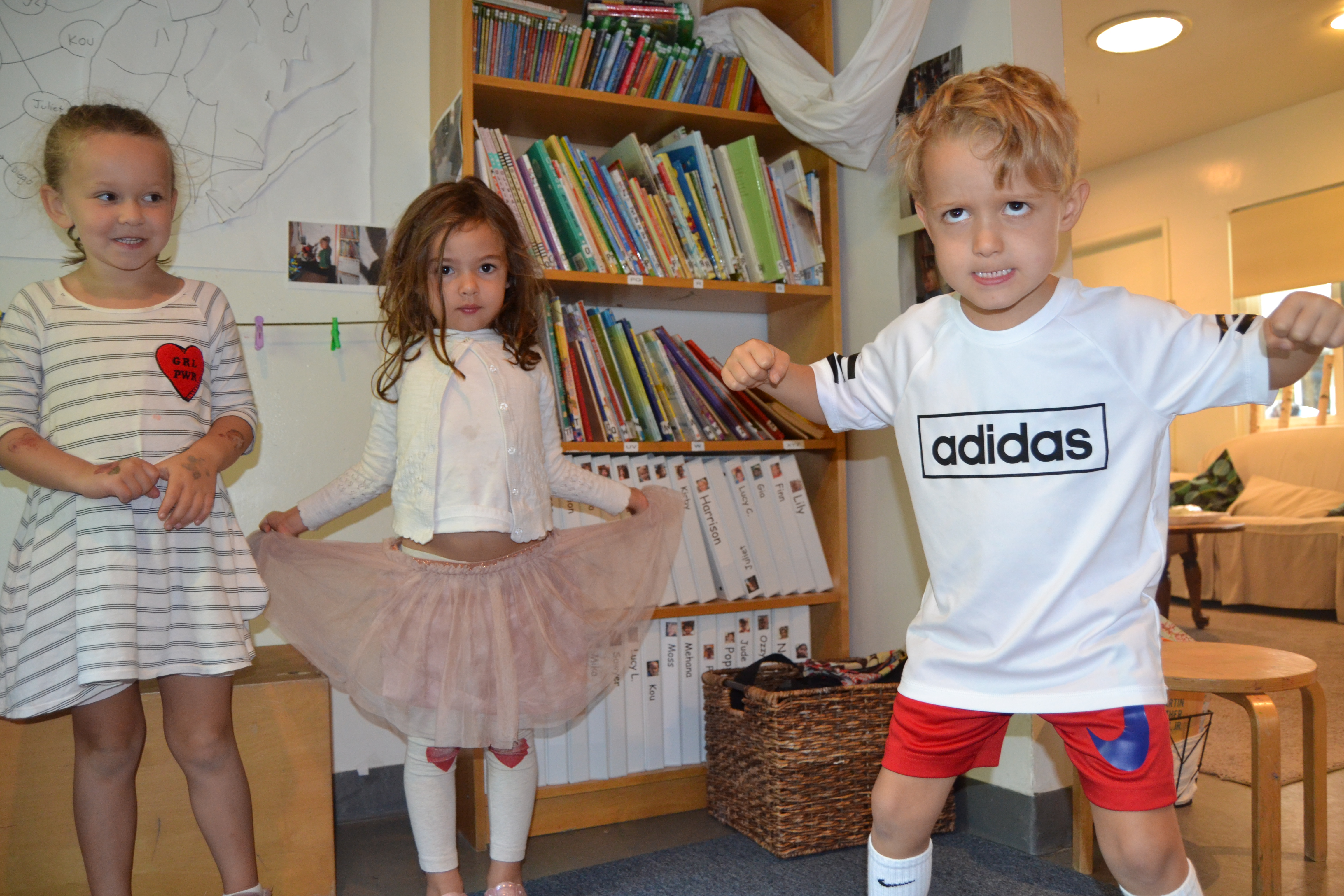
End of the story: The story was presented at Reflection Meeting and after hearing the players’ conflicting characters, the larger group determined that “the cactus puts all its spines on all the butterflies. The butterflies flap their wings faster and faster and they fly away.”
Together, the children created an ending that told a deeper story: When you don’t agree, agree to disagree. Reflecting on this encounter with the teaching team, we hypothesized that the end of this story is really a beginning. From here, how do we find similarities and connectedness? The teaching team proposed the following questions:
What if this wasn’t the end of the story? What if this was the beginning? What would happen next to connect the butterflies and the cactus?
When was a time you wanted to connect but it just didn’t happen? How did you come back together?
We will guide the players to relate their real-life experiences of their practices of kindness, accommodation for others, revisiting, and value for good friendships using the play to think up new strategies for difficult situations.