During an East Wing morning meeting, Yoli talked with the children about compost. The children were interested in seeing what was inside that compost bin in the Front Yard. Thinking that the children’s study of what’s inside the compost will have a strong base in observation and recording, the teachers met with the children with a mind toward illustration and reoccurring investigations. As children engage in this study, they will be using their senses, making observational drawings and begin to map what they have seen.
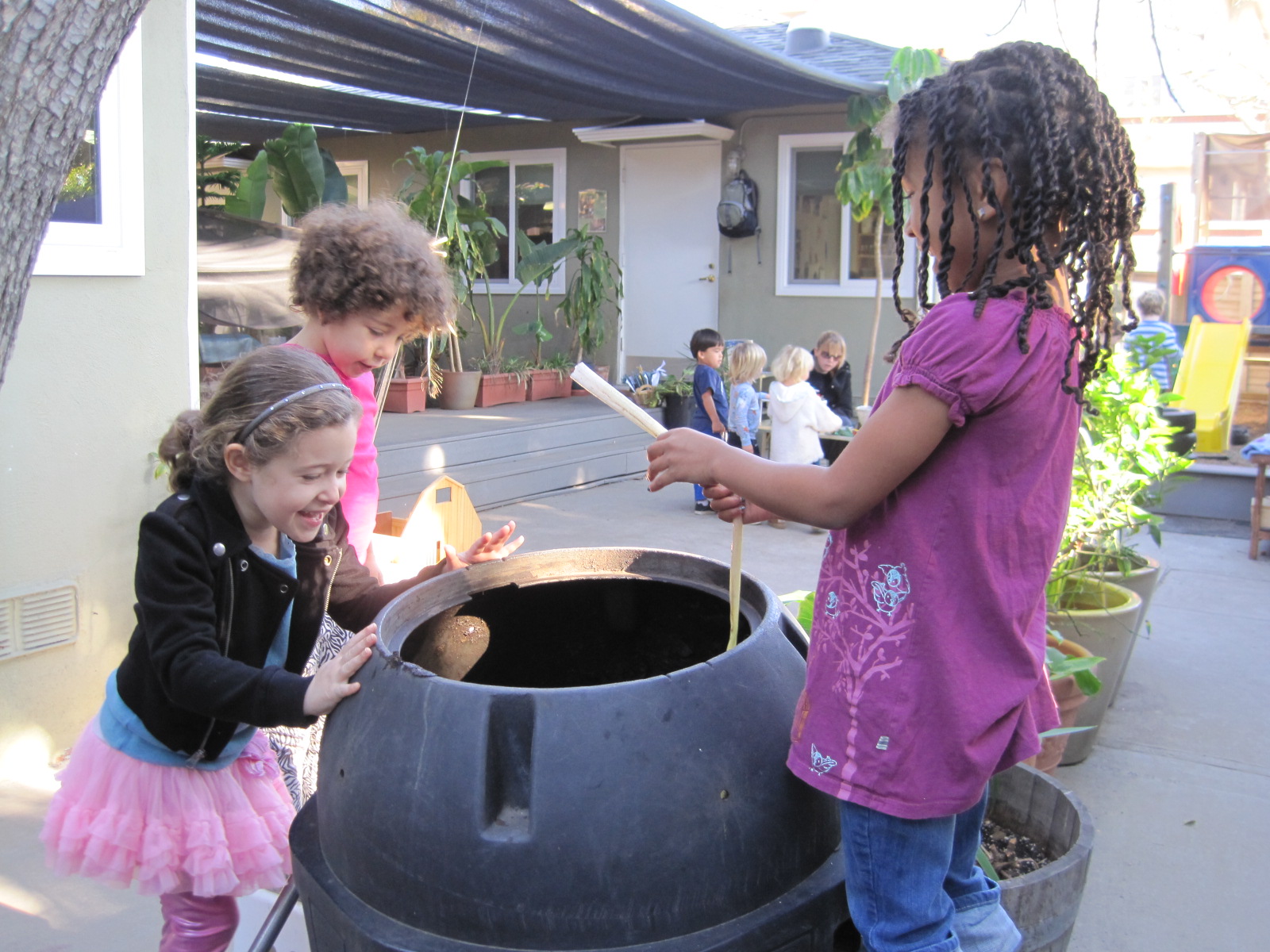
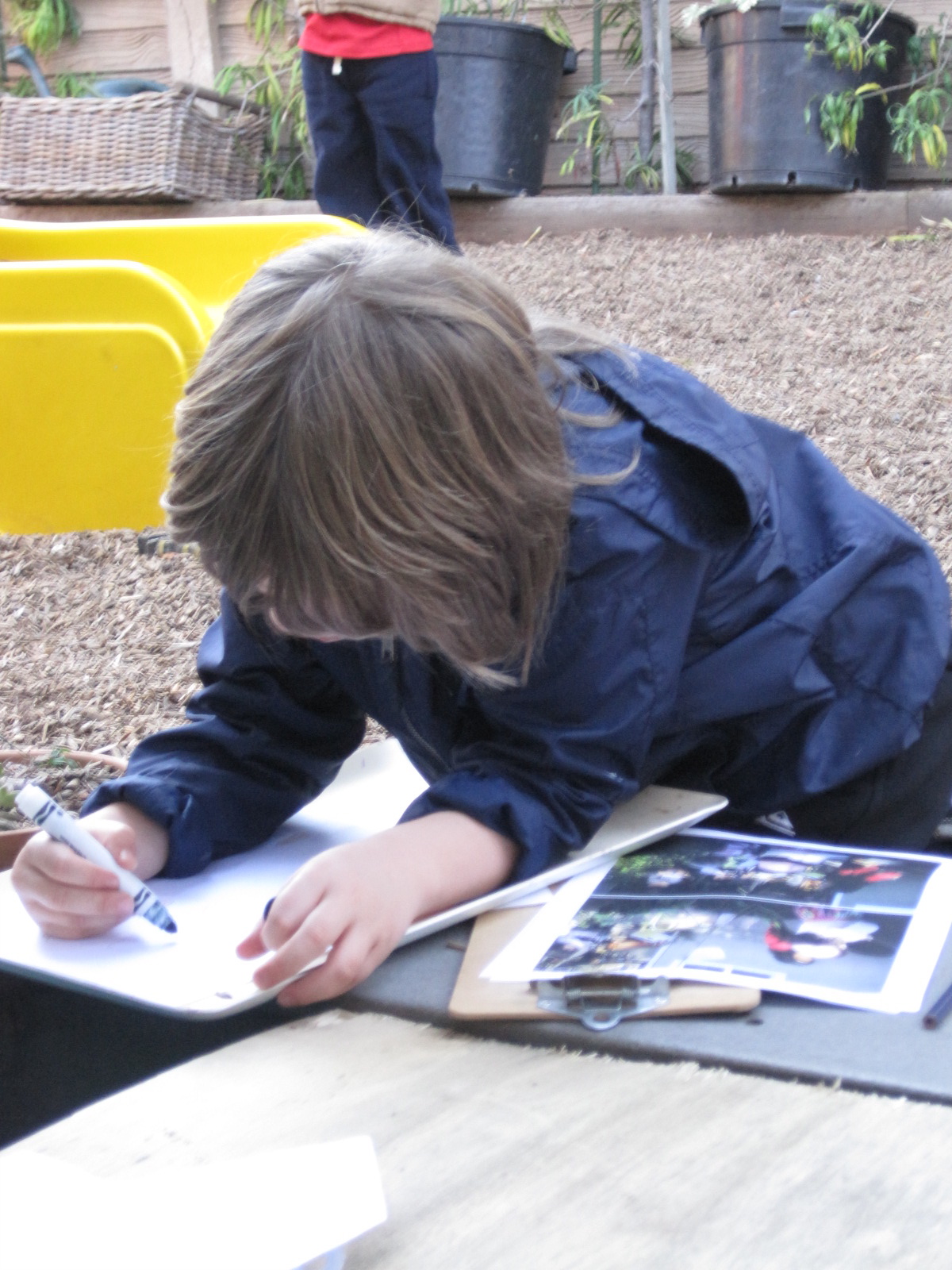
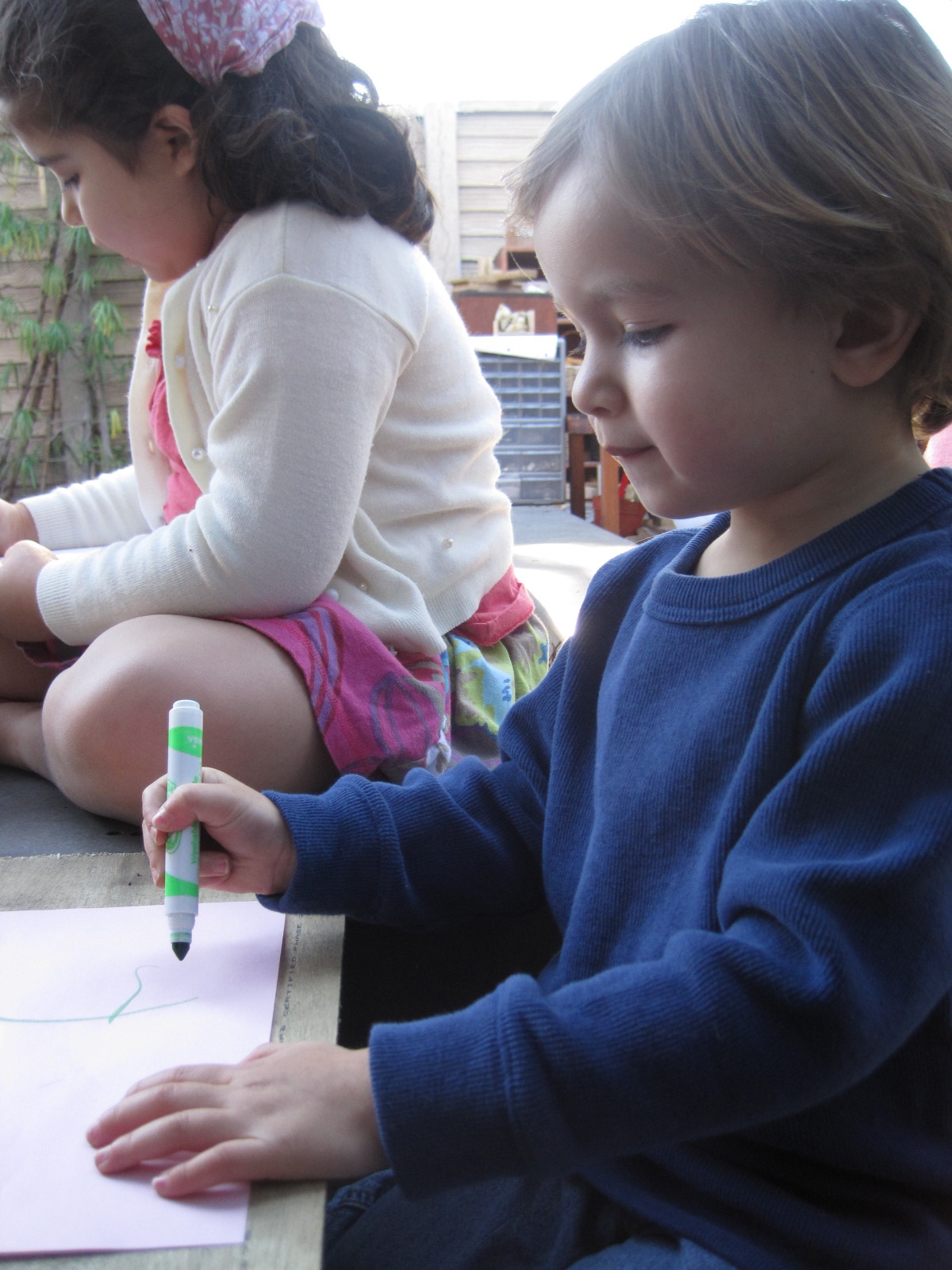
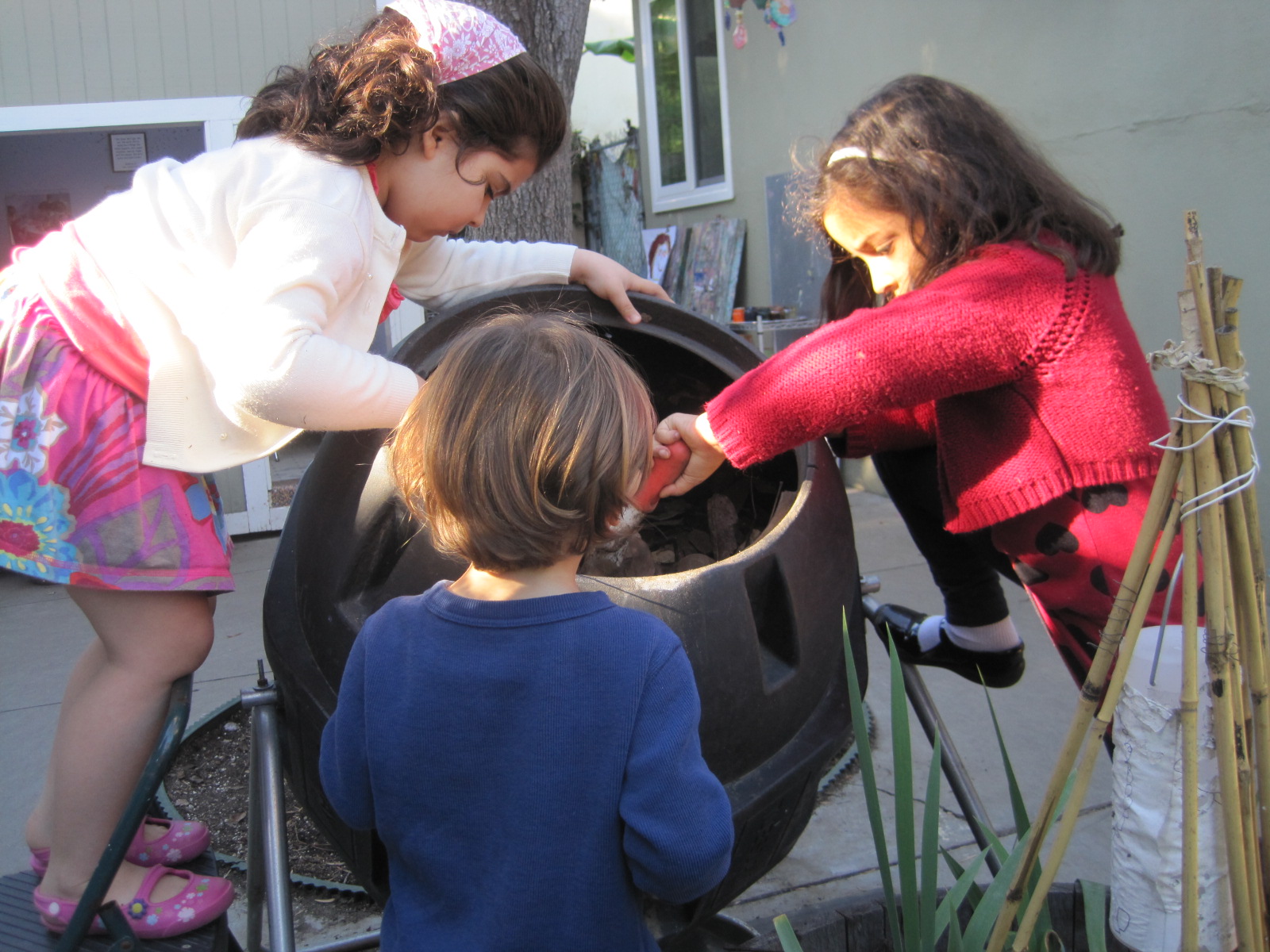
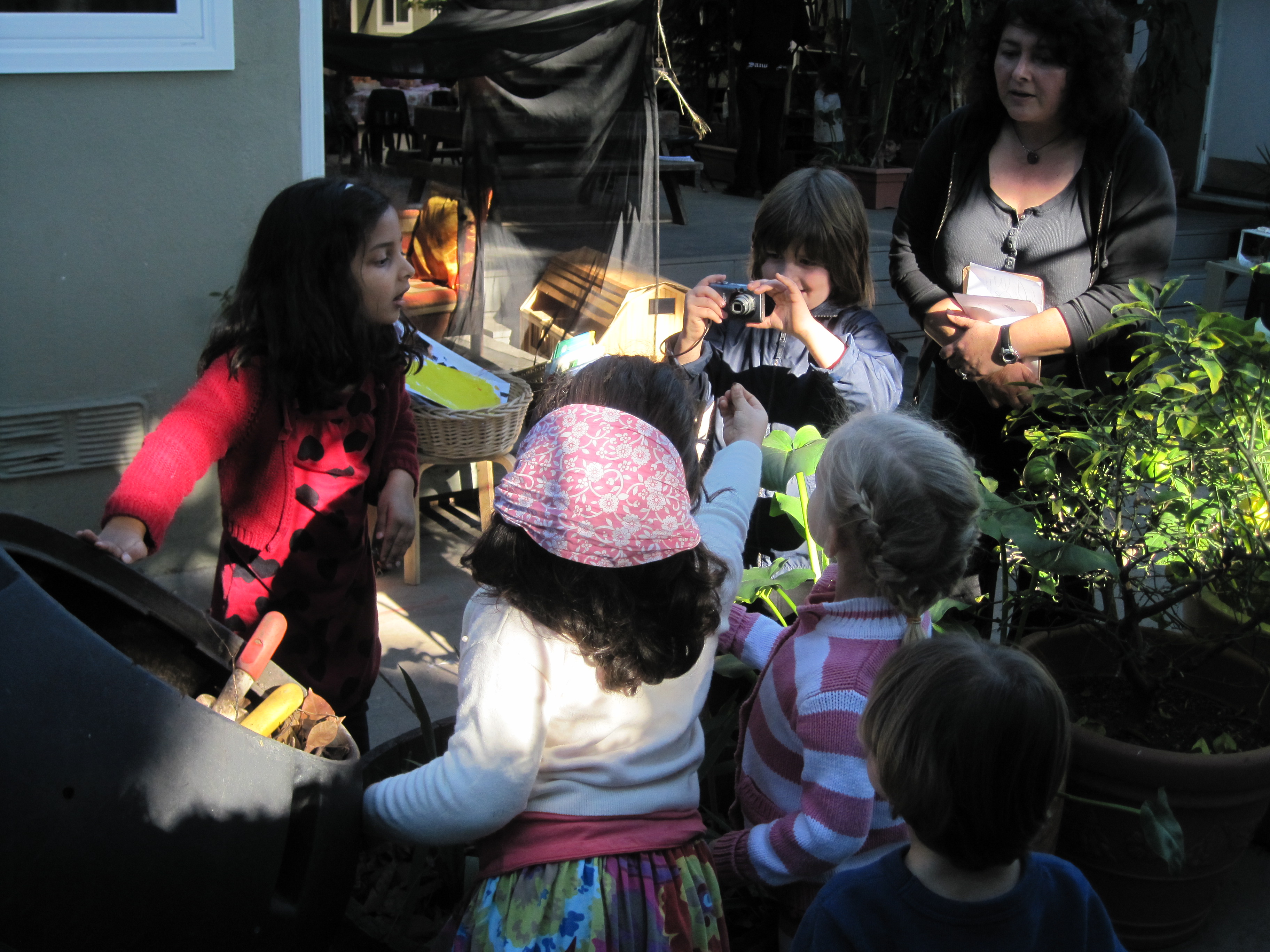
Yoli set the tone for the initial investigation: “Let’s check out the compost. Let’s draw what we see.”
They all walked over and opened up the compost bin.
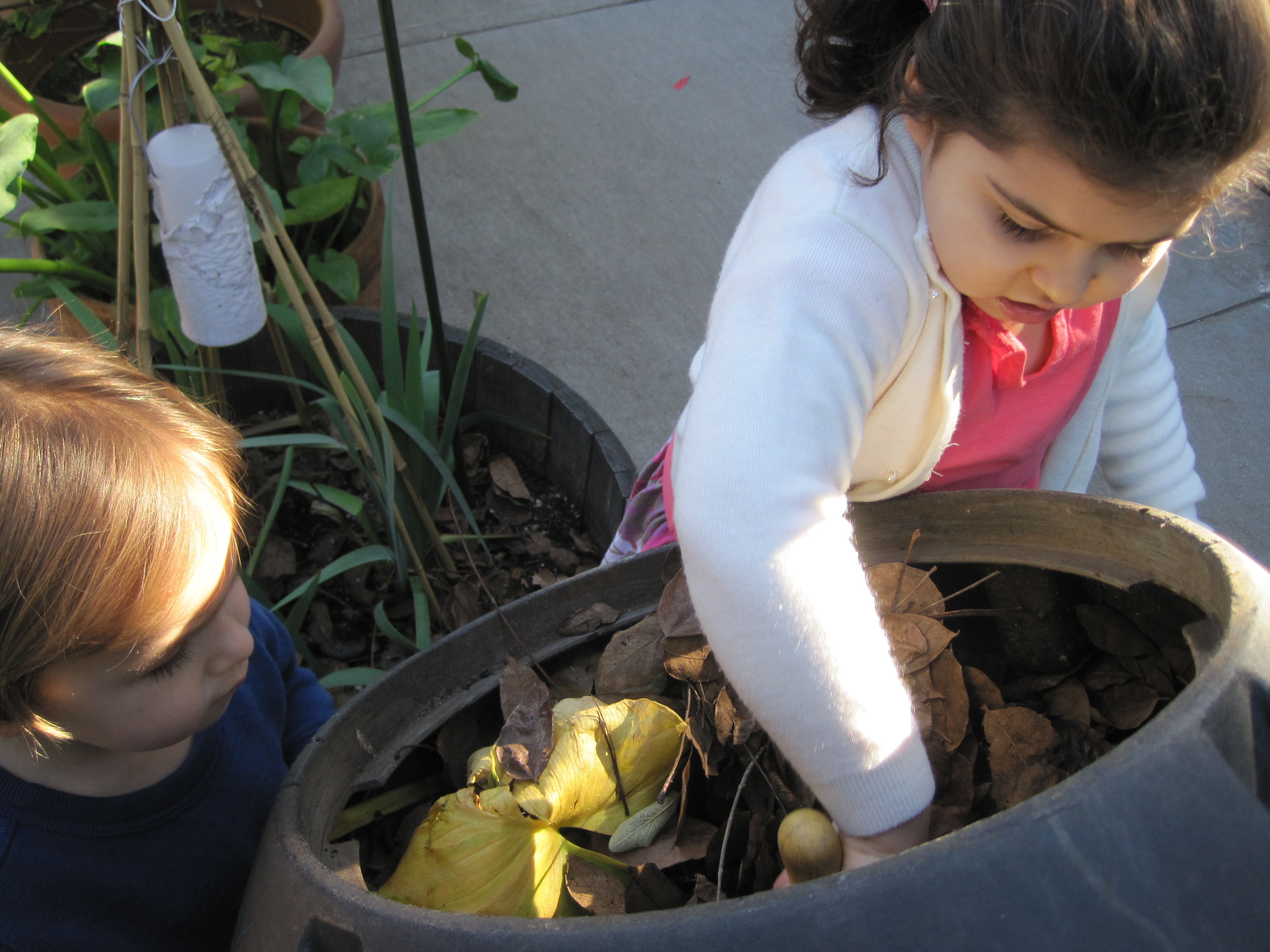
Mia: “Leaves, Brown leaves.”
Rowena: “Sticks.”
Kyle: “Bugs.”
Mia notices the additions from the snack table: “Carrots, carrots, carrots.”
Yoli, wanting to encourage a deeper investigation: “Kyle can you help me dig in there?”
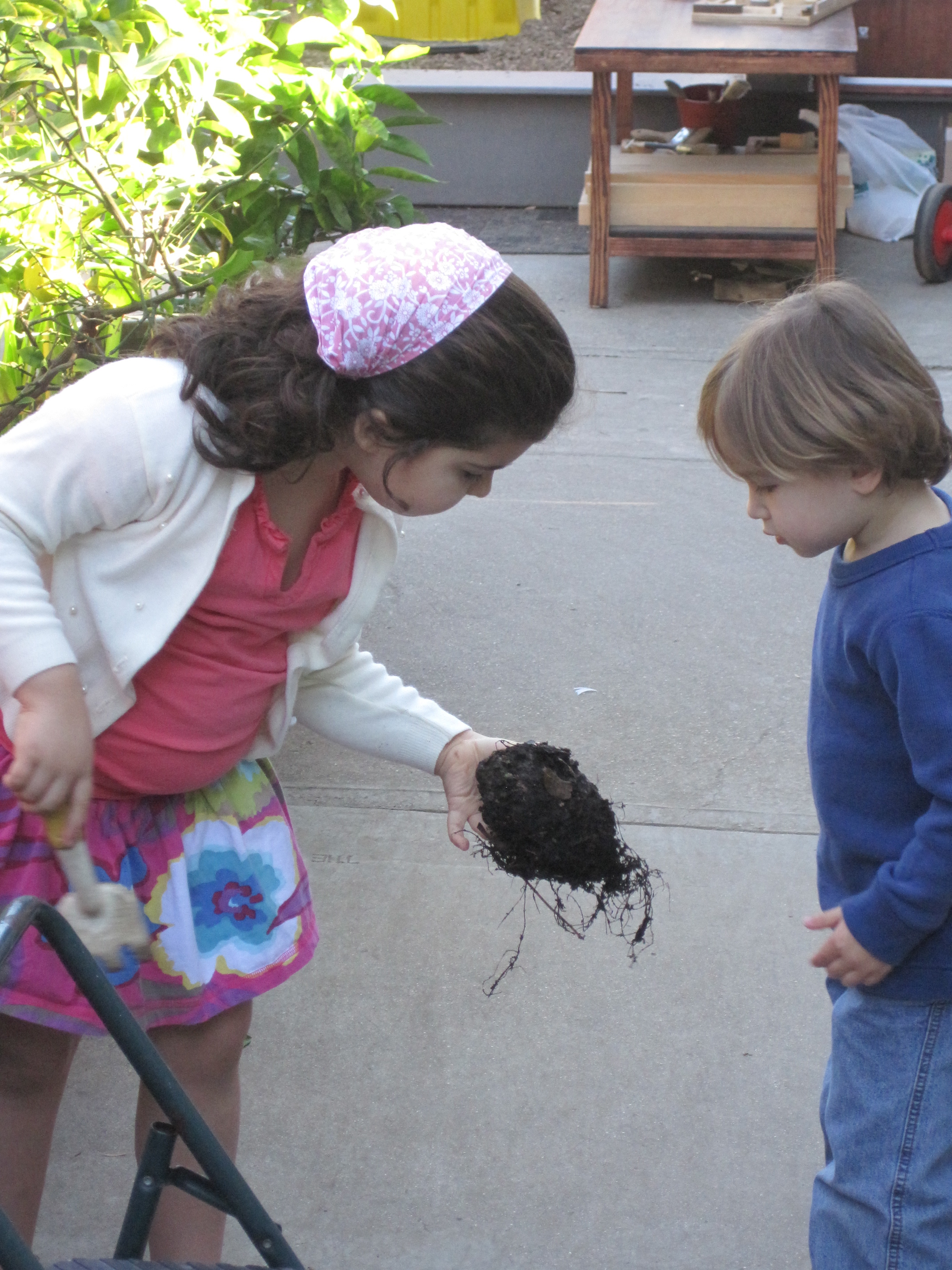
Kyle, using a trowel: “I don’t see any worms.”
Mia spies a worm: “There it is, there it is!”
Yoli confirms her view and engages all the children: “Wow, there it is.”
Owen: “I’m gong to draw it.”
Kyle: “I want to draw it too.”
Mia: “I see some babies.”
After a few more observations, Yoli asked some of the children what they wanted to know about the compost.
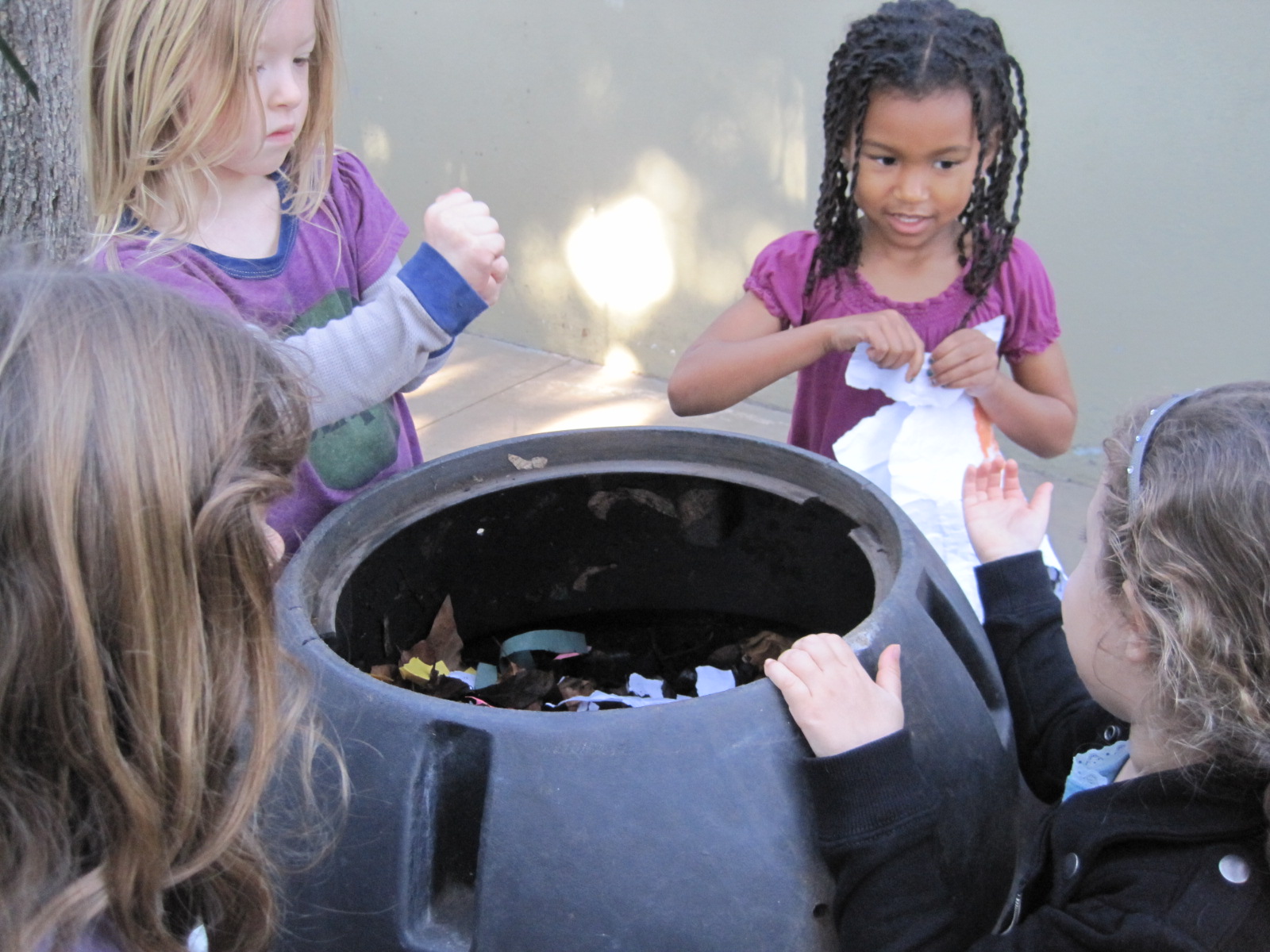
Cookie, revealing a prior knowledge: “Can we turn this bin? Compost needs to be turned. Can I get recycled paper for it?” (Some of the children noticed the paper in there.)
Devin, wanting to participate in the creation of this worm home: “Can you please let me know what kind of things goes in there?”
Sadie B imagines beyond what she seees: “I want to know how many things are in there and what’s living in there?”
Laurel invites friends to get closer: “I wanted to see if I could find worms. Cookie, touch it. It feels good. It feels smooth.”
We will be introducing the compost bin to the West Wing children through photos and representational work. We are also going to be taking them to check it out. Owen suggested that we make a compost book for the New School West because people don’t know about it. He thinks we should give out information to the parents because his mom has a compost and she does not know how to compost: “like putting Browns in there and a little water.”
I’m excited to embark on this journey in the basic principles of composting. Throughout our investigation we’ll be documenting what we discover and watching this valuable process of changing scraps into “black gold”.
“Compost-making doesn’t need to be hard work, it costs almost nothing, and the only secret ingredient you need is patience.” -Ken Thompson