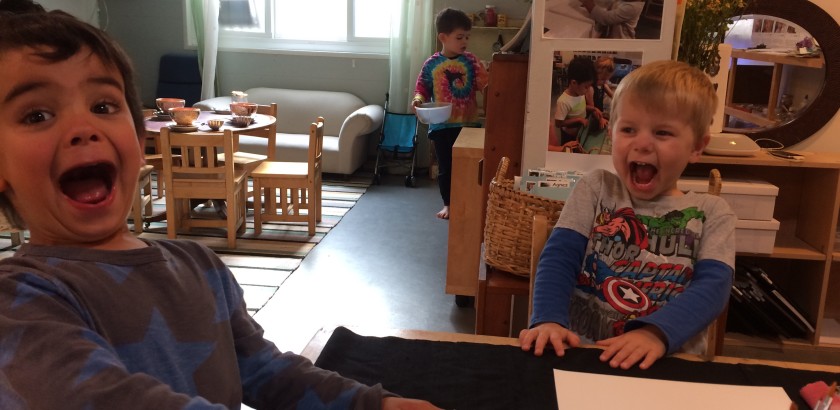
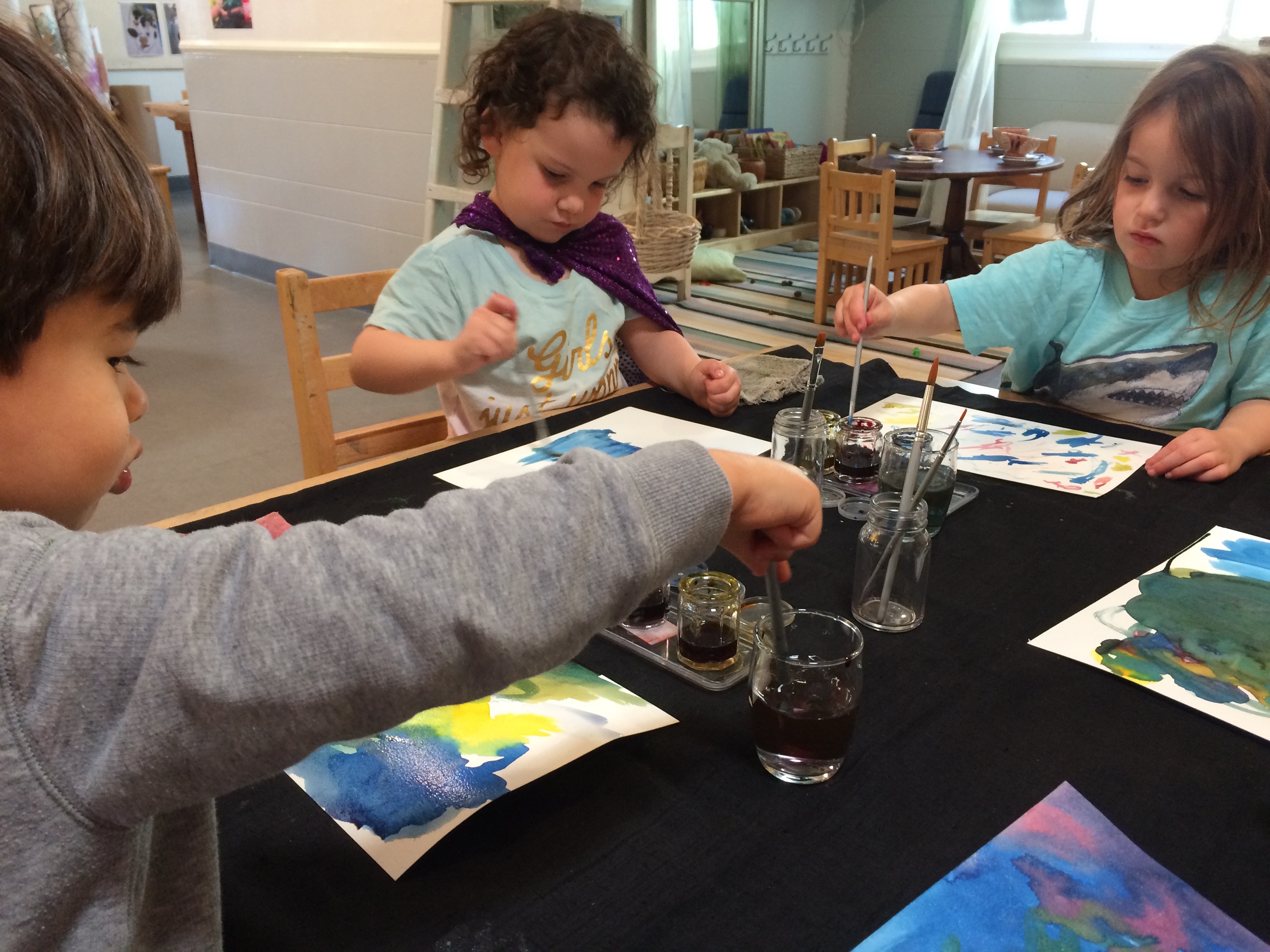
We’ve talked about feelings, named them, defined them… but then we wondered: What does a feeling look like? We’ve explored photography, tracing, and then we introduced watercolors. The draw of choosing their favorite colors revealed how children quickly confronted that an intention can get lost in expression. Our meaning can be misread, misinterpreted, misunderstood. Color can mean different things to different people. Contrary to the movie and idioms, yellow does not mean happy to everyone, “feeling blue” doesn’t resonate with every child as being sad. If someone’s favorite color is red, it might make them feel happy rather than angry. Green with jealousy might not connect with a child who feels reminded of nature when they see green.
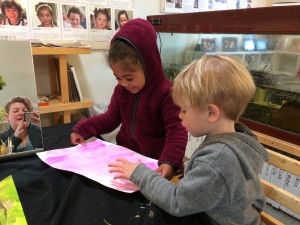
Coco: It’s a pink scary monster.
The children sitting around the table, hearing her story nod in agreement. Coco’s words give the color and composition a new layer of meaning.
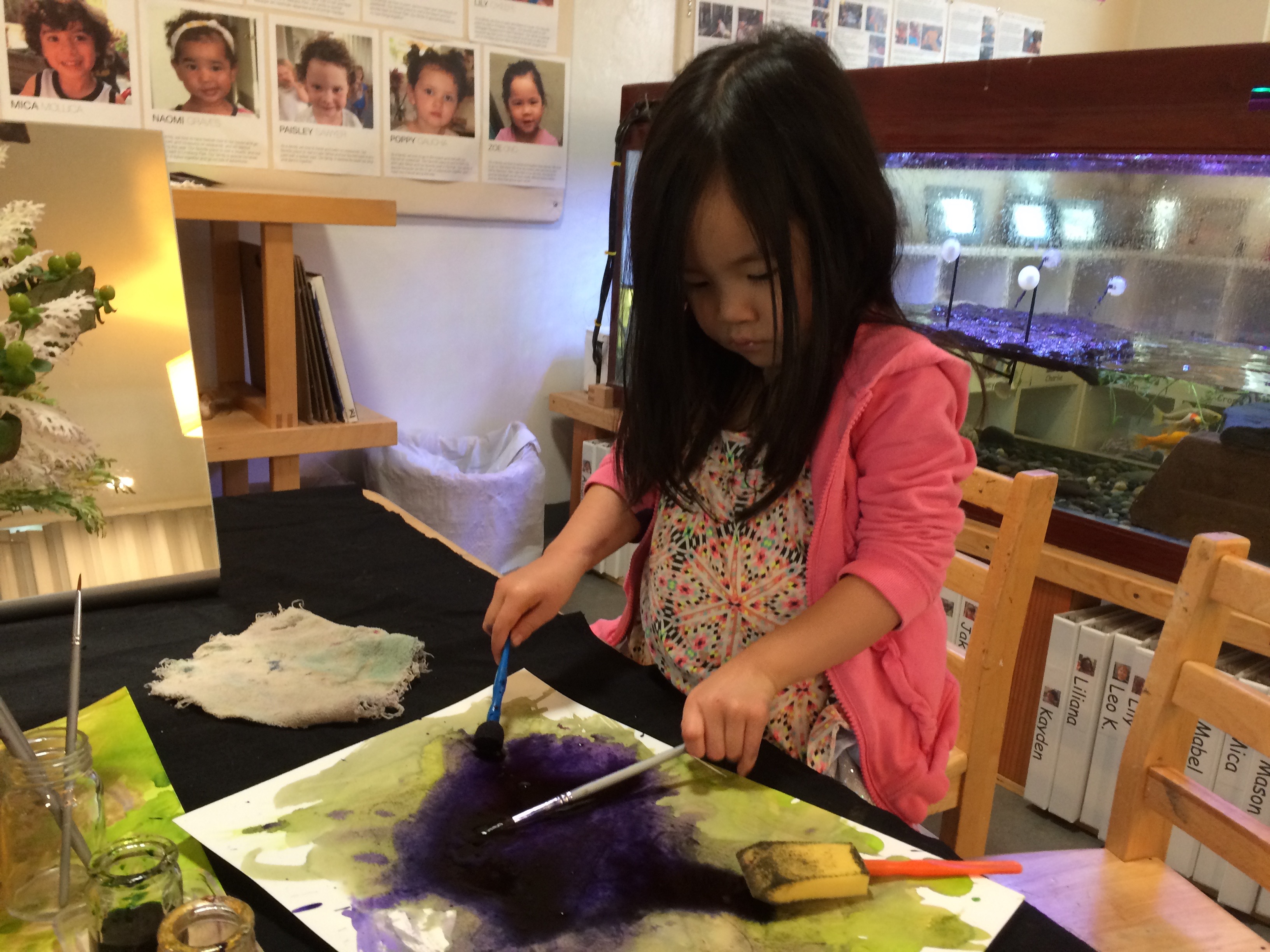
Zoe: This is the dark, dark, dark cave and the dragon lives inside.
The children respond to the composition of the deep purple center. They see it as scary and imagine the creature that lives inside.
Challenging the children to respond to the non-verbal communicators, in this case, color and composition, we bring the two paintings to a reflection meeting, prepping the children to be ready for something scary.
When the pink watercolor painting is turned around for the group to see, there is initially silence, then a nervous giggle.
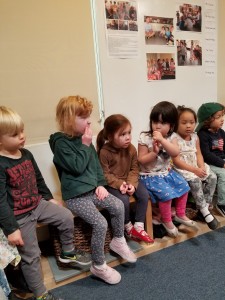
Estelle: But that isn’t scary… it’s pink!
The painting with a darker color palette is brought to the group next.
The children respond more immediately. They read the colors as scary and begin to make up their own ideas about the story behind the painting.
Originally, I was wondering how to bring a universal readability to their visual representations. Their discussions and the context set through their storytelling invited me to rethink my intention and the purpose of the experience. If context ‘colors’ representations, then color alone is not a clear communication. How this relates to an intention for this work might be that if color expresses one perspective in relation to a personal context, then a one-dimensional observation has no connection to a community. So we are asking ourselves: How can we know each other better through color and story? -Teacher Jessica