Building Relationships Through Wire
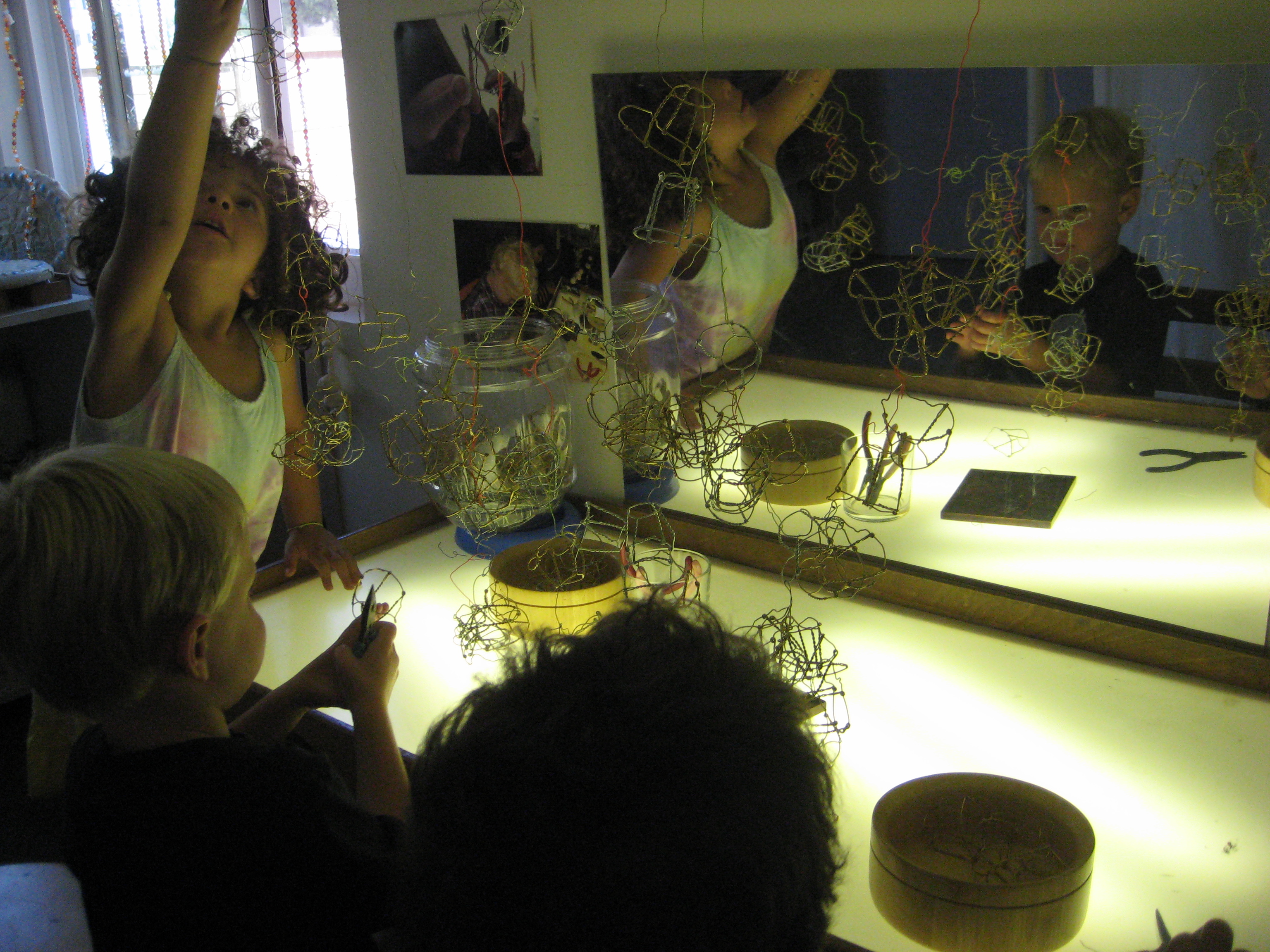
As an avenue to extend the children’s wire exploration, Cindy set a mixture of wire and other materials up on the light table. Two children sat side-by-side working independently until they felt they were done.
Austin: “Can we be done?”
Cindy: “Show me what you have worked on.”
Austin: “I put these together.”
Julian: “I did this.”
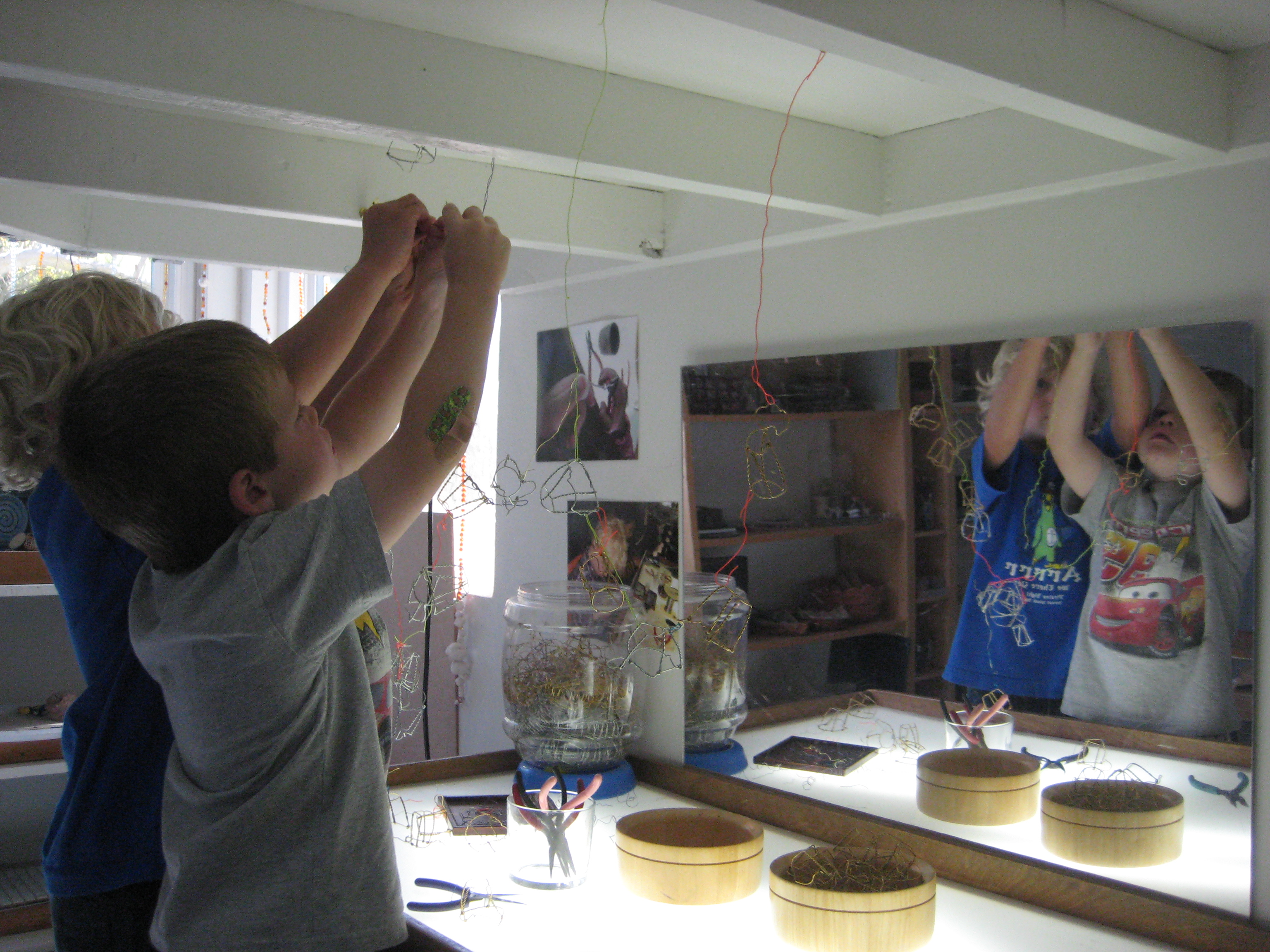
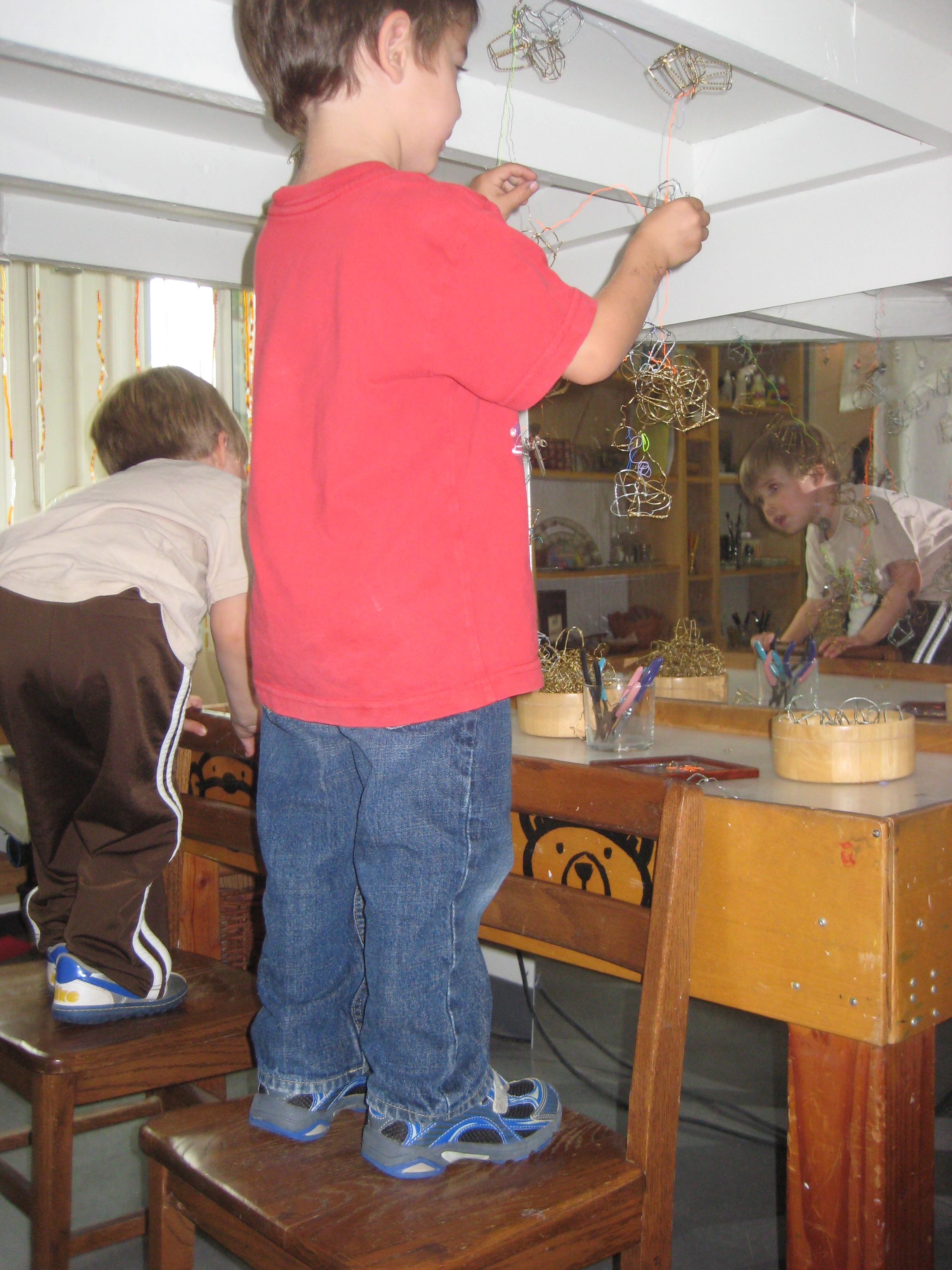
To my surprise, the children had found a way to connect wire to the ceiling under the loft. They had noticed two hooks that supported work from last year’s group of East Wingers and creatively put them to use. In consideration of our classroom intention, I wondered how this area and the work here could deepen the relationship of these two new friends.
I asked, “I noticed that each of you found a hook to use. How could you combine your work together?”
Austin: “We would need more hooks.”
Julian: “We need two more hooks. One here and one here.”
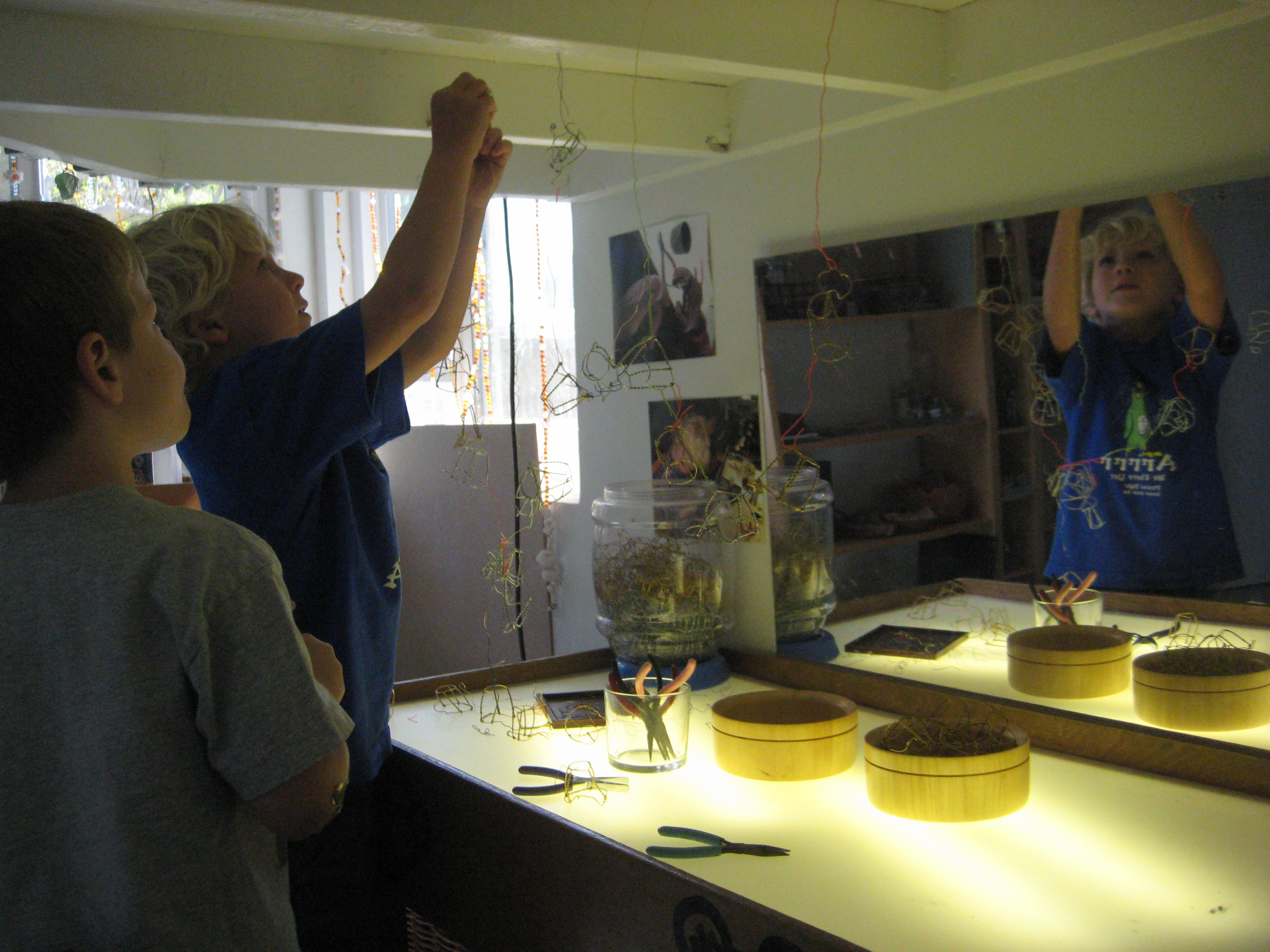
Julian, Austin, and I went to the woodworking area and found the required materials and attached them under the loft. The two children went back to work. They worked for the rest of the morning talking, laughing, and supporting each other while using real wire tools and techniques to blend their ideas and make them even more elaborate. When it was time to get ready for lunch, Austin and Julian moaned, “Ahh, can we come back and work some more?”
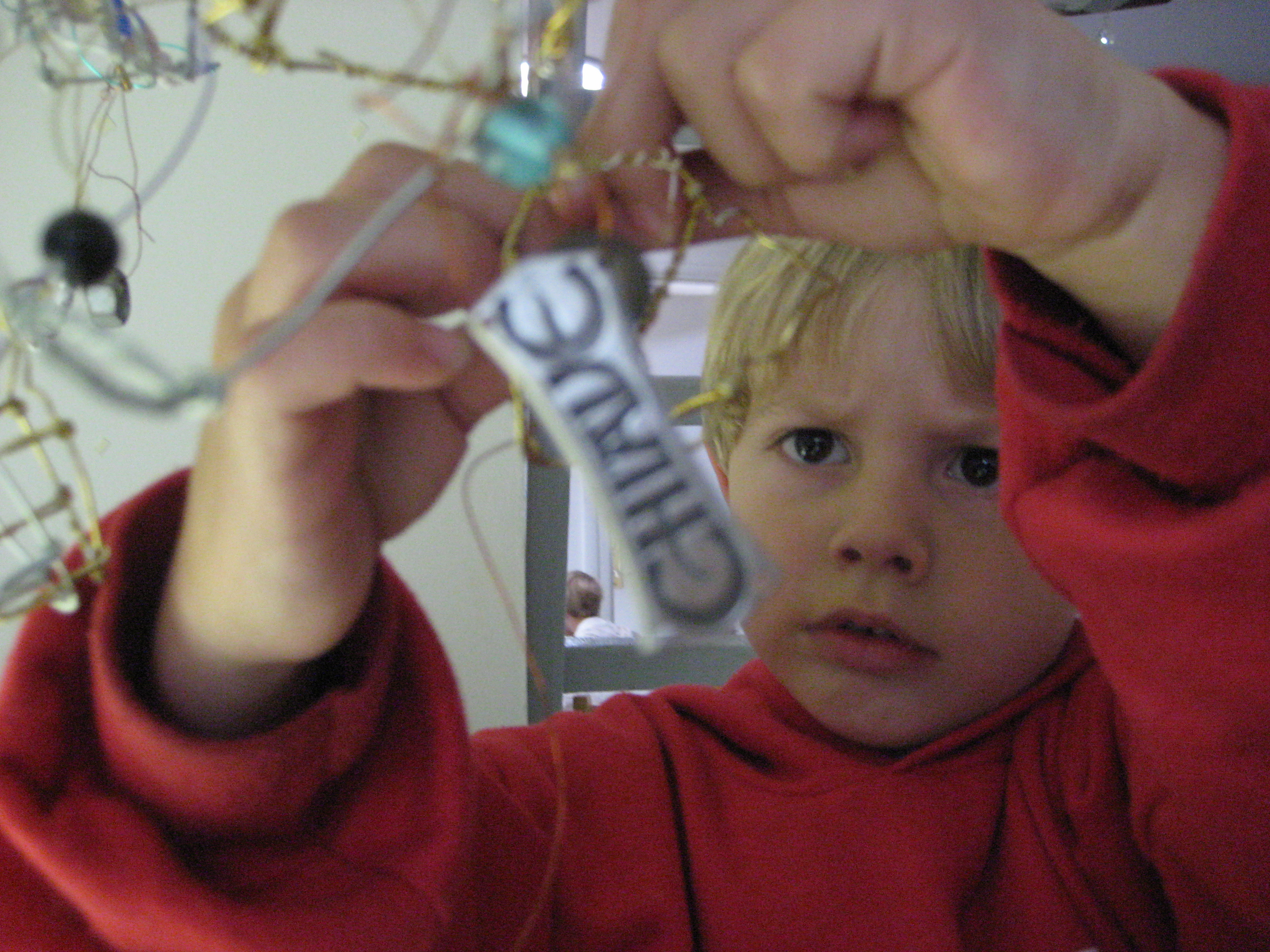
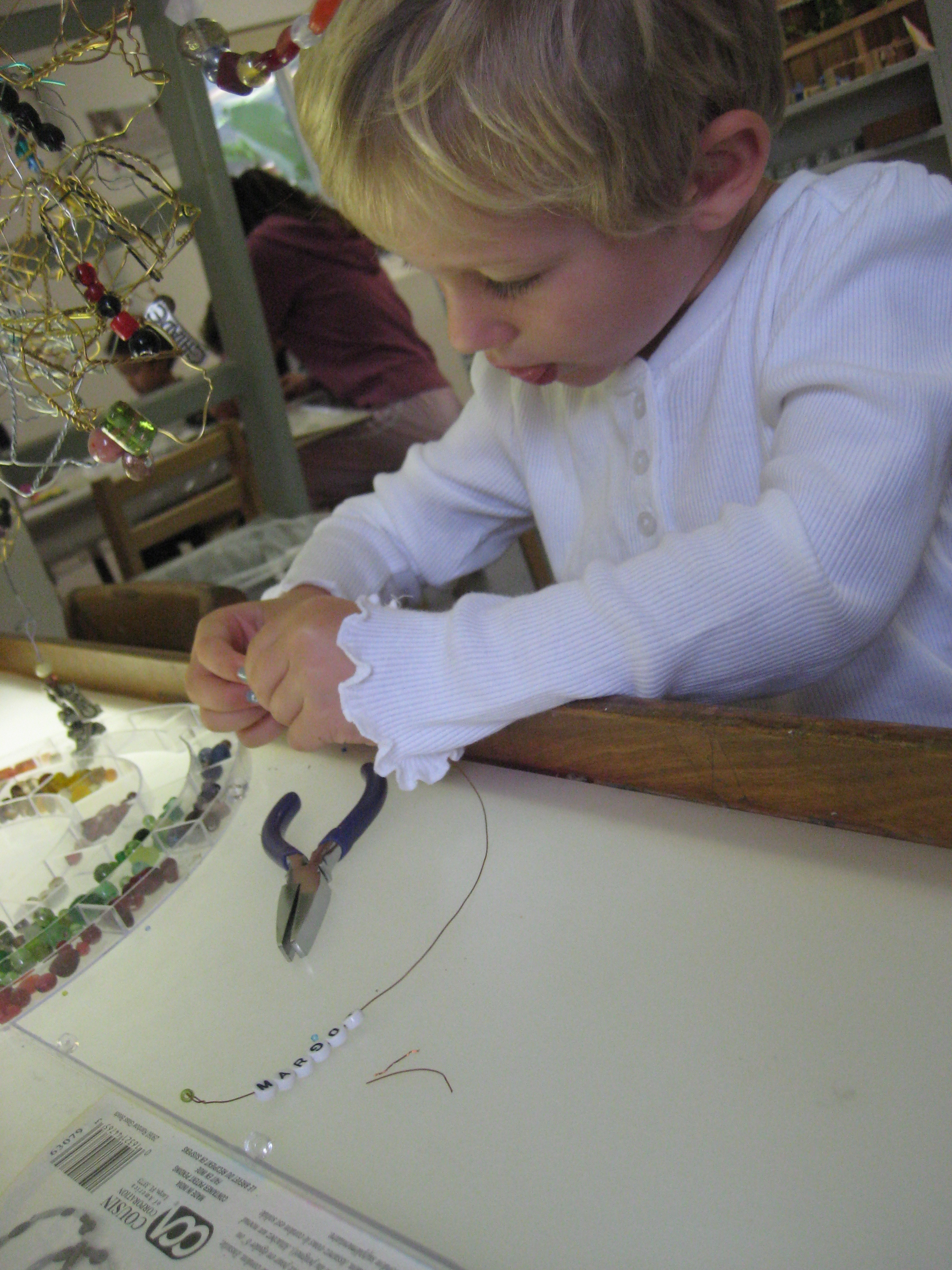
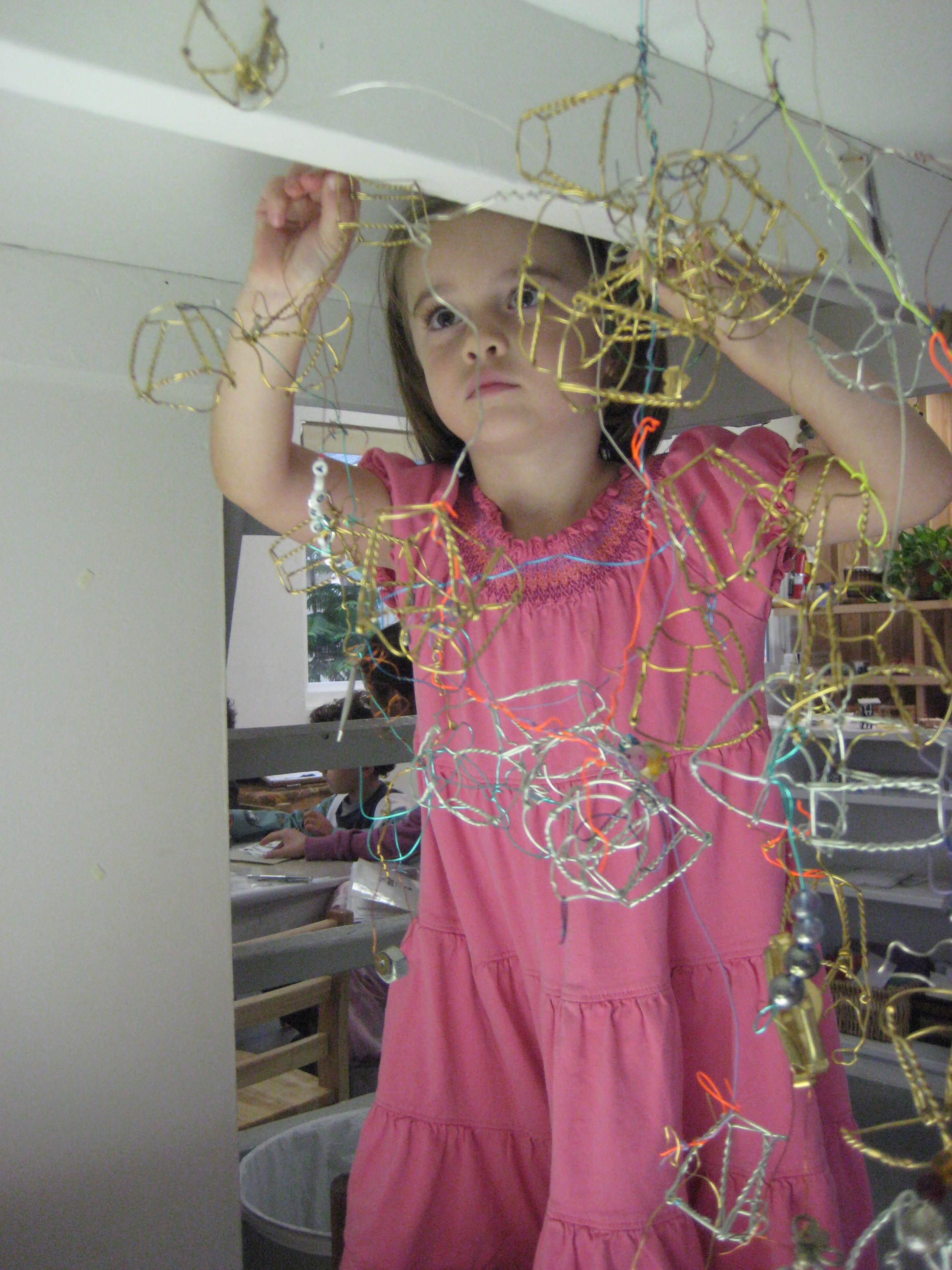
Over the next few days, Austin and Julian shared this work and all of the children wanted to add to it. As of now we have had to add a few more hooks to widen this growing piece of work. The children have been adding their names in beads to remind each other that as a group each one of us have been a part of this collaboration.
Kindergarten relevance-
Fine Motor and Gross Motor Skills-
Using wire tools develops the muscle strength required for successful cutting.
Twisting, bending, beading and connecting wire sharpens eye-hand coordination.
The children learn to balance and stretch in order to get to high, out of reach areas.
Math skills-
Predicting and estimating is used when determining how long a wire piece needs to be in order to complete the task.
Sorting, patterning and counting are prerequisites to math and reading.
Literacy-
The children are identifying letters and spelling their names. Phonetics is being explored when spelling unfamiliar words.
Social/ Emotional-
The children develop relationships in the small intimate working area.
Self-confidence is achieved when gaining new skills and completing tasks that once felt out of reach.
Children develop the ability become persistent learners.