The teachers have noticed from the beginning of the year that the children often talk about their feelings but were only using four words to describe them: happy, mad, sad and scared. We offered these words for use in the communication area.
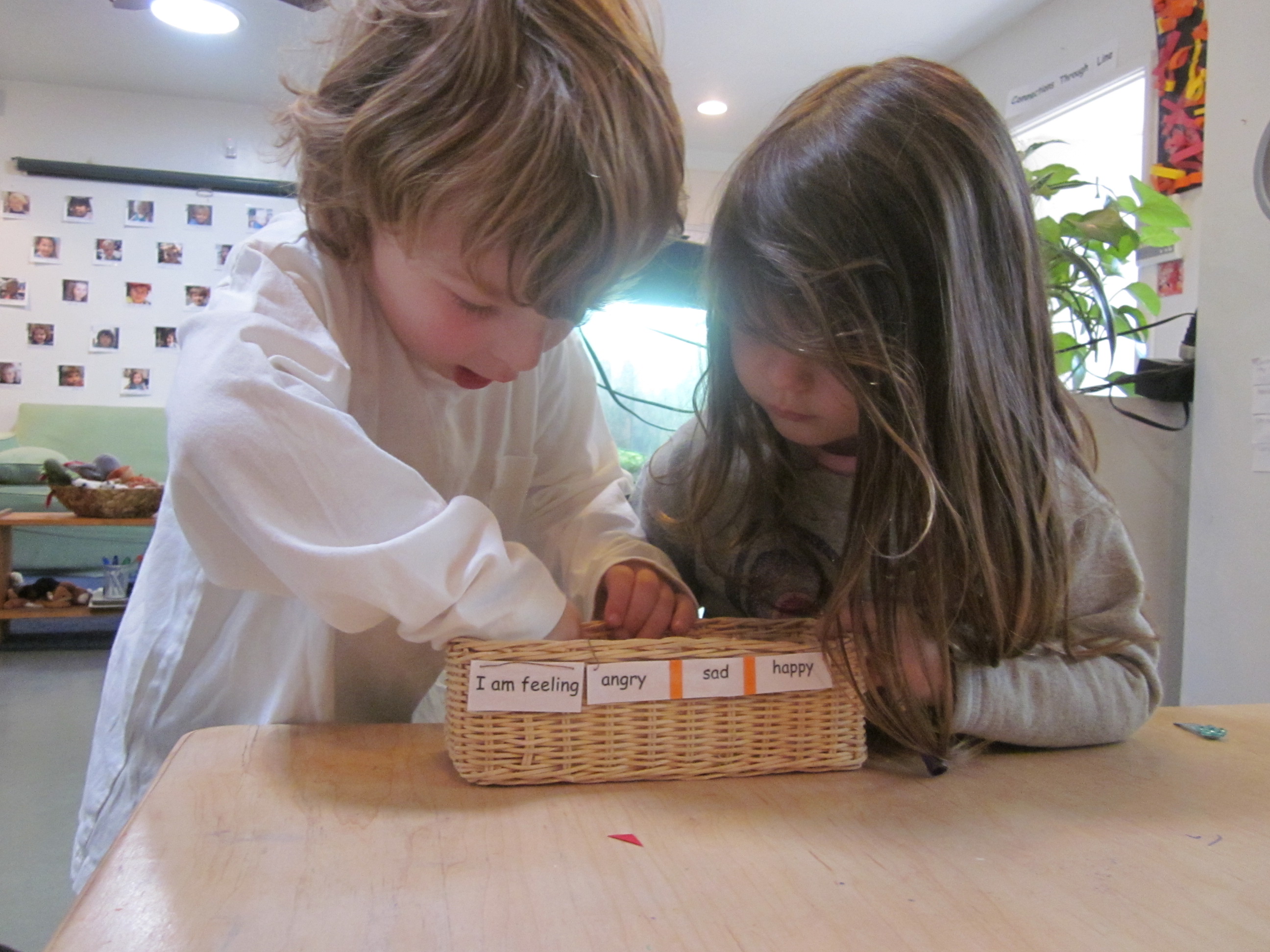
We wondered how we could support the children in developing greater verbal expression and use this to support them in understanding their own and others emotions.
A book was placed as a provocation in the communication center with pictures of actors portraying a large variety of emotions. We started looking at it in small groups, and began having organic conversations while flipping through the pages.
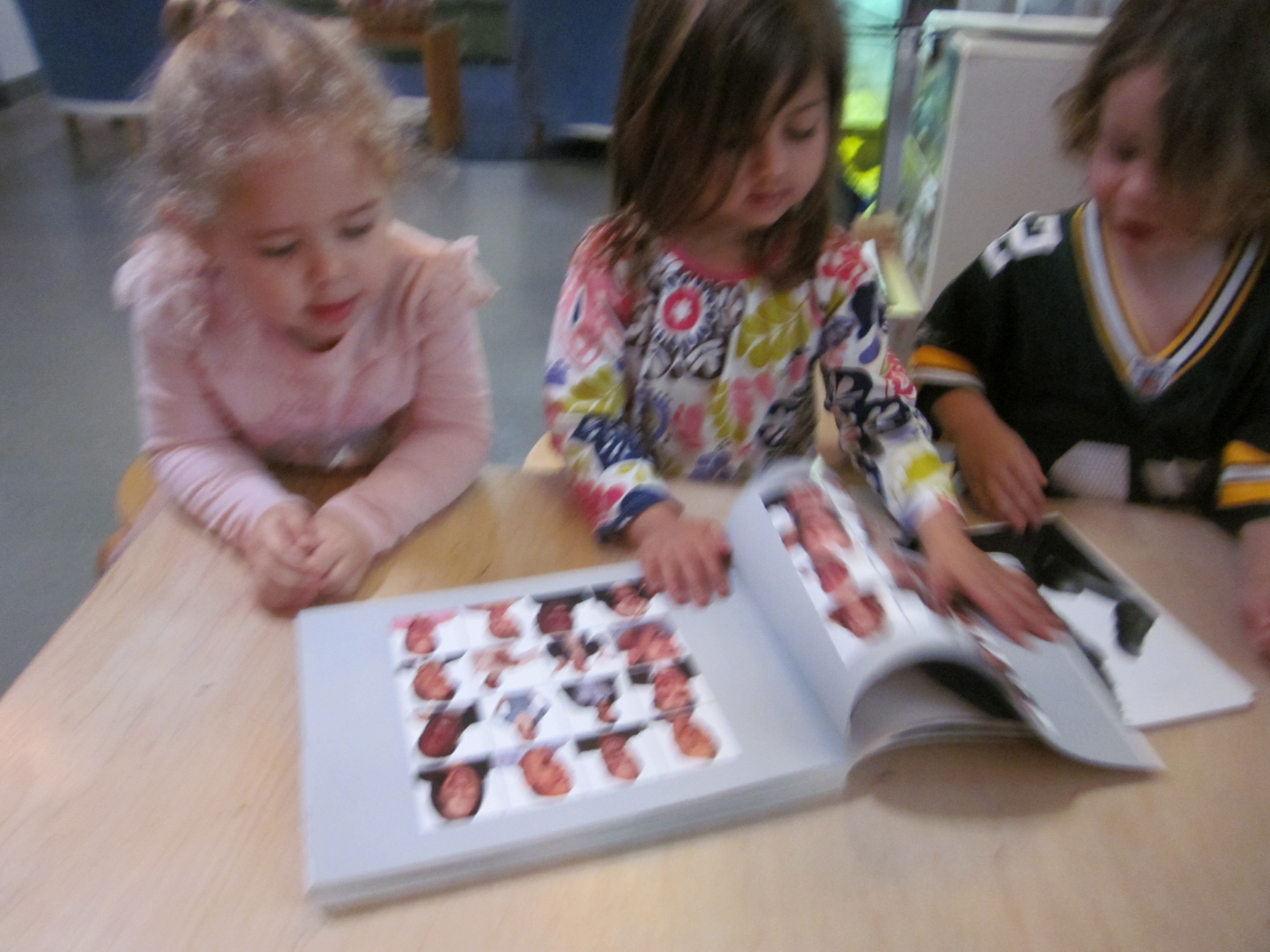
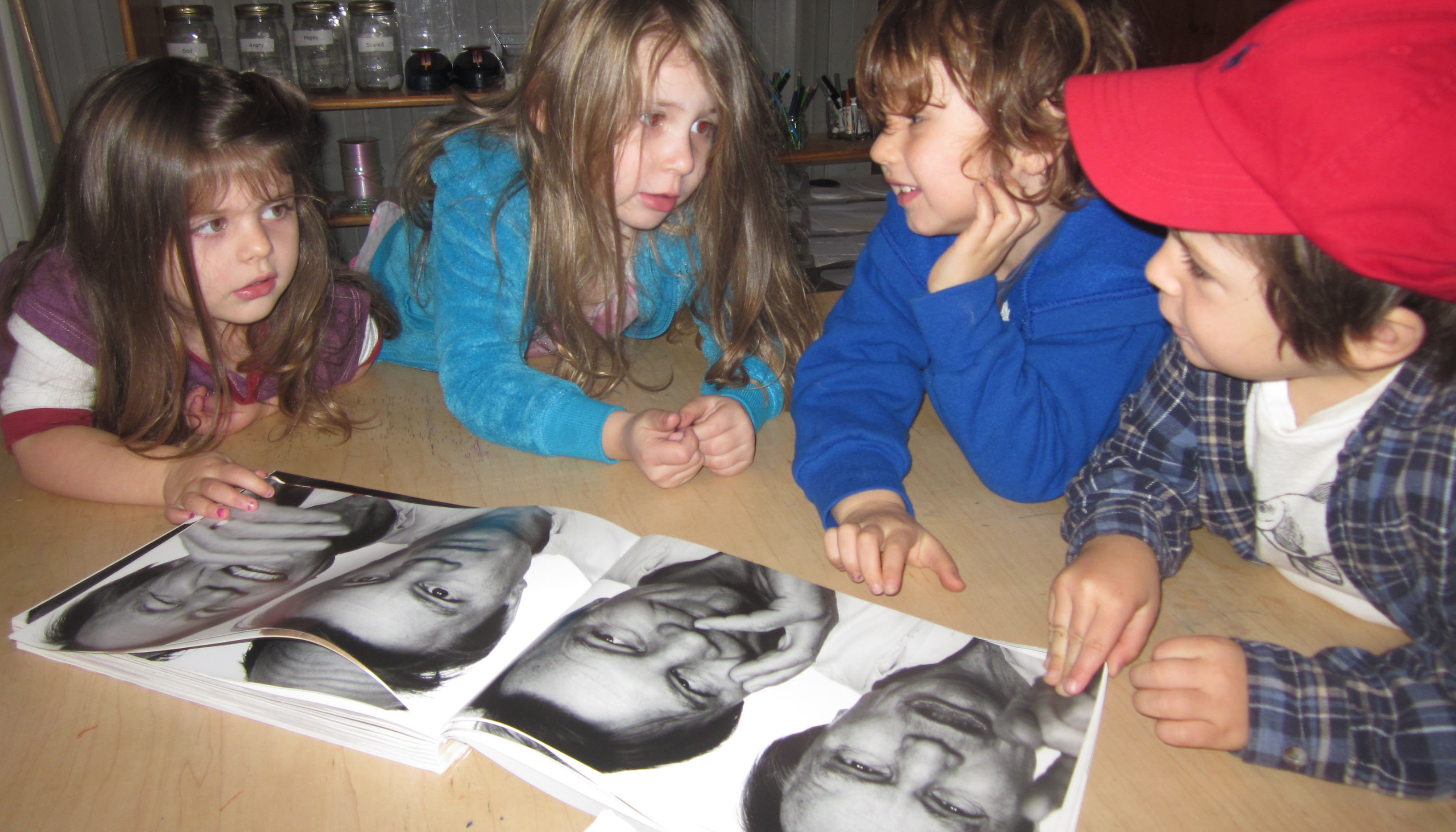
The children debated what the actors could be feeling.
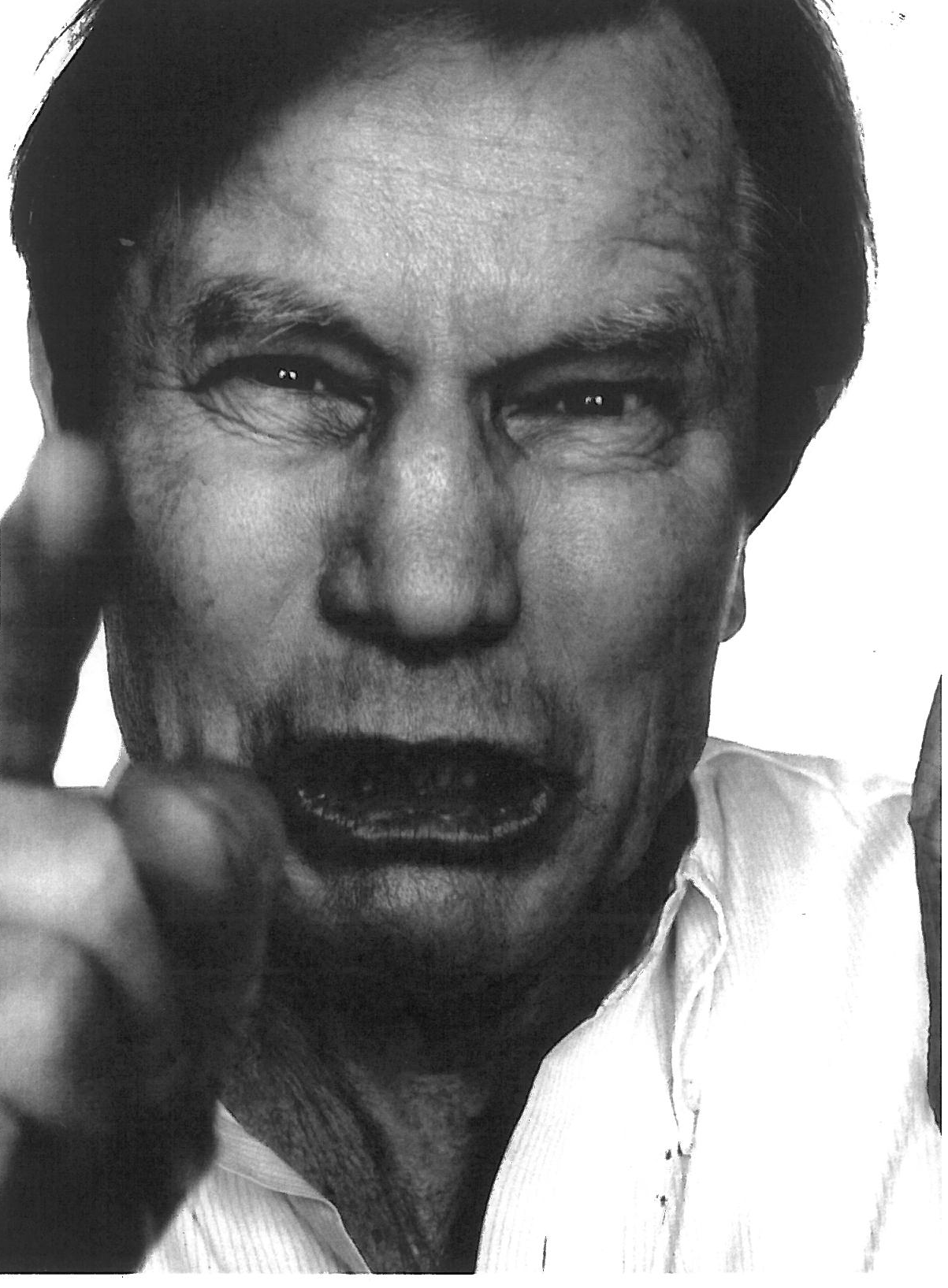 “He’s mad. His lips look mad.” Mateo observes the photo.
“No, he’s crying, and then his mommy picked him up.” Deia relates the expression to personal experience.
“He’s mad! His teeth are mad!” Mateo asserts and gives evidence as part of his argument.
“He’s sad. His eyes look sad.” Juliette adds to the debate, looking beyond the mouth.
“He’s crying.” Oliver takes in all the information shared, and determines through consensus.
Teacher Sam: “But there are no tears. How do you know he’s crying?”
Oliver points to his eyes.
On another day, the children focused on one emotion and looked for people in the book who might be portraying it.
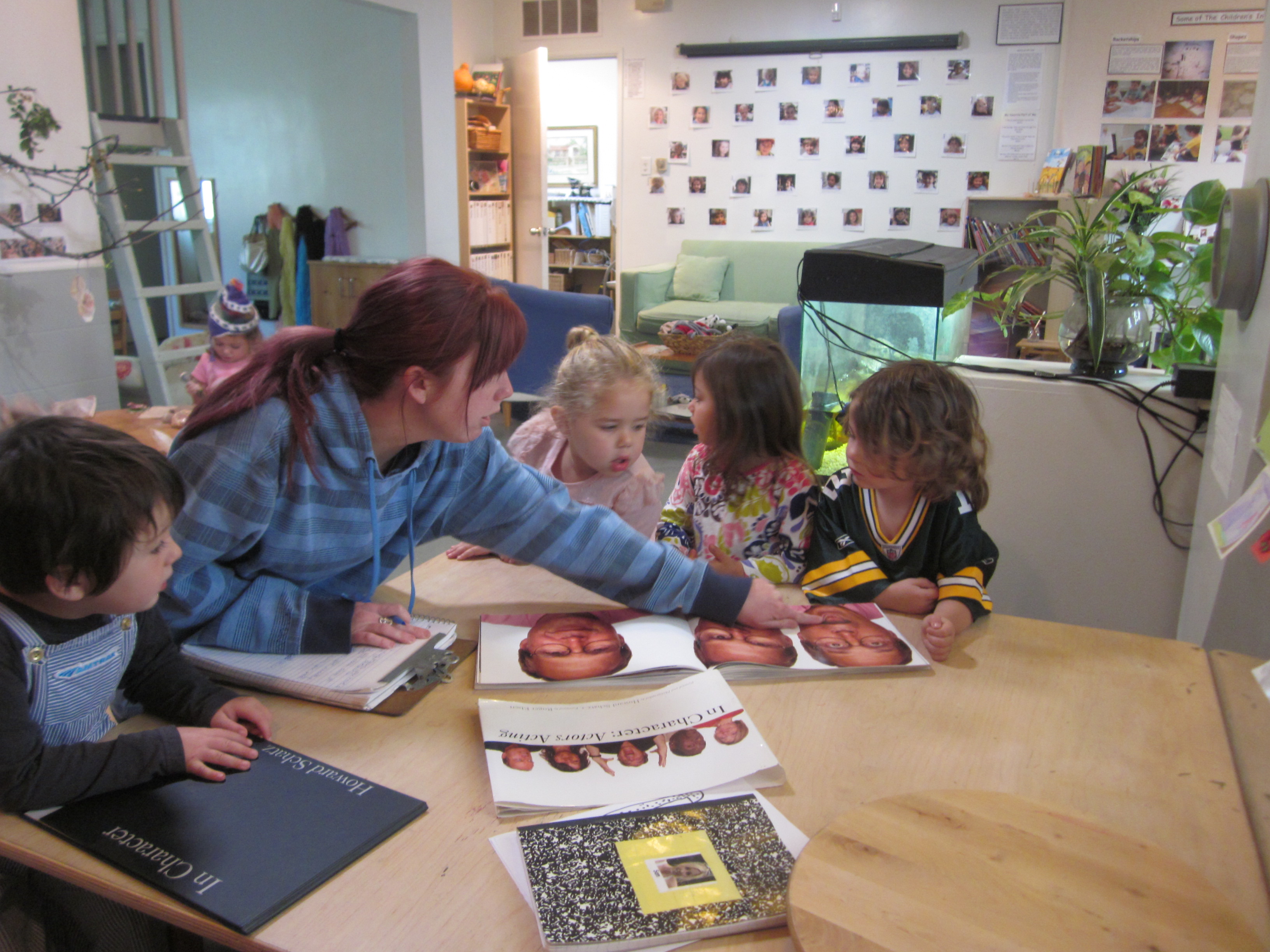
They chose scared.
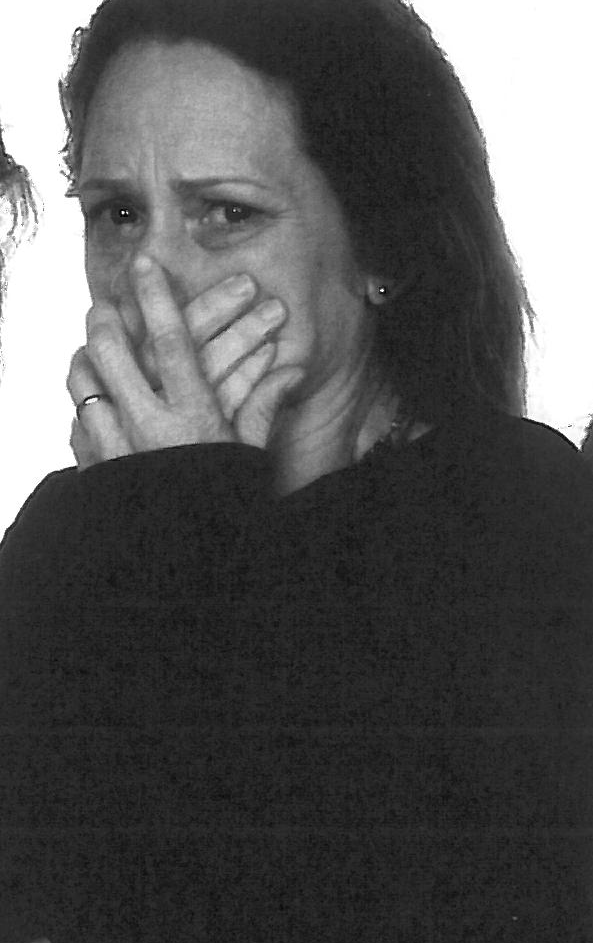
Oliver jumps right in and observes that “she’s scared! Her hands are on her mouth.”
From this interest, the teachers developed a research question: How does a child’s understanding of emotions and expressions help them to understand the emotions and expressions of others? We will develop this question in the communication area of the West Wing and throughout the classroom.