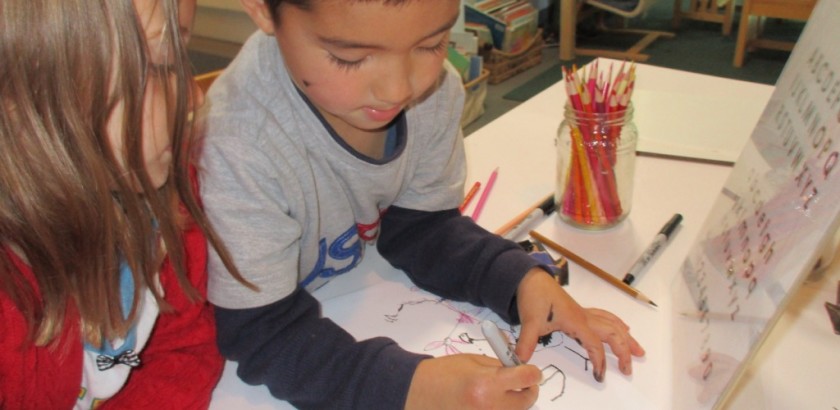
“How can her cry be happy if she can’t dance?” – Isla

In the EW, the teachers theorized that it was easier for the children to discuss difficult situations when they occurred to someone else. We introduced ‘persona dolls’ and have incorporated them into the classroom. Their names are Jane, Jill, Hector, and Sylvester. I shrunk images of them down to use as story props in the Communication Center to see if the children had incorporated some of the strategies we’ve discussed when faced with challenging situations.
UNADJUSTEDNONRAW_thumb_12c6eUNADJUSTEDNONRAW_thumb_12c8a

One strategy is to introduce a daily mantra that has to do with our school community. The children use this word throughout the day and the teachers refer to this word when facilitating their discussions. Today’s word was ‘welcome’.
UNADJUSTEDNONRAW_thumb_12c91

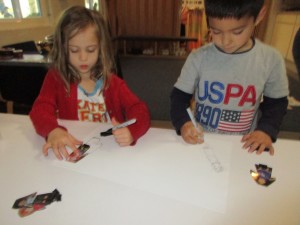
These strategies also include asking for more information, noticing how our words or actions make the other person feel, and taking on the other person’s perspective. Isla and Archer created a scenario similar to their own experiences. In their story, Archer, via Jane, is listening to headphones and Isla, via Jill, asks to listen too. Archer (Jane) says NO!
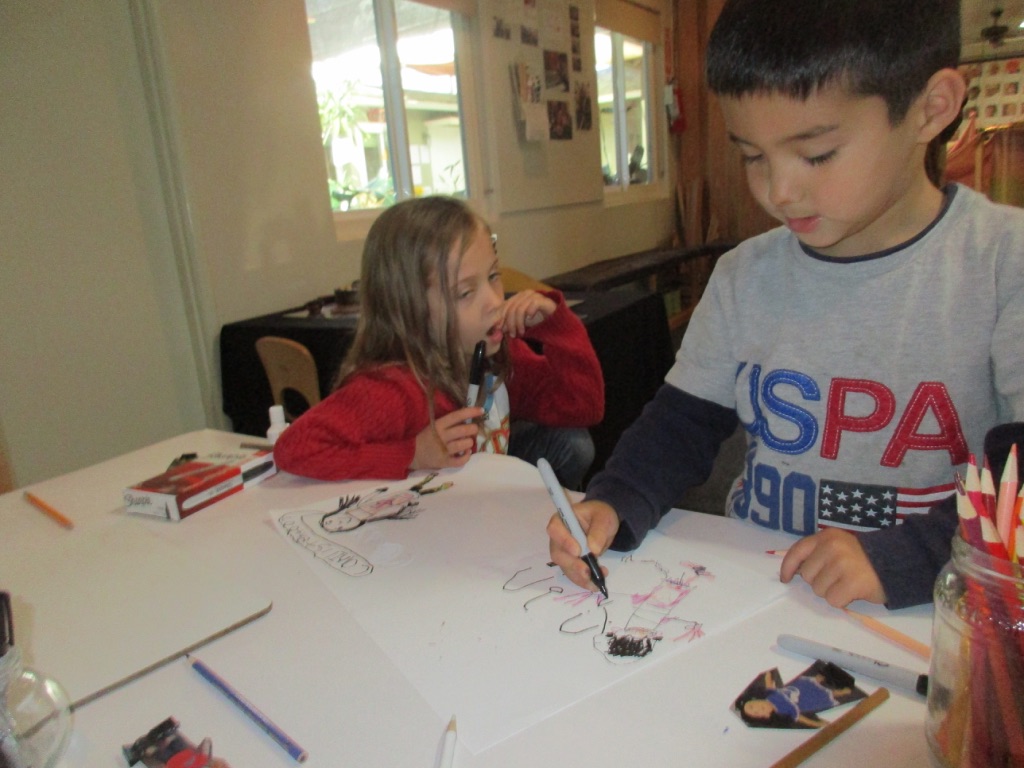
Isla: That doesn’t make her happy!
Silvana: Isla’s saying that when Jane said ‘no’ it did not make her feel happy.  It made her cry.
Archer: No, her cry was a happy cry.
Isla: How can her cry be happy if she can’t dance?
Archer: Ok, I said Yes.  After I’m done.
Silvana: Archer, what do you think Jill is going to say?
Archer: No!
Isla: Yes!
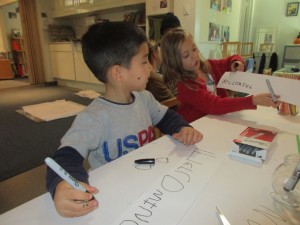
Archer: No, No, No, No no, no, no, NOOOOO!
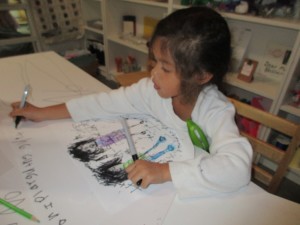
Isla: ‘No’ is only 2 letters. This is how you write ‘no’.
Archer: Can I do them?

UNADJUSTEDNONRAW_thumb_12c81UNADJUSTEDNONRAW_thumb_12c83

 The moment when Isla offered more information to Archer about how that ‘no’ felt (like not dancing), Archer was able to understand how differently Jane could respond. The following ‘no/yes’ debate was done in fun and the two worked closely on making their debate visible. As teachers, we are satisfied with this initially unfacilitated negotiation and recognize that it is still in the third person. We will be looking for evidence of first-person negotiations using these school community techniques. – Silvana & Kristin

Leave a Reply

Your email address will not be published. Required fields are marked *