The emergence of self is one of the most elemental parts of childhood. How do children construct their individual and social identities? How do they evolve a sense of personal uniqueness that is distinct from other individuals? One of the ways we studied identity with the children in the West Wing was through self-portraits. While looking at themselves and their peers, we encouraged them to speak about what they noticed so they could deepen a relationship with their physical selves. We structured these experiences in group settings acknowledging the interdependence of self and social context. We continued our study this year by updating their identity panels. This process helped them reflect and express how they see themselves in their social world and what they want others to know about them. Our interview questions reflected our current context and explored how they could stay connected and communicate with each other when there is physical space separating them.
Link to Basil and Aloe ID panels will be sent to you next week.
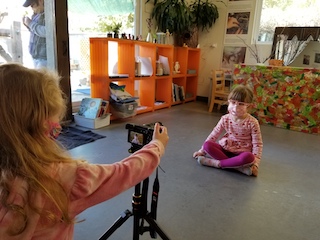
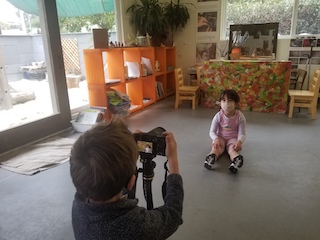
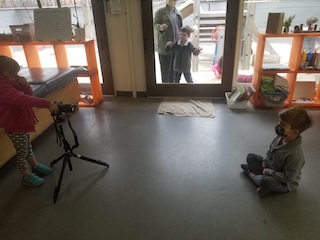
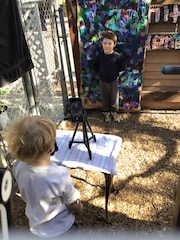
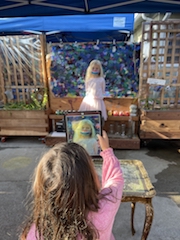
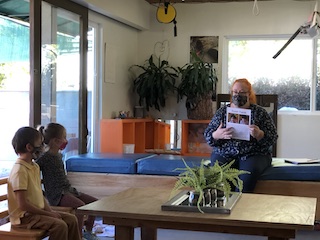
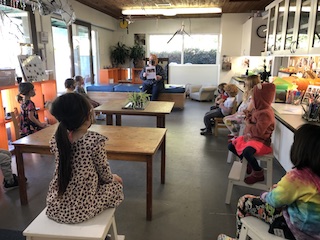
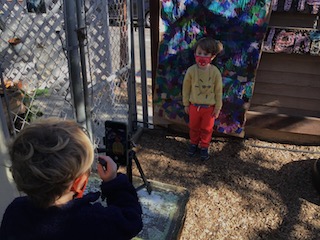
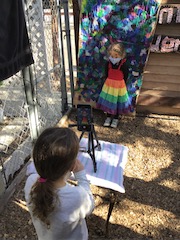
When we asked the children about the photos, they hoped to include a picture with their mask, since that is a part of their current identity, and one without their mask, since that is how they will see each other in the future. During our reflection meeting, we shared the new identity panels. Afterward, we asked, “Why do you think we have ID panels?”
ALOE VERA GROUP:
Presley: So people know about us.
Levi: It makes us feel connected to Dylan Fields when she’s not here.
Christoph: So people can know about us and what we do and what we think about.
Mason: We can connect to each other. Then we can connect with people with cards.
Uma: August and Hudson are not here because they are moving to Australia and they took theirs.
Presley: I wonder what Tallulah said about herself on her ID panel.
Dillon Ray: I wonder what everyone in the Basil group said.
Christoph: I wonder what Susan said and everybody in the whole world said.
BASIL GROUP:
Elliot: Because we have to know about each other.
Tallulah: We can know about each other like our names.
Keaton: For us to see each other. We can know about each other and also know what our favorite things are. We can see each other without masks because of the picture.
Eve: So we know the people here.
Cynthia: What kind of things do they say about us?
Mars: Our names and where we like to go.
Everly: Different things we like to do and also things we like to do with our family. My favorite thing is to play with the ponies.
Penny: You can know yourself forever because you will be at another school.
Susan: Why do you think it’s important to know about each other?
Elliot: So we can play with each other with those things. We can have fun with each other. We can know what they like and play those things.
Everly: I can use my hands and push something with my entire body. The things you can do are part of it.
As we continue this journey, our hope is for children to discover what is unique about themselves and others and what makes them similar and different. The conversations with the children make it evident that they’re beginning to understand the complex, evolving nature of identities. By sharing the identity panels with the group, the children are learning about each other. These pieces become entry points for relationship building. As Christoph mentioned, the information on our identity panels is important because “people can know about us and what we do and what we think about.” We’ll continue to listen and reflect together and ask questions that celebrate our diversity and inspire our long-lasting relationships.