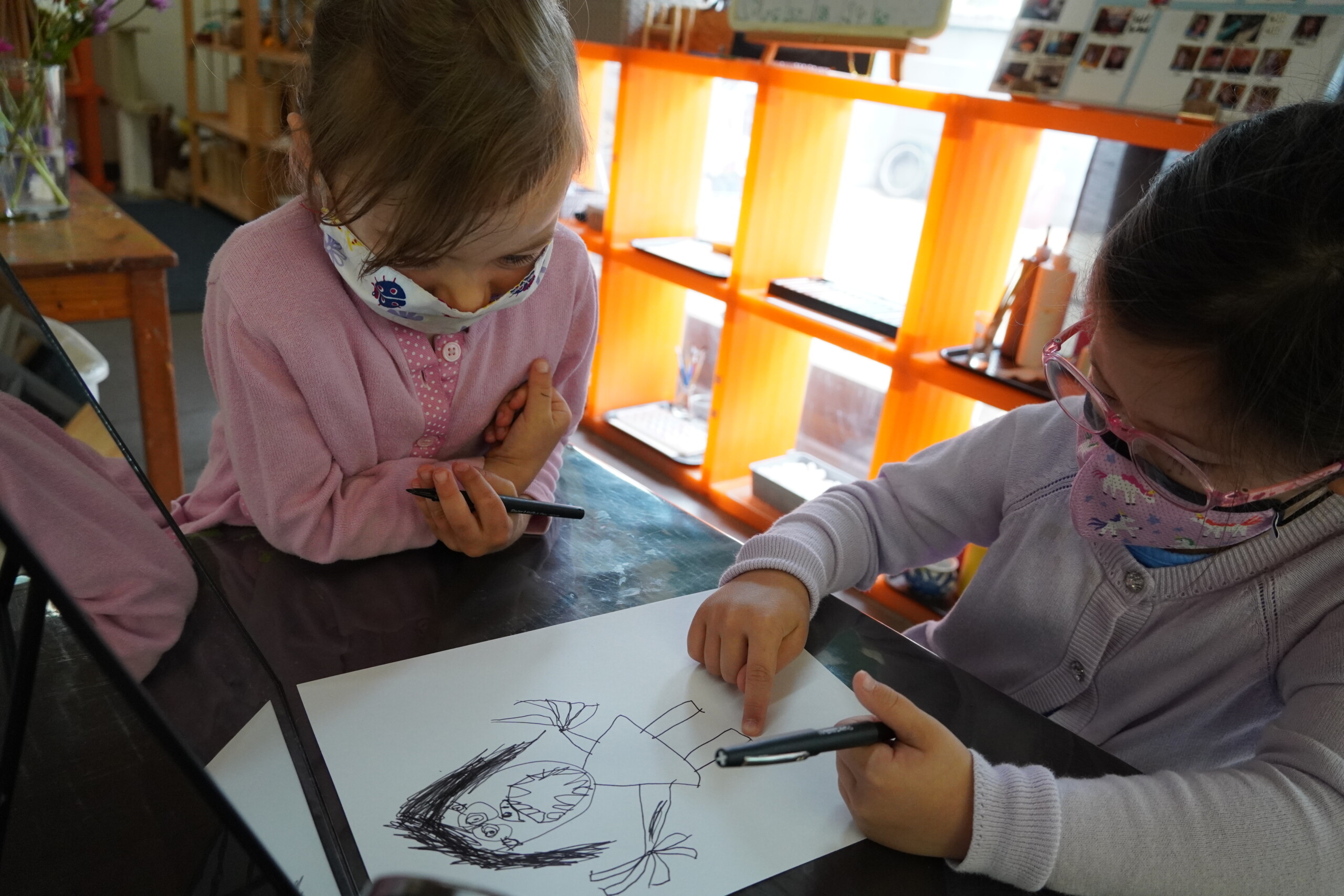
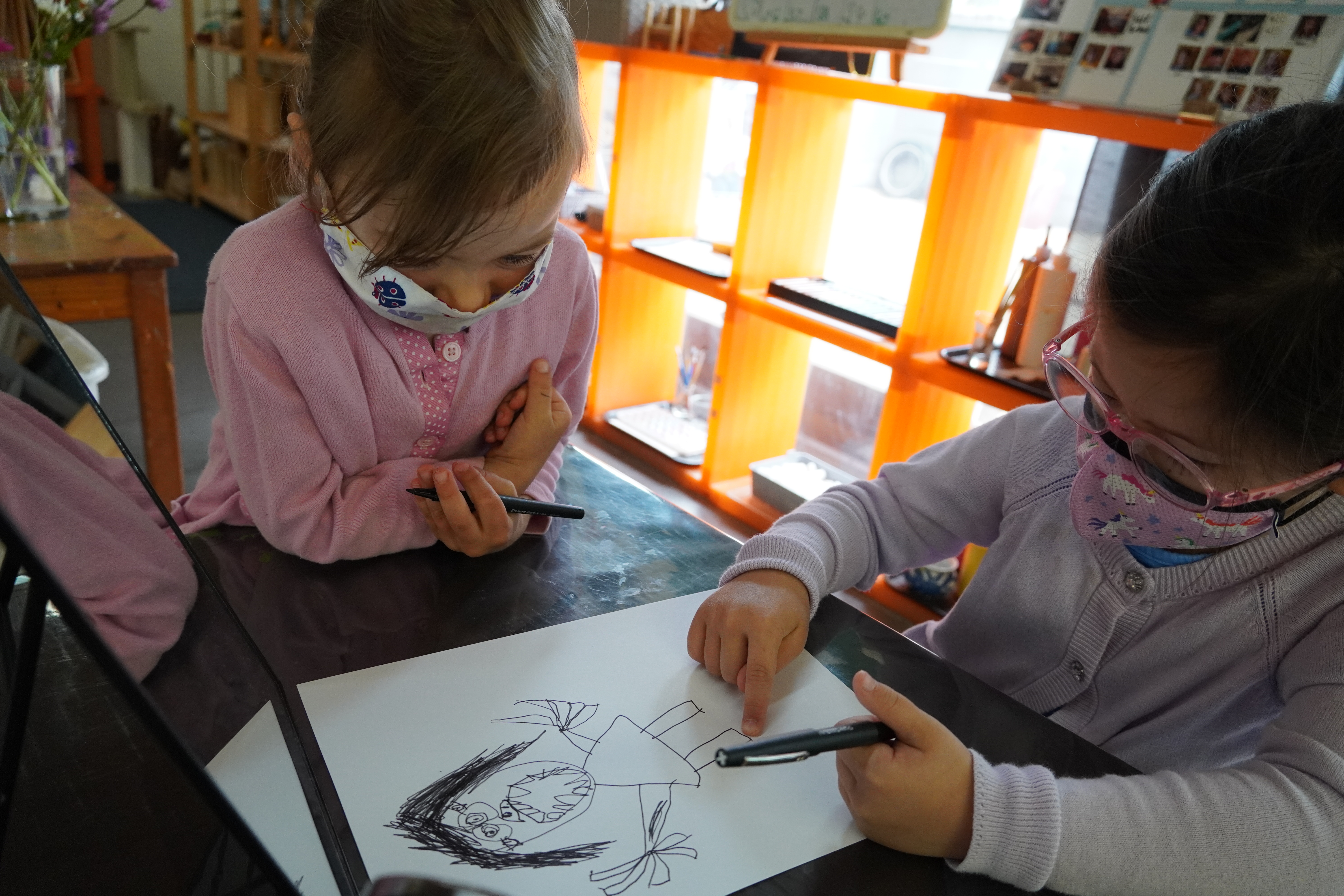
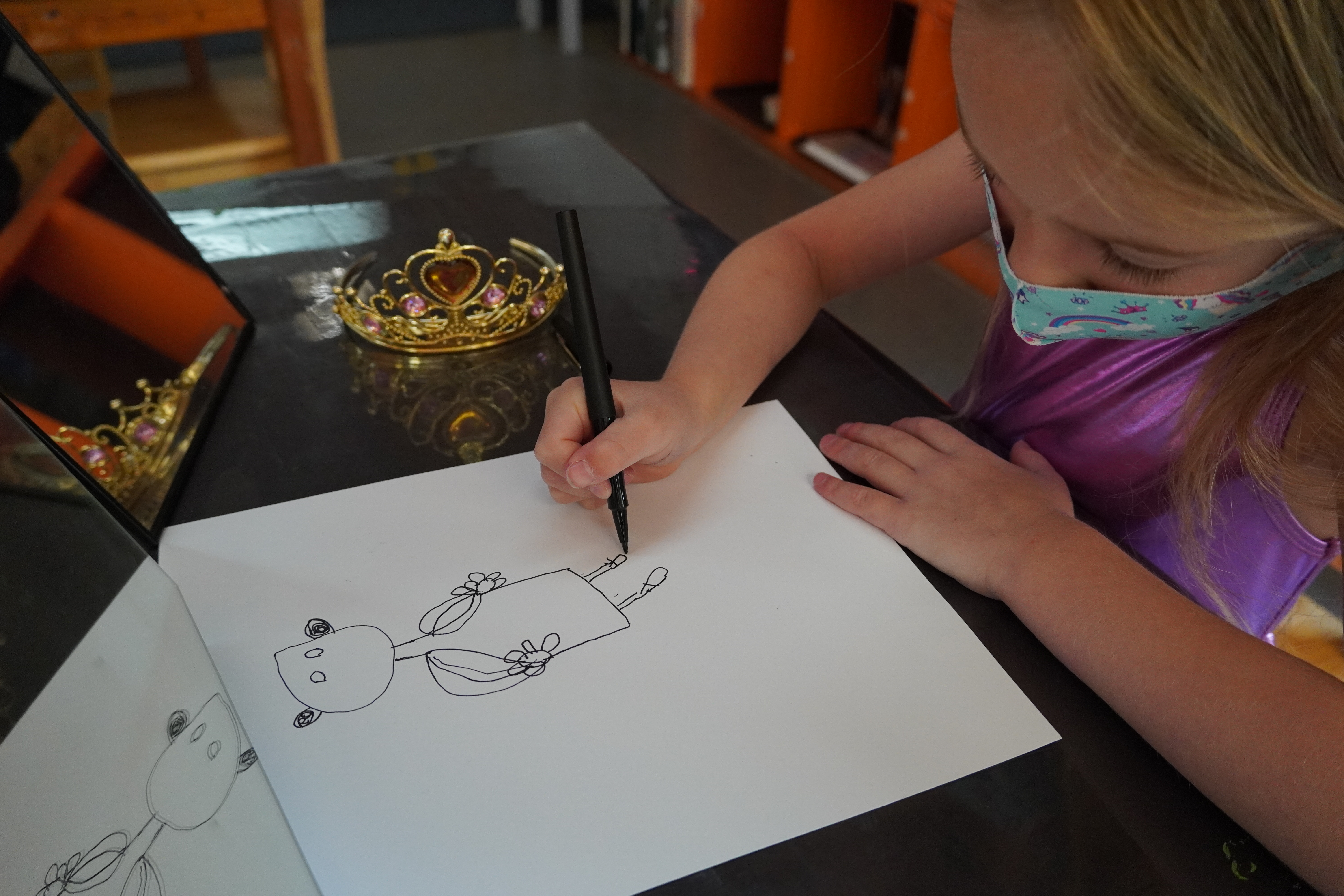
From the moment the children enter the school, we intentionally design a curriculum to express their internal and external uniqueness so that they begin to recognize the different elements that contribute to their identities and its effect on our group identity. These expressions are captured in their ID panels. We have revisited their ID panels multiple times from different perspectives, giving the children an opportunity to express what makes them who they are. During their West Wing year, the children spent time with mirrors looking at their faces, their whole bodies, and taking pictures of different expressions that they used. As we entered the East Wing year, we set up different independent areas where the children could look at themselves and use multiple line tools to create self-portraits. Children revisited their work independently and other times with a peer. We supported the children to find the right organic moment where one child at a time removed the face cover mask and the other child would comment on the details to add to the self-portrait. Photos of the children were used as a tool to support expressions that we couldn’t hold for long in the mirror. Below you’ll find a glimpse of the support process.
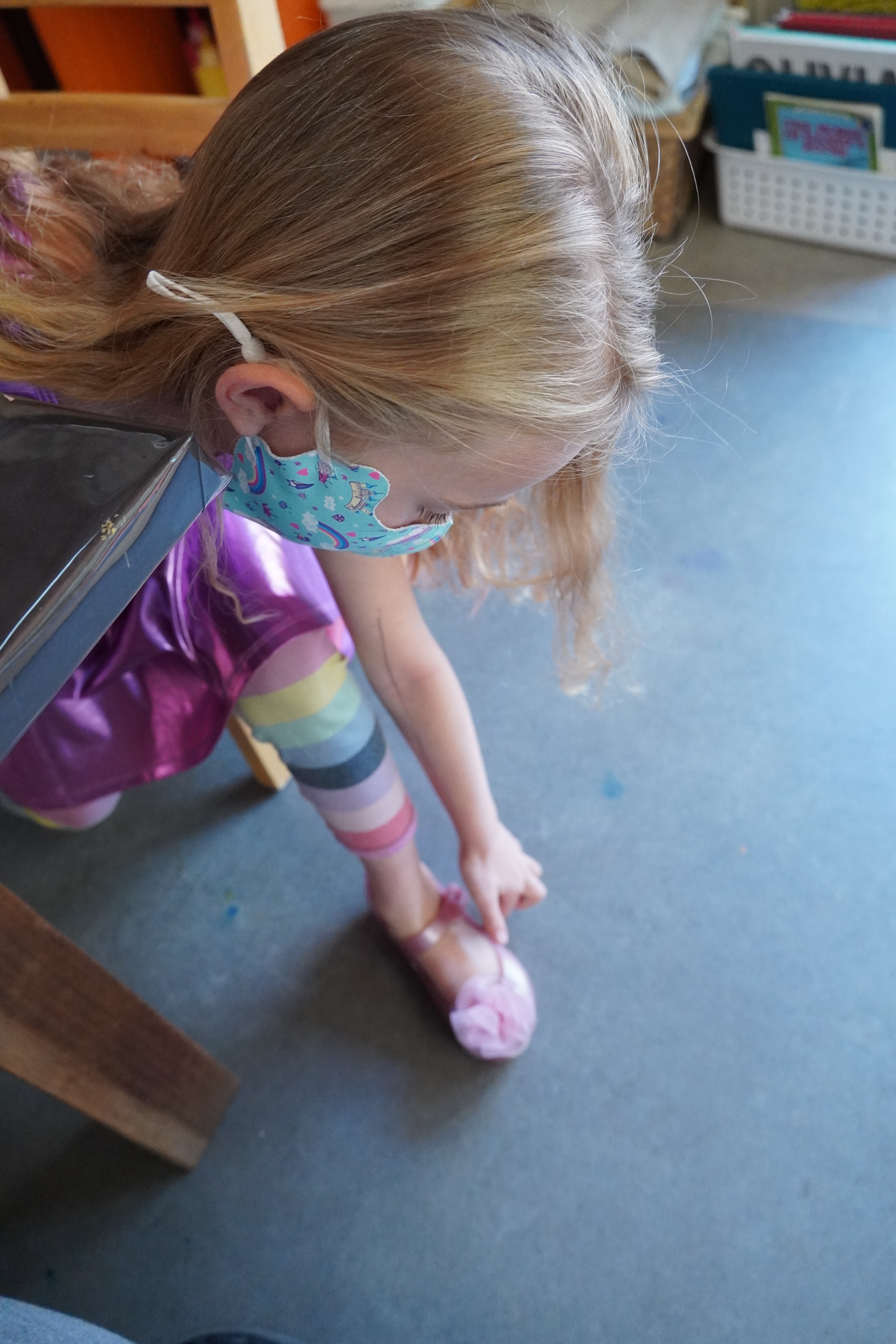
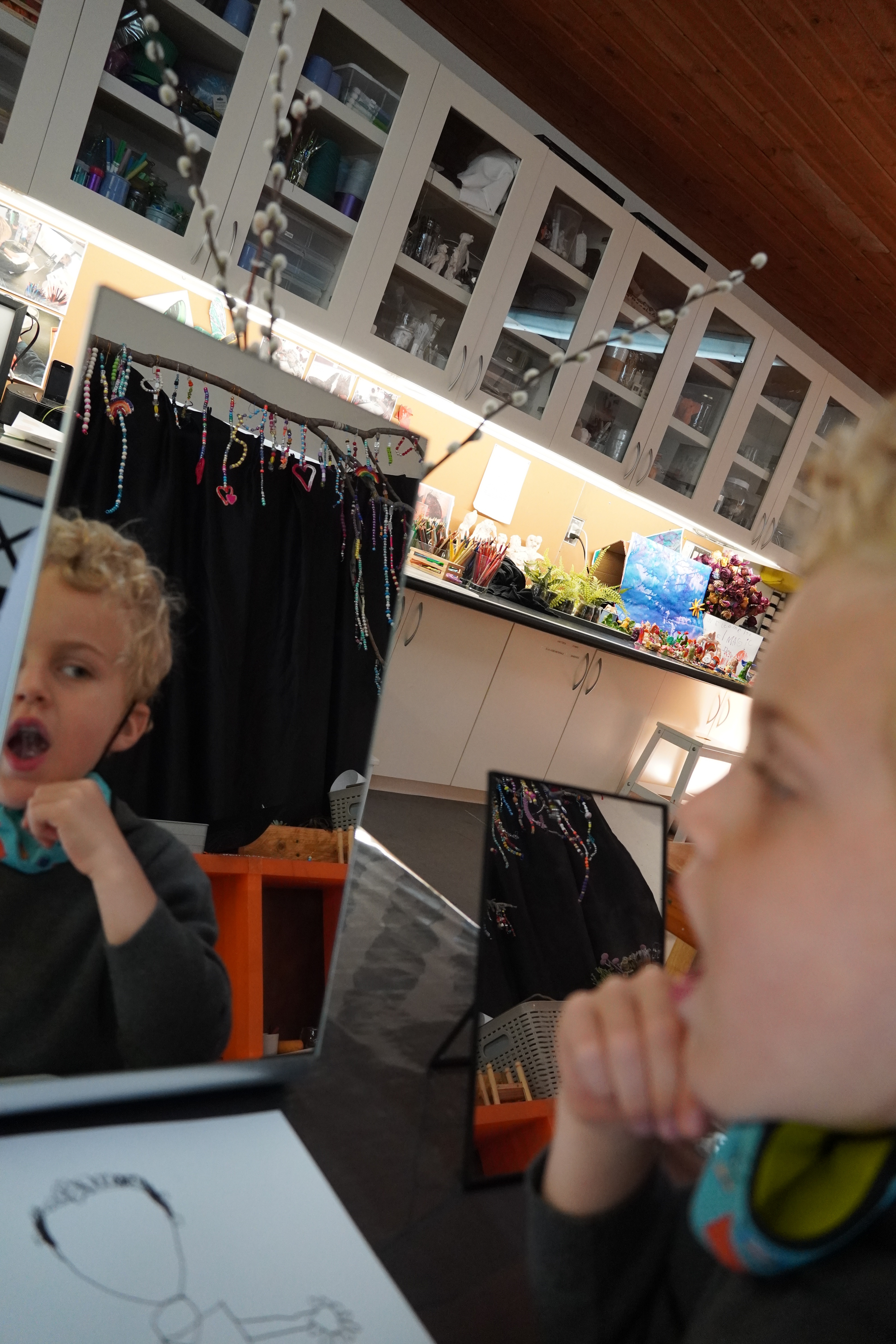
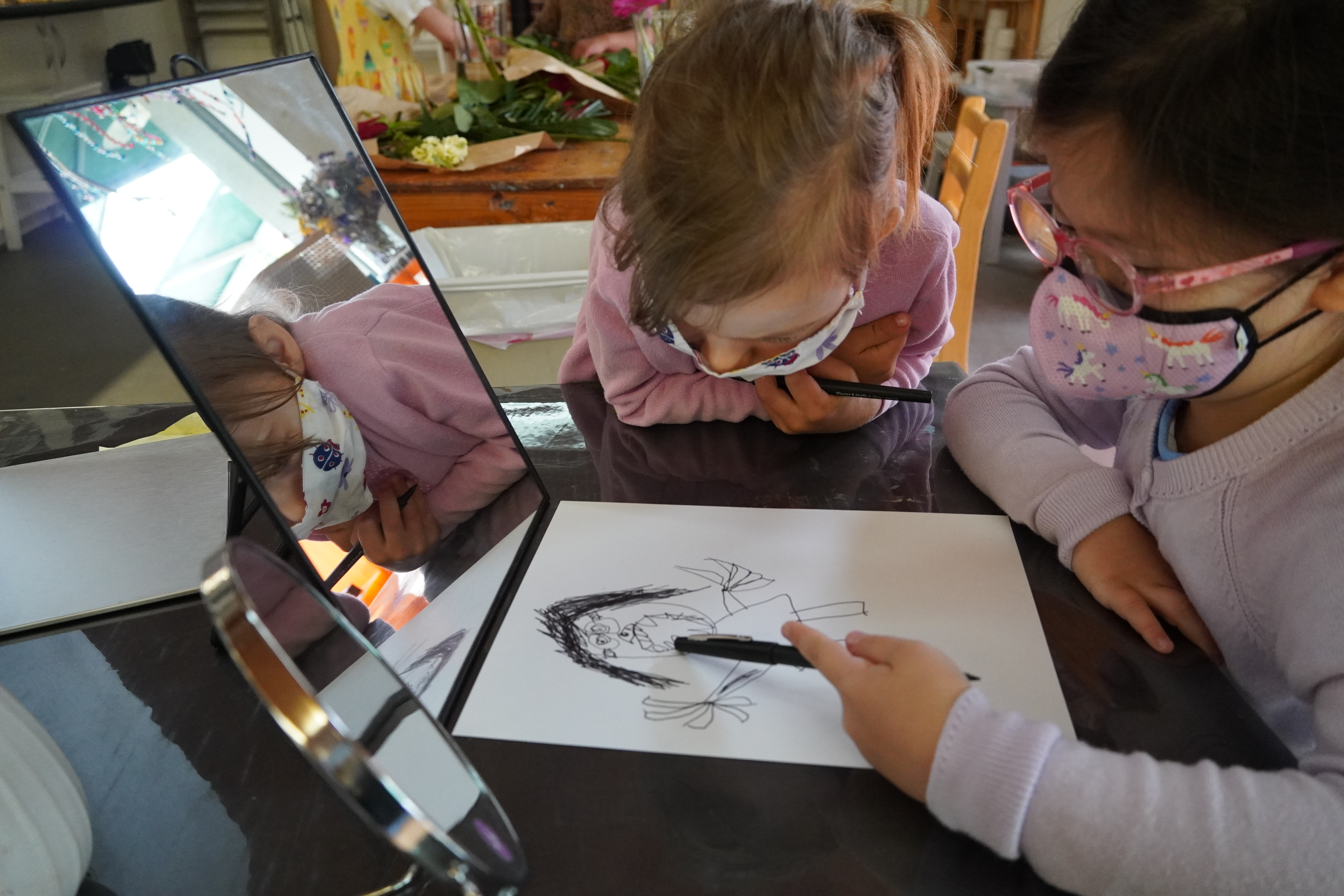
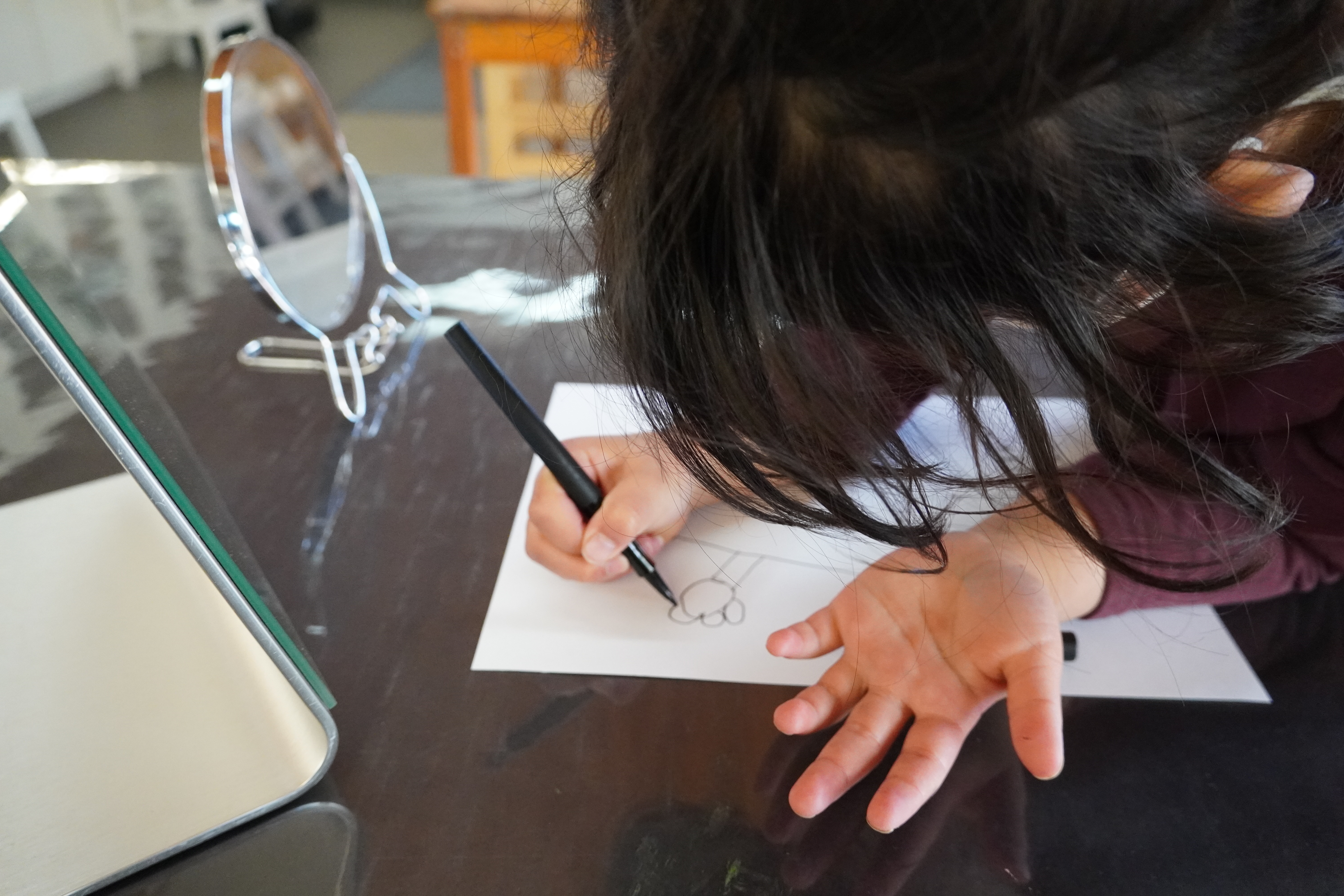
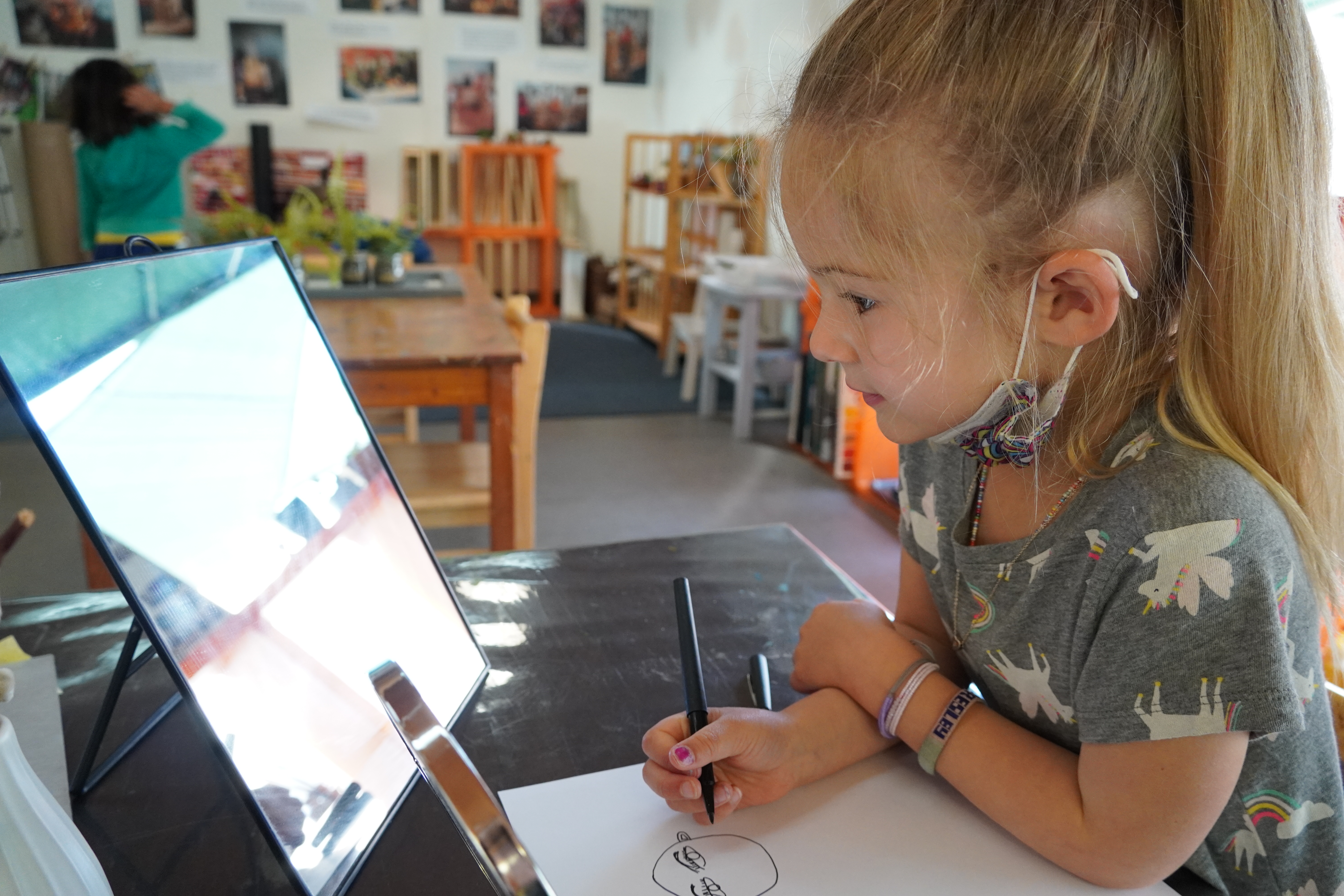
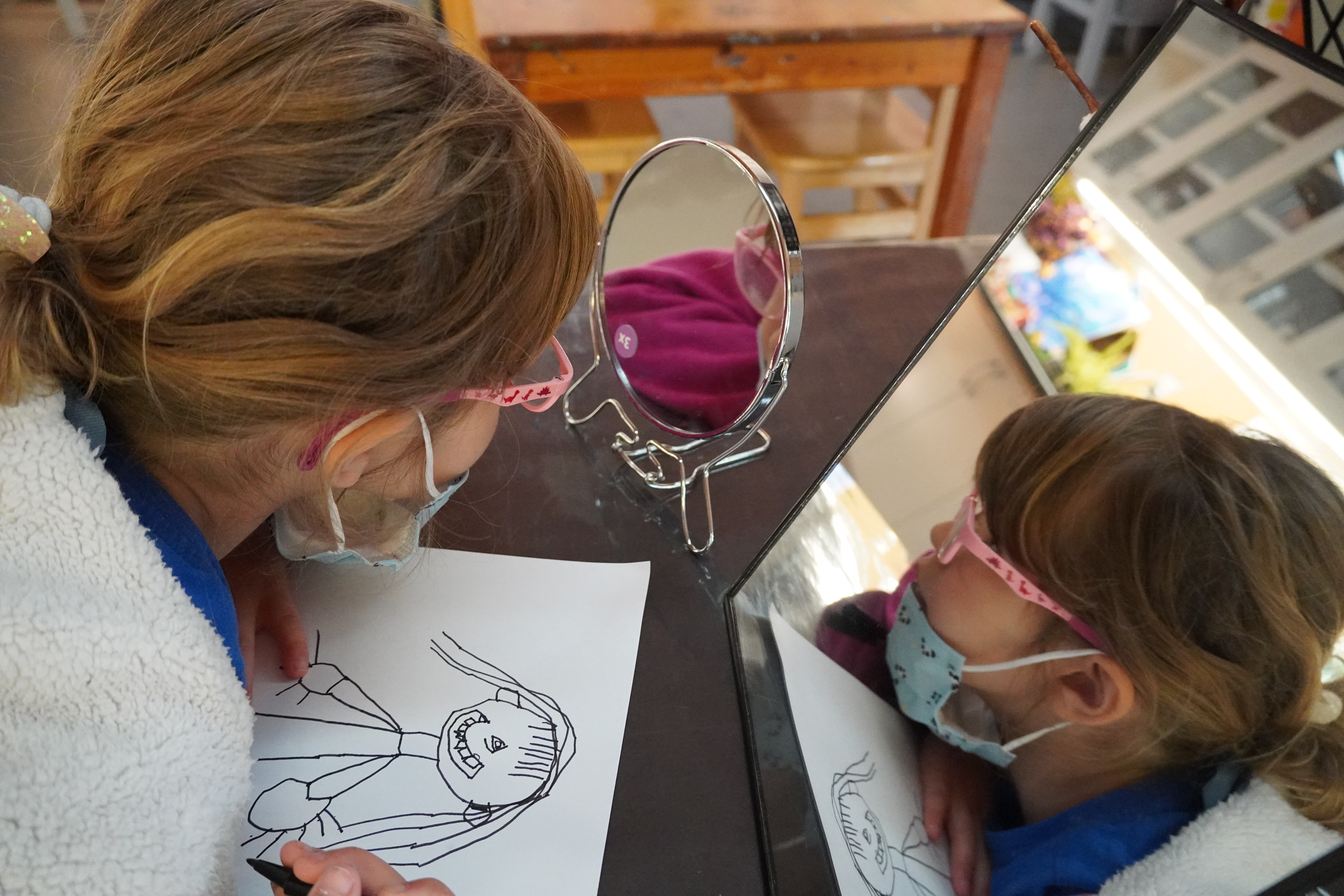
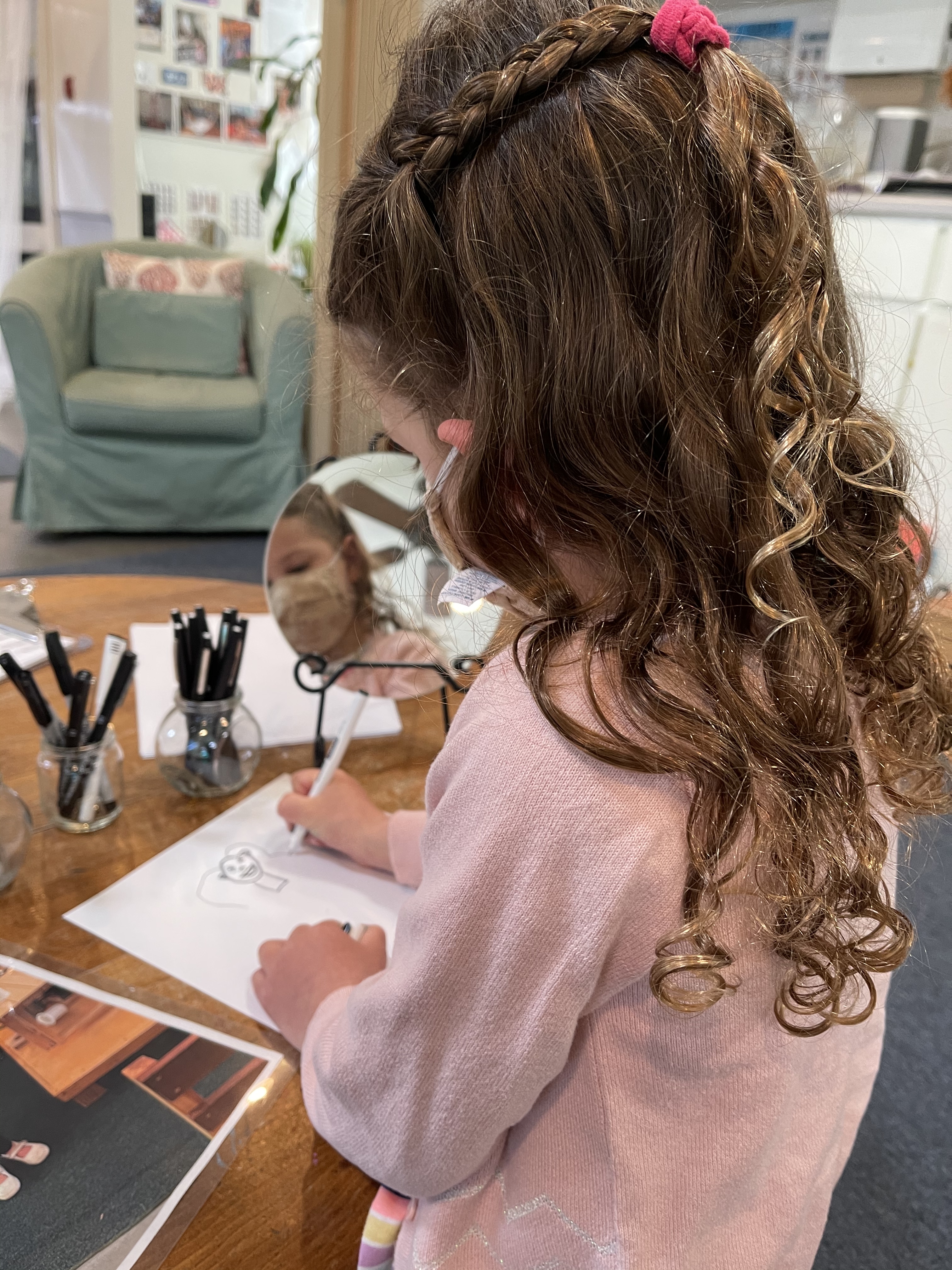
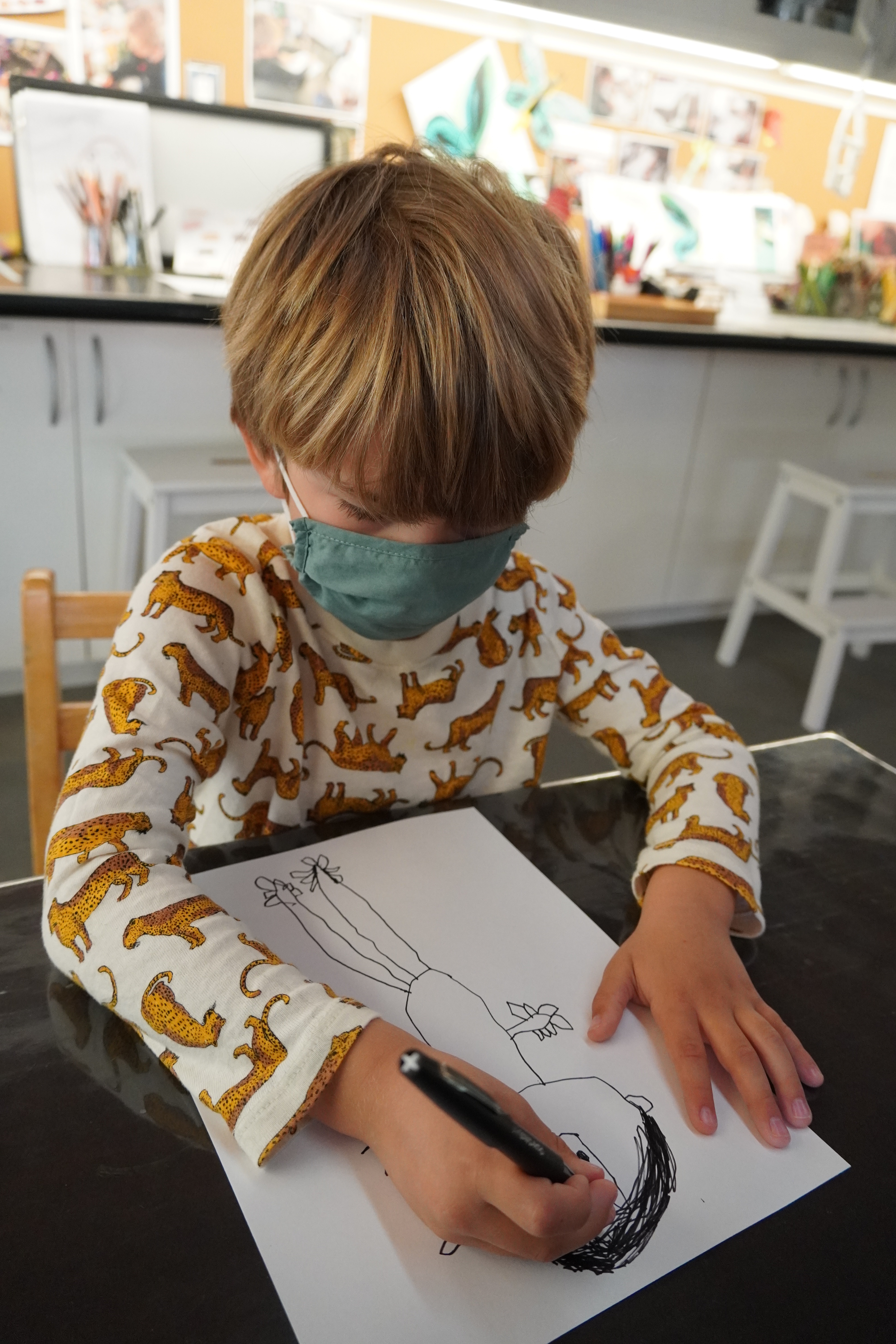
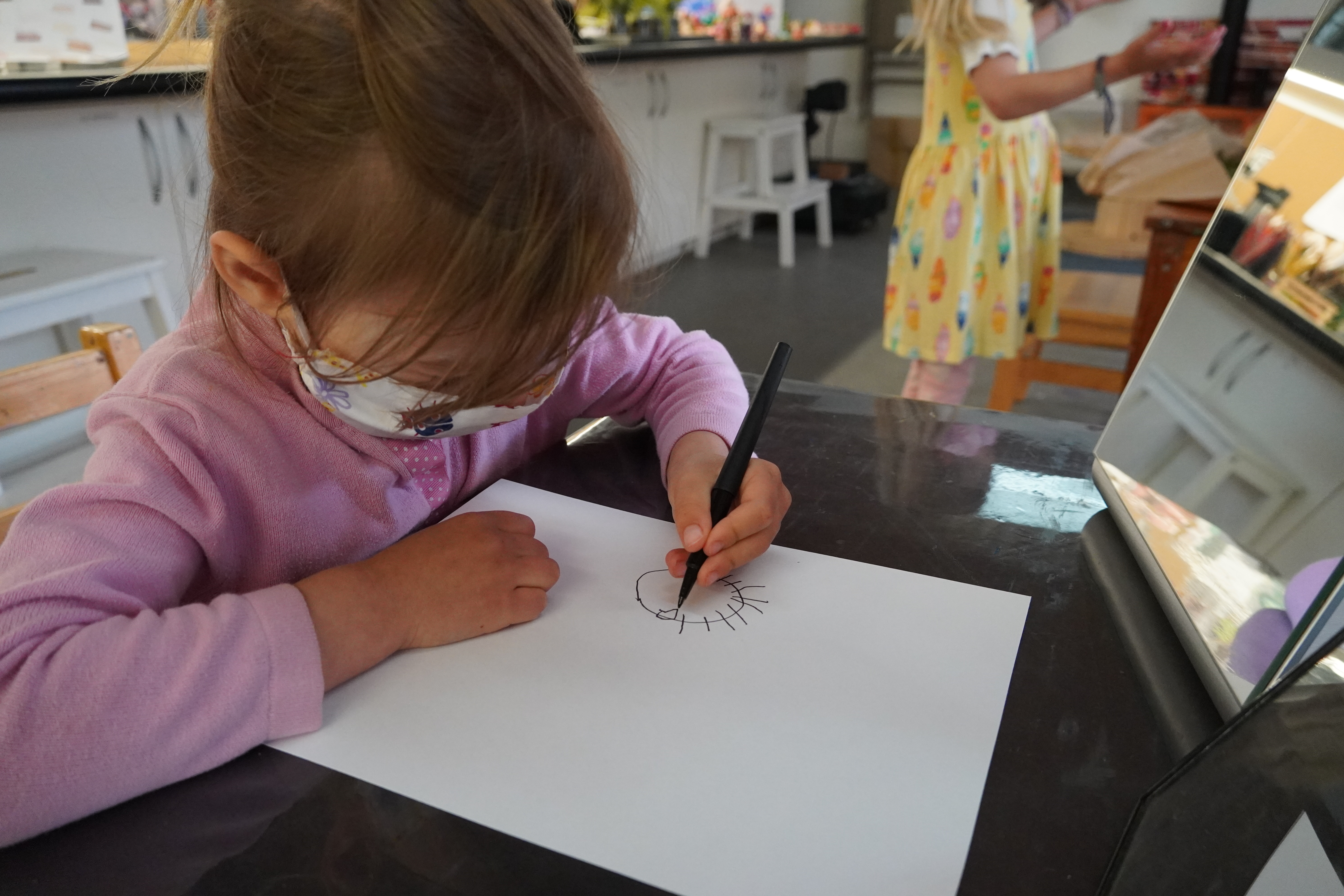
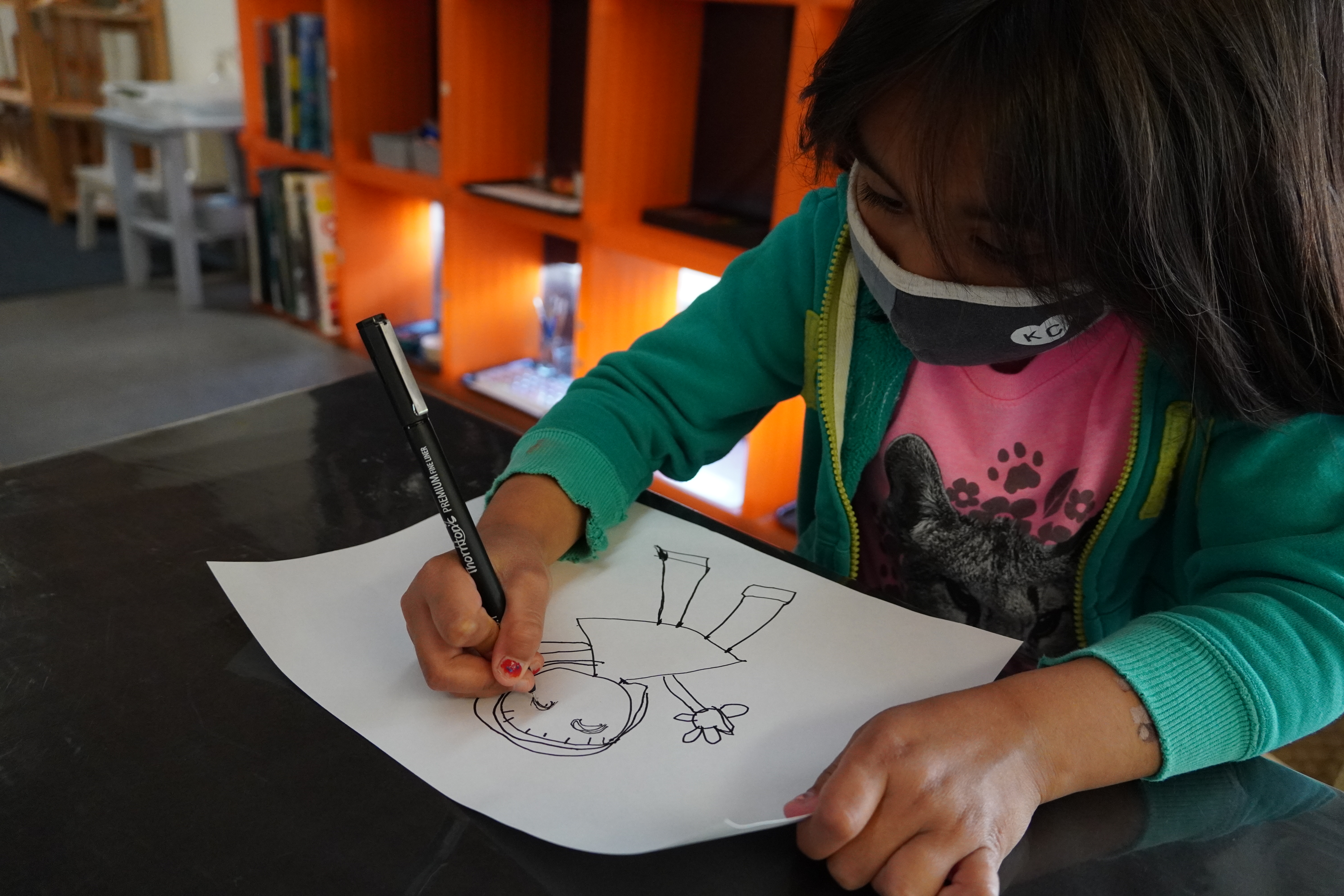
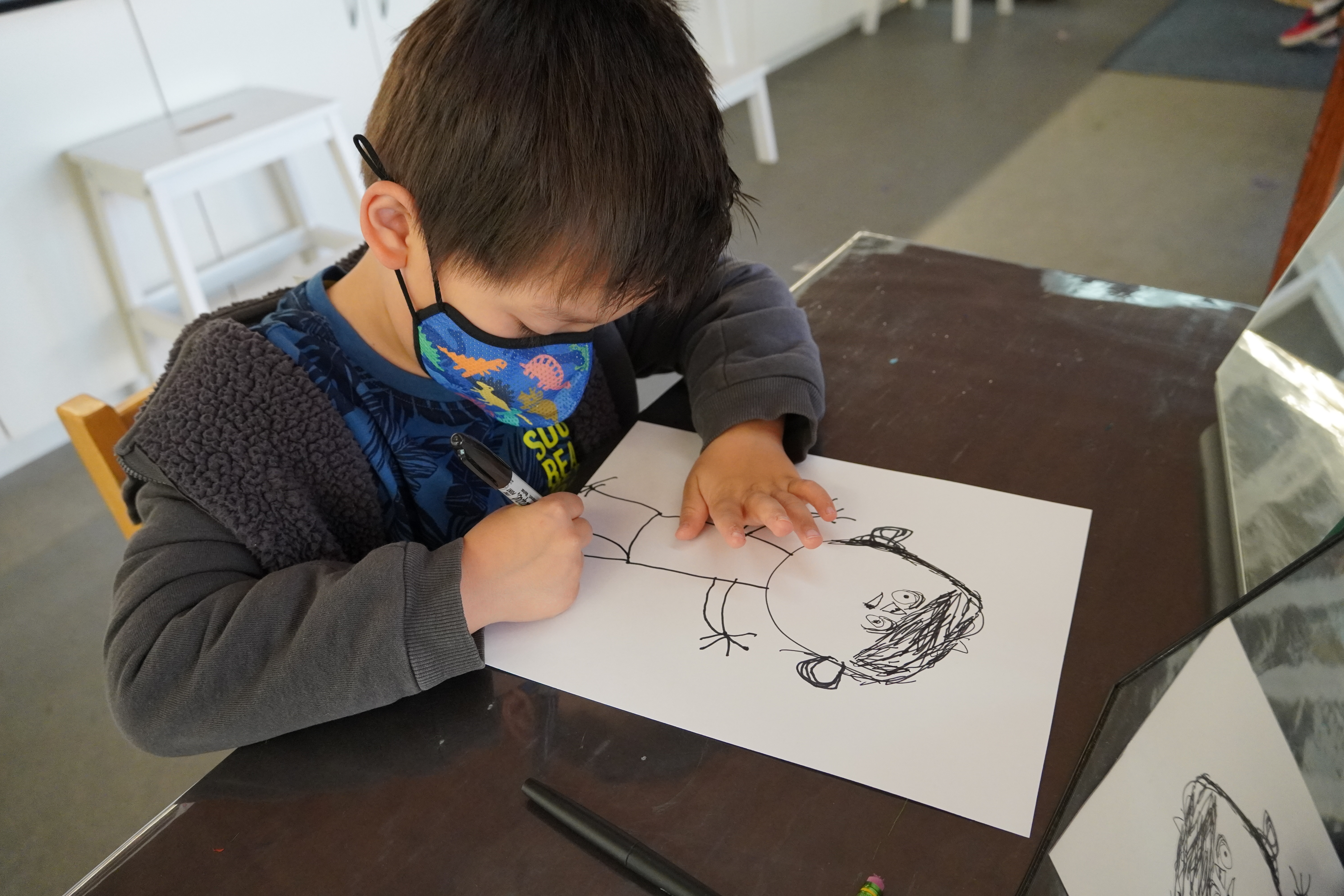
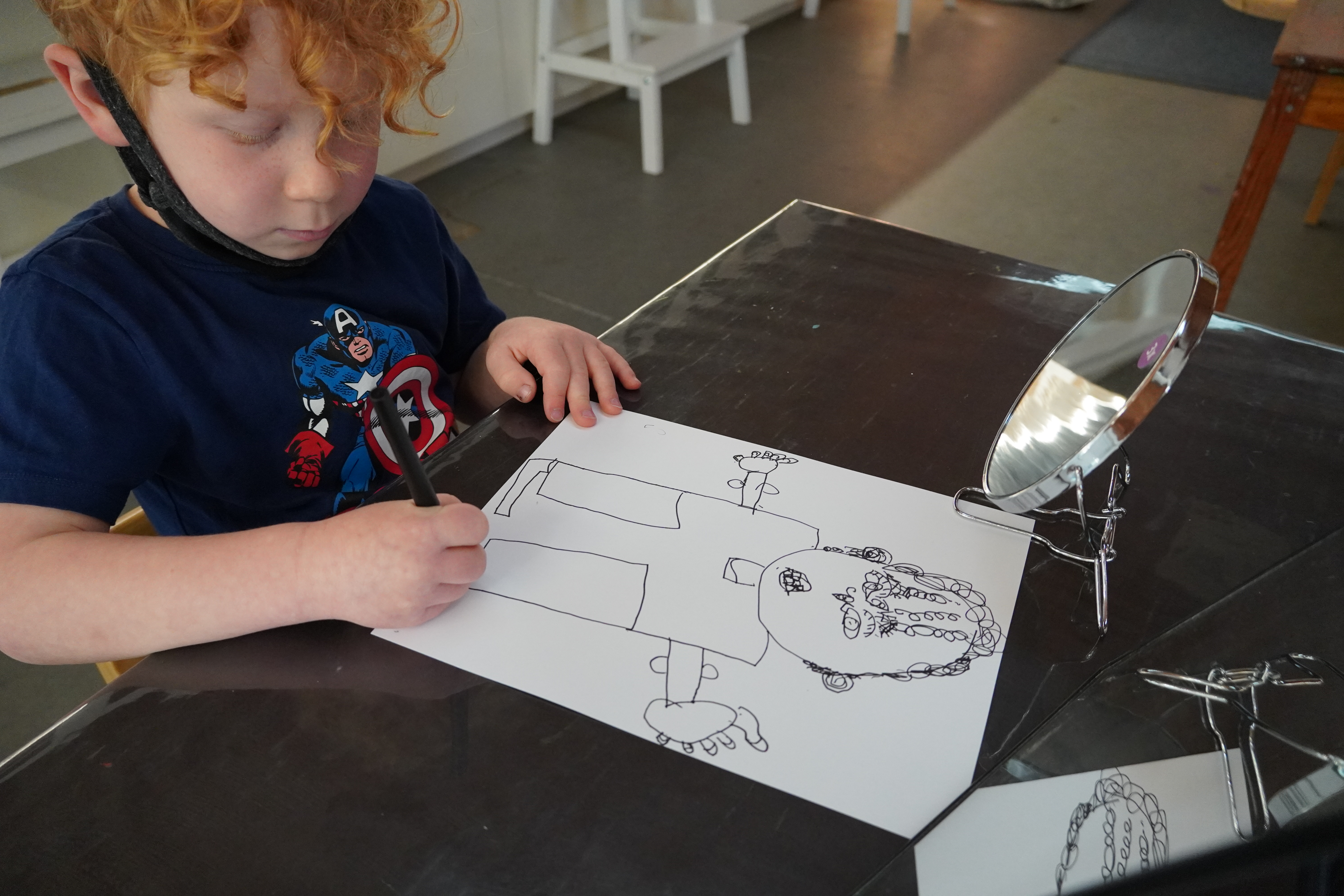
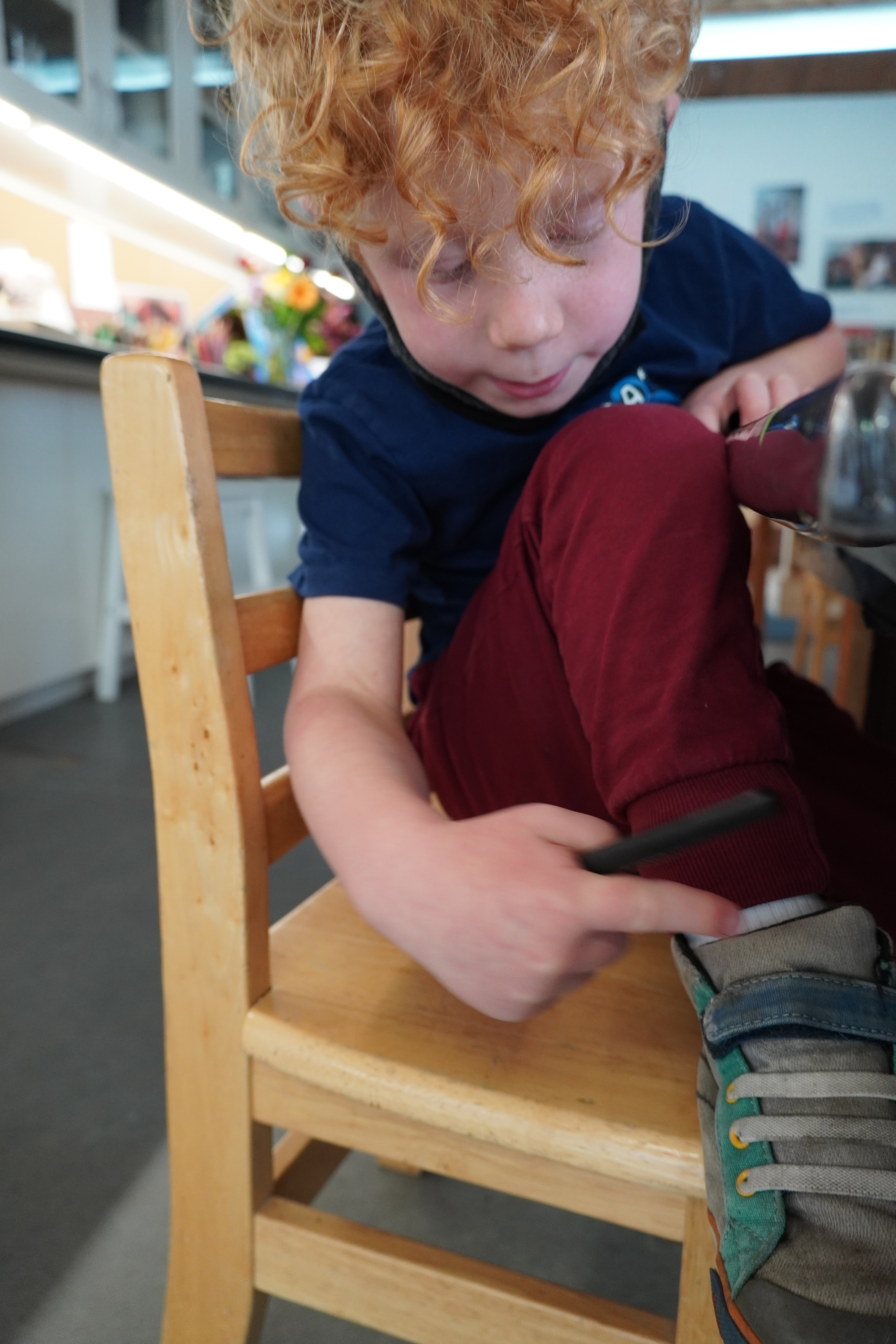
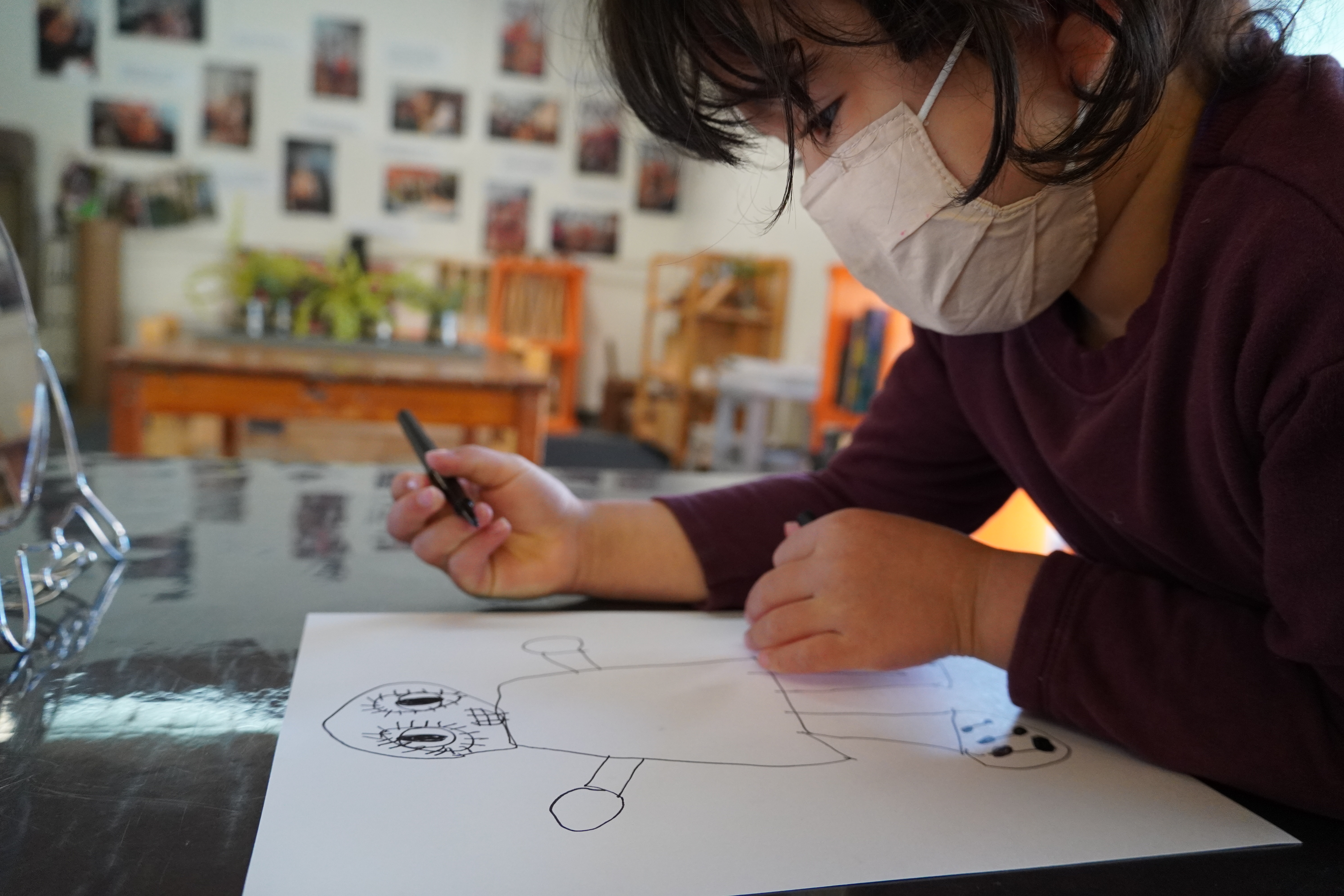
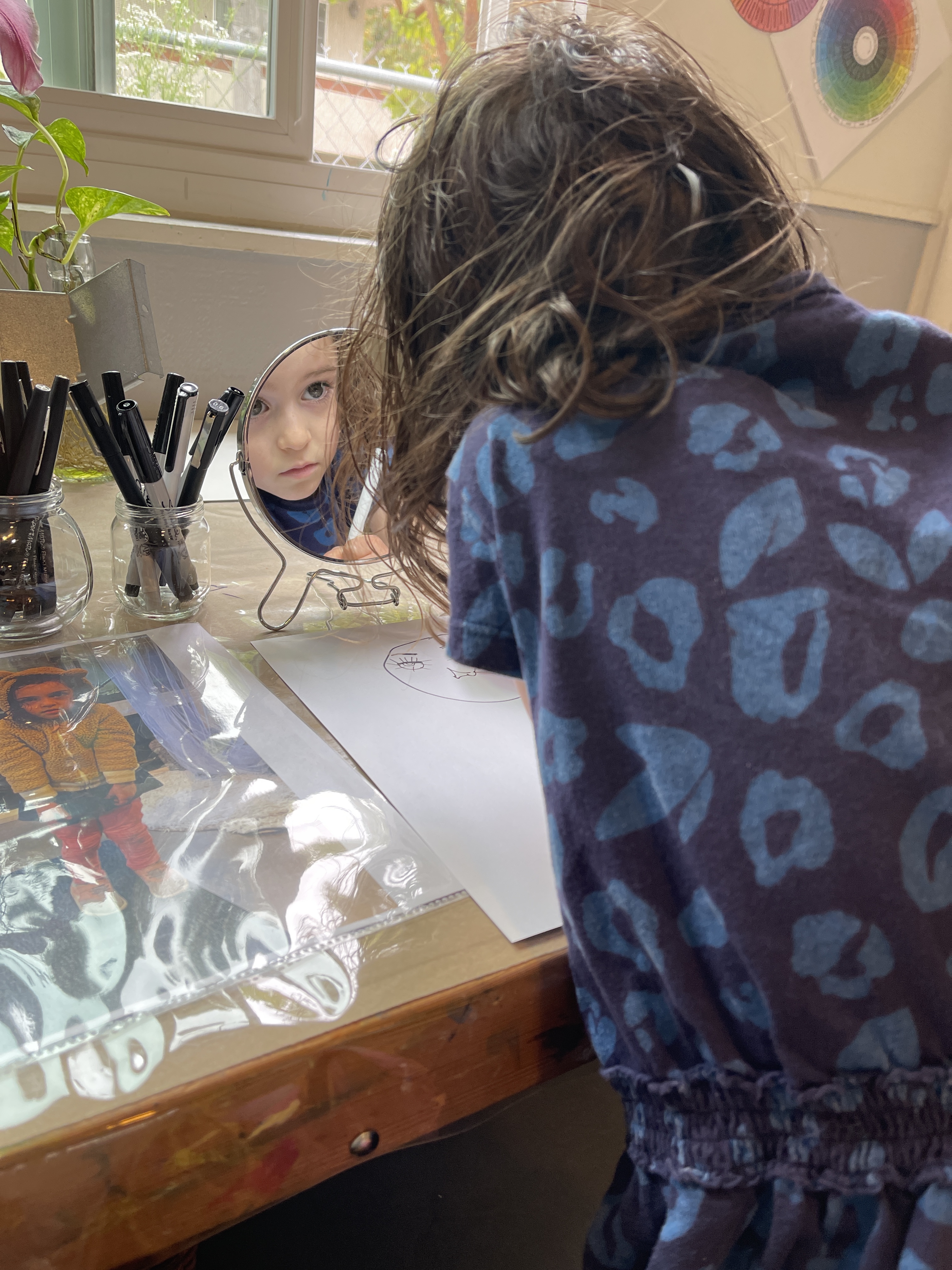
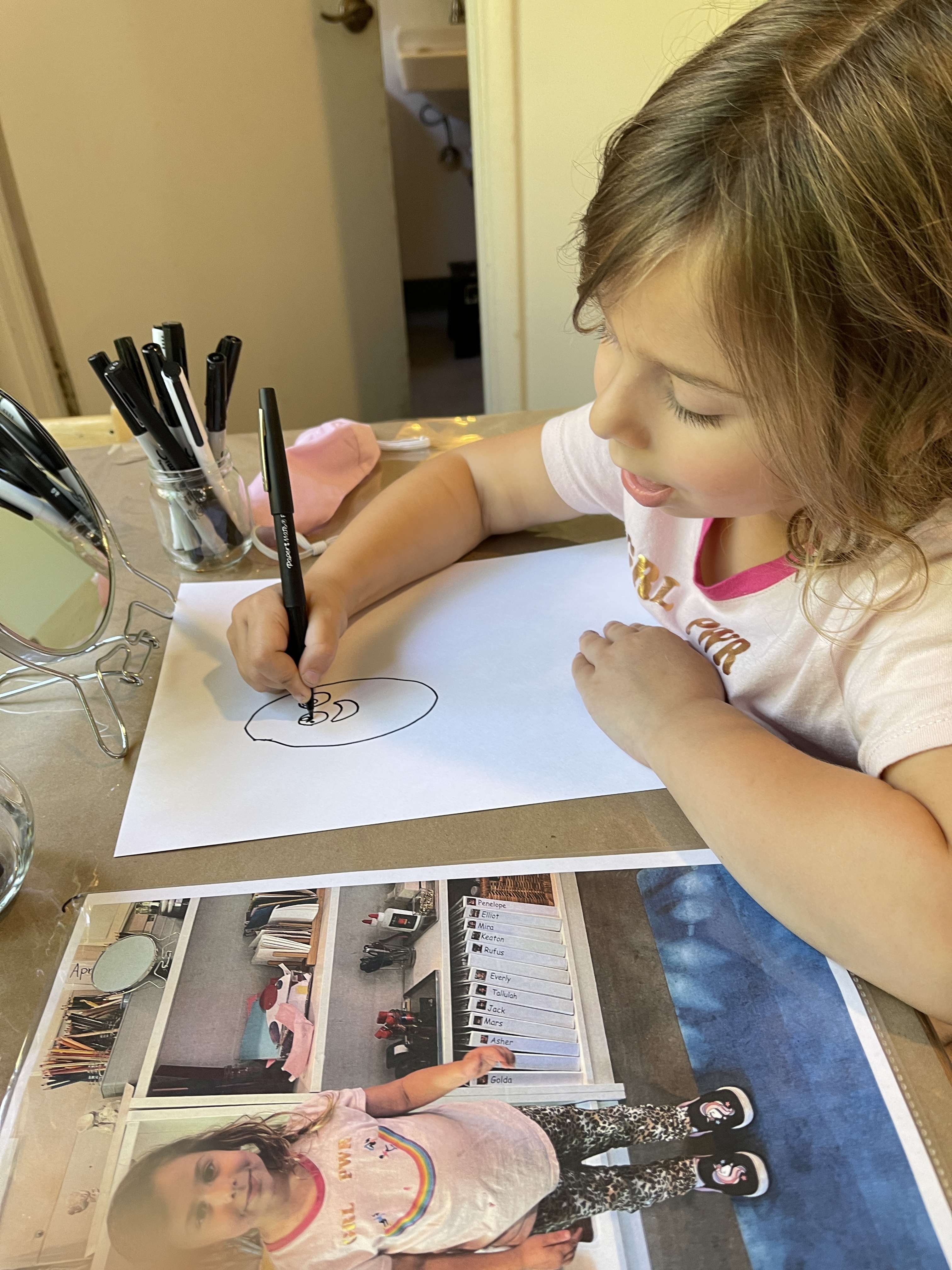
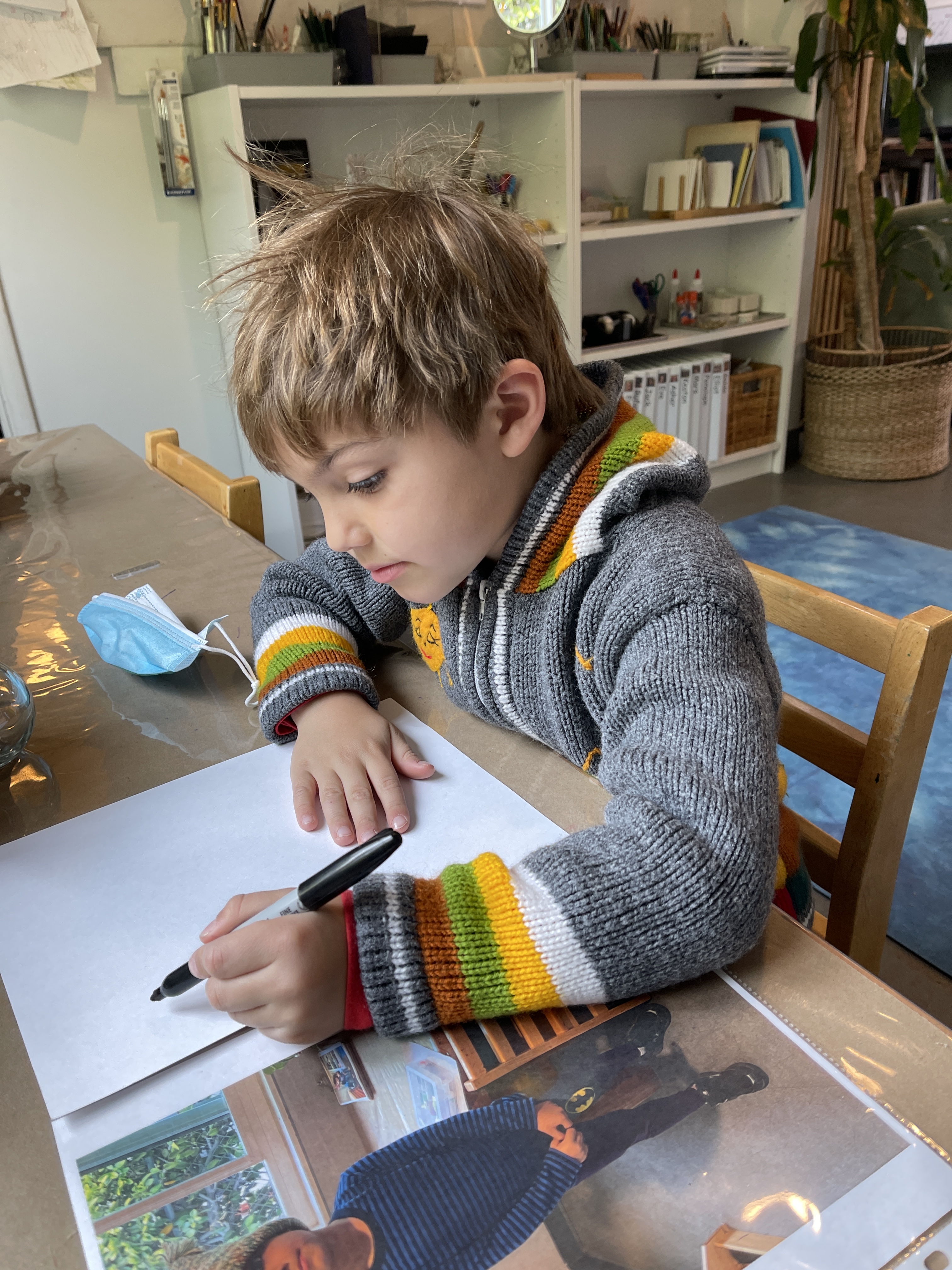
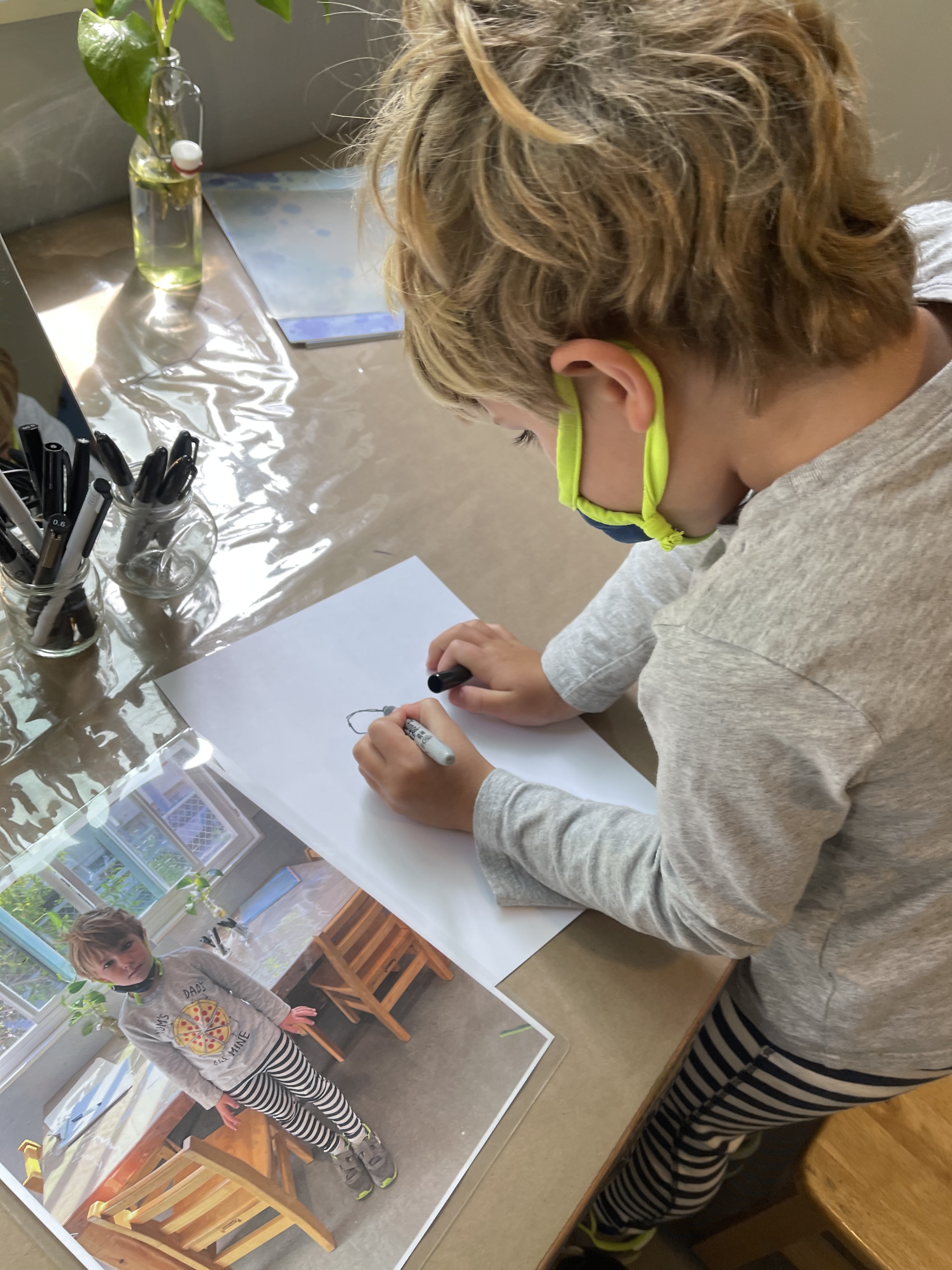
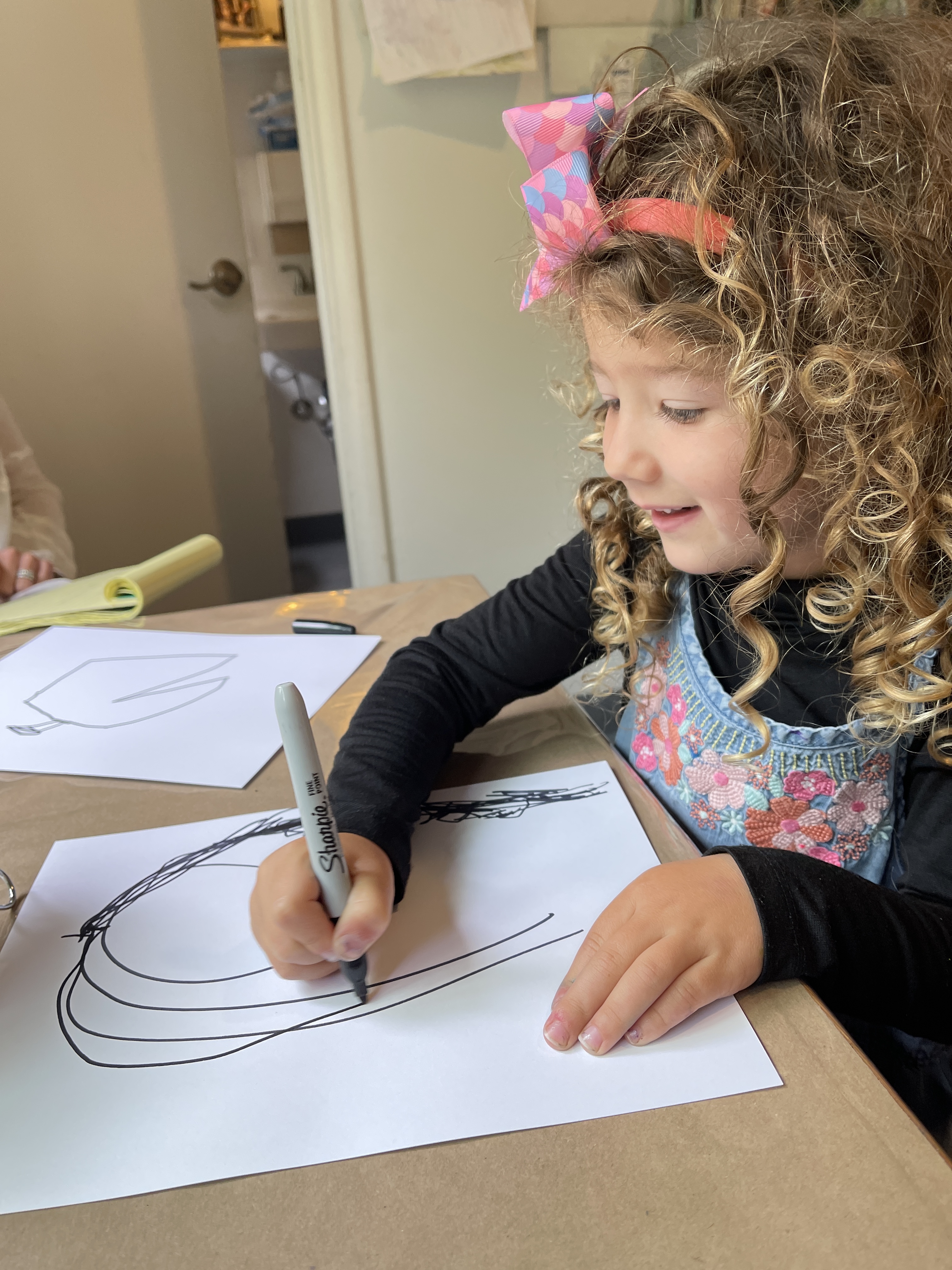
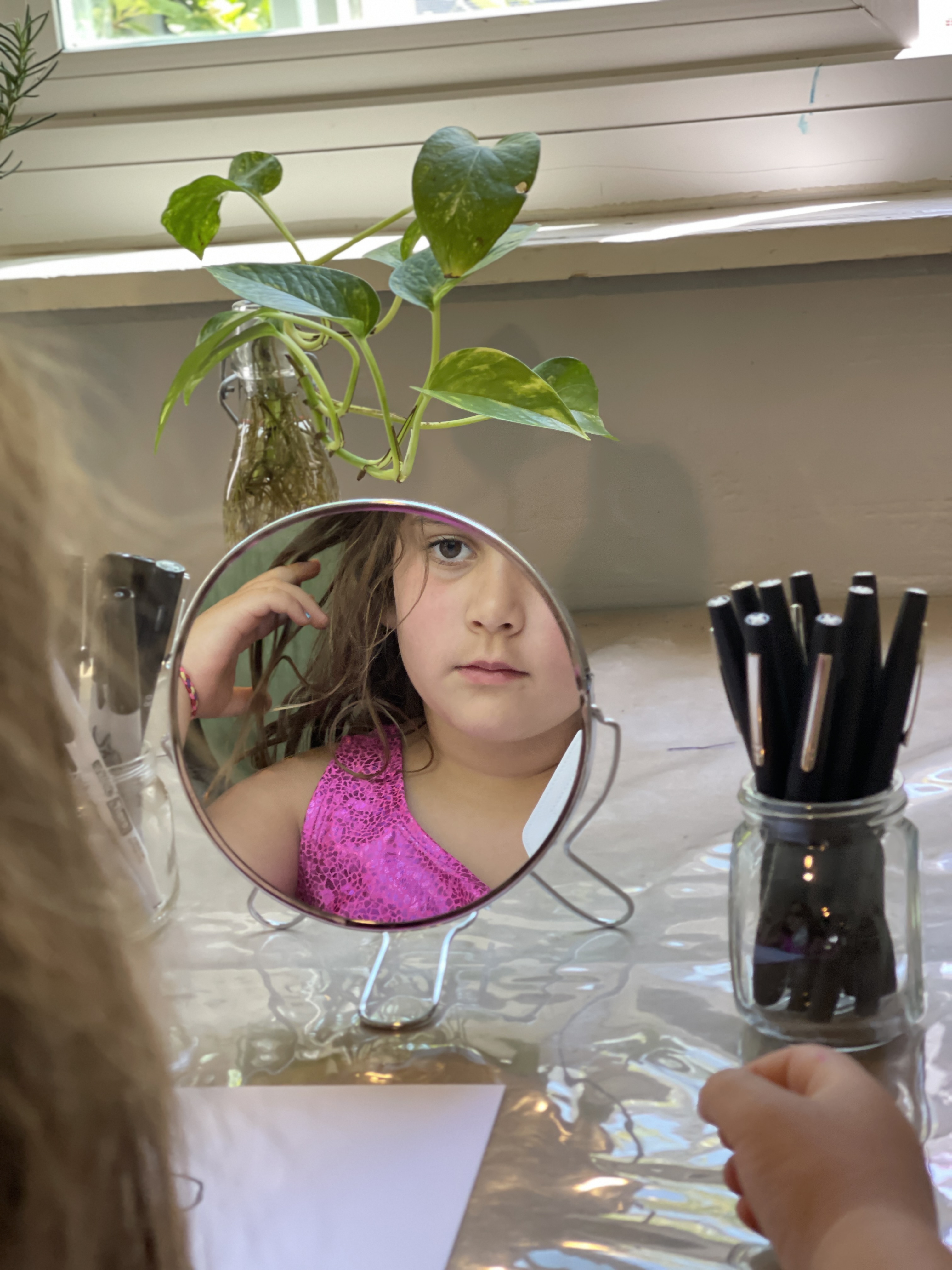
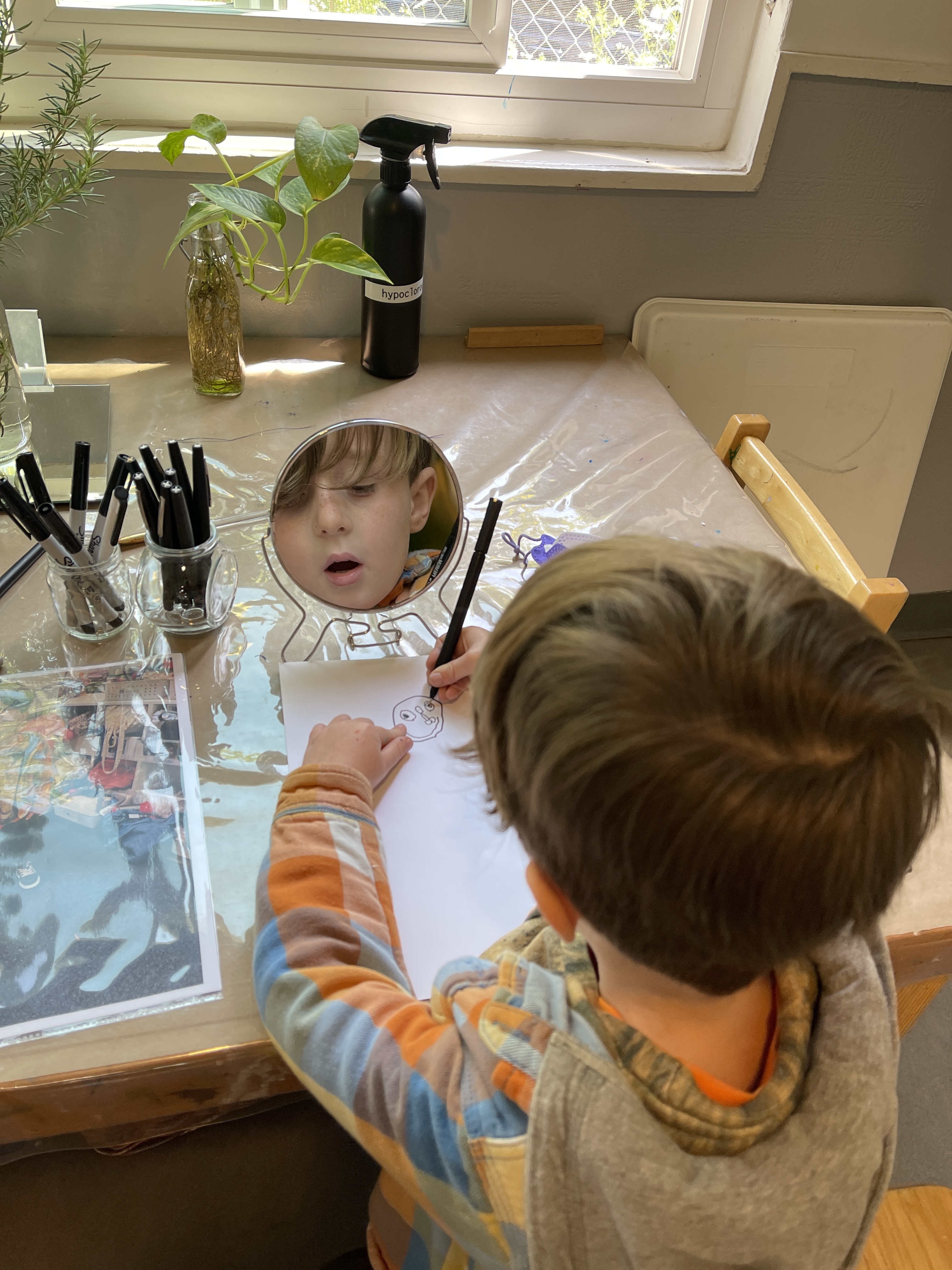
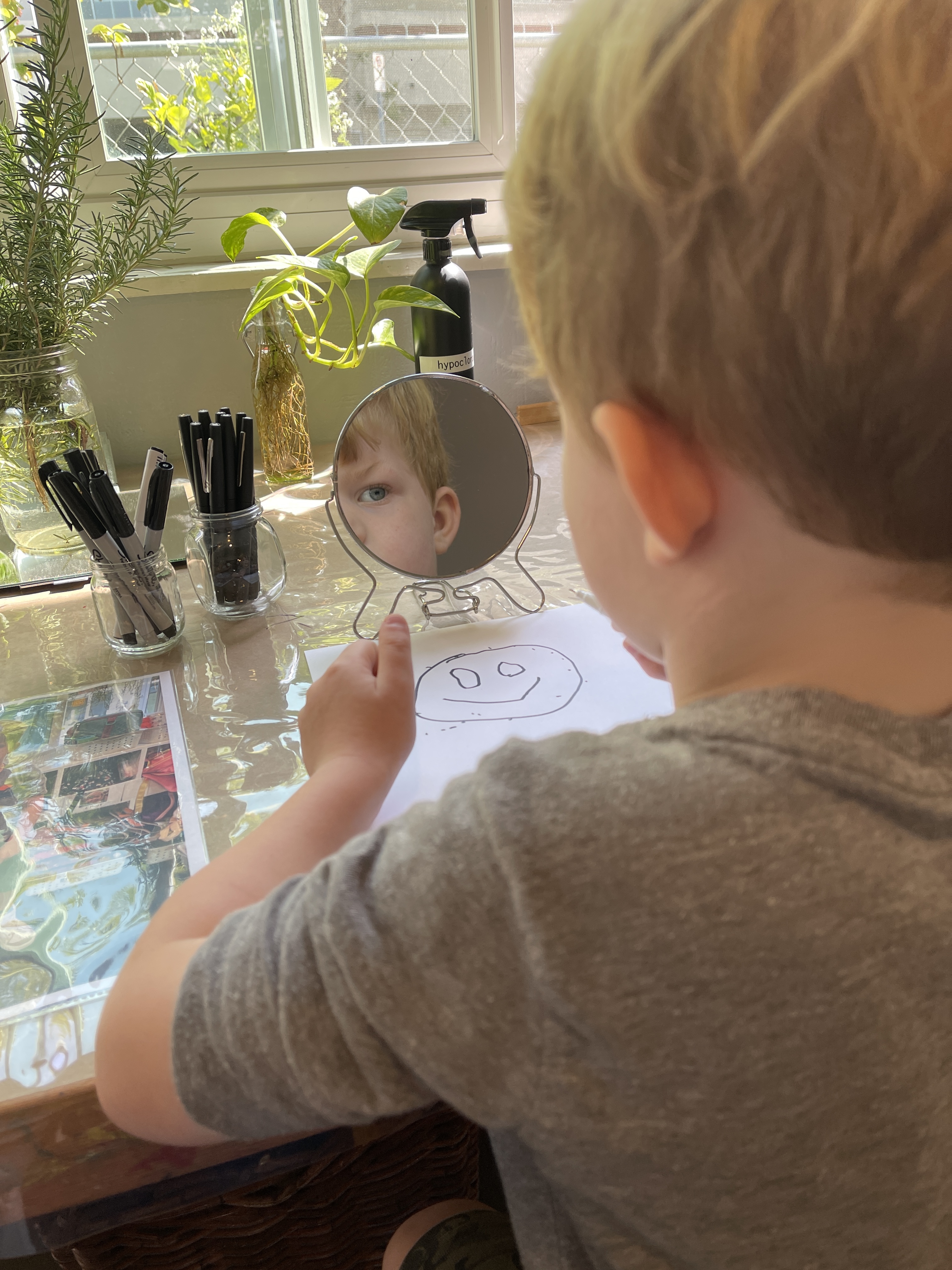
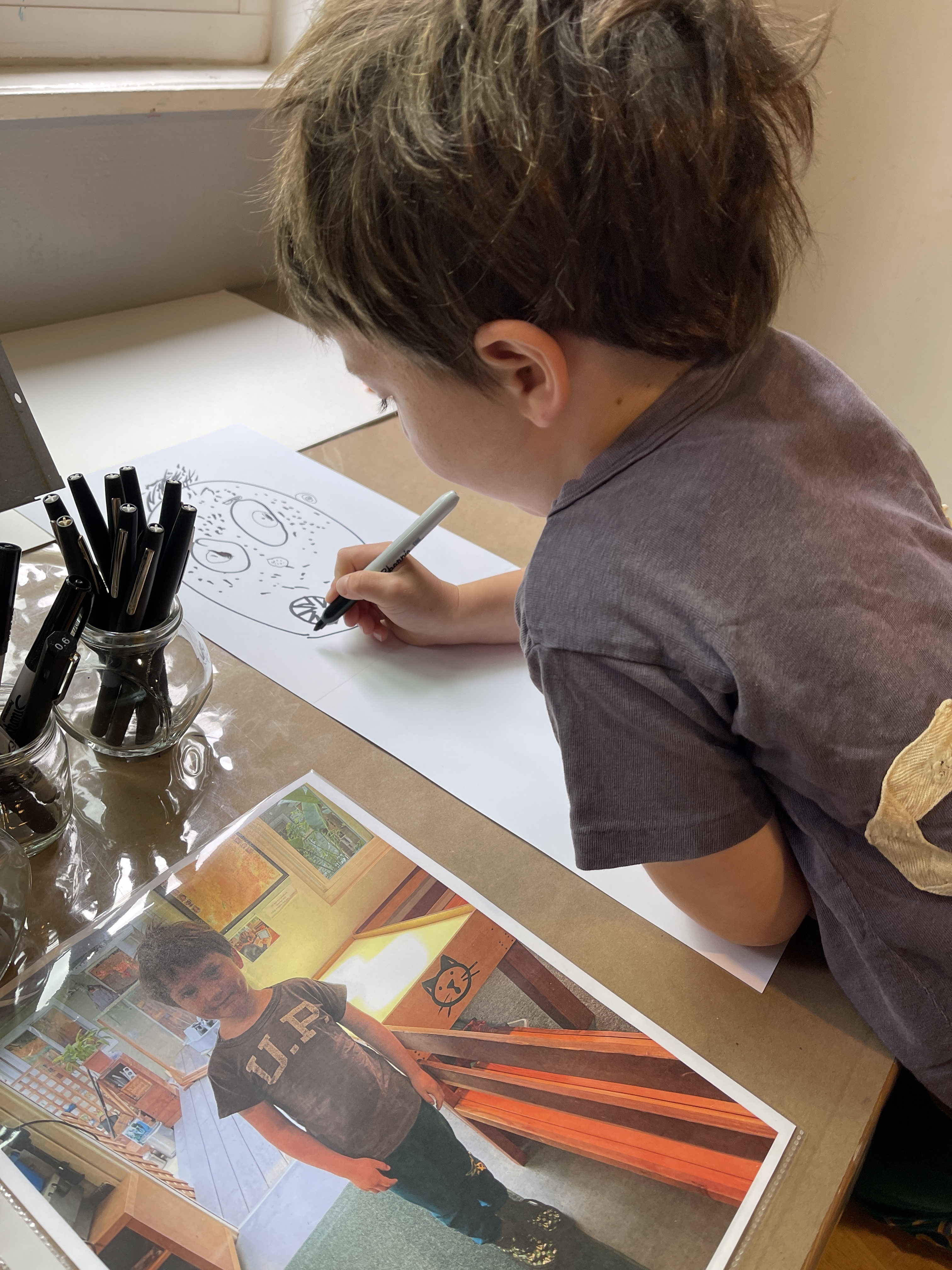
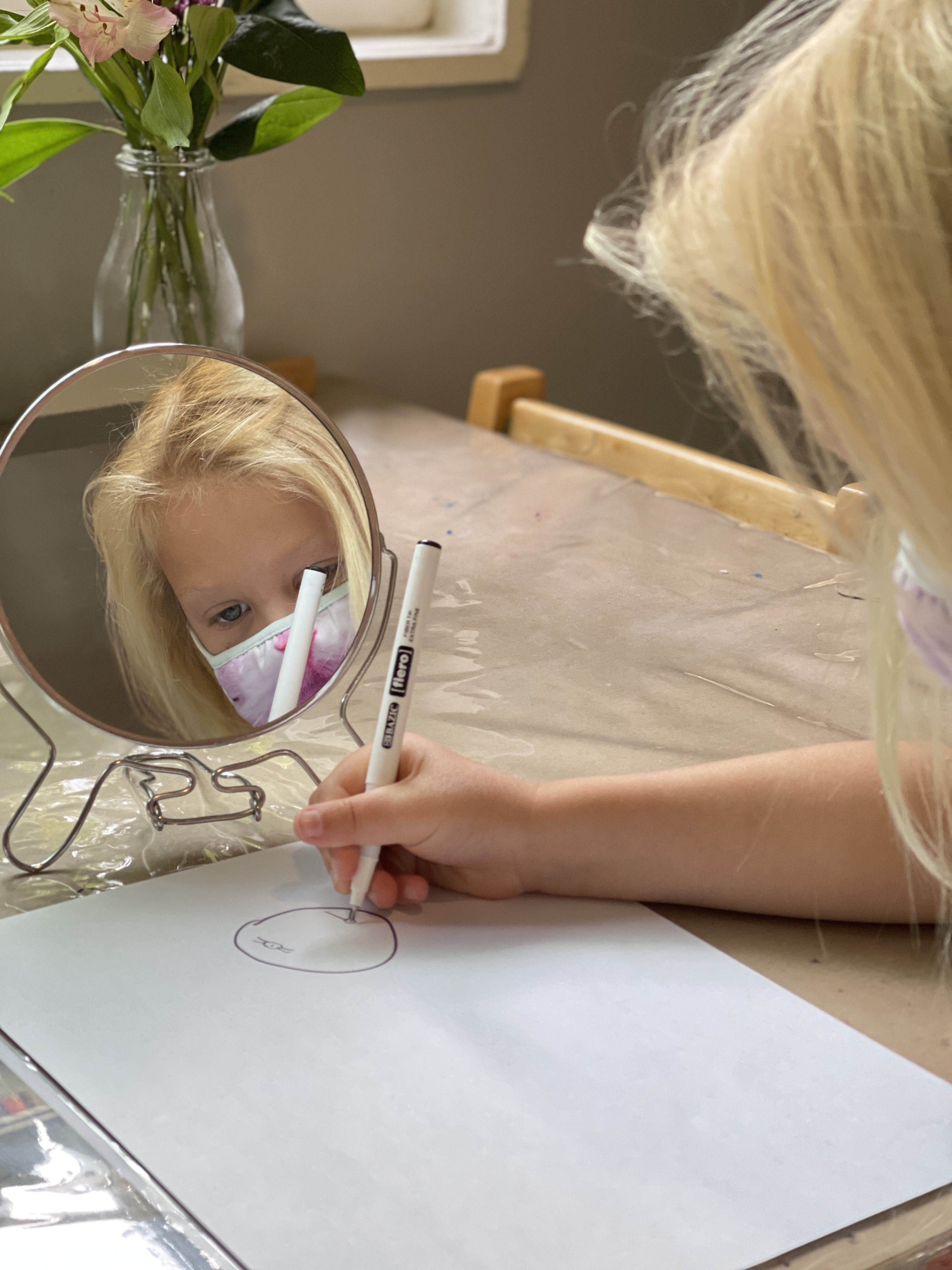
Cynthia: We will be taking a closer look at ourselves. Rufus, what color are your eyes?
Rufus: I think they are brown. Oh, they are actually green! There is some brown but there is green too.
Cynthia: See what happens when we take a closer look? We see things we didn’t even know were there. Now, what shapes do you see in your eye?
Rufus: A circle.
Cynthia: Is it one circle?
Rufus: No. There’s a black dot, then the green, and then some white, and then the circle of my eye.
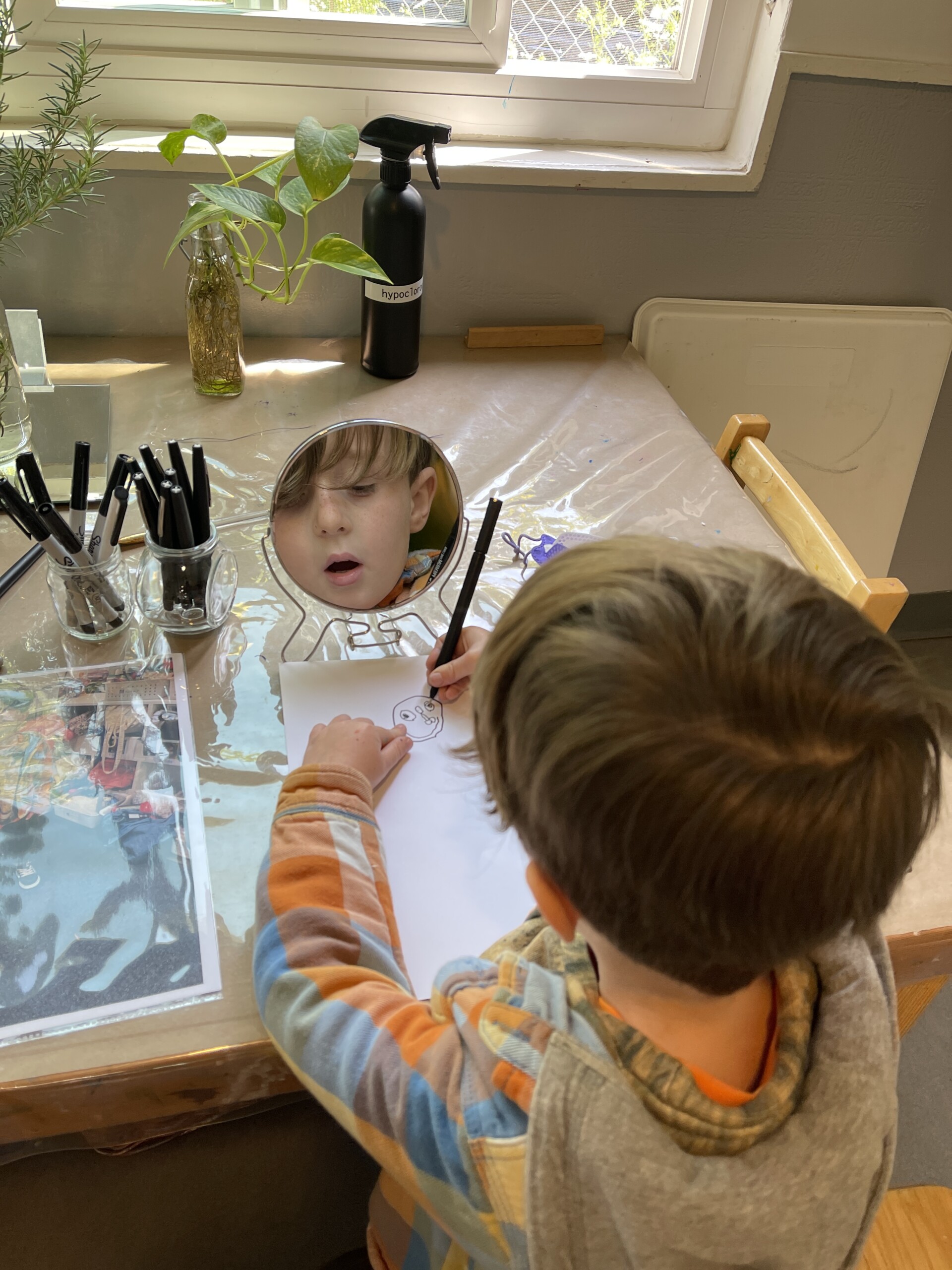
These questions from the teacher support the children to notice things that maybe weren’t noticed before. They also help to change patterns of representation that we like to call ‘formulas’ that are sometimes hard to break away from.
Mira: I know how to make a person.
Cynthia: I see. Today we are working on a portrait of you.
Mira: Ok. I’m going to draw a crown.
Cynthia: Let’s pause. Look at the mirror. Do you see a crown?
Mira: No, but I want to be a princess.
Cynthia: You do and that sounds like a drawing we can work on after your portrait. Right now we are going to focus on what you see in the mirror and on your photograph.
The Aloe Veras began their process a few months ago and spent time revisiting and re-creating whole body portraits.
Santiago: My head I made is too small to add my eyes.
Amy: That was a great start. Let’s try again. Now think about the size of your head because it needs to have space for the details like your eyes. Think of the shape of them.
Santi: They are shaped like pointy raindrops.
Poppy: My eyes are diamond shaped but without the pointy sides. Oh, I forgot my glasses!
Dylan: My eyes are oval with a long side under it! I love the color of my eyes!
Christoph: My ears have circles inside.
Mia: (Noticing the details Christoph added to his ears) My ears have circles too. I am working on my eyes and then my ears.
Mason: My body looks like a “D”.
Chloe: I am making my teeth.
When Mason came to her legs, she drew a single line. I asked her about the shape of her legs and invited her to look at her legs.
Mason: I don’t know how to make that kind of leg.
Amy: Take a look at Chloe’s portrait and see if you can get some ideas.
Mason: I am watching Chloe finish her portrait to get some ideas.
She then continued and finished her portrait feeling more confident.
Mason: Chloe, you look angry.
Chloe: I am not angry, I am yelling!
Levi: I am going to make myself naked.
As the children made their self portraits we observed some of them scaffolding techniques for each other. By listening to each other’s narrative process, the children who weren’t really voicing their questions and ideas were able to apply a similar process to their own experiences. Chloe and Mason reminded us of the importance of having children work side by side to offer the opportunity to see a different way to tackle a similar challenge. When working in a group they built on each other’s ideas adding to the whole group’s knowledge and developing a sense of community.