Upcoming Calendar Reminders
Monday, March 29th through Friday, April 2nd: SCHOOL CLOSED for Spring Break
Tuesday, April 6 and following: Conference Check-ins via Zoom
Cilantro: https://www.signupgenius.com/go/30e0449afa629a02-cilantro1
Dandelion: https://www.signupgenius.com/go/30e0449afa629a02-dandelion1
Flowers brighten our West Wing spaces and provide children with multiple opportunities for exploration and investigation. Here’s the link to our SignUpGenius for classroom flowers: https://www.signupgenius.com/go/30e0449afa629a02-flower
West Wing Open Houses
Thanks for joining us for our Open Houses this week! We couldn’t do any of this wonderful work without your children and your support. Keep an eye out for a post with some of the photos and the reflections from the event.
Aminata’s birthday!
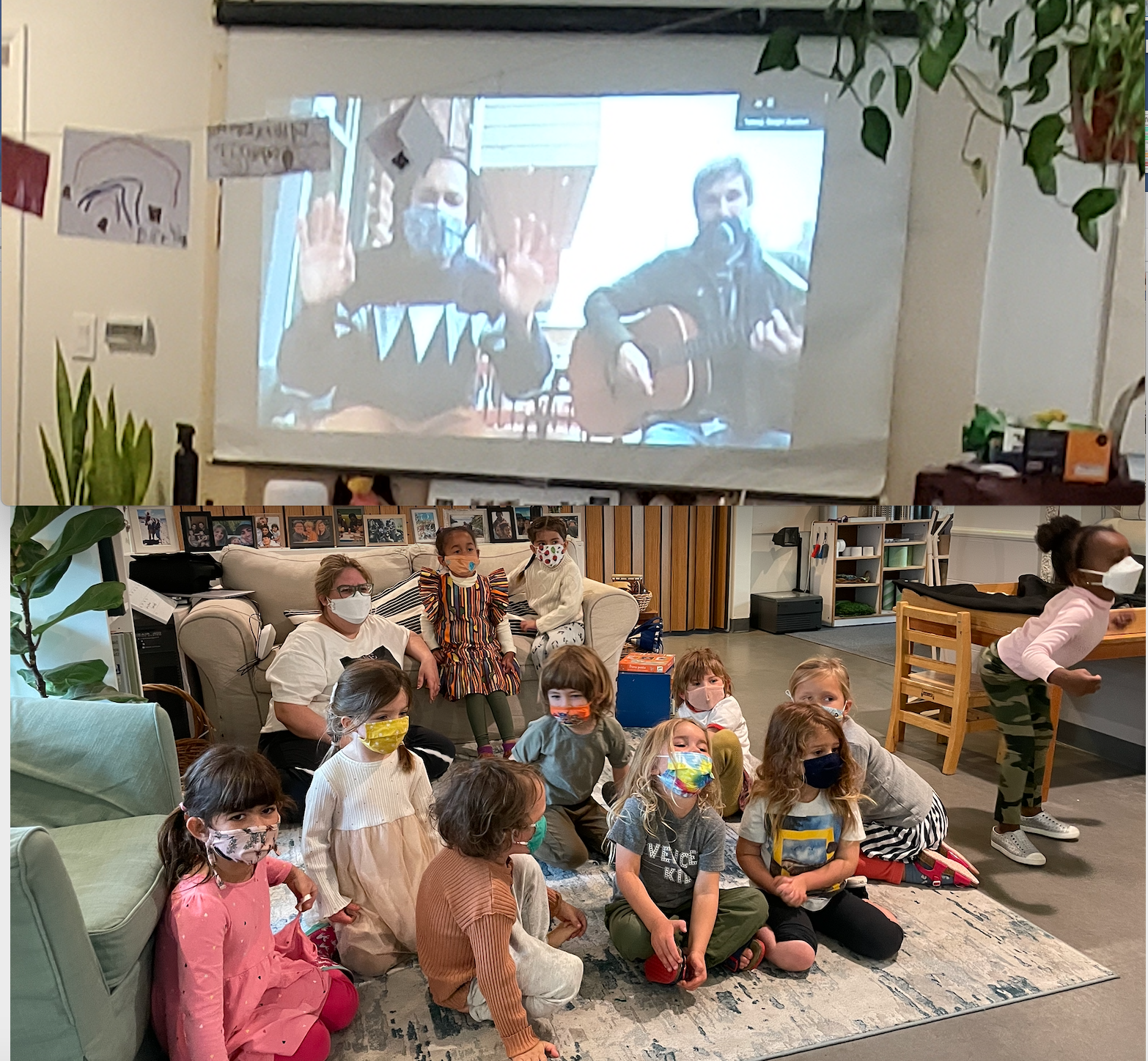
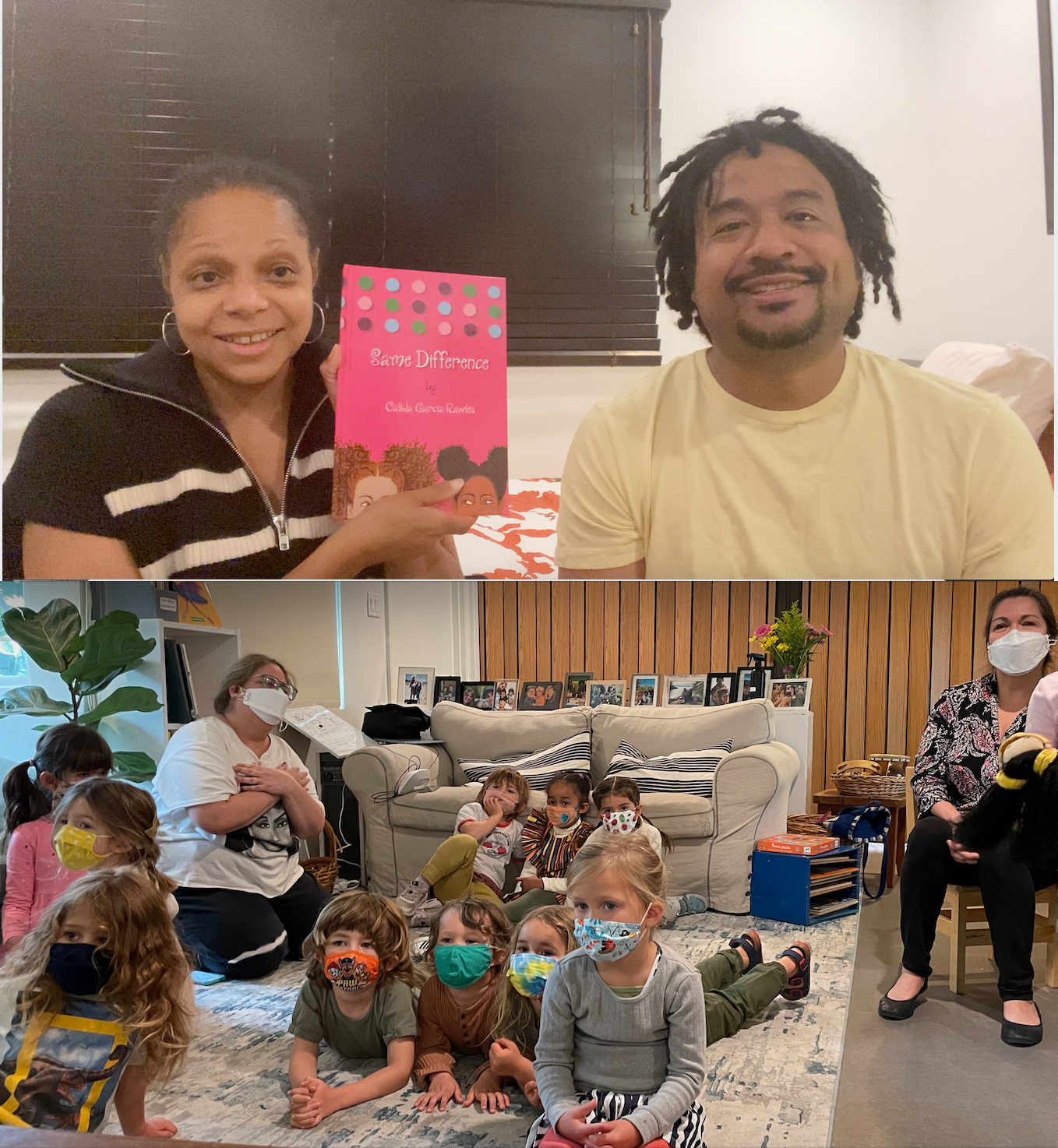
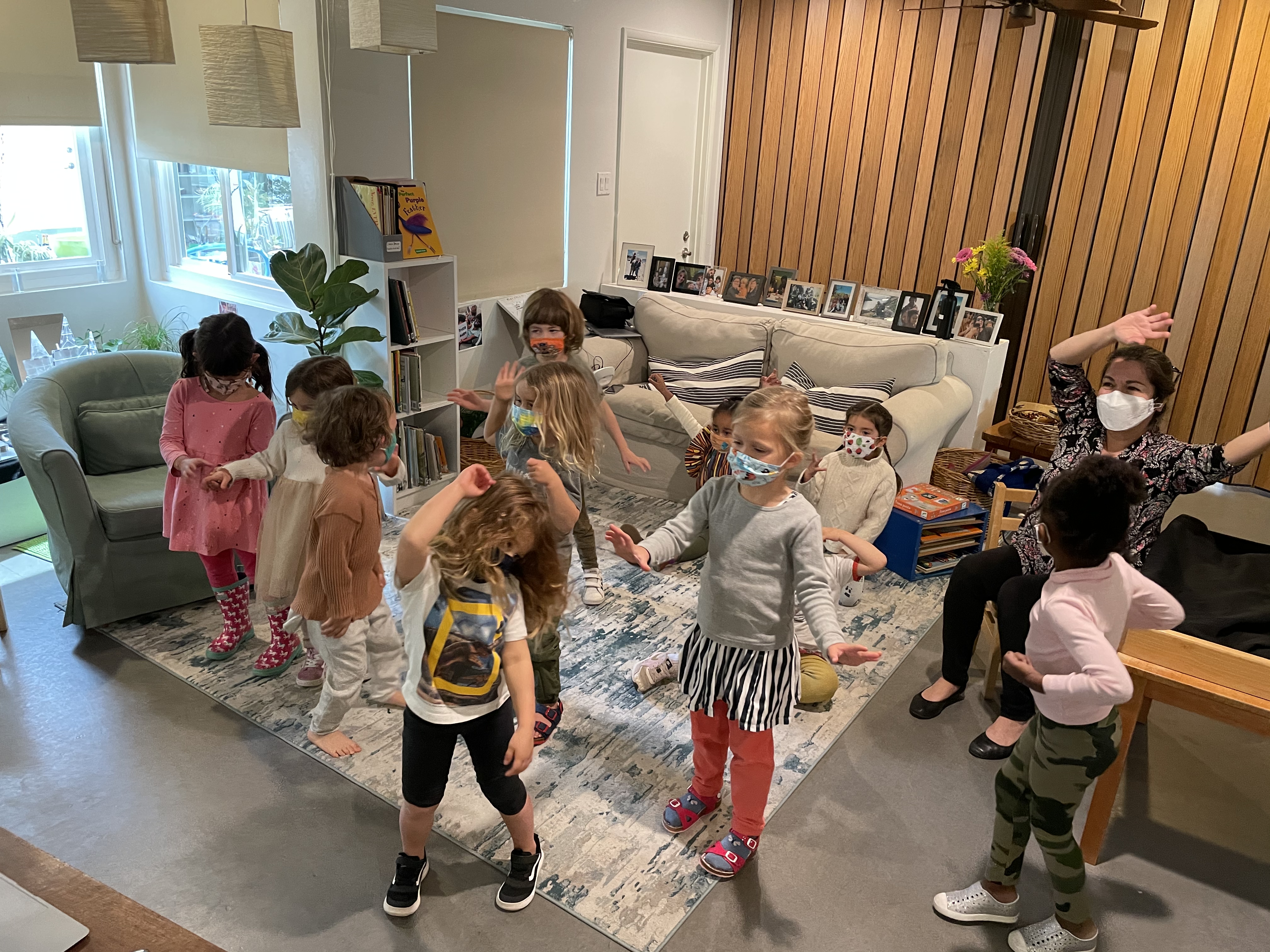
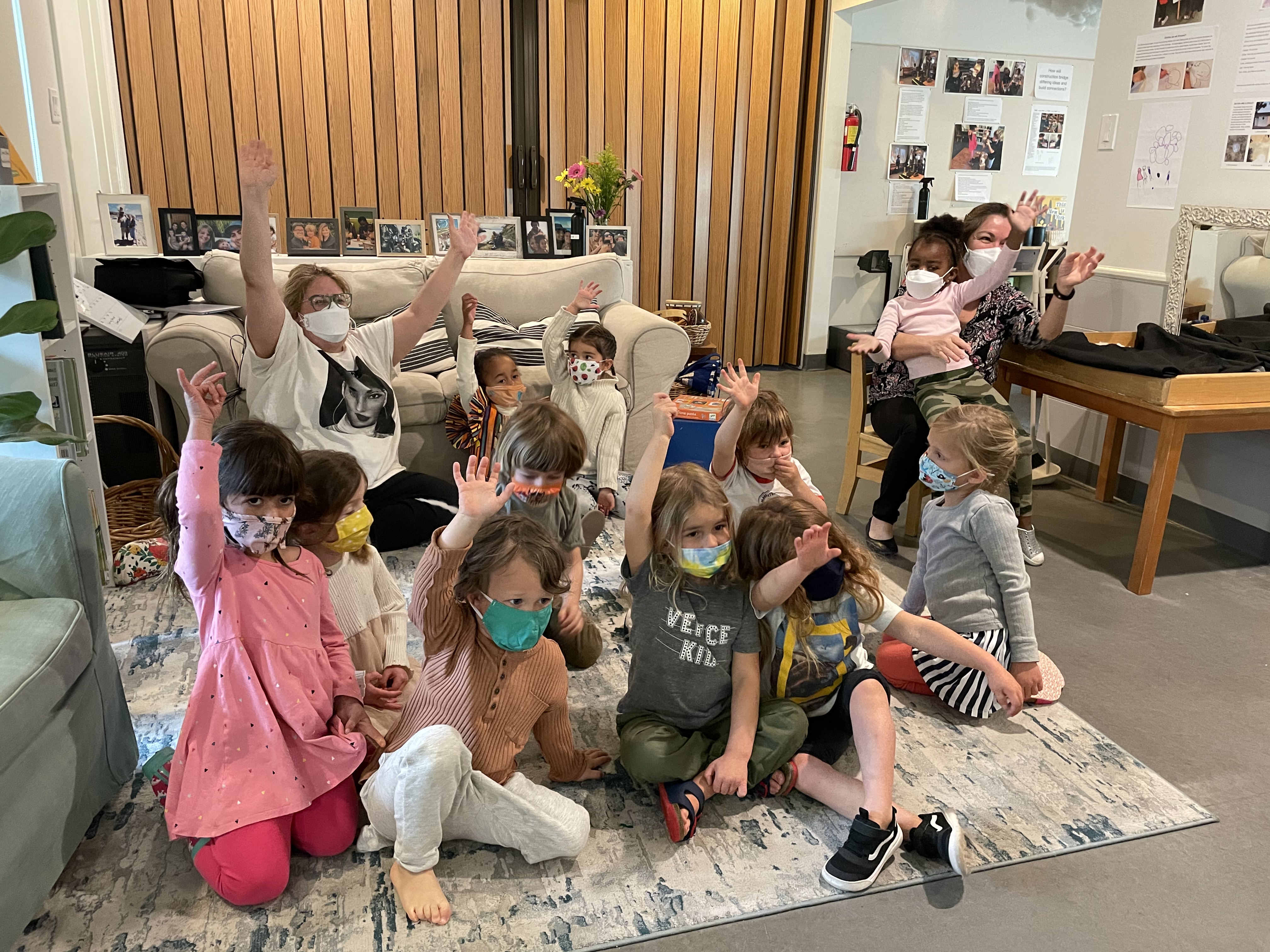
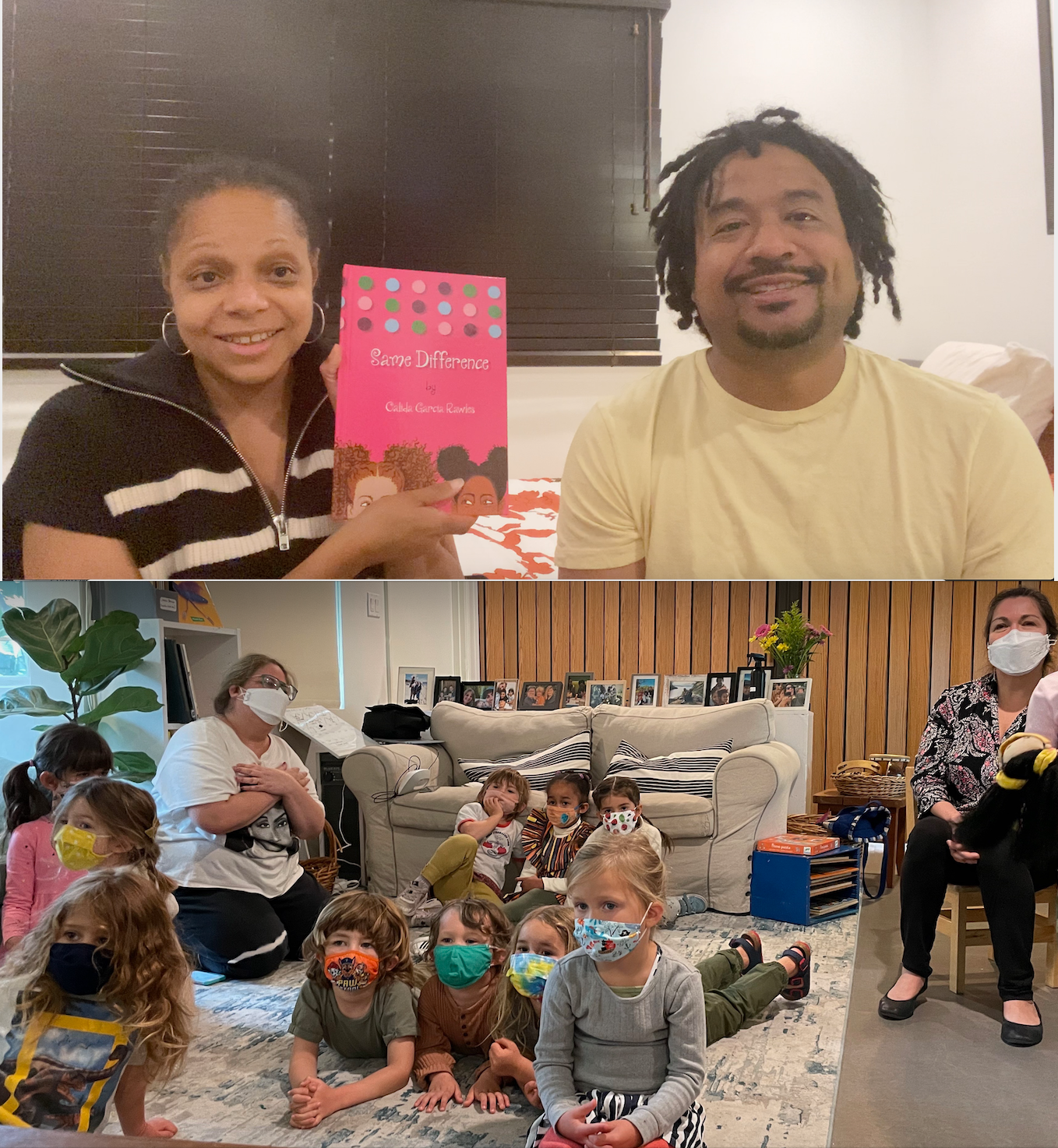
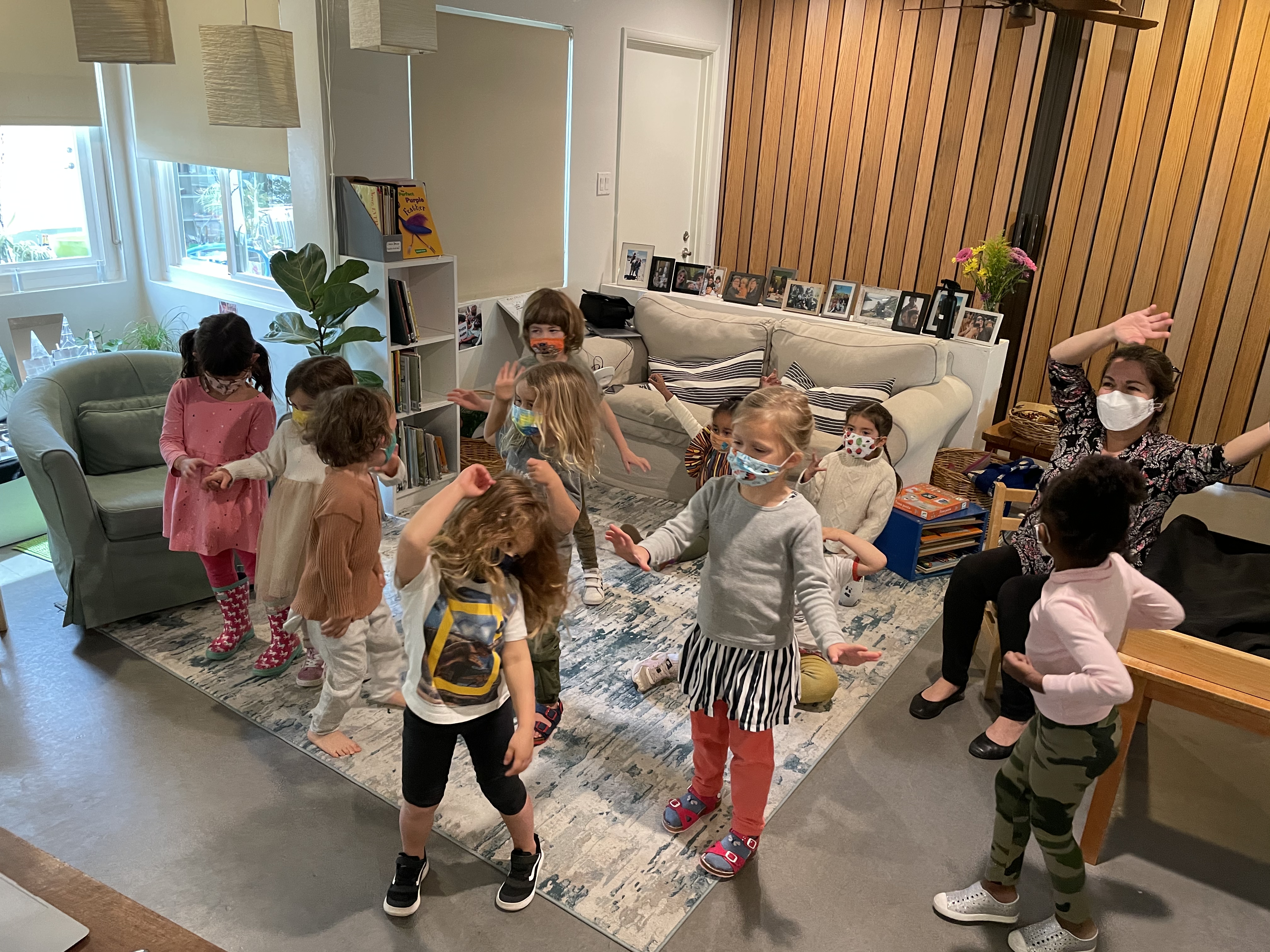
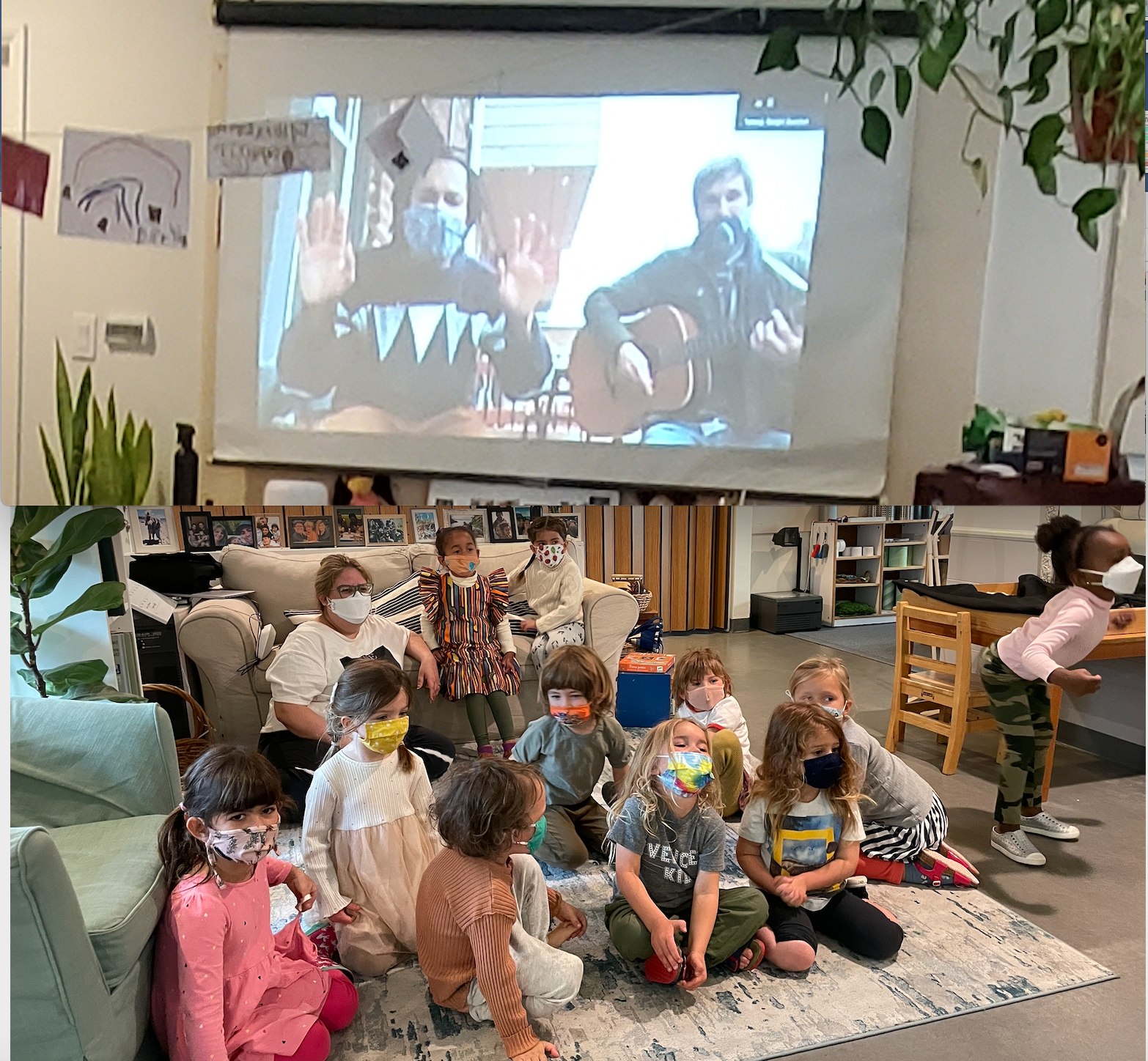
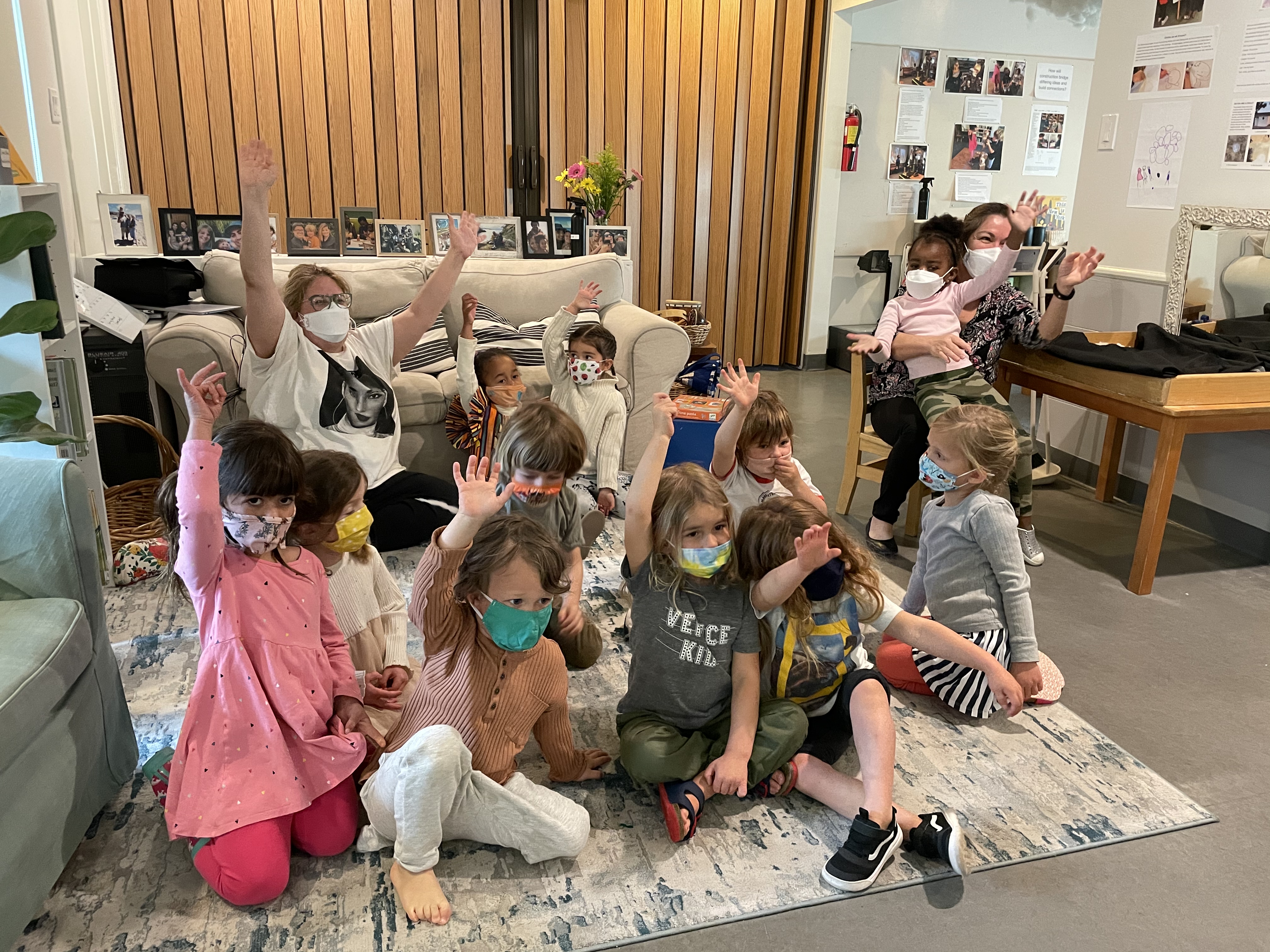
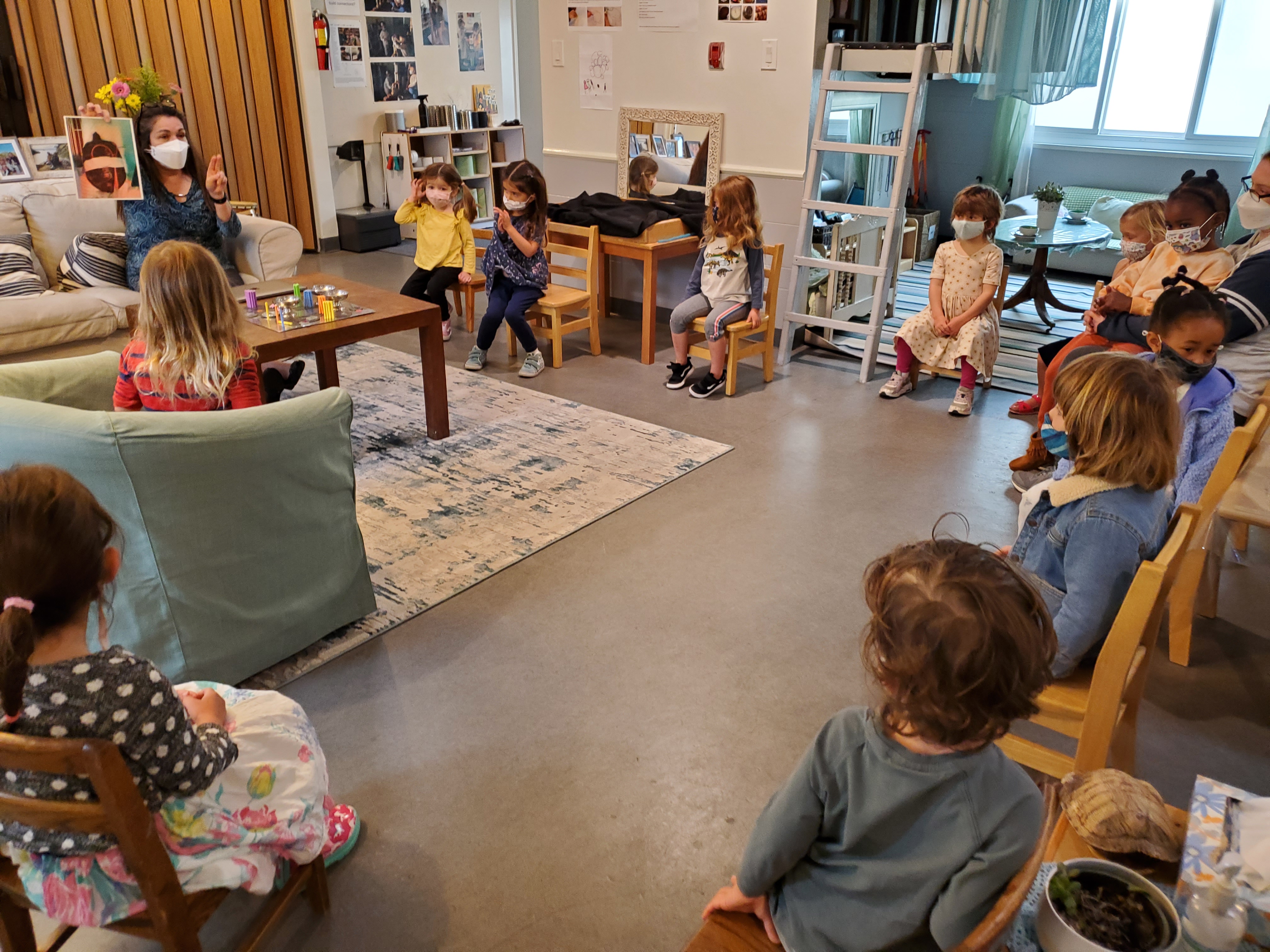
On Tuesday, March 16th, we celebrated Aminata’s 4th birthday! Happy birthday, Aminata! We pulled down our projector screen on our wall by the Communication Center, and we hooked up our projector to a laptop. We dimmed the lights and moved the magnet-stick table to create an open space on the rug for a special surprise organized by Mariama, Aminata’s mom. A Zoom jam session with her talented musical friend, Dwight Dunston! He is an awesome equity educator and trainer. He is also a part of a social justice children’s music group called City Love. The children moved to the rhythmic sounds with the beautiful message of spreading love, hope, dialogue, and justice. Our hearts, minds, and bodies fully enjoyed such a special treat! Aminata’s parents, Mariama and Garland, also sent us a recording of them reading the book Same Difference by Calida Garcia Rawles, a children’s book that recognizes the beauty in us all. After finishing the book, we all sang “Happy Birthday!” Thank you to Mariama and Garland for reading us the story — and for the amazing special treat of inviting “D-wight!’ Attached are links to enjoy the musical gifts of City Love.
Cilantro
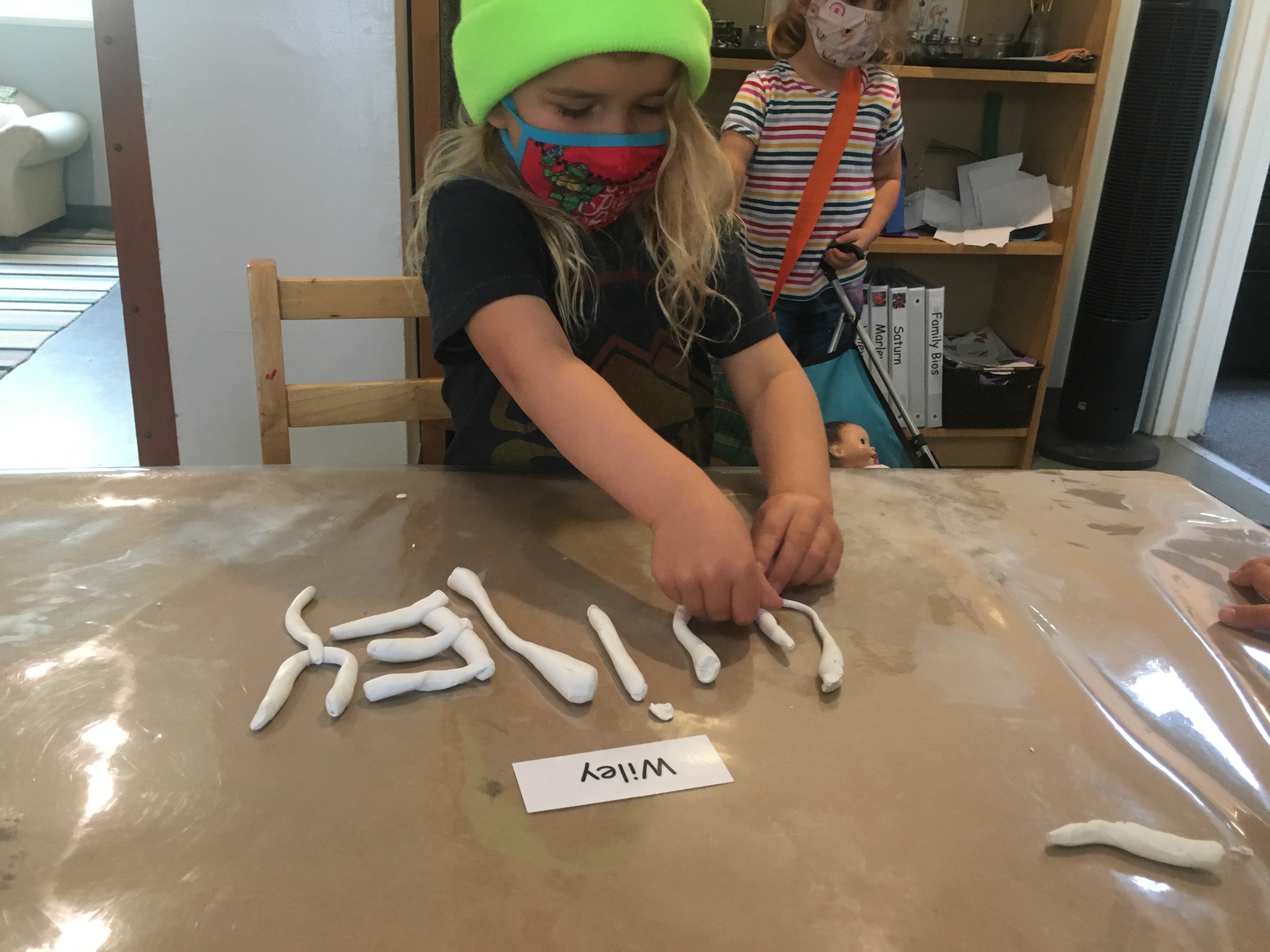
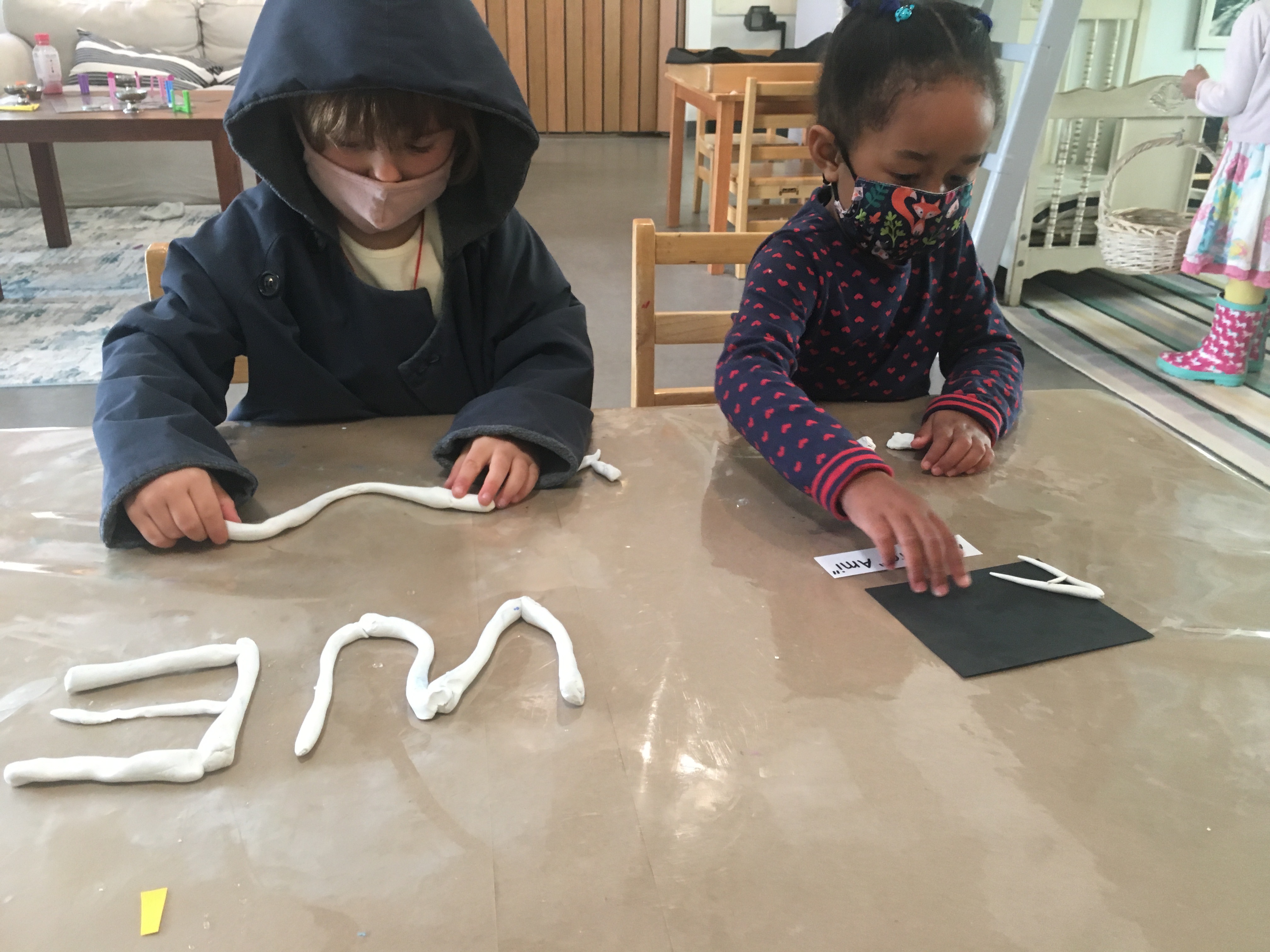
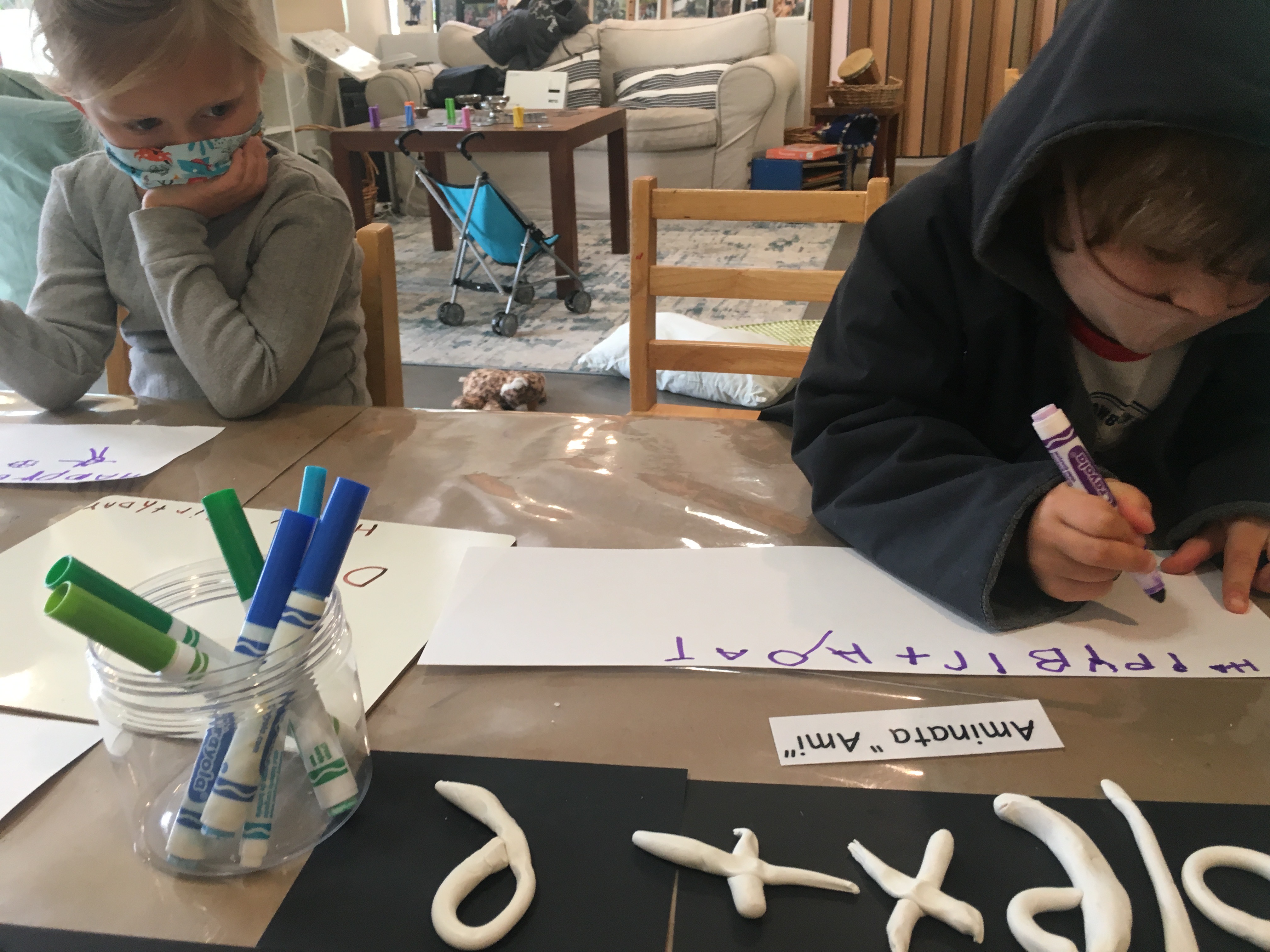
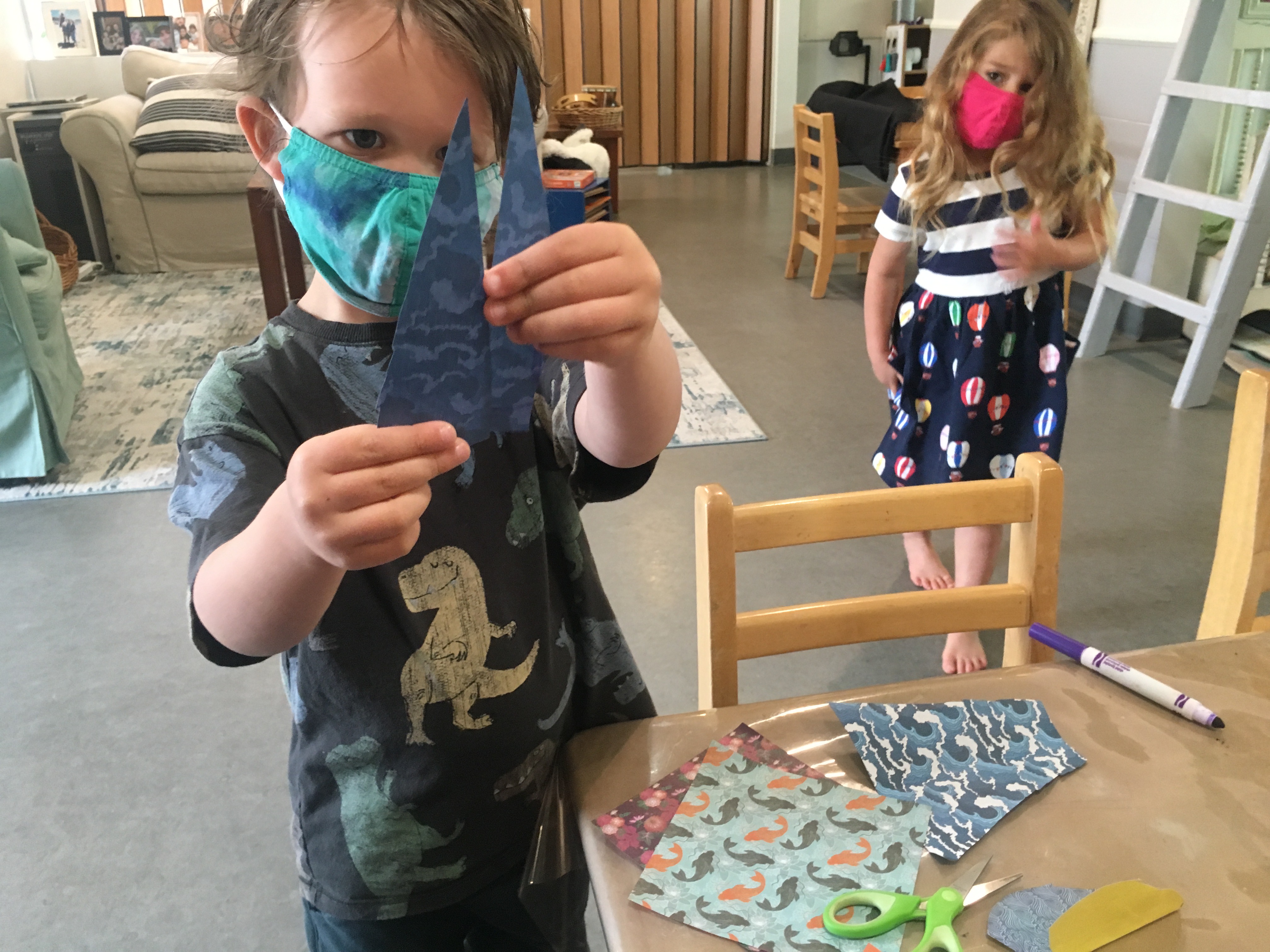
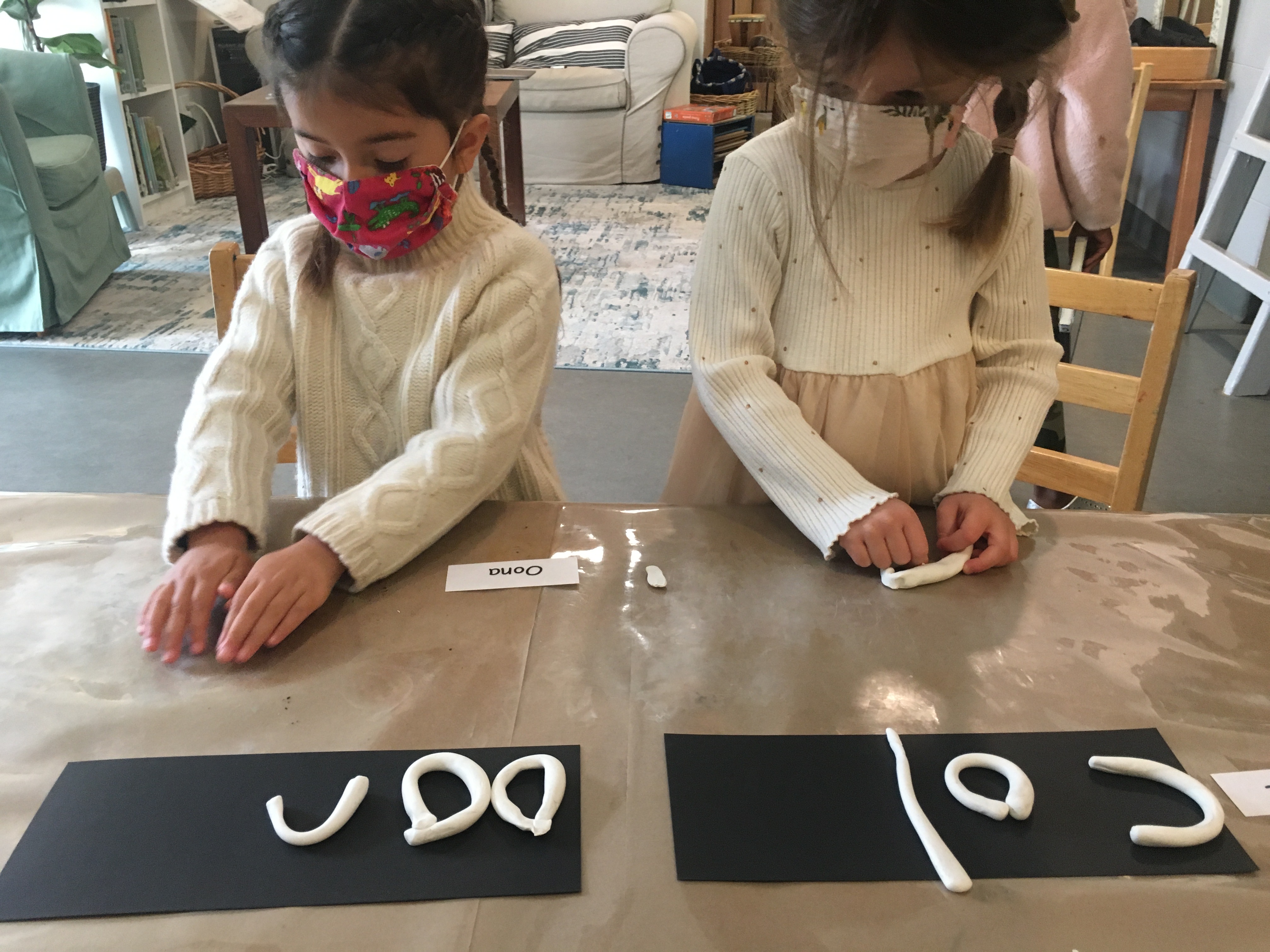
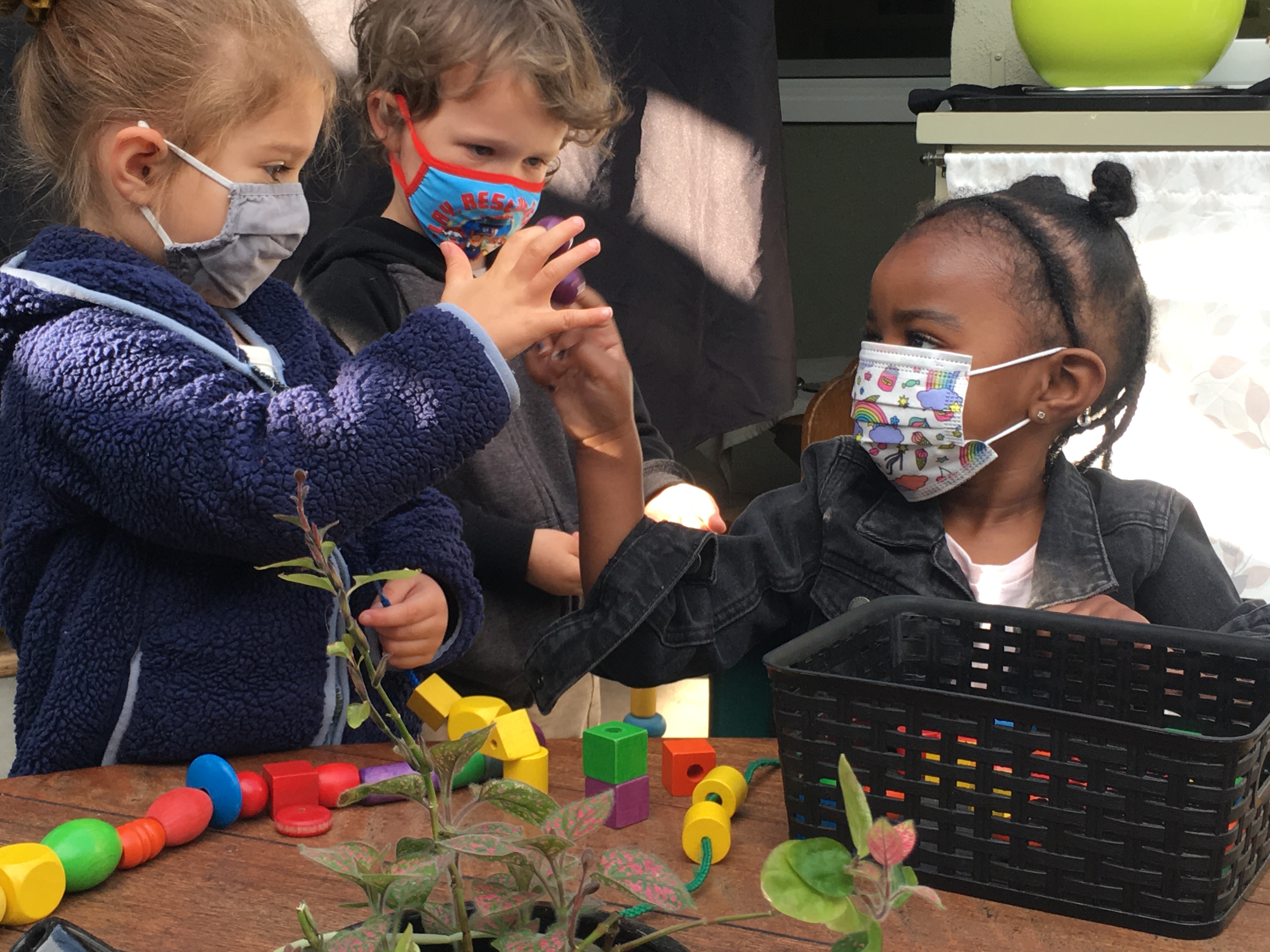
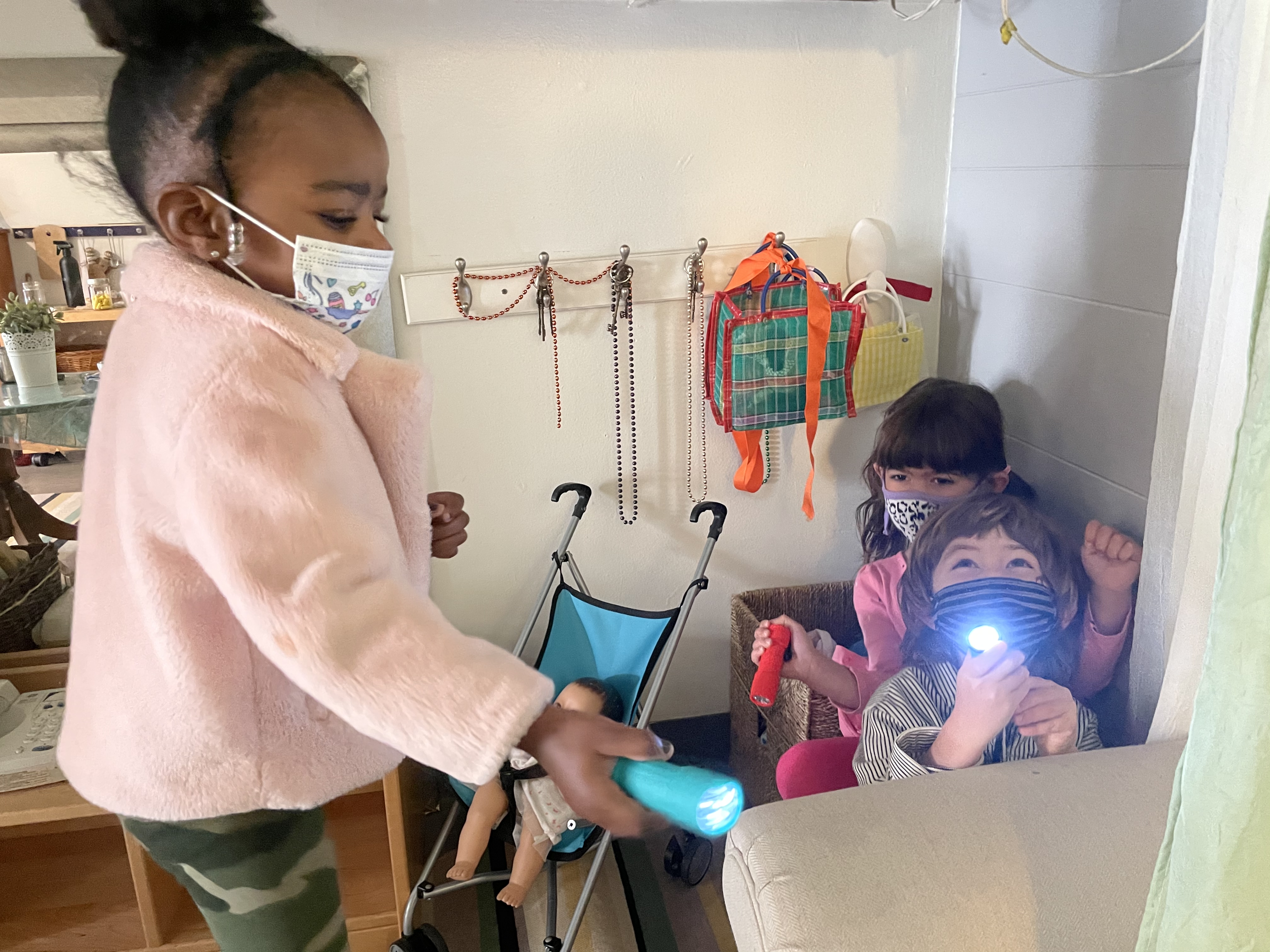
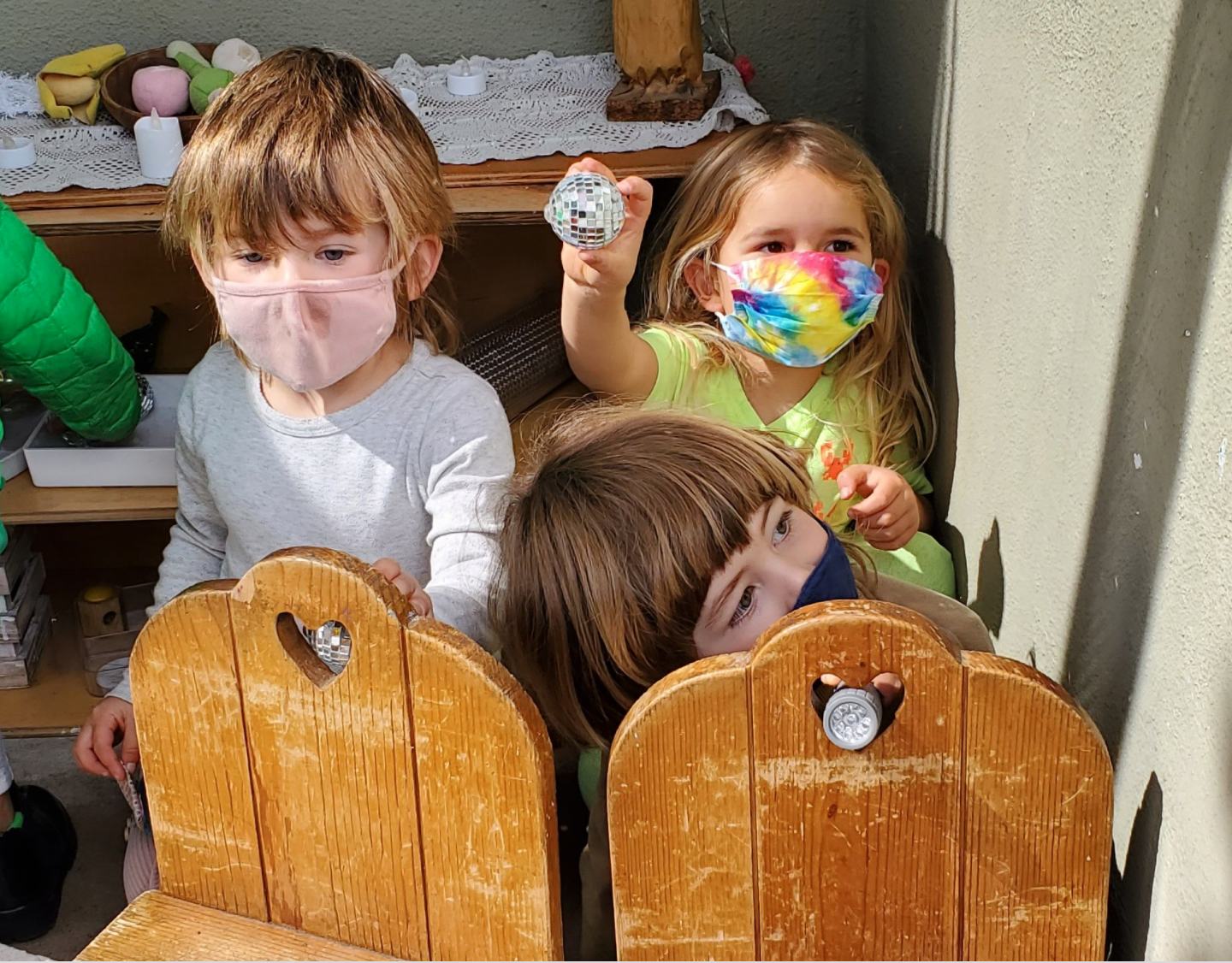
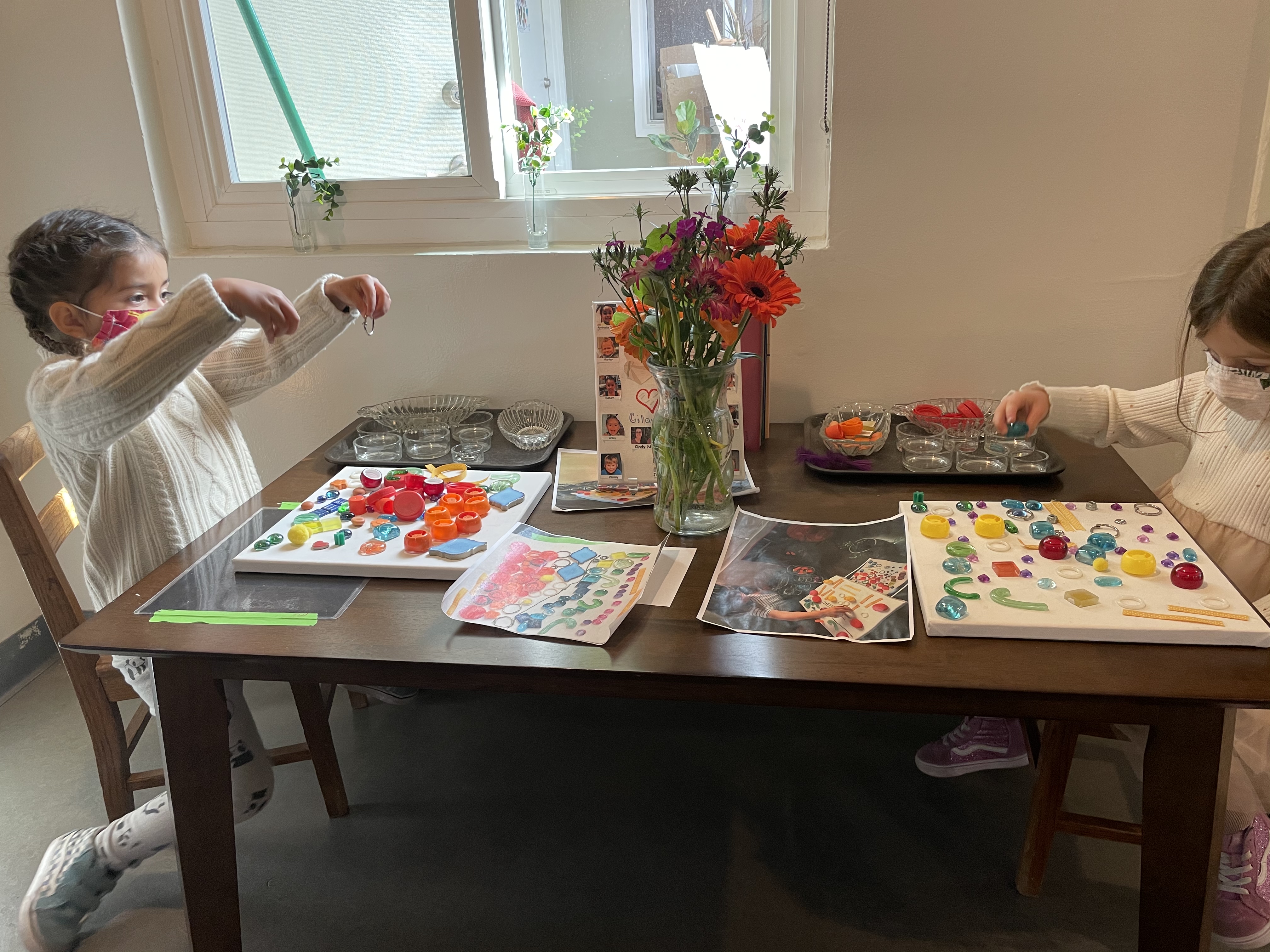
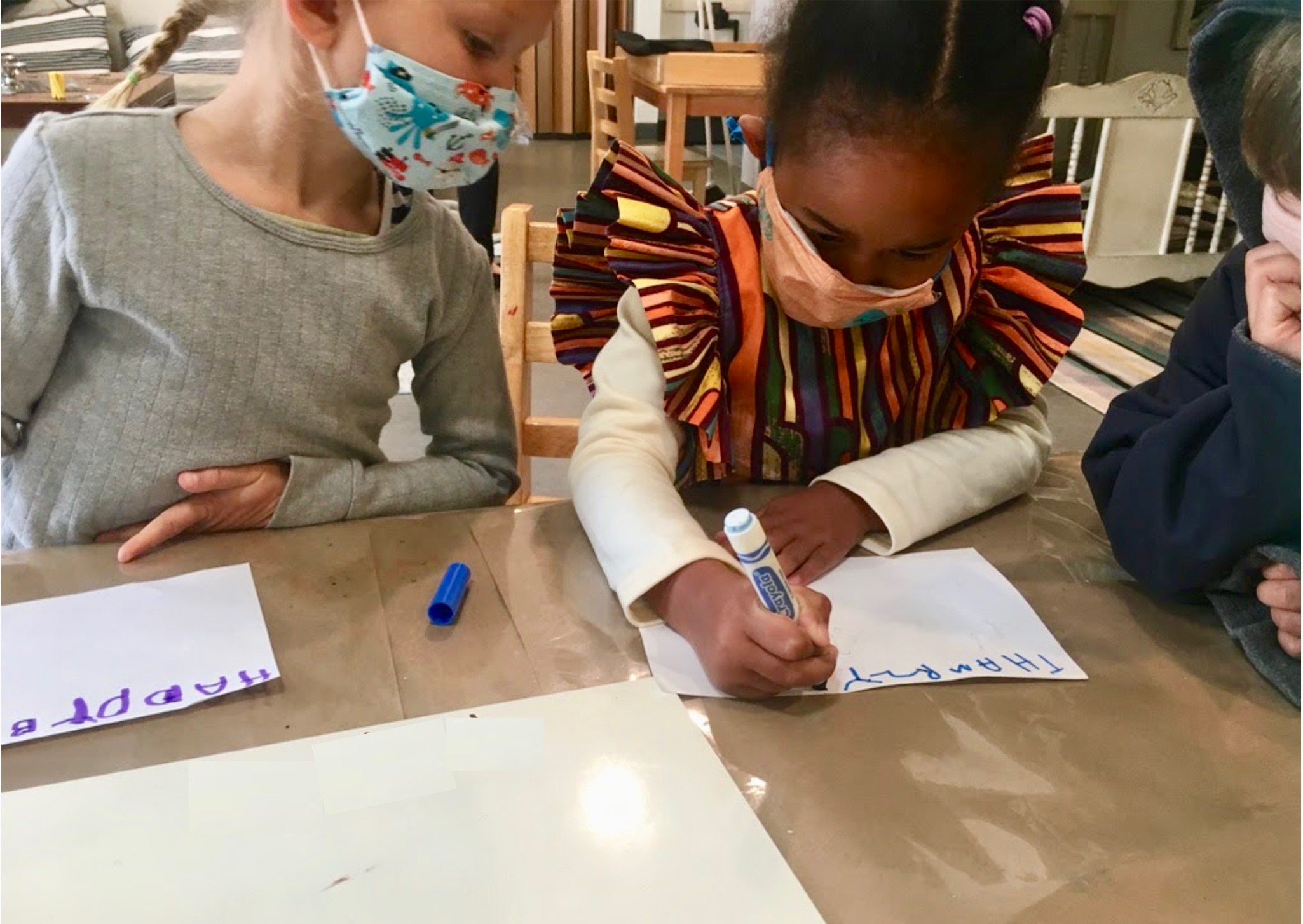
Inside the Communication Center, we have been discovering lines in different mediums as a precursor for letter writing. This week the children worked with the possibilities of sculpey clay to create letters for their names. At first, the children used the clay to roll “snakes,” and then began to notice the different lines the sculpey clay could be shaped into.
Wiley: Look! I turned it into a U.
Silvana: Wiley, your name starts with ‘W.’ Get it double-U!
Wiley: Oh, teacher Silvana, you’re so funny.
Leo: Wiley, you only need one more line to make a W.
Wiley: Yeah, I need it in the middle. Look, it’s a ‘W!’’ Now I have W-I-L-E-Y, Wiley!
Working with clay empowers children to think, investigate, and explore at their own pace. Our hands listen, they observe and manipulate, they work the clay with palm and fingertips, shaping it in different ways with alphabets of plasticity (Reggio Children –In the Shape of Clay).
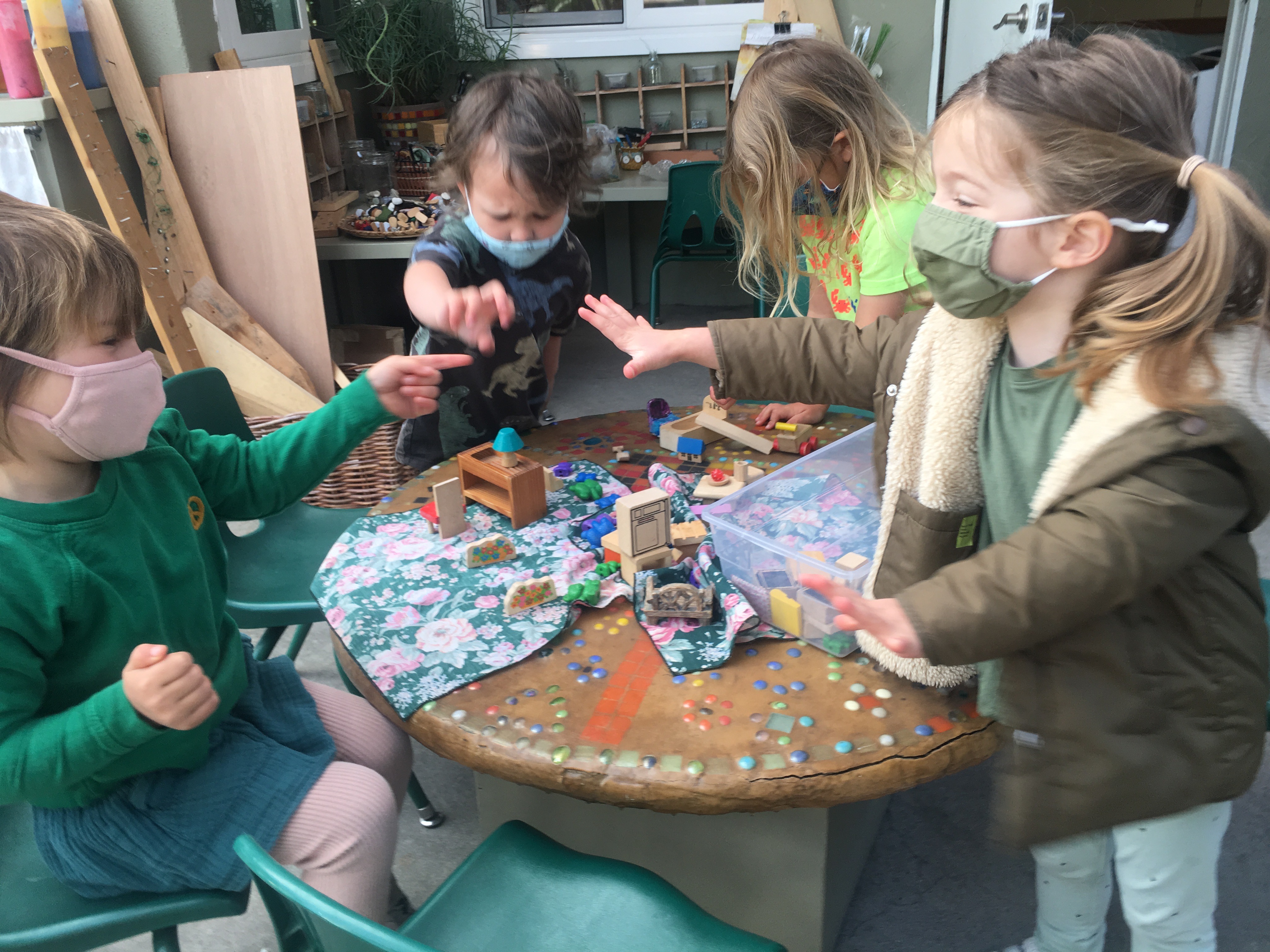
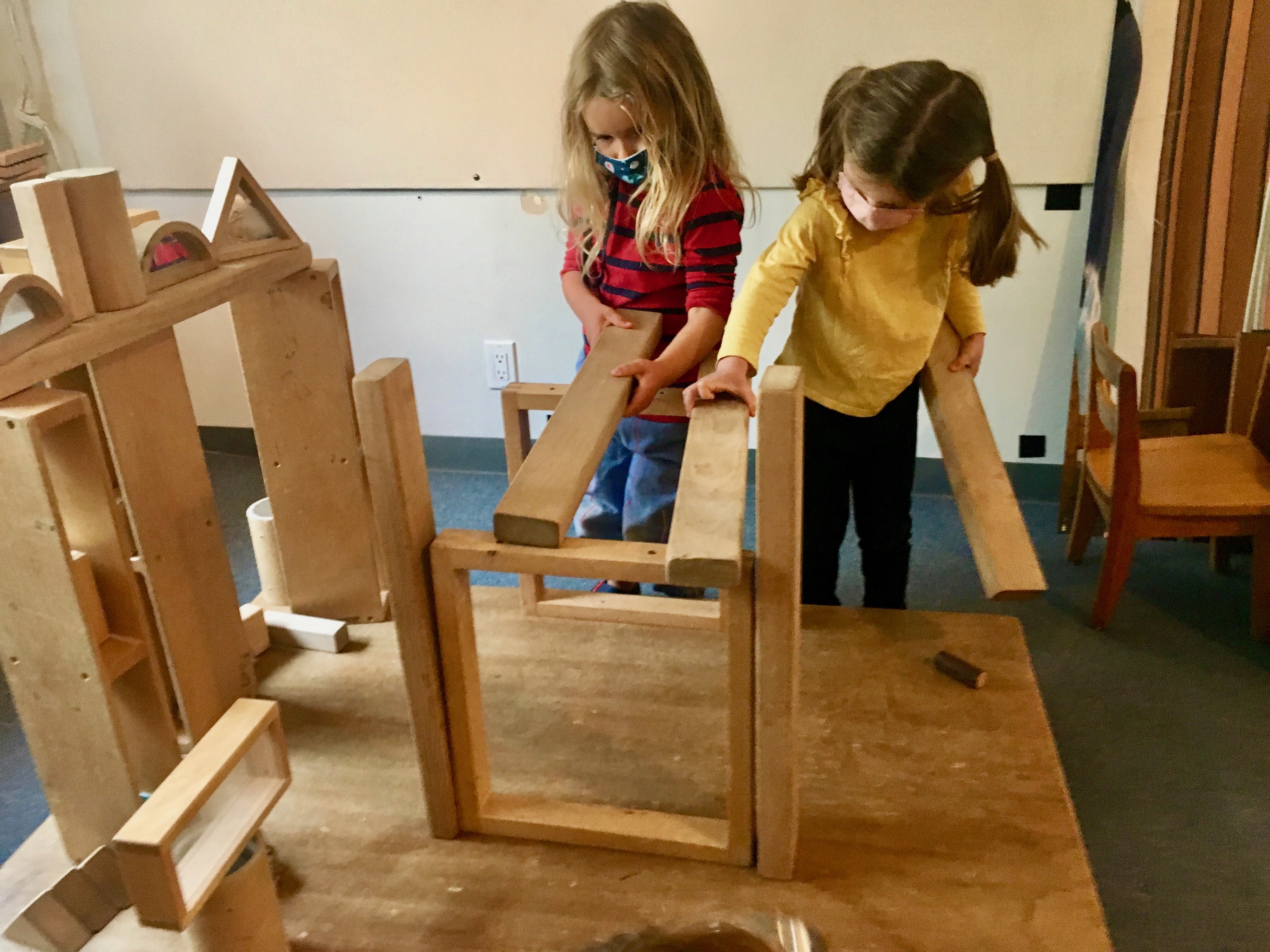
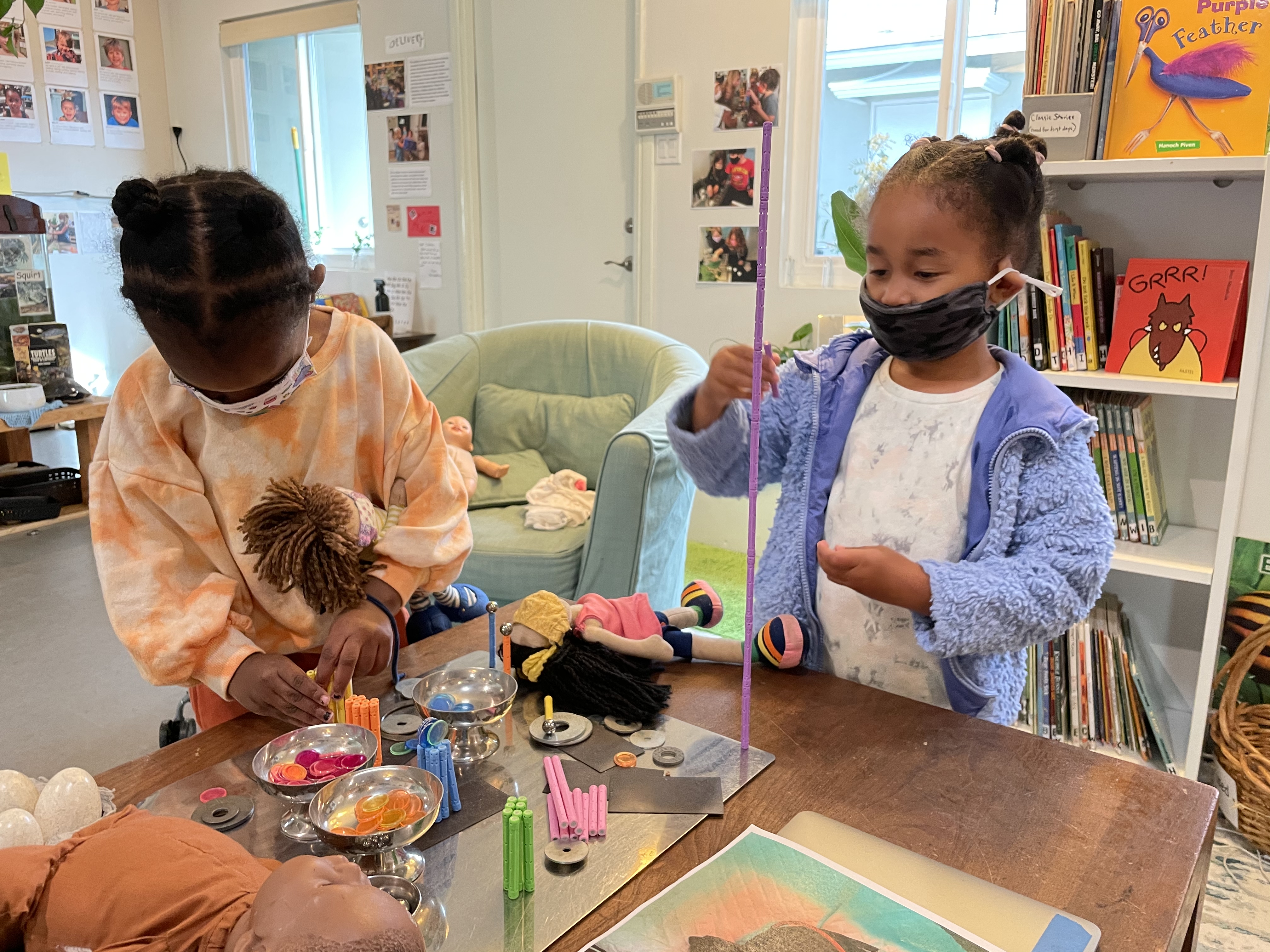
In the Building Space, the children have been constructing enclosures around the border of the platform to prevent imaginary ‘bad guys’ from coming in their structures. This week, contraptions for the Big Bad Wolf were created. There were many opportunities to negotiate about placement in relation to the structure and their bodies. As the children began making enclosures, Colette removed parts of the border.
Leo: Stop that, Colette.
Emme: Oh no guys, quick, now the Big Bad Wolf is going to get the bears.
Colette, pointing to the now open space where she removed blocks: This is to get out.
Leo: But then the Big Bad Wolf will eat the bears and come get us!
Colette continues to remove the blocks and the group tells her no. Silvana observed an opportunity to support them in their discourse and find ways to understand each other’s thinking.
Silvana: Colette, you gestured in this area to get out. Can you tell us more about that?
Colette, removes blocks from another space and demonstrates with her body: This is the way in. And this is the way out.
Wiley: For the bears?
Colette: No, for us. We’re still building.
Silvana: Oh, part of the enclosures are too tall to step over. Are you trying to create space to move in and out of the structure?
Colette: Yea.
Leo: Okay. Leave that space open to get out and that space to get in.
The children continue with their narrative and construction of the structure. At the end of the appointment, Silvana asked the group:
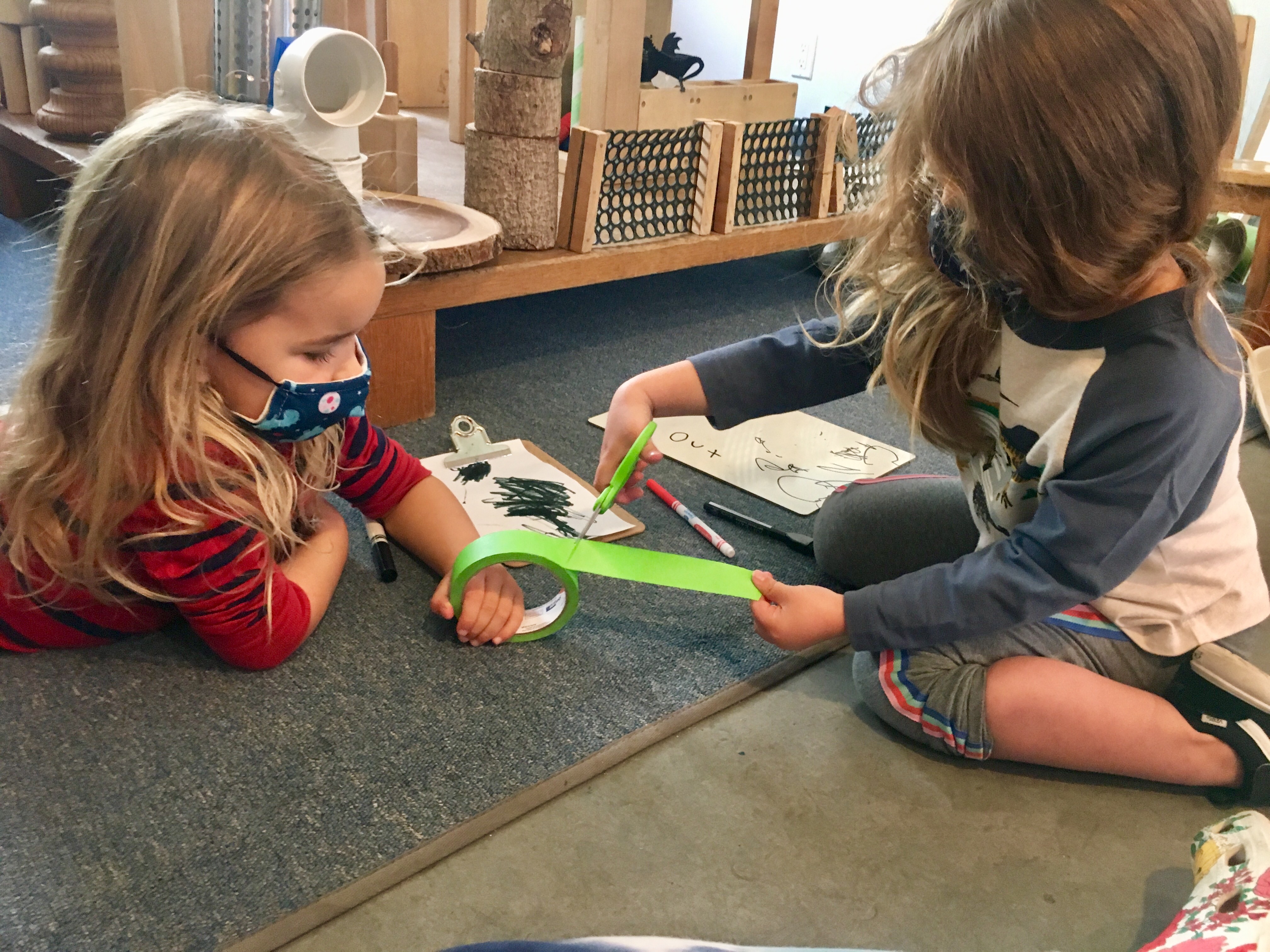
Silvana: How will the next group know there’s an in and an out?
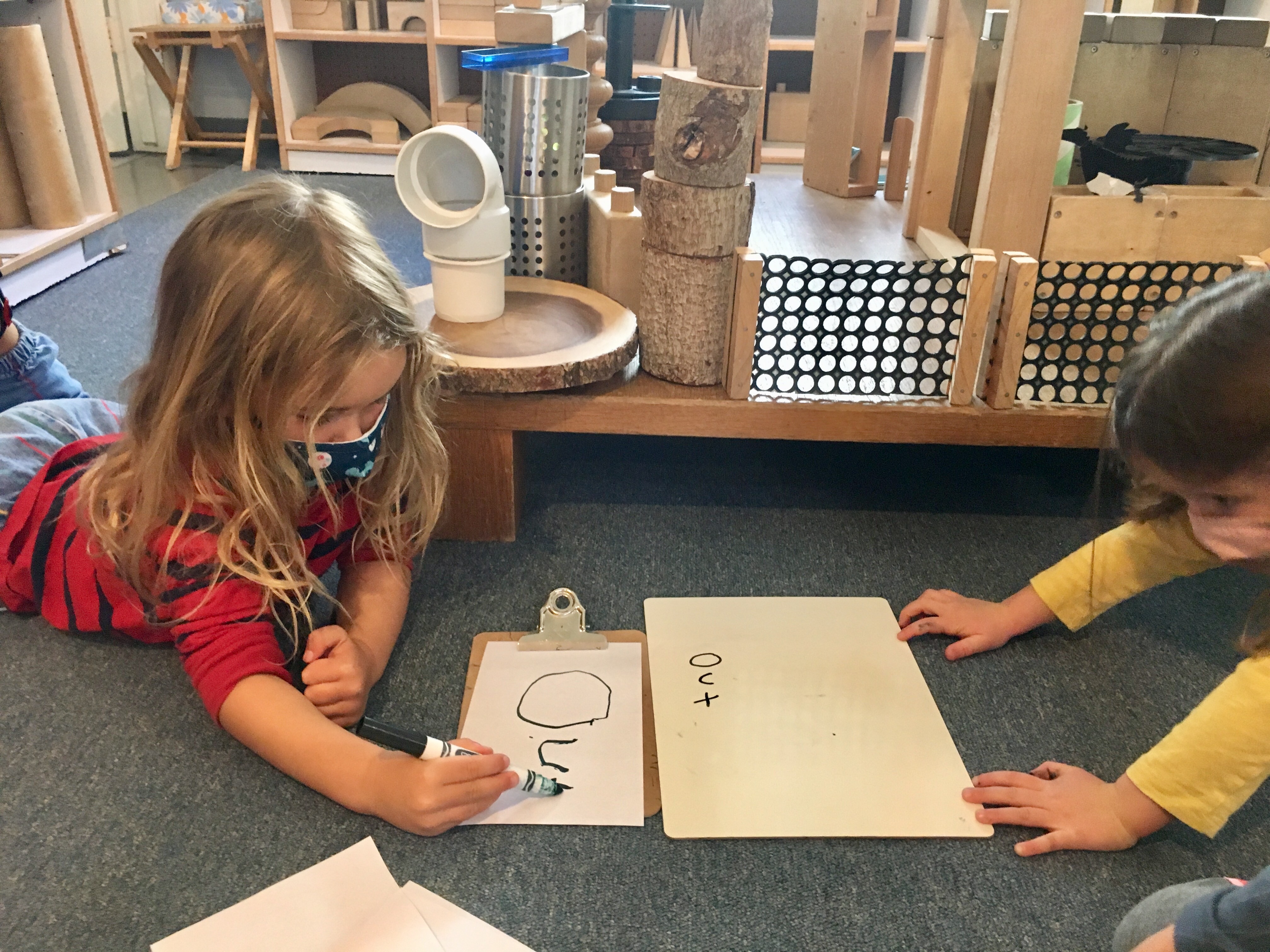
Wiley: How do you spell out?
Emme: We need tape.
Experiences like these show the value of communication. Communication becomes possible when we’re able to realize what we want communicated and how it will be understood by others. Once a common understanding is shared, it’s easier to stretch out our ideas to make room for others.
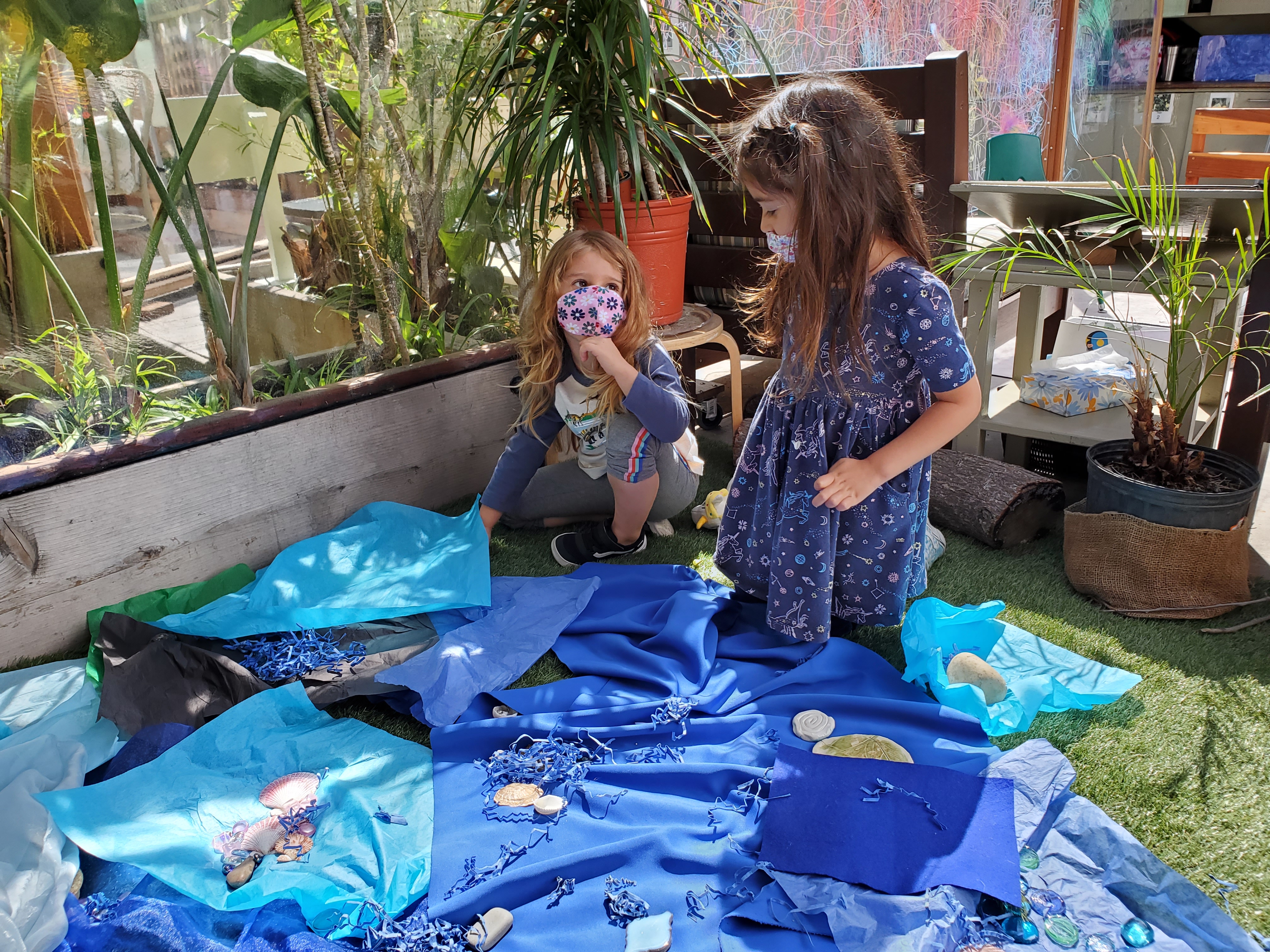
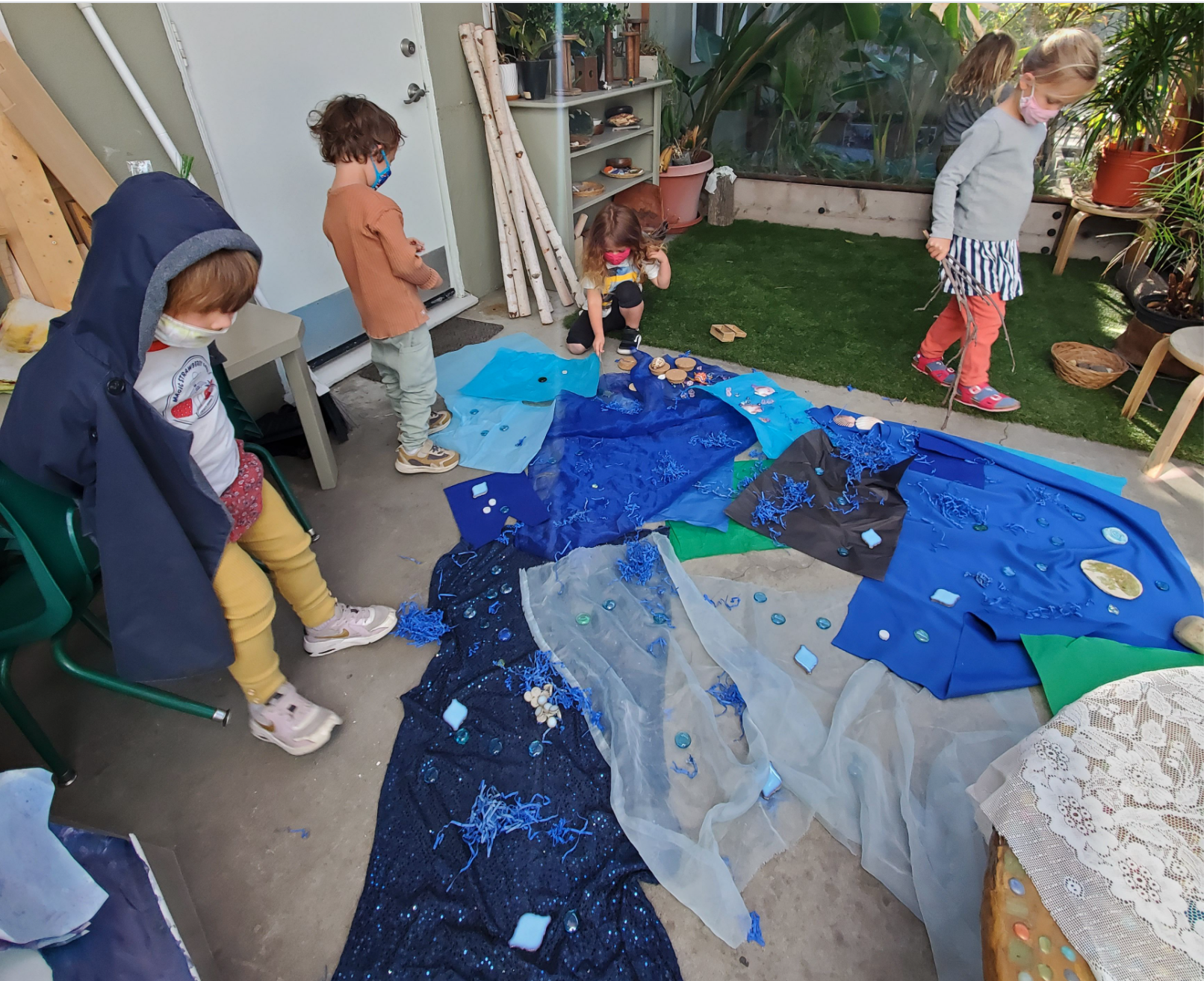
A group revisiting their painting of the ocean played out their ideas on a larger scale. Working with a variety of textiles, shells, sea glass and wood, a deep dark ocean with white splashy waves and blue water flowed into the Middle Courtyard. Kris, our Pedagogista, worked closely to gather rich inquiry-based threads. Her reflection of the experience is posted on the blog titled Pedagogy of Play. It’s a new energized beginning to our intentional teaching practice! Attached is the link:
Dandelion
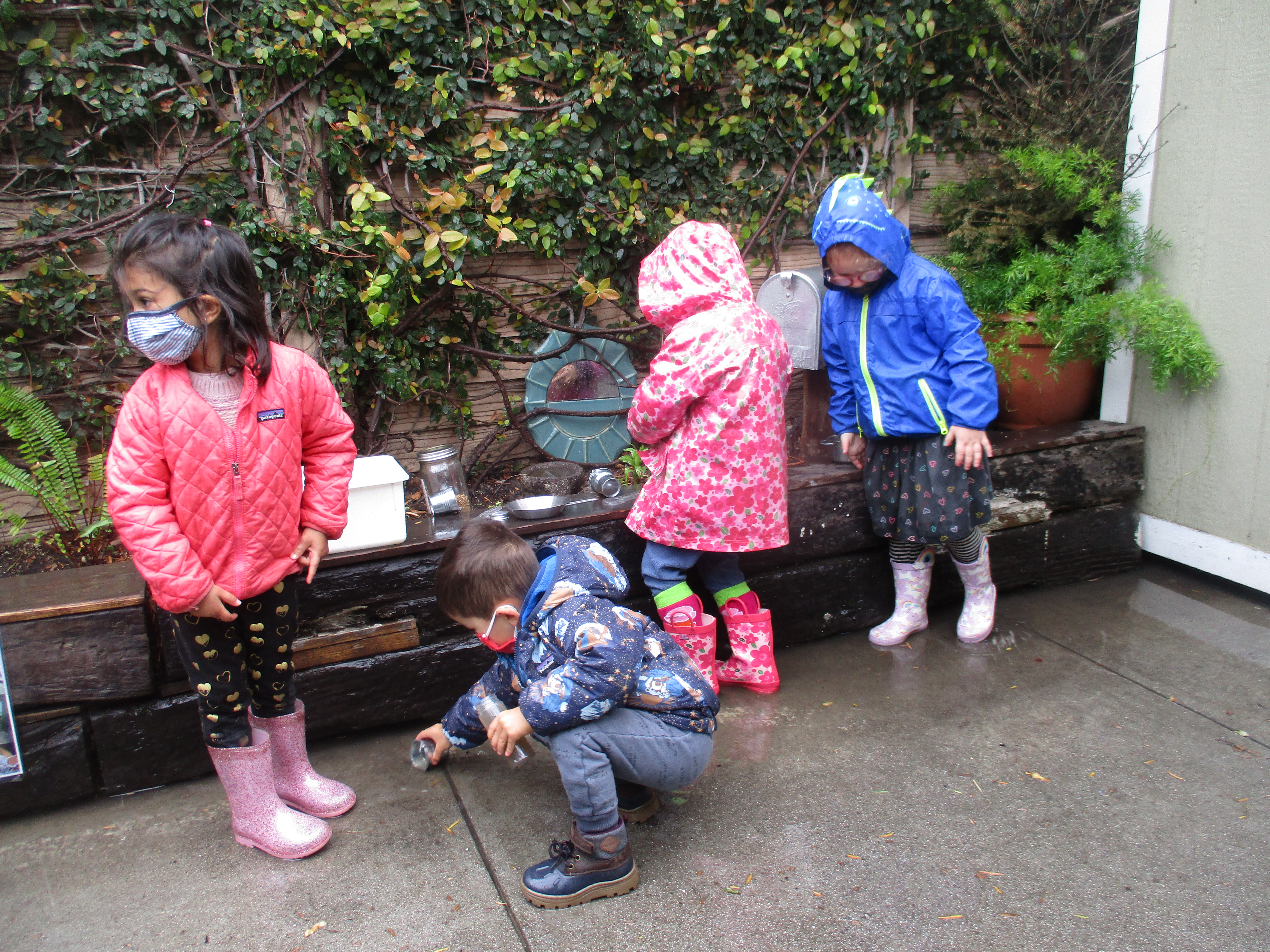
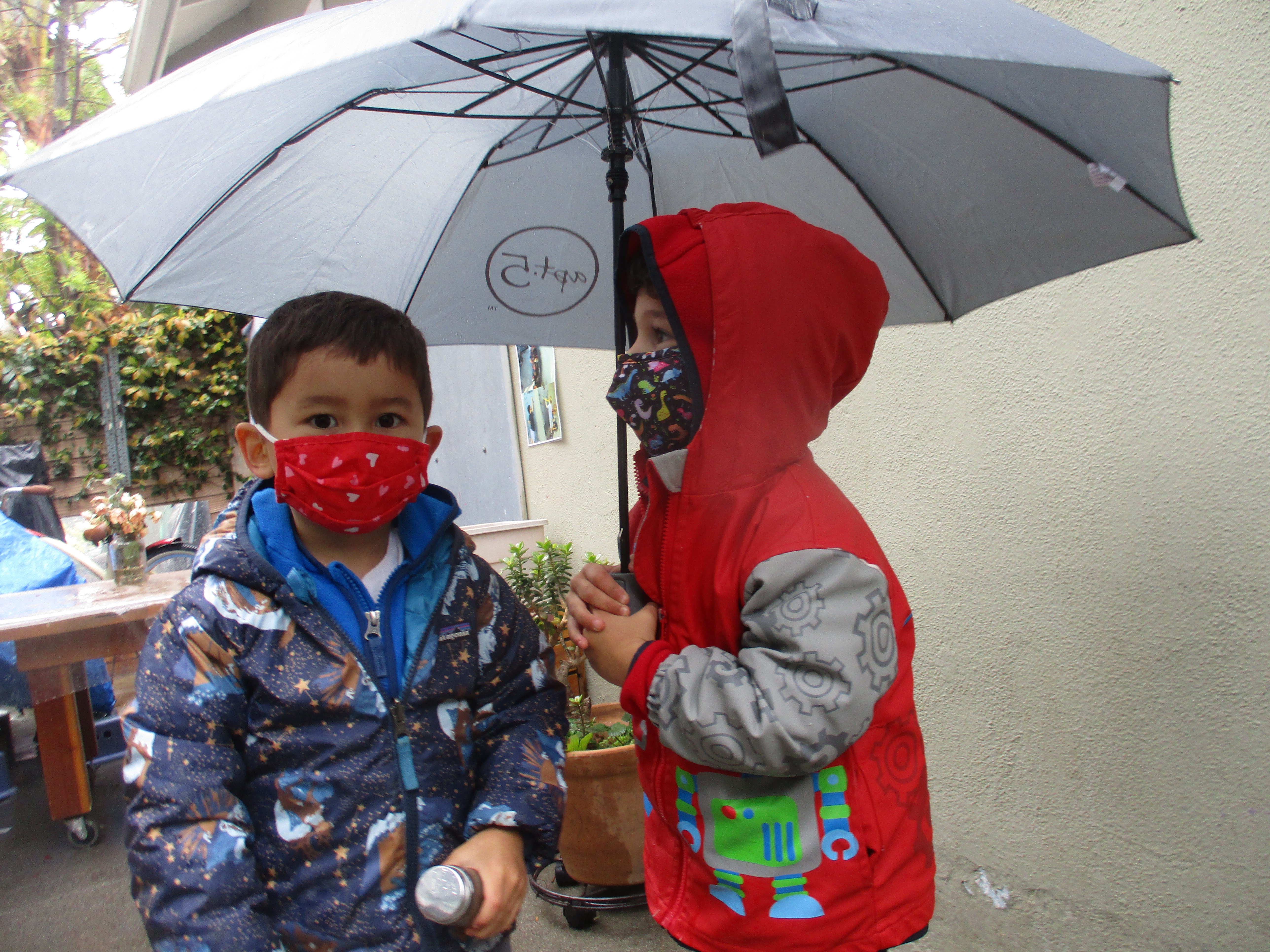
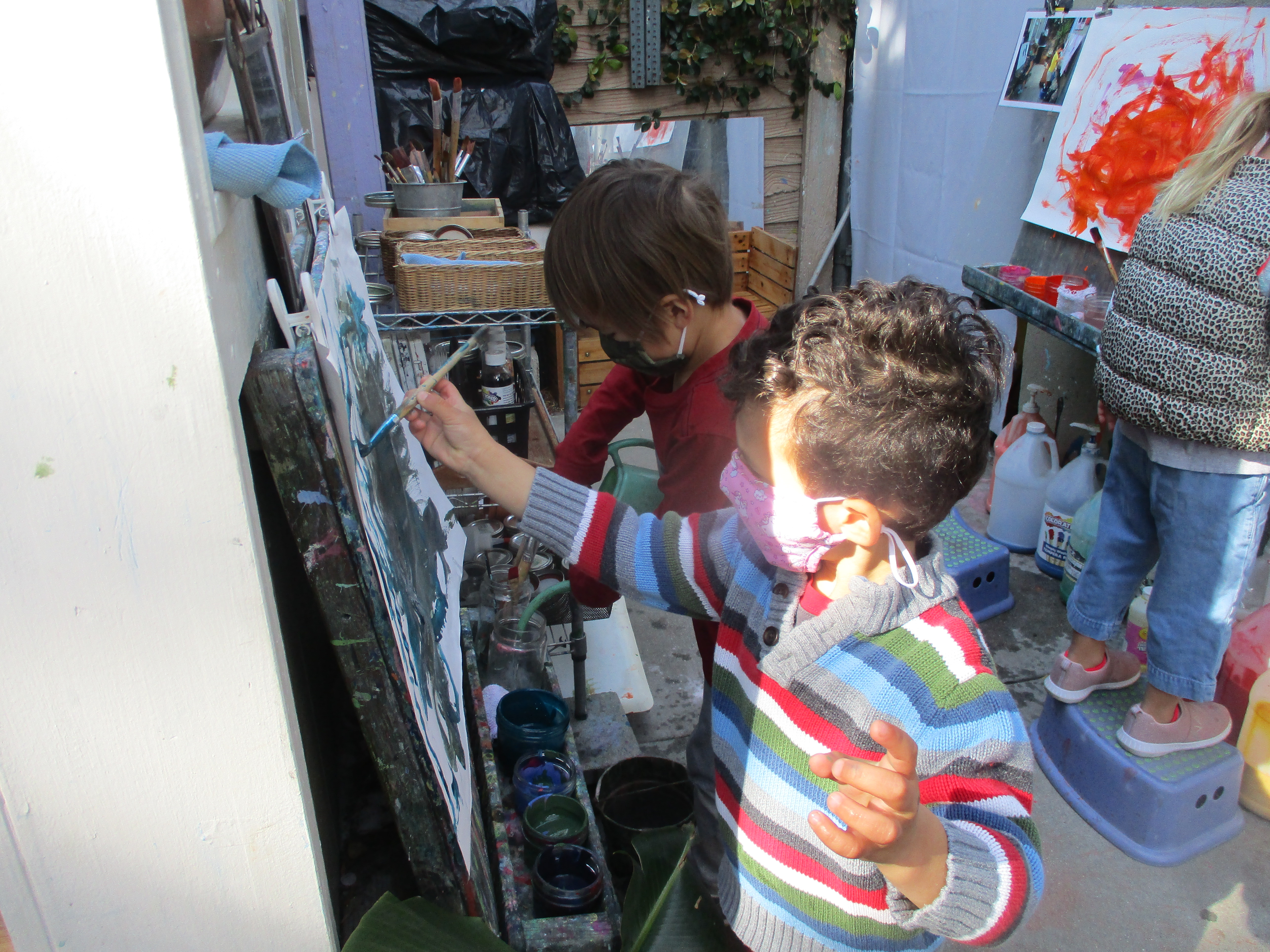
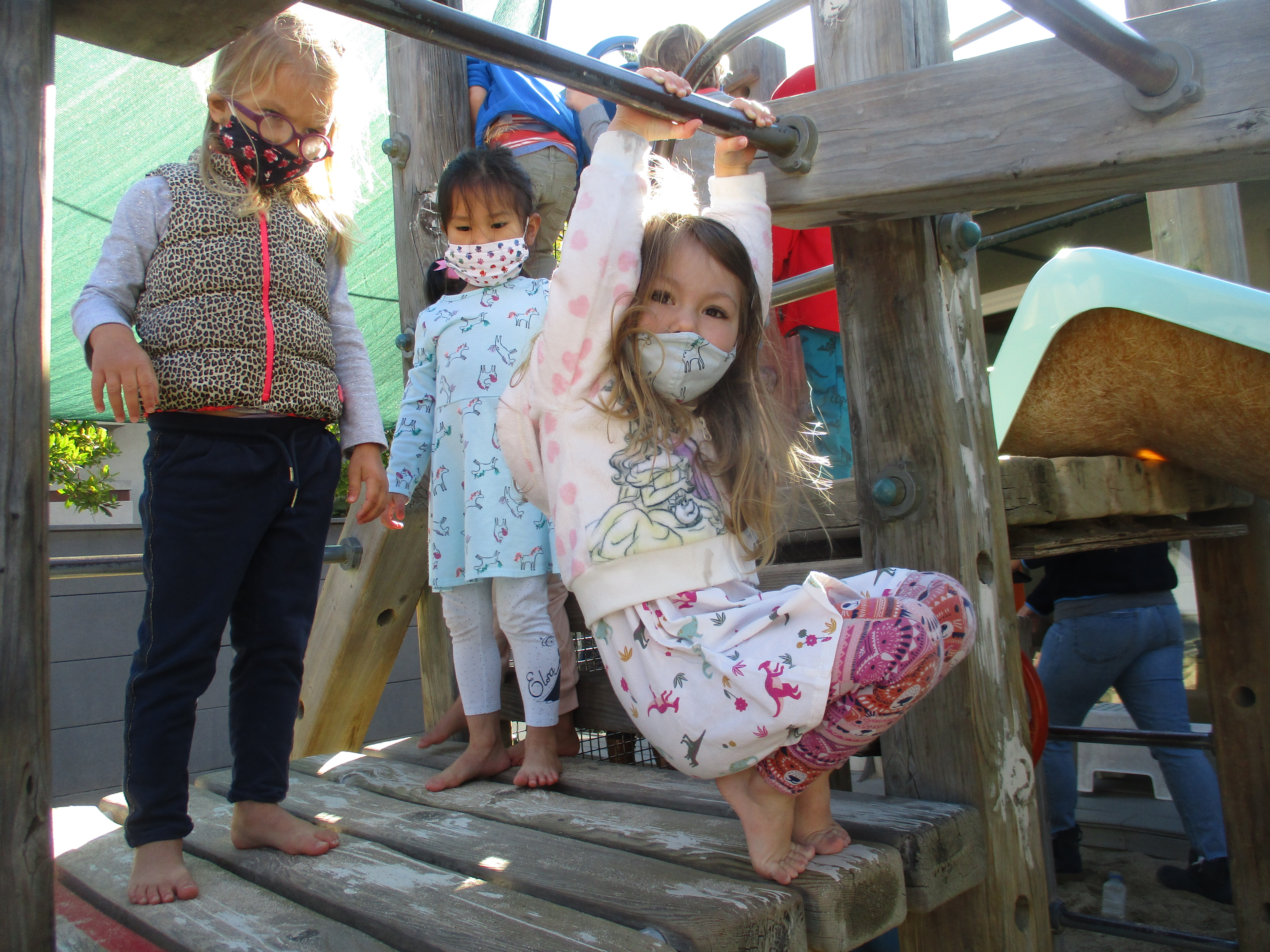
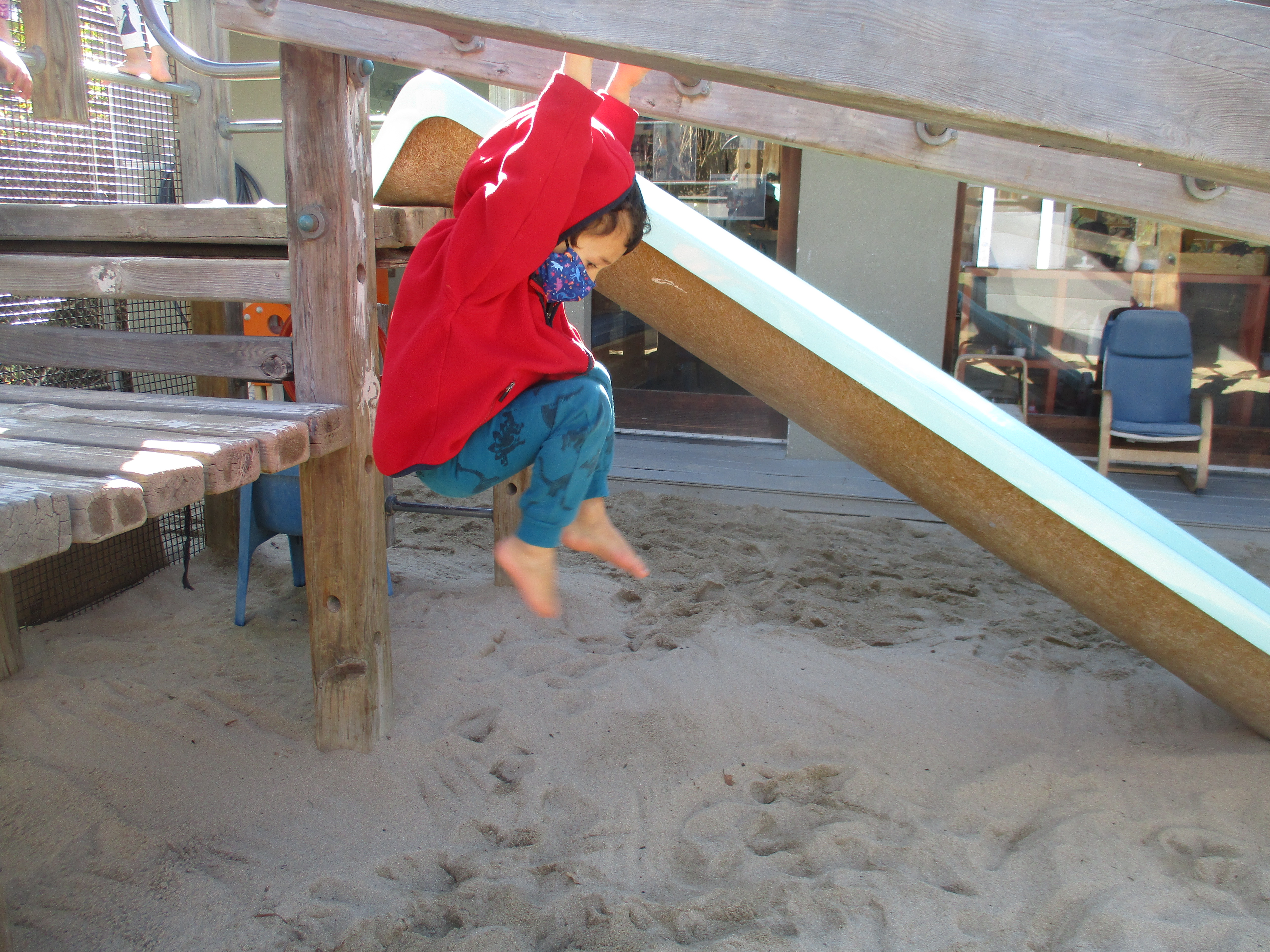
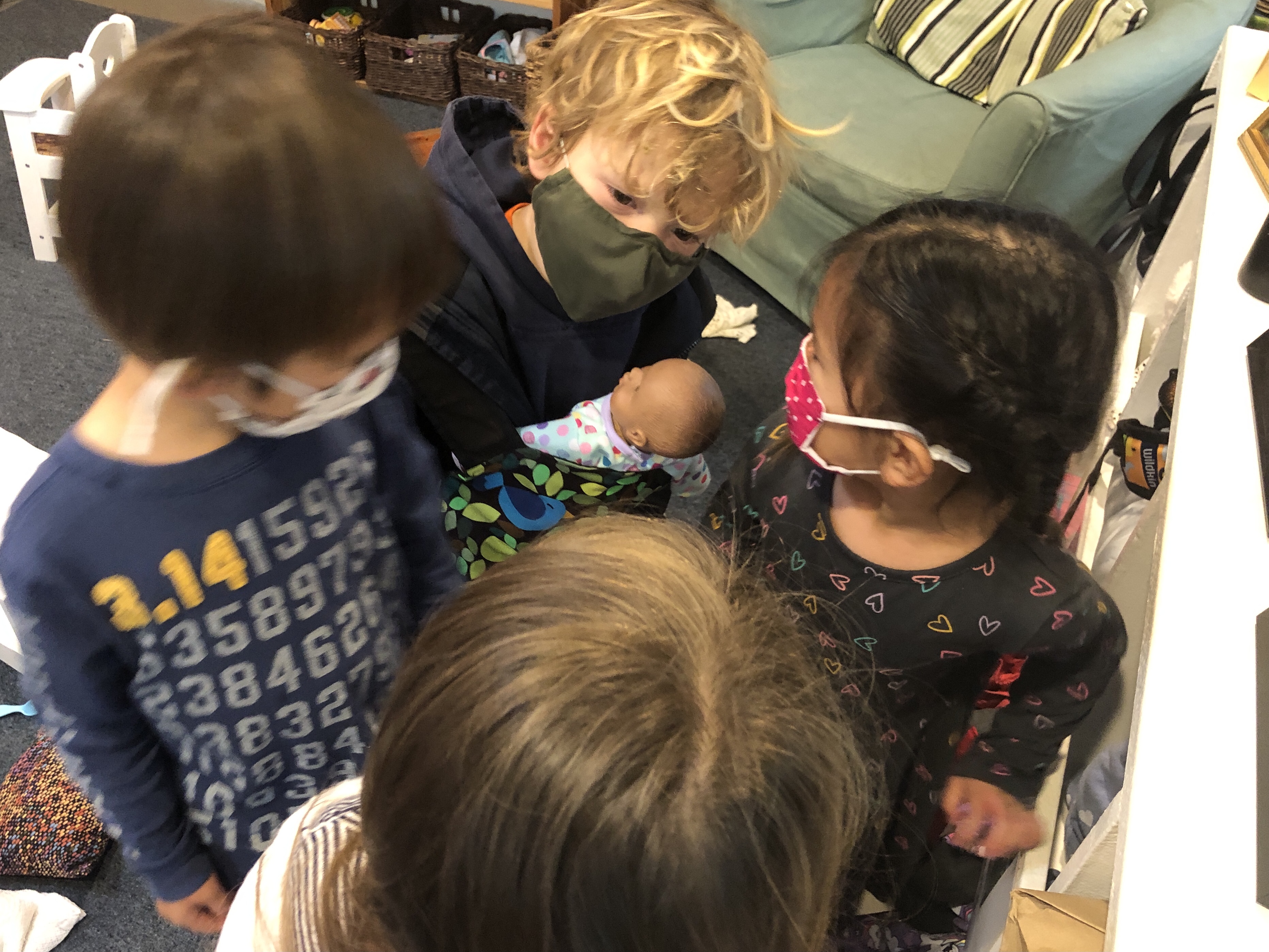
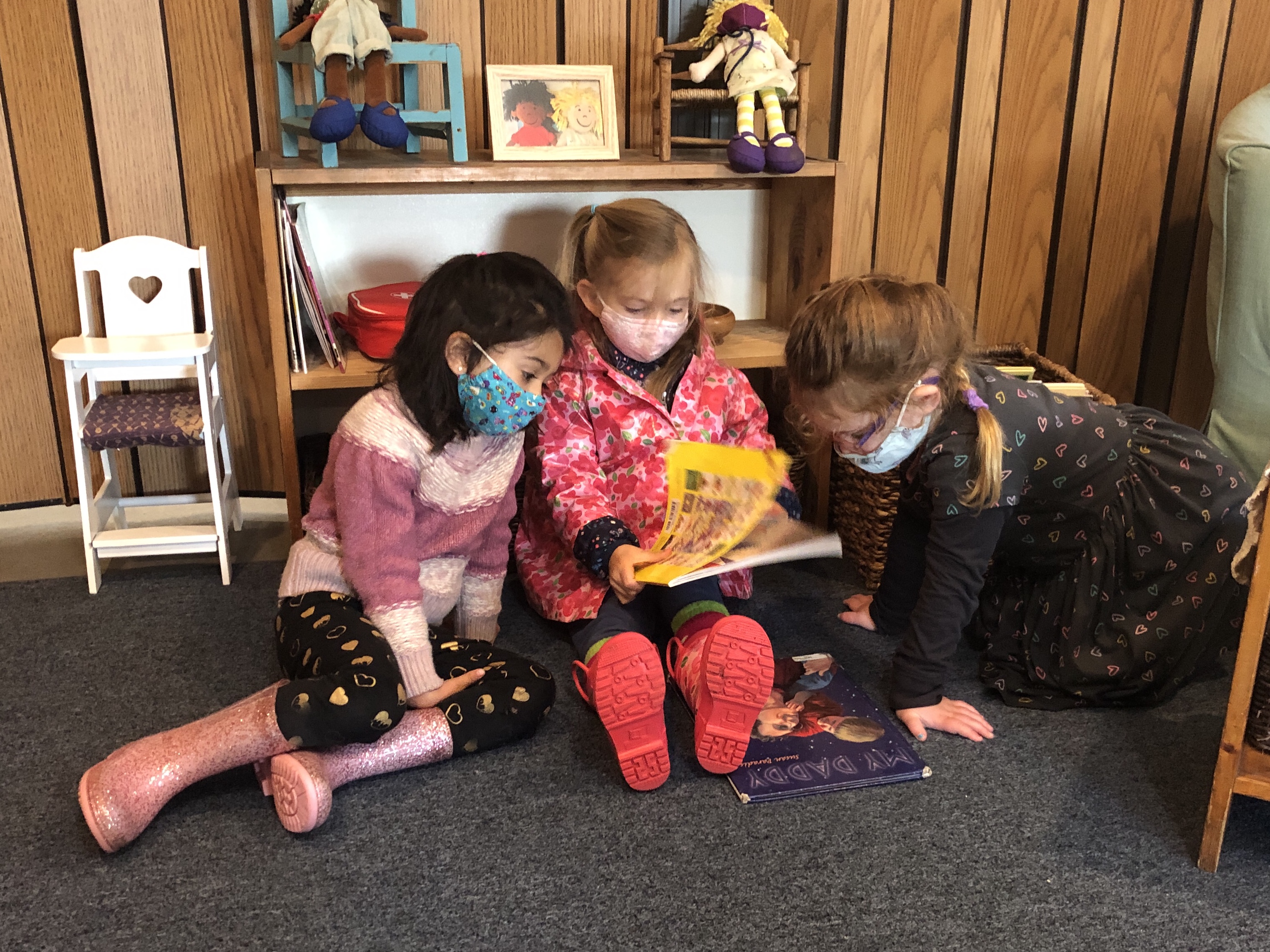
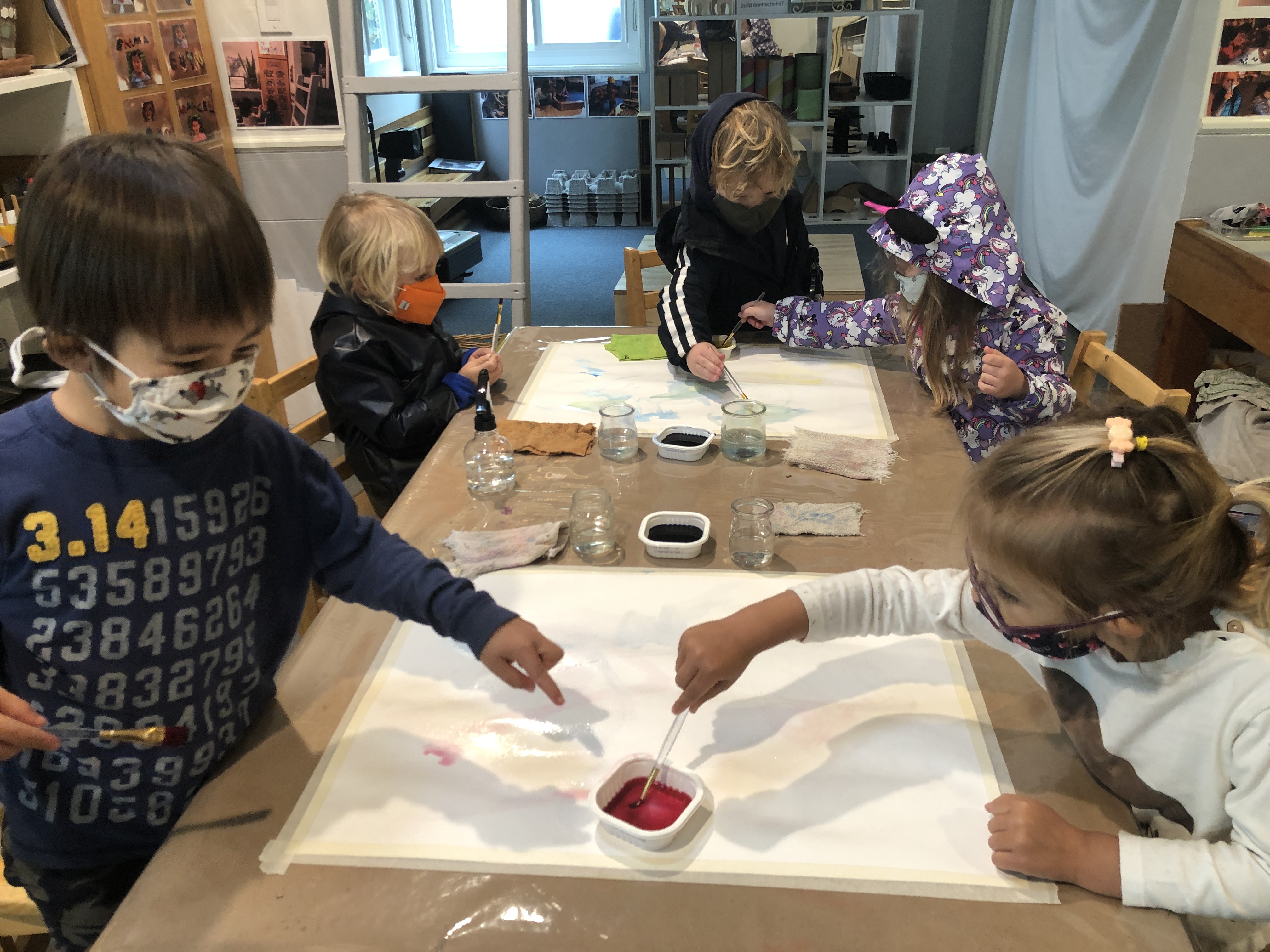
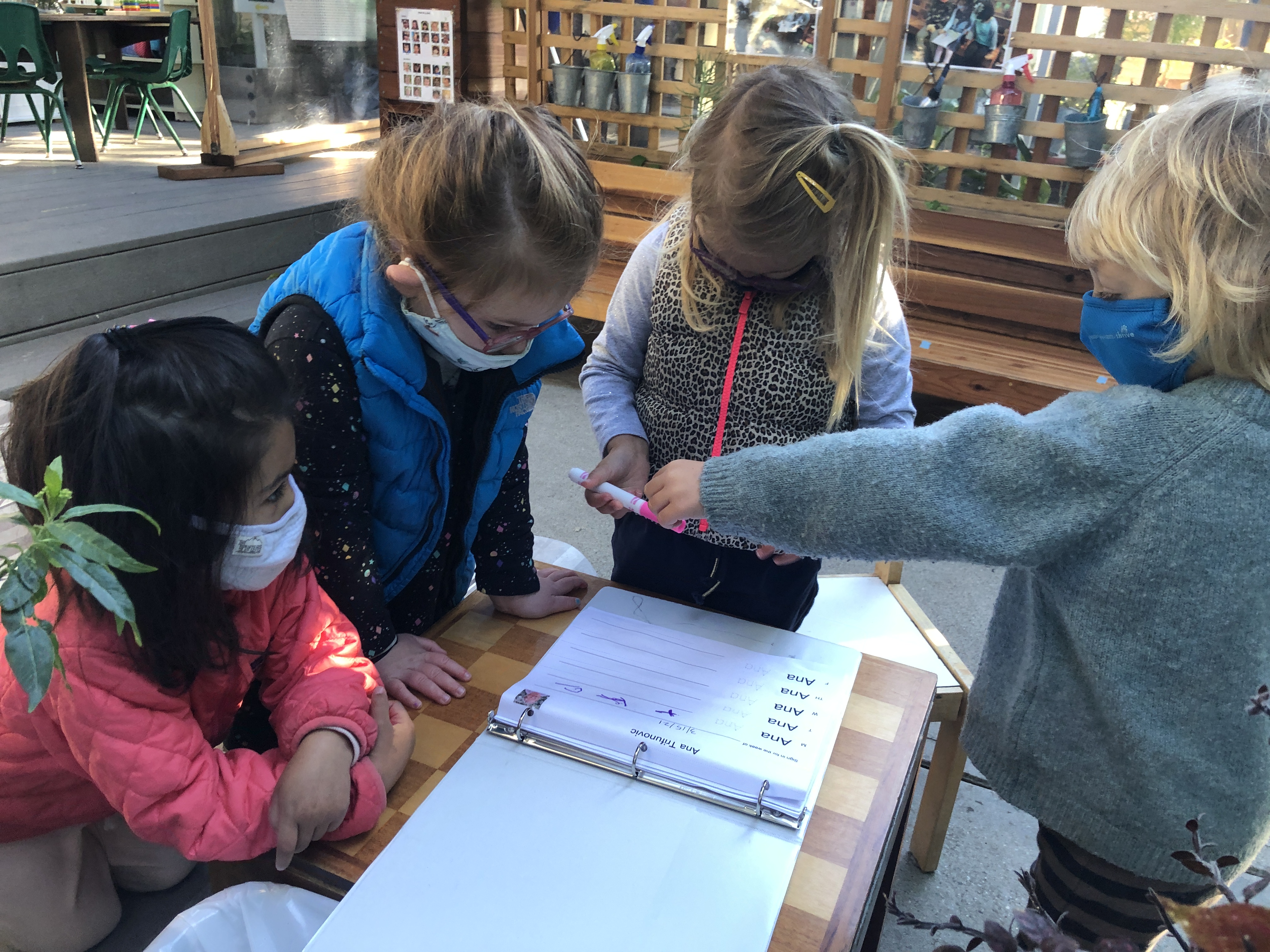
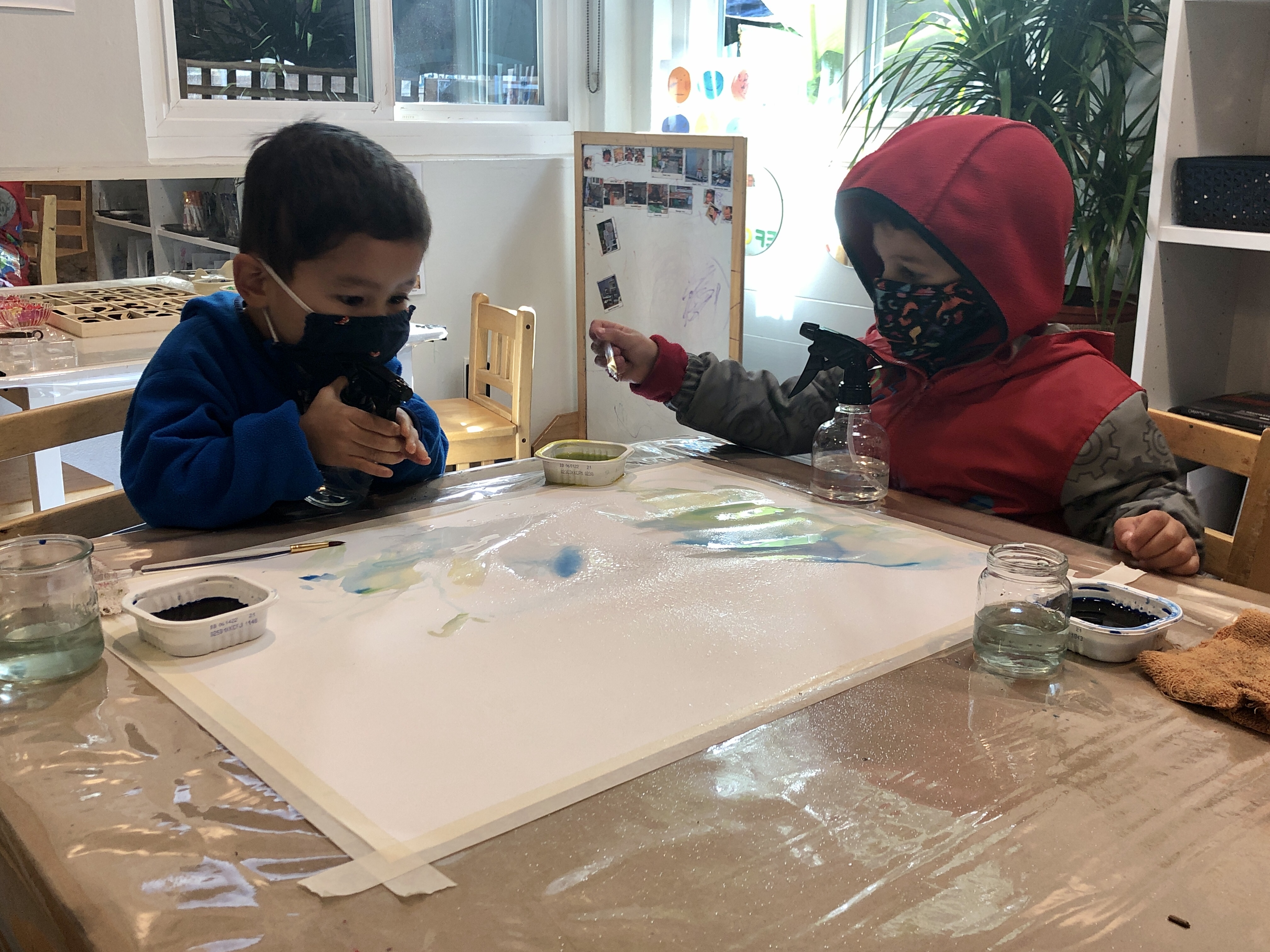
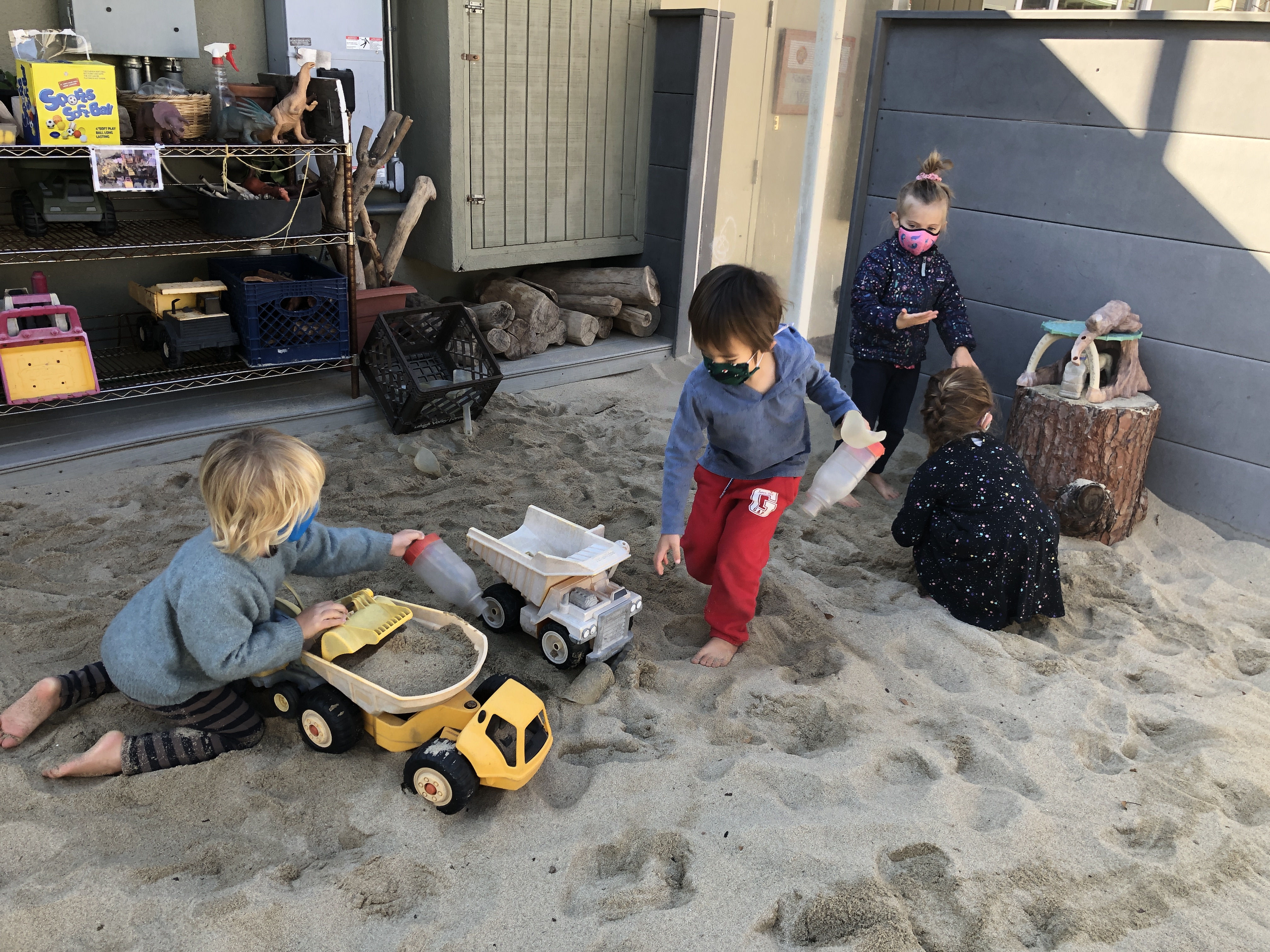
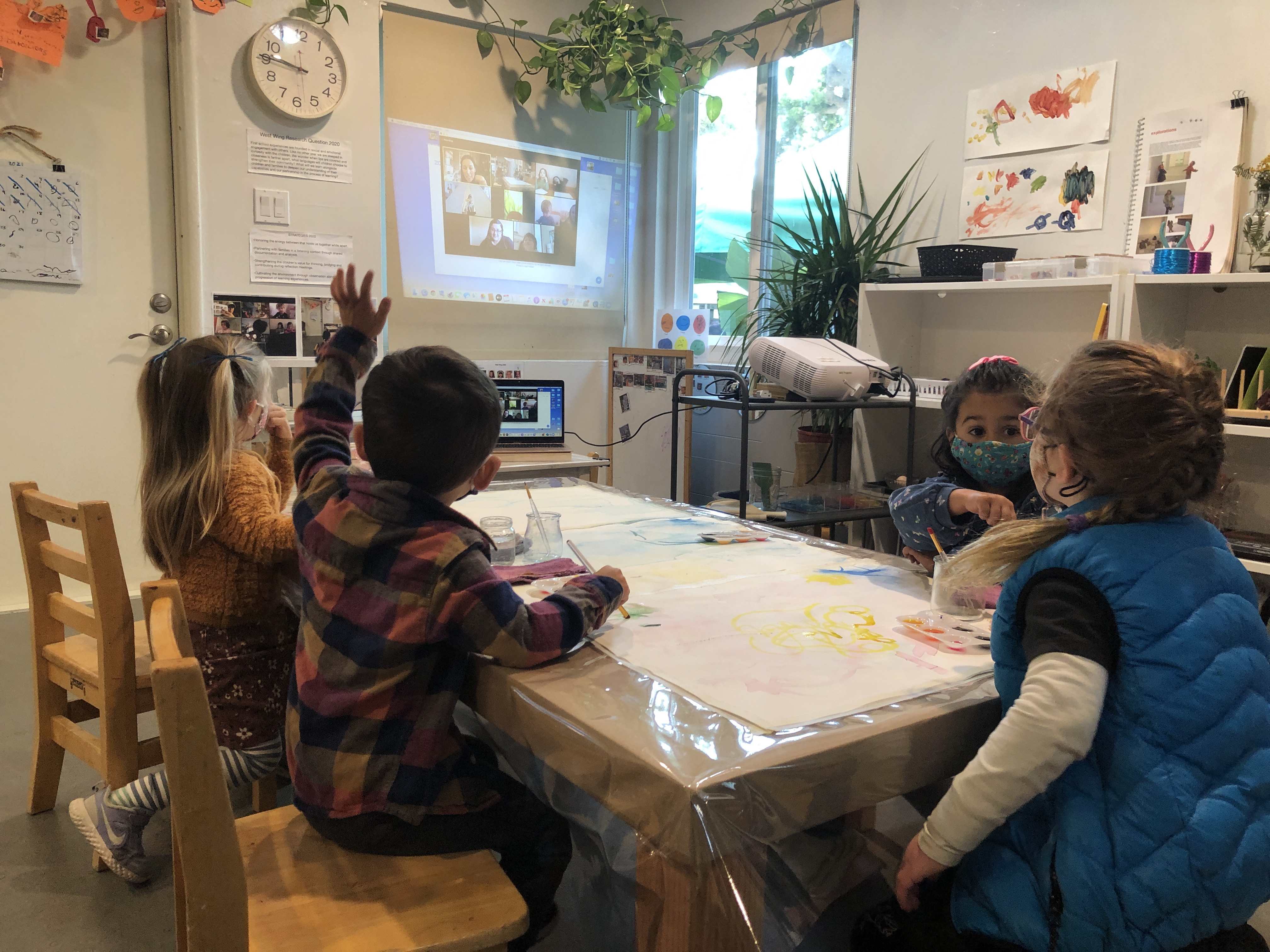
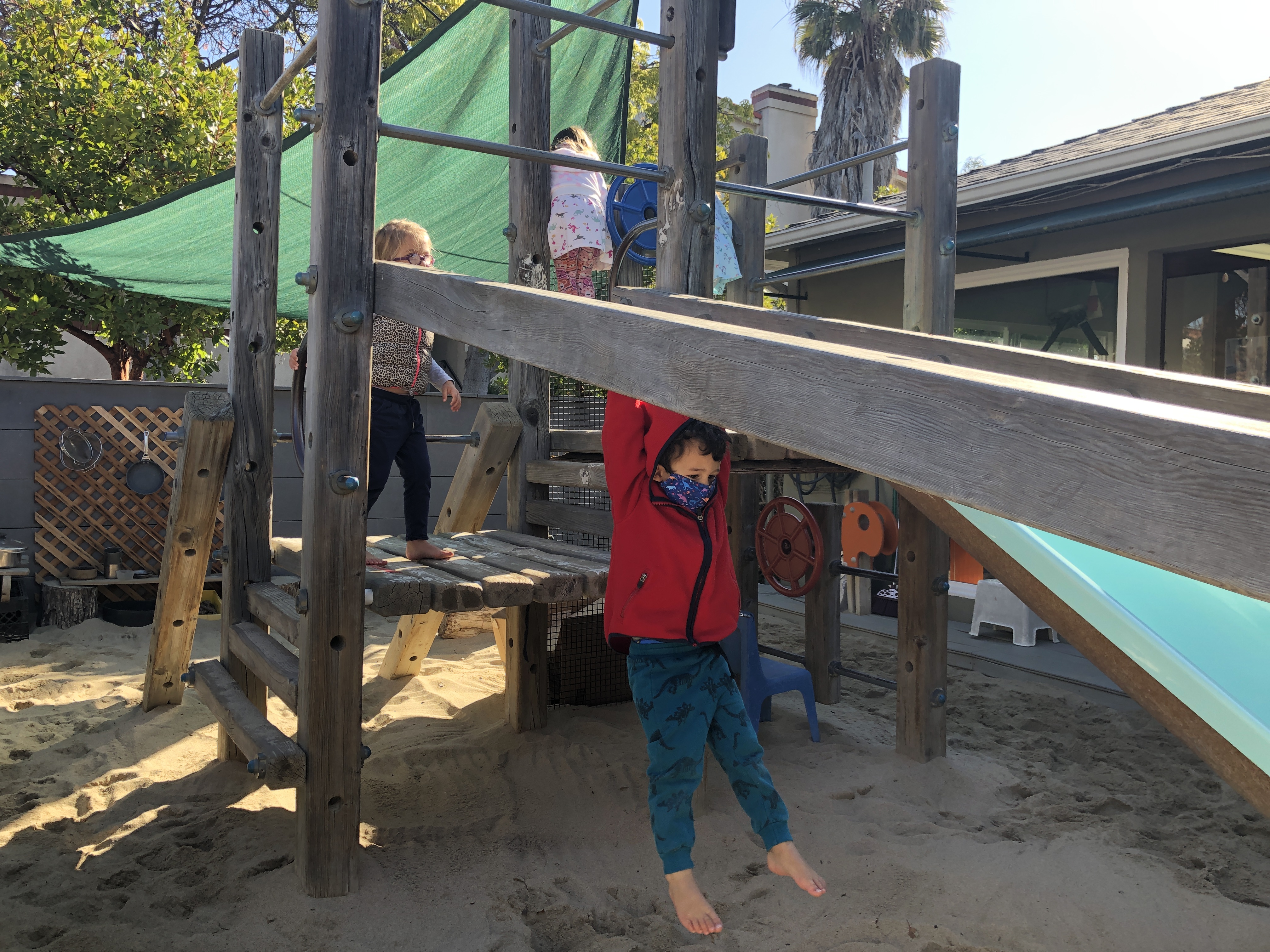
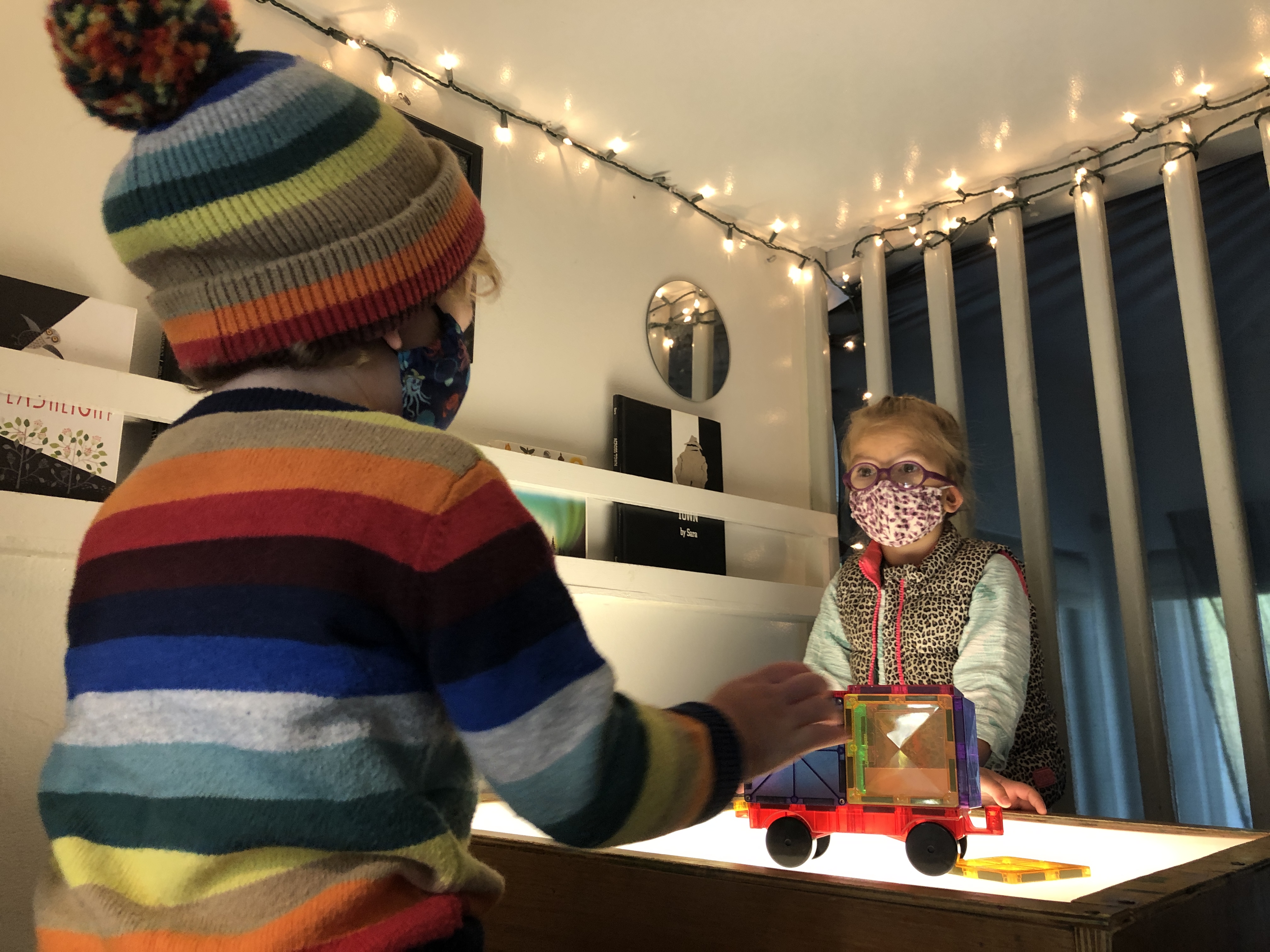
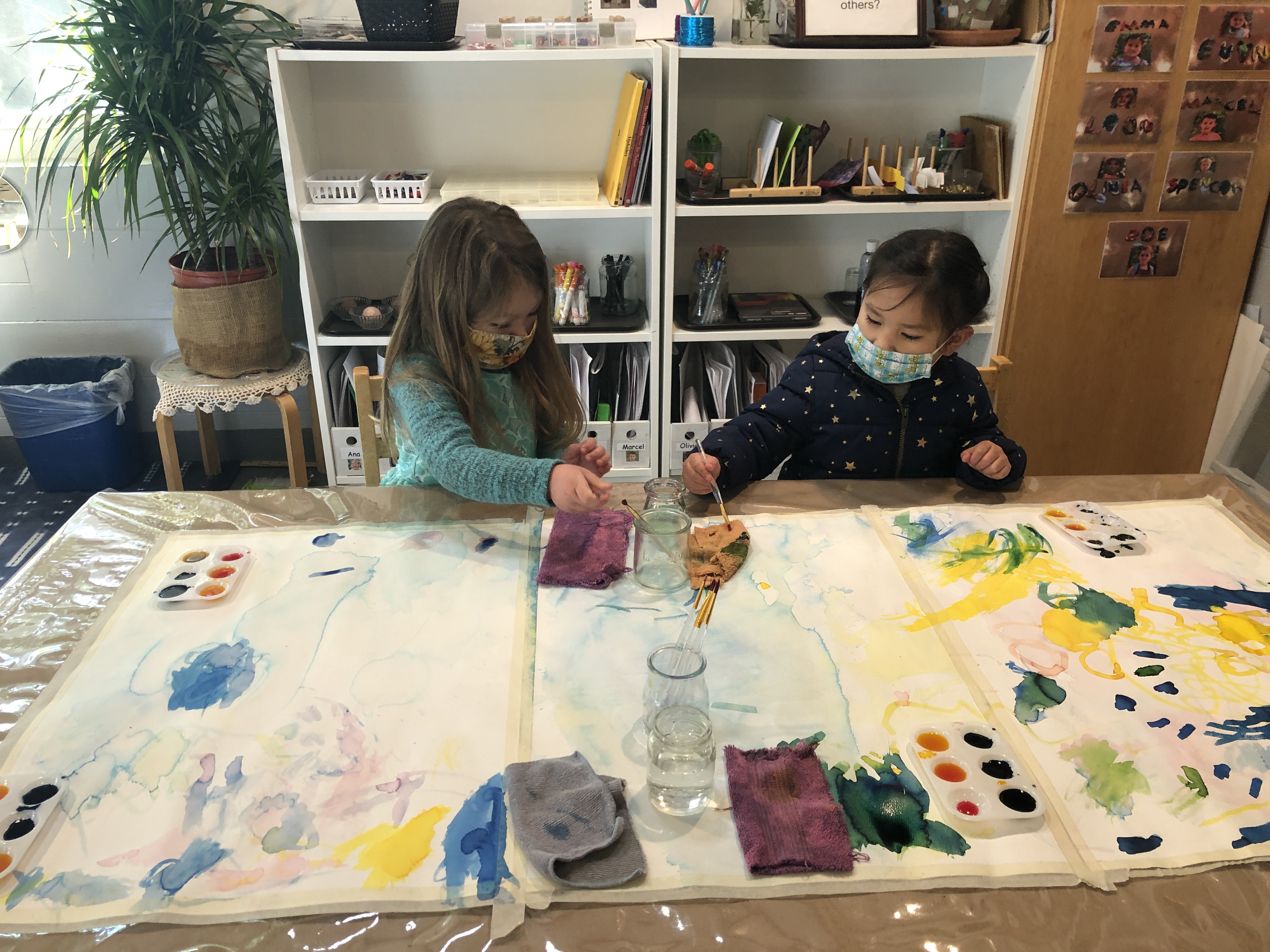
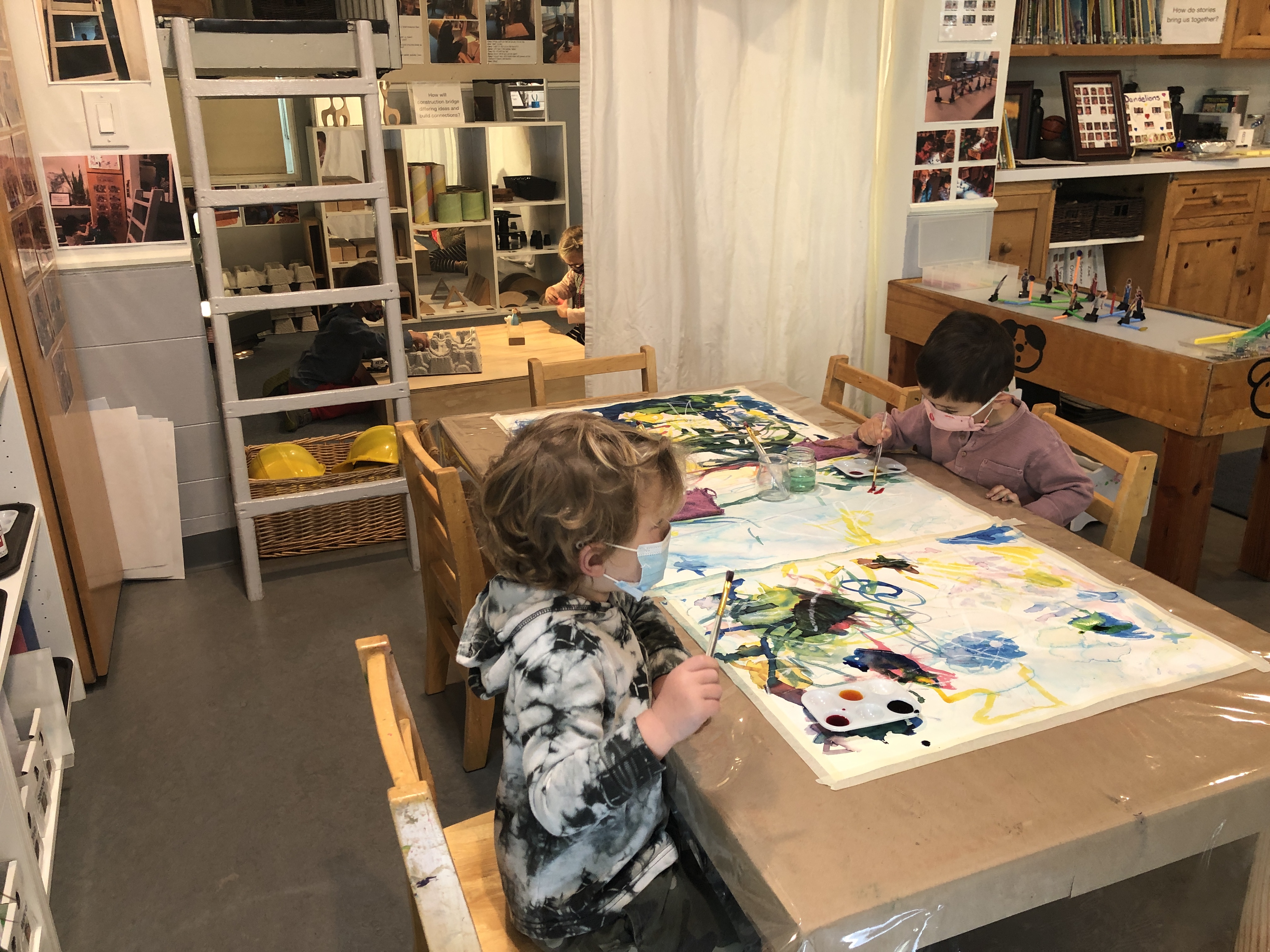
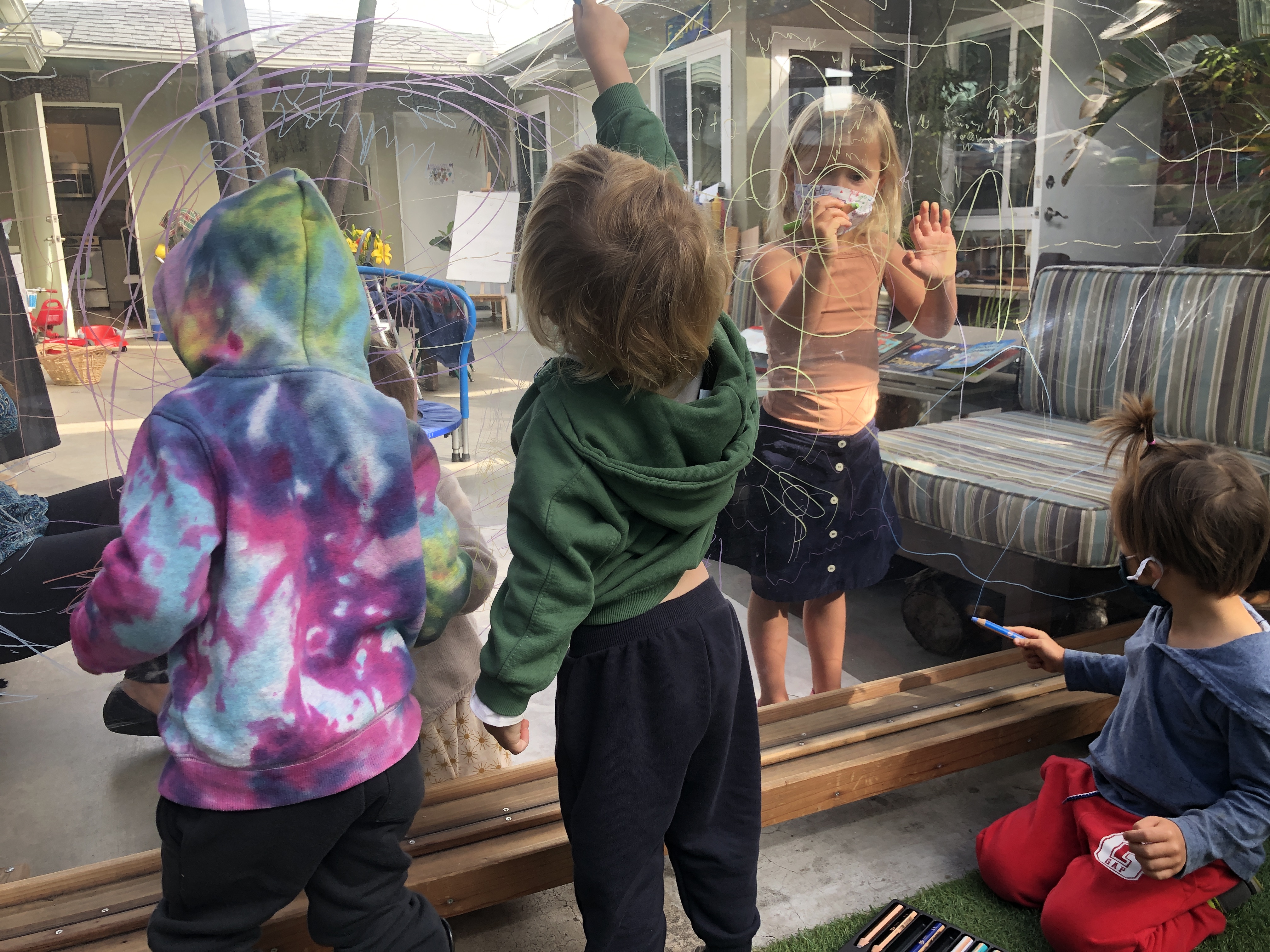
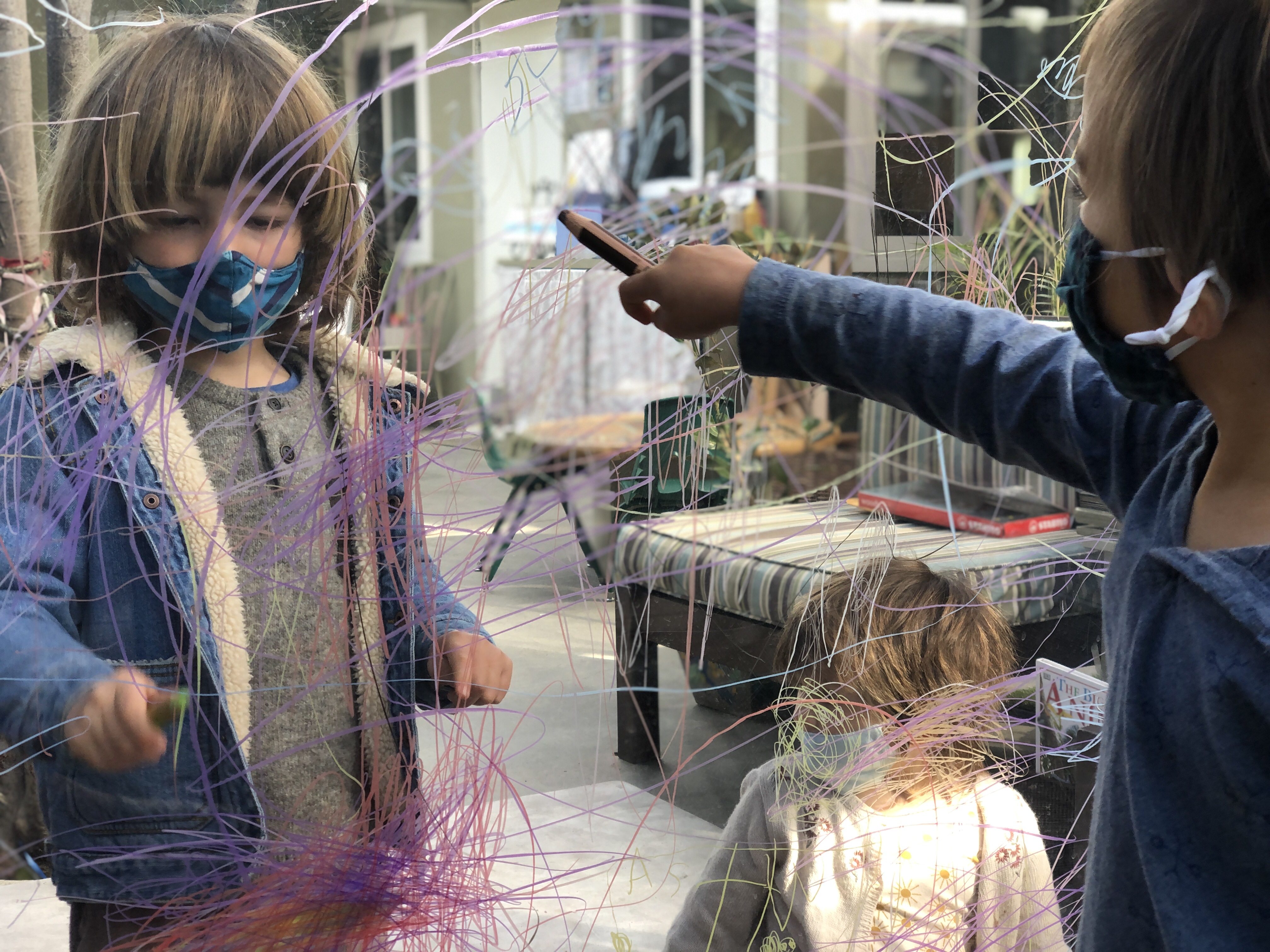
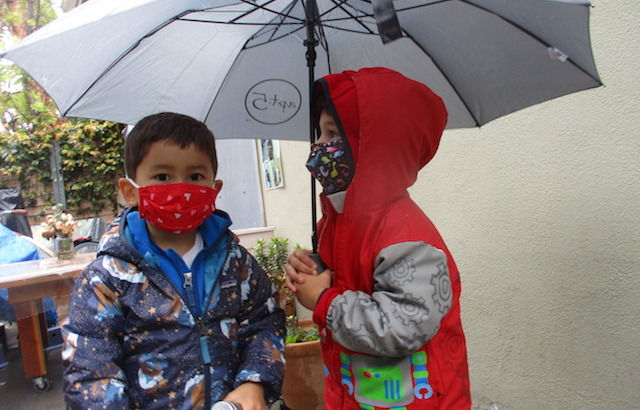
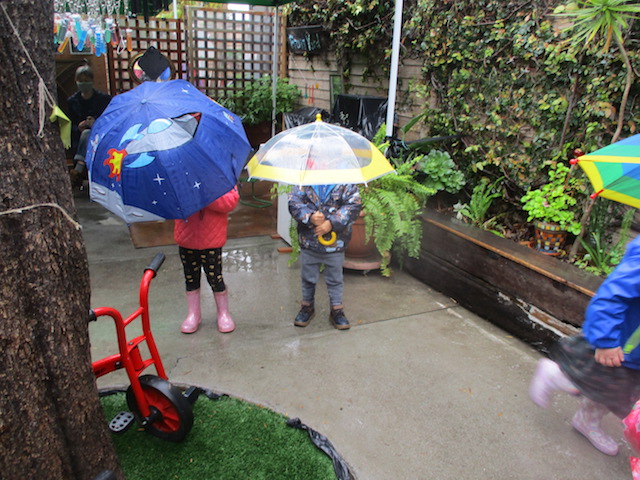
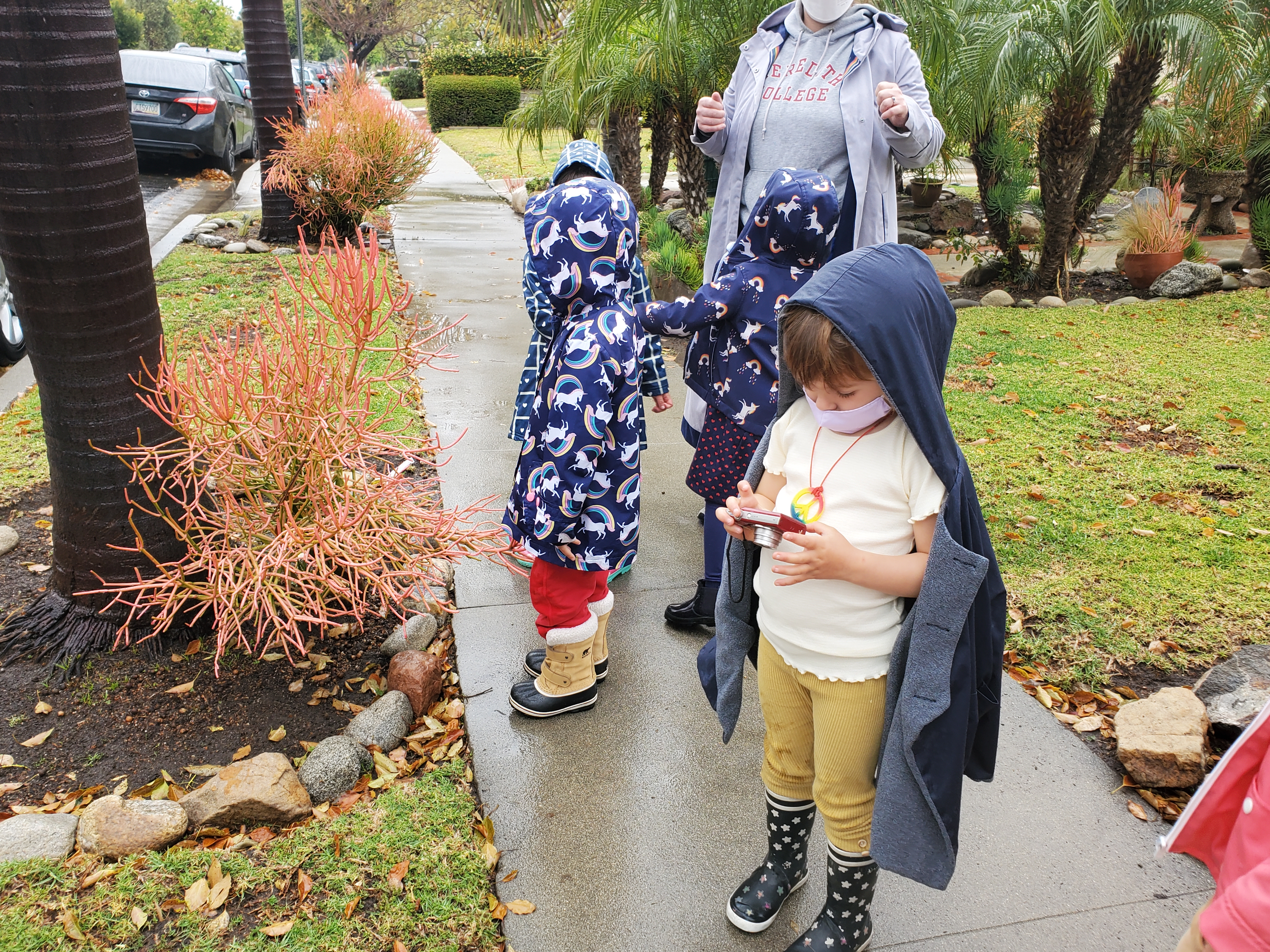
This week, knowing how much the Dandelions enjoy jumping in the puddles and dancing in the rain, we decided to explore some of the other ways that we can play with water in our Mini Studio space. We explored the technique of wet-on-wet watercolor: wet paints applied to wet paper. The children took turns wetting down our paper with some spray bottles. Then, using a palette of the primary colors: red, blue, and yellow, they used fine brushes to add the primary colors to the dampened paper. The Dandelions observed how the colors started bleeding into one another and blending. The secondary and tertiary colors of oranges, greens, and purples began to appear. Through this free exploration, the children discovered new ways that they could represent and share their ideas and theories with one another.
Ana: I have blue.
Eddie: I’m painting the rain.
Spencer: I’m painting the rain too.
Evyn: Paint the rain, paint the rain. Splishy splashy.
Spencer: When you paint the rain, it is clear water.
Evyn: Rain is white.
Eddie: And blue.
Evyn: You’re right. Sometimes water is blue.
Leon: Or white.
Evyn: Or rainbows. Water becomes rainbows.
Dana: How do you think water becomes rainbows?
Evyn: If you mix all the colors together, it makes black. If you mix 11 colors, that is a rainbow.
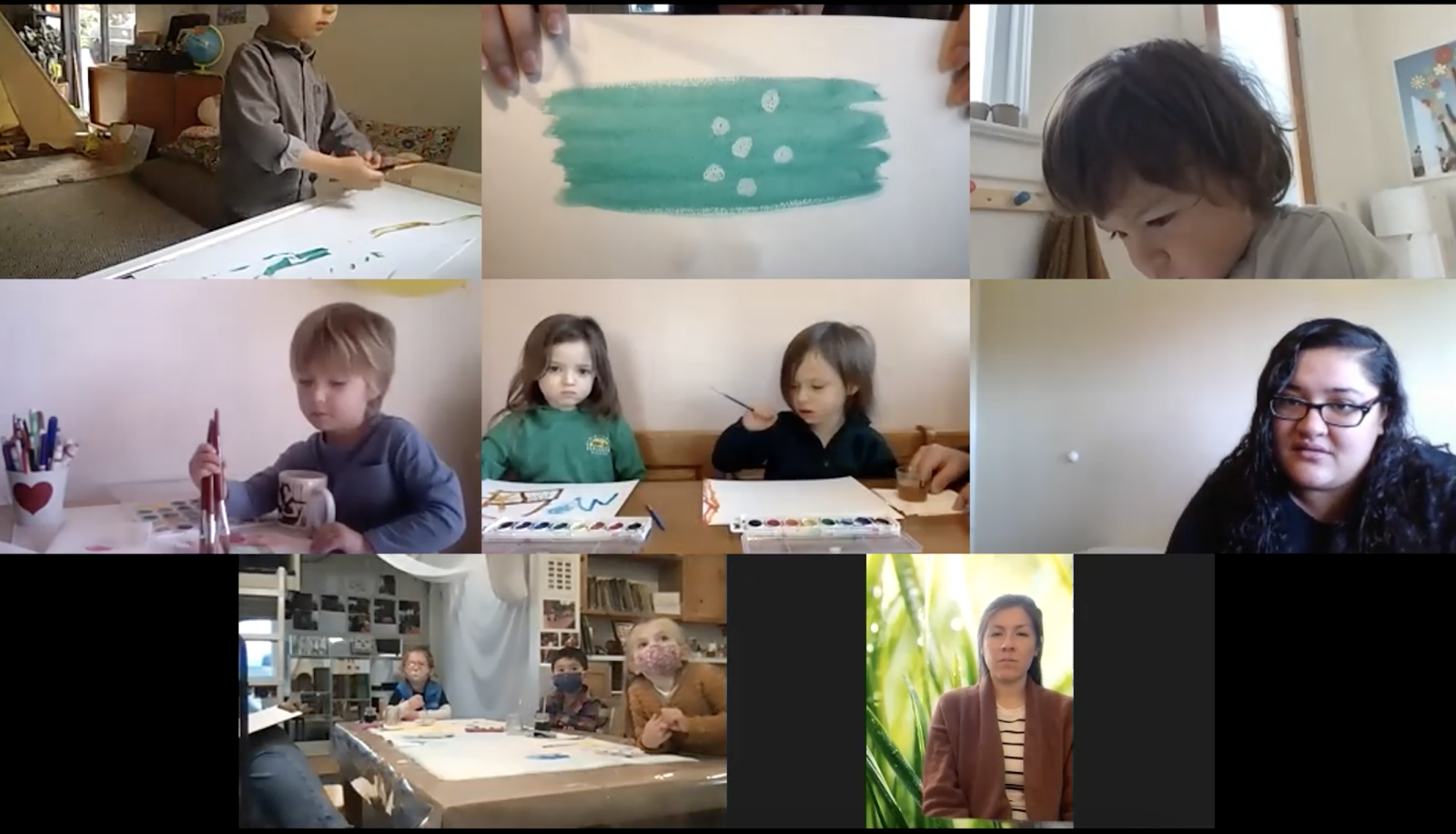
And just like the wet-on-wet watercolor technique could make rain and rainbows appear, the children discovered that more water from the spray bottle could make the colors “disappear” again. During our Wednesday Zoom with the Mints, Teacher Jen and the children showed us another new technique to make the colors “disappear” on the page: oil pastels or wax (here in the form of a candle) as a resist. She used the candle to draw some circles, and then she painted over the circles with some watercolors. The area with the wax remained white on the paper.
Olivia: I see the dots!
Cary: I see the dots!
The next day, we took screenshots from the Zoom meeting back to the Mini Studio to remind children of this technique. We invited the Dandelions to draw on the paper with white oil pastels and then add paint on top. The children were excited to see the “secret” lines appear. We appreciate being able to use these meetings with the Mints as a way not only to make connections between peers but also to inspire new ways of looking at the possibilities of materials.
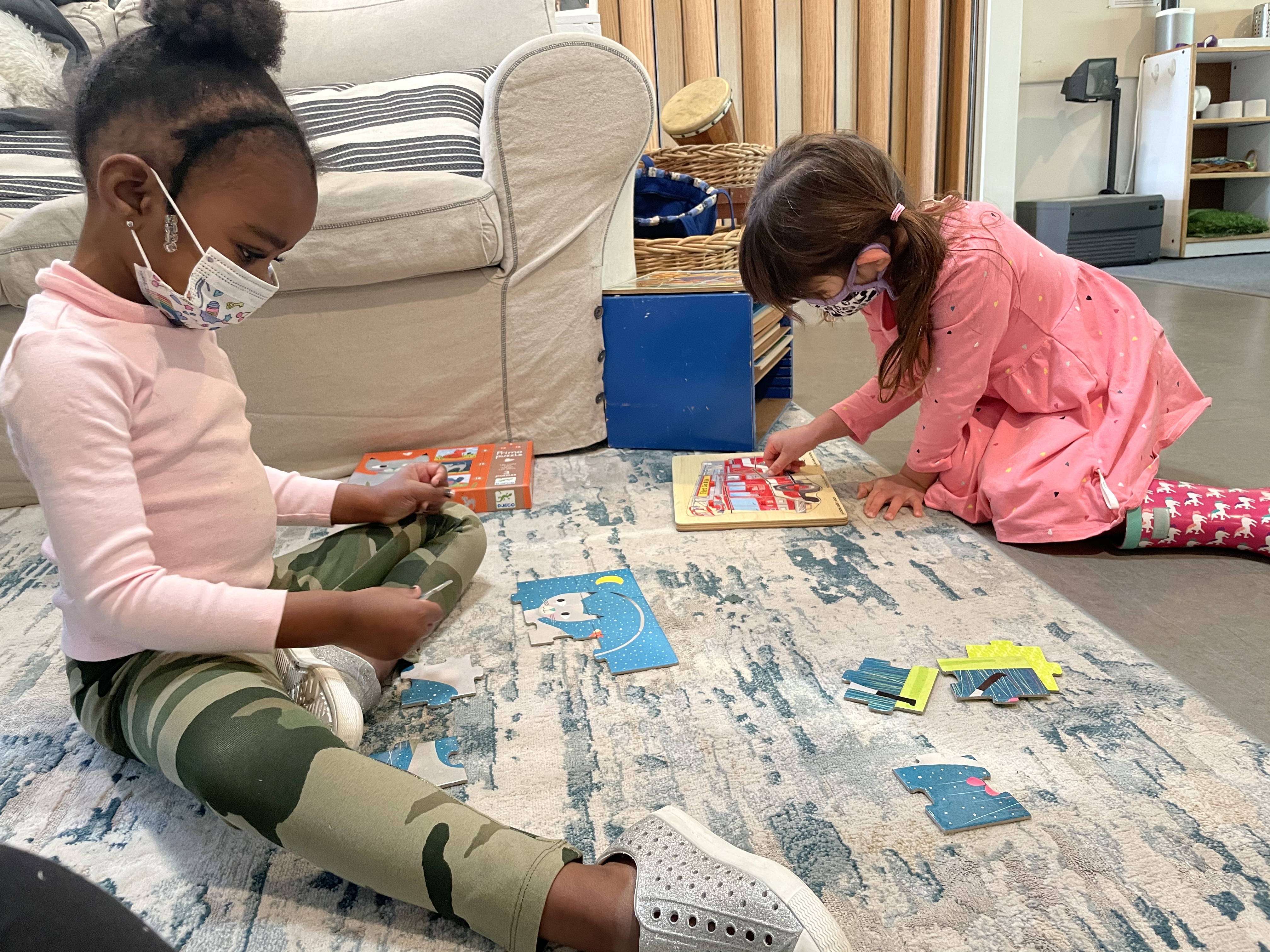
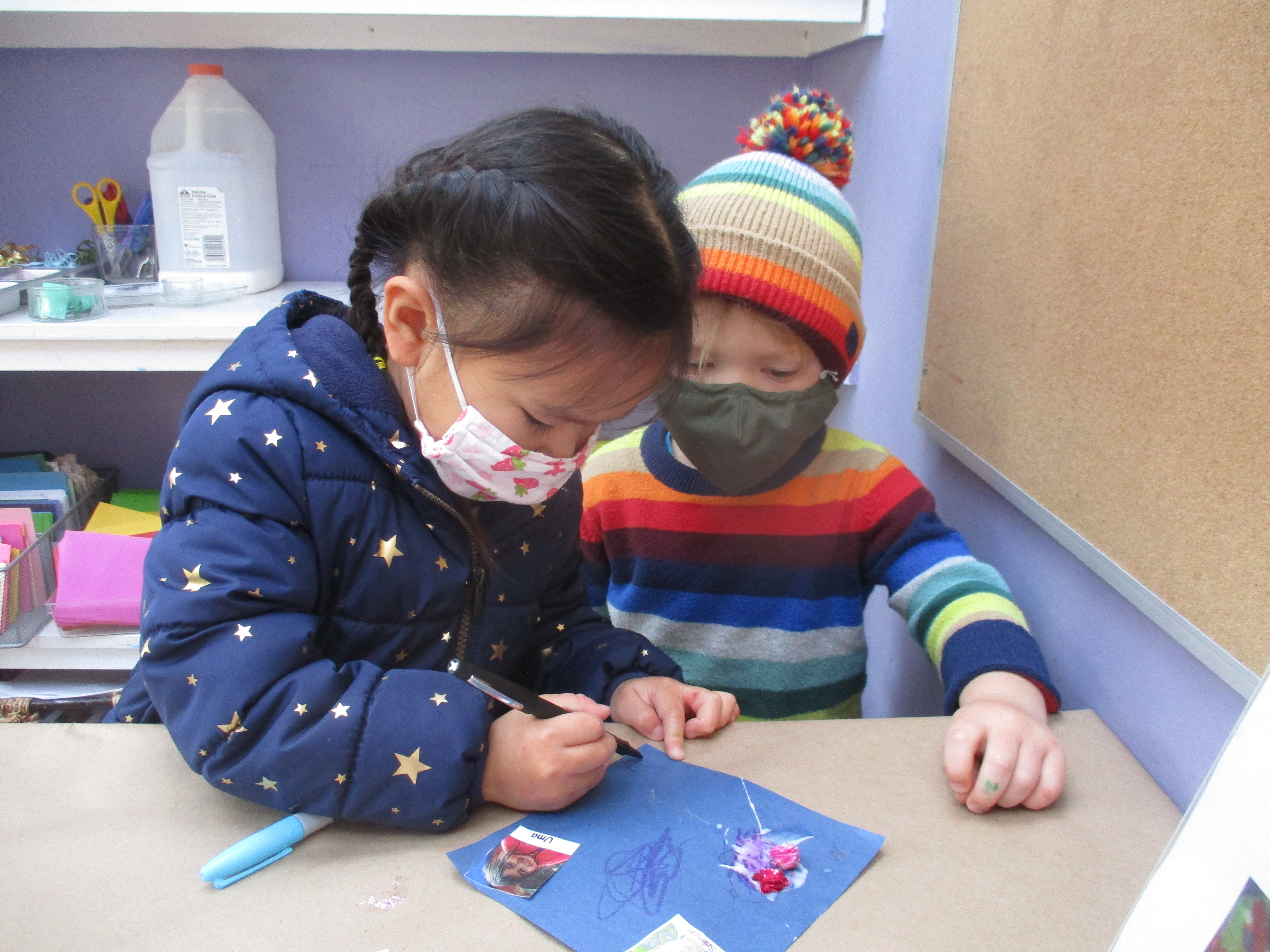
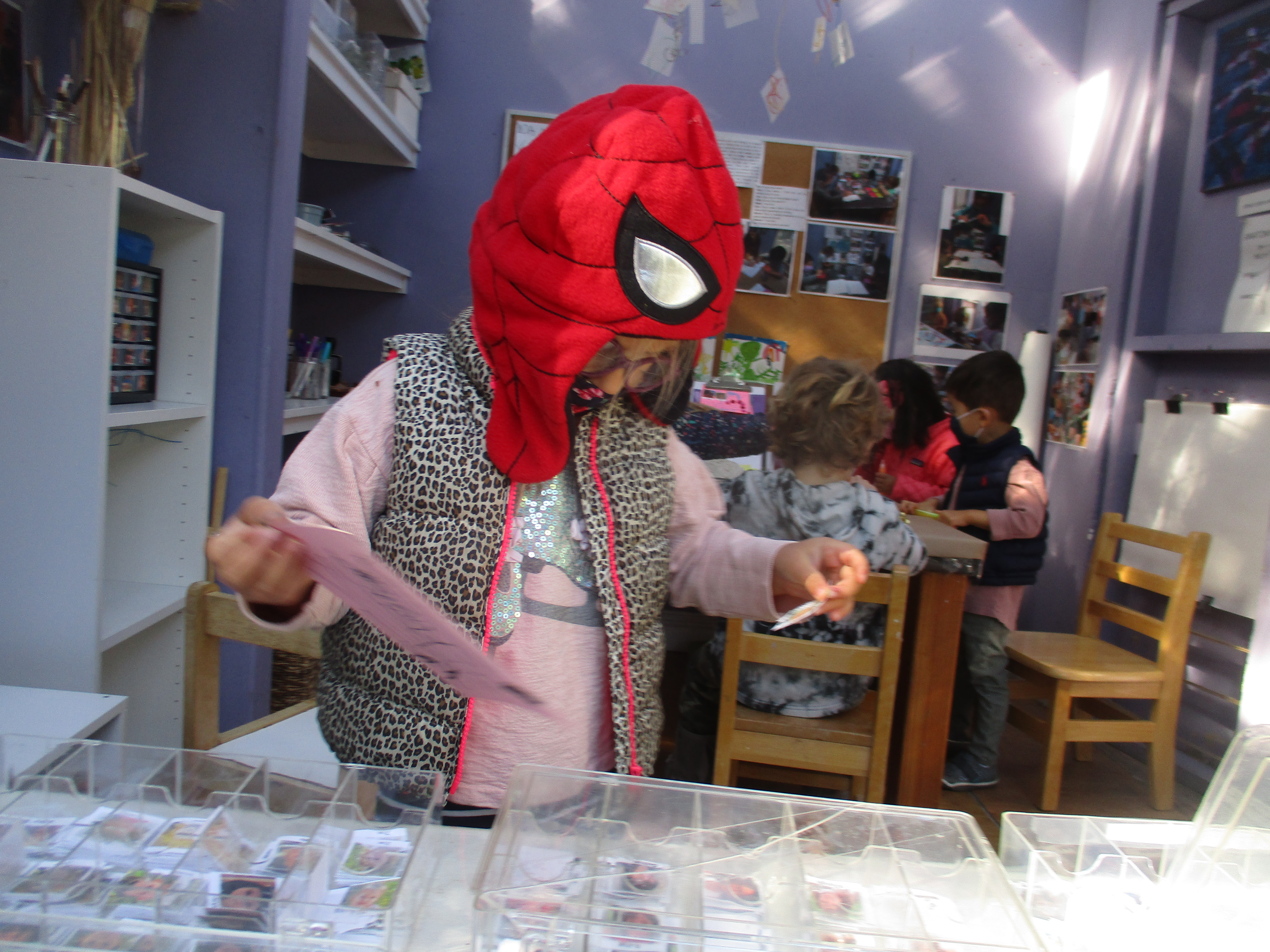
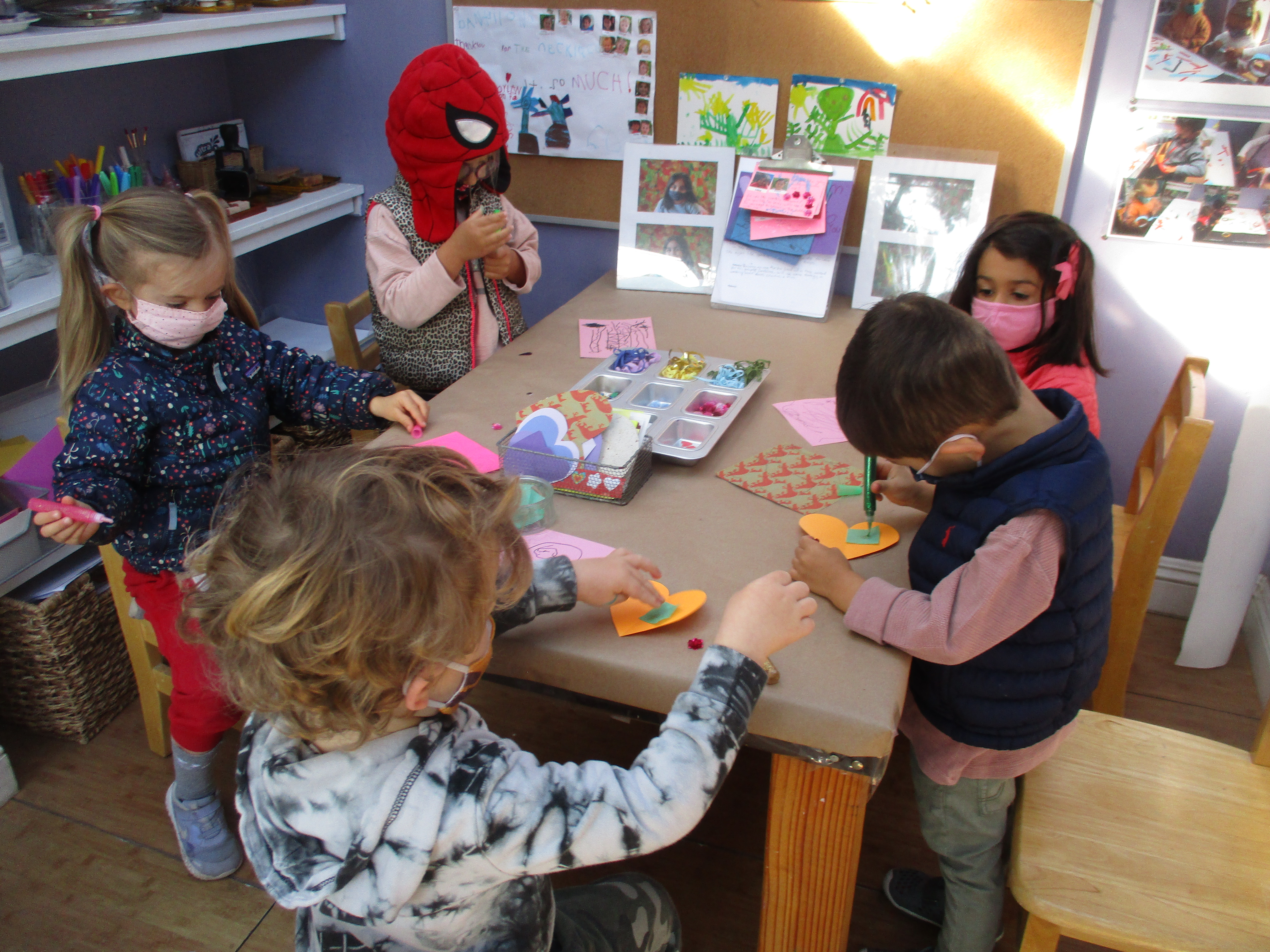
In the Paper House, two groups of Dandelions focused on creating messages for Uma and Presley from the Aloe Vera group. Initially, Uma and Presley had sent cards to all the Dandelions and we wanted to reply. With the intention to deepen our interconnection, a photo of Uma and Presley was shared with the children at the beginning of their appointment with the question: Who is Uma? And what do we think she likes? Who is Presley? Why do we think she wanted to send a card to all of the Dandelions? While these are thought-provoking questions that could awaken learning more about children from other pods, it is also a path for children to put into practice their abilities to represent ideas through drawing and use materials with a purpose. This experience also supports exchanging ideas and scaffolding learning between each other. One scenario was when Spencer wanted to write ‘I love you’ but thought he couldn’t. I encouraged him to reach out to Emma who had just finished writing that same message. Emma gladly accepted to show Spencer how to write ‘I Love you’ to Uma.
Through the process of these experiences, we can observe windows of learning moments that enable us to guide and scaffold cognitive, social, and emotional connections between children or direct approach within the context which is when it is relevant to the children.
Questions for Presley:
Spencer: Why is there candy around you?
Cary: I see her hair and her ears.
Olivia: Do you like skeletons?
Ana: Do you like flowers?
Arya: Do you like purple unicorns?